Timbuktu City of Knowledge: The Lost African Empire of Scholars That Changed the World
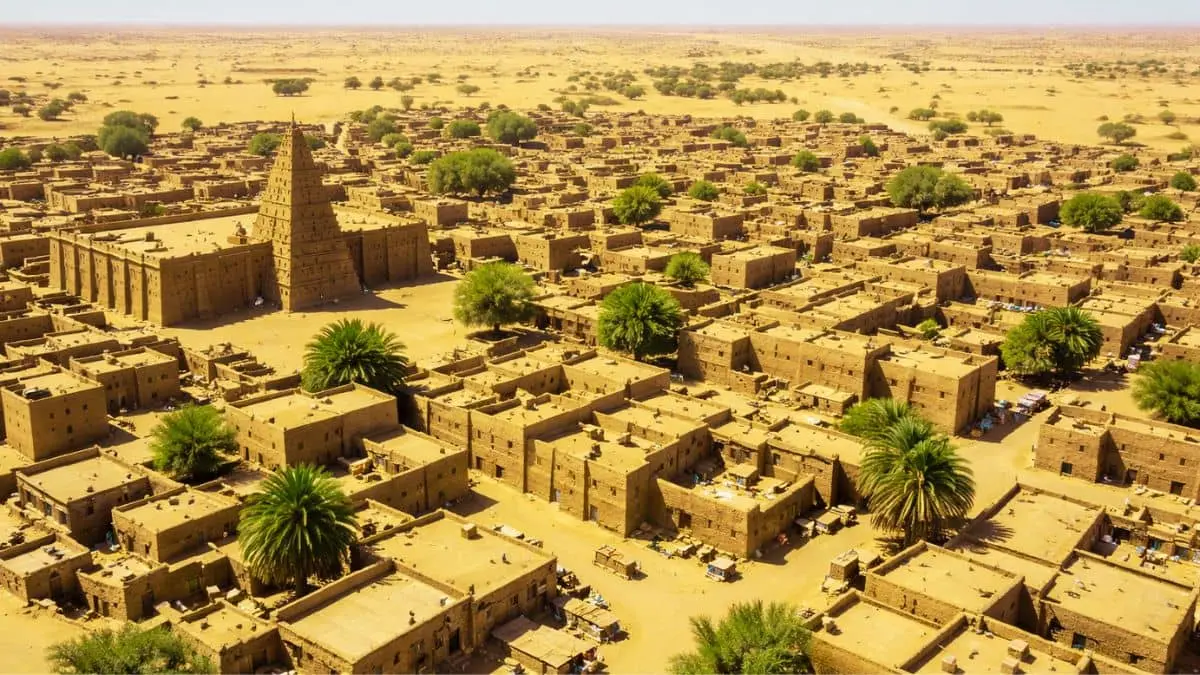
When people hear Timbuktu, they often imagine a distant, almost mythical place at the edge of the world. Yet Timbuktu City of Knowledge was once one of the most influential intellectual centers in human history. Far from being isolated, this legendary city in West Africa thrived as a vibrant hub of scholarship, culture, and global exchange.
During its golden age, Timbuktu attracted scholars, traders, and thinkers from across Africa, the Middle East, and beyond. Its universities, libraries, and rich collections of manuscripts made it a beacon of learning long before many modern institutions existed.
Table of Contents
Today, Timbuktu City of Knowledge stands as a powerful symbol of Africa’s intellectual heritage, challenging outdated narratives and reminding the world of the continent’s deep contributions to education, science, and culture.
What Is Timbuktu City of Knowledge?
Timbuktu City of Knowledge refers to the historic city of Timbuktu, once a thriving intellectual and cultural powerhouse in medieval Africa. Far more than a remote desert settlement, Timbuktu built its identity as a center of scholarship, where knowledge, religion, science, and literature flourished. It became widely respected for its scholars, libraries, and institutions that attracted learners from across continents.
Located in present-day Mali in West Africa, near the southern edge of the Sahara Desert, Timbuktu occupied a strategic position along major trans-Saharan trade routes. This unique location allowed it to connect North Africa, sub-Saharan Africa, and even parts of Europe and the Middle East, making it a crossroads of commerce and ideas.
Its rise as a center of trade, culture, and education was fueled by the exchange of valuable goods such as gold, salt, and manuscripts. As wealth flowed into the city, so did intellectual curiosity. Over time, Timbuktu evolved into a renowned hub where merchants and scholars coexisted, transforming it into one of the most important learning centers of the medieval world.
The Golden Age of Timbuktu
Rise During the Mali Empire
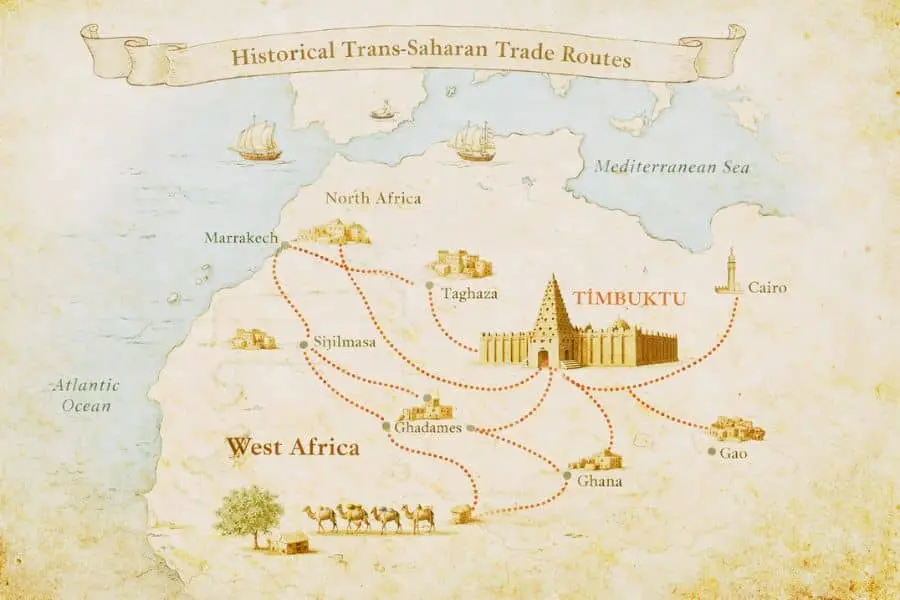
The golden age of Timbuktu City of Knowledge began during the height of the Mali Empire in the 13th and 14th centuries. Under the leadership of rulers such as Mansa Musa, famed for his immense wealth and support for education, Timbuktu transformed into a flourishing center of prosperity and learning. His legendary pilgrimage to Mecca not only showcased the empire’s riches but also brought back scholars, architects, and books that enriched the city’s intellectual life.
Timbuktu’s success was closely tied to the trans-Saharan trade routes, which connected West Africa to North Africa and beyond. Caravans transported gold, salt, ivory, and manuscripts across the desert, turning the city into a vital commercial hub. This steady flow of goods and wealth helped fund schools, mosques, and libraries, laying the foundation for its reputation as a leading center of knowledge.
A Hub of Intellectual Exchange
At its peak, Timbuktu City of Knowledge became a meeting point for scholars, traders, and travelers from across Africa, the Middle East, and even parts of Europe. This constant movement of people brought new ideas, perspectives, and cultural practices into the city, creating a vibrant intellectual atmosphere.
Students and teachers gathered to study subjects ranging from theology and law to mathematics, astronomy, and literature. The diversity of backgrounds and beliefs encouraged open dialogue and the exchange of knowledge, making Timbuktu a truly global center of learning. This rich blend of cultures and ideas is what set Timbuktu apart and secured its place as one of history’s most remarkable academic cities.
Timbuktu’s Legendary Universities and Libraries
Sankore University and Islamic Scholarship
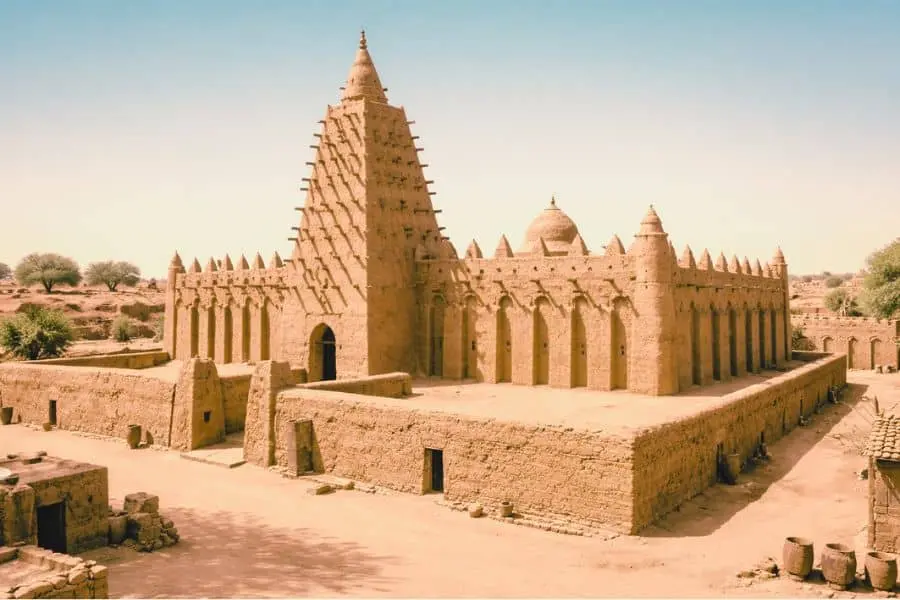
At the heart of Timbuktu City of Knowledge stood Sankore University, one of the most respected centers of learning in the medieval world. Rather than a single building, Sankore functioned as a network of scholars and learning spaces connected to mosques, where education was deeply rooted in Islamic traditions.
Students from across Africa and beyond traveled to study under renowned teachers, often engaging in personalized learning similar to modern mentorship systems. The curriculum was remarkably advanced for its time, covering subjects such as astronomy, mathematics, law, philosophy, and theology. This strong academic foundation helped establish Timbuktu as a leading destination for higher education centuries before the rise of European universities.
Ancient Manuscripts of Timbuktu
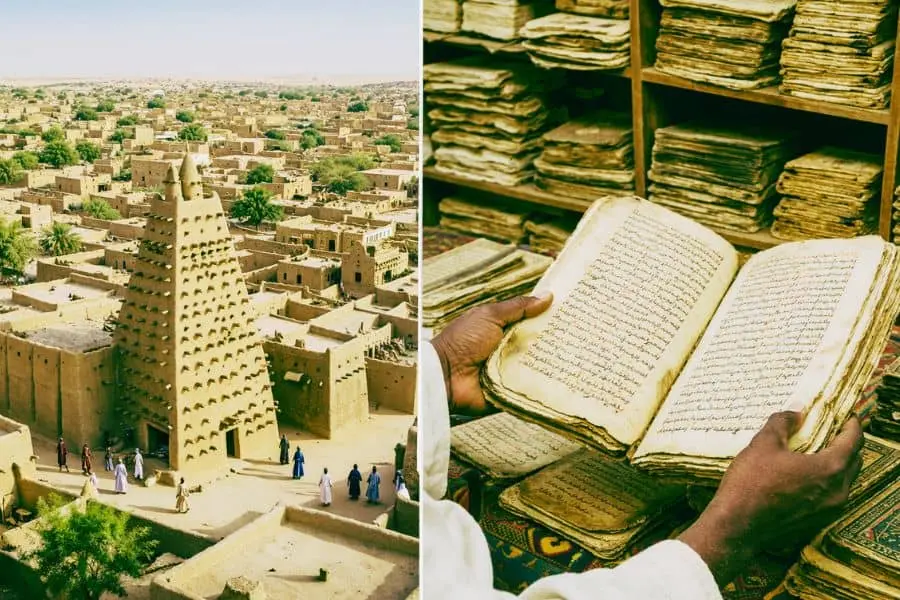
One of the most extraordinary features of Timbuktu City of Knowledge is its vast collection of ancient manuscripts. Numbering in the hundreds of thousands, these documents were carefully preserved in private libraries and family collections over generations.
The manuscripts cover a wide range of topics, including science, medicine, astronomy, literature, law, and even poetry. Written primarily in Arabic and African languages, they reveal a rich intellectual tradition that challenges outdated assumptions about Africa’s past.
These priceless texts are not only historical artifacts; they are powerful evidence of Africa’s long-standing contributions to global scholarship. Today, efforts to preserve and digitize these manuscripts continue, ensuring that the legacy of Timbuktu’s knowledge endures for future generations.
Architecture and Cultural Heritage
Iconic Mosques of Timbuktu
The architectural beauty of Timbuktu City of Knowledge is best seen in its iconic mosques, which have stood for centuries as symbols of faith and learning. Among the most famous are the Djinguereber Mosque, Sankore Mosque, and Sidi Yahya Mosque. These structures were not only places of worship but also centers of education, where scholars gathered to teach and study.
Built using traditional materials like mud bricks and wood, these mosques showcase the distinctive Sudano-Sahelian architectural style. Characterized by its smooth earthen walls, wooden support beams, and towering minarets, this style is both functional and adapted to the harsh desert climate. The design reflects a deep connection between culture, environment, and spirituality, making Timbuktu’s architecture truly unique.
UNESCO World Heritage Significance
The historical and cultural importance of Timbuktu City of Knowledge has earned it recognition as a UNESCO World Heritage Site. This global acknowledgment highlights Timbuktu’s role as a center of learning and its contribution to human history.
However, preserving this heritage has not been without challenges. Environmental factors such as desertification, along with political instability and past conflicts, have threatened many of its historic structures and manuscripts. In response, international organizations and local communities have worked together to restore damaged sites and protect Timbuktu’s legacy. These ongoing efforts ensure that future generations can continue to learn from and appreciate this remarkable city of knowledge.
Decline of Timbuktu City of Knowledge
Invasions and Political Instability
The decline of Timbuktu, once known as a ‘City of Knowledge,’ began in the late 16th century, when political instability and foreign invasions disrupted its thriving intellectual environment. One of the most significant turning points was the Moroccan invasion of 1591, which led to the fall of the Songhai Empire, the state that had supported Timbuktu’s prosperity.
This invasion weakened the city’s economic and educational systems. Many scholars were displaced, imprisoned, or forced into exile, causing a sharp decline in academic activity. Without strong political support and stability, Timbuktu gradually lost its status as a leading center of learning and influence.
Colonial Era and Modern Challenges
During the colonial era, Timbuktu City of Knowledge faced further decline as European powers shifted trade routes and priorities away from the trans-Saharan networks that once sustained the city. This reduced its economic importance and contributed to its growing isolation.
In modern times, Timbuktu continues to face challenges that threaten its cultural heritage. Ancient manuscripts and historic sites have been at risk due to conflict, neglect, and environmental factors such as desertification. Despite these obstacles, ongoing preservation efforts by local communities and international organizations aim to protect and restore this invaluable legacy, ensuring that the story of Timbuktu is not lost to history.
Rediscovering Timbuktu Today
Preservation of Manuscripts
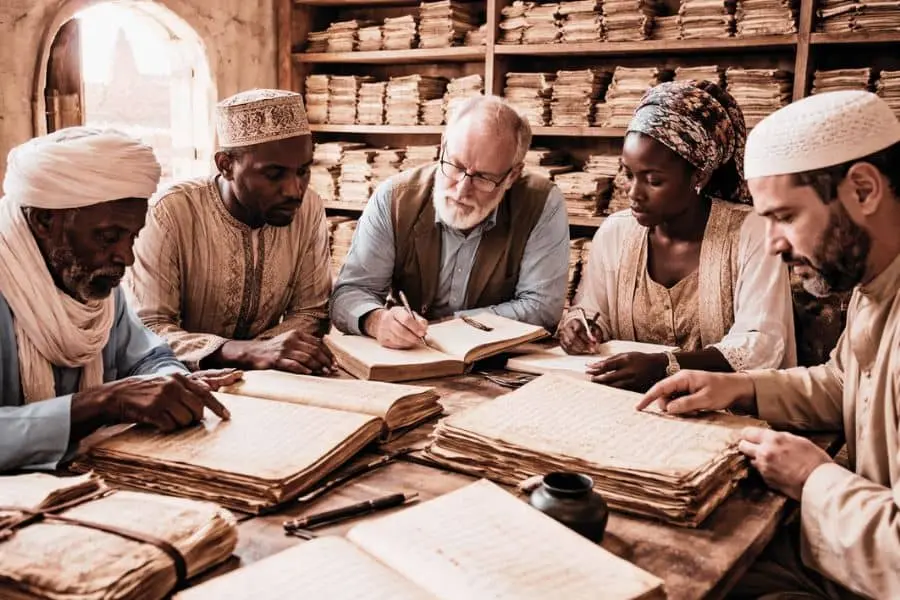
In recent years, the city of knowledge, Timbuktu, has gained new global attention due to efforts to preserve its priceless manuscripts. Historians, archivists, and cultural organizations have worked tirelessly to protect these fragile documents, many of which date back centuries. During times of conflict, local families and librarians even risked their lives to secretly safeguard thousands of manuscripts from destruction.
Today, large-scale digitization projects are helping to preserve and share these works with the world. By converting ancient texts into digital formats, experts ensure that the knowledge contained within them is not only protected but also accessible to researchers, students, and history enthusiasts worldwide. These initiatives play a crucial role in keeping Timbuktu’s intellectual legacy alive.
Why Timbuktu Still Matters
The story of Timbuktu City of Knowledge remains deeply relevant in today’s world. It offers powerful lessons about the importance of education, cultural exchange, and the preservation of knowledge across generations. Timbuktu challenges long-standing misconceptions by proving that Africa has a rich and sophisticated intellectual history that has contributed to global civilization.
Moreover, Timbuktu plays a key role in reshaping narratives about African history. It stands as a symbol of pride, resilience, and scholarly achievement, inspiring a more accurate and inclusive understanding of the past. As efforts continue to protect and promote its heritage, Timbuktu reminds us that knowledge knows no boundaries and that its legacy still has the power to educate and unite people around the world.
Fascinating Facts About Timbuktu City of Knowledge
Timbuktu City of Knowledge is filled with remarkable historical insights that continue to surprise and inspire people around the world. Here are some fascinating facts that highlight its importance:
- One of the World’s Earliest Universities: Timbuktu was home to institutions like Sankore, where structured higher education existed centuries before many modern universities in Europe.
- Vast Collections of Manuscripts: The city’s libraries once held hundreds of thousands of manuscripts, covering subjects such as science, medicine, law, astronomy, and literature, making it one of the richest intellectual centers of its time.
- A Magnet for Global Scholars: Long before the rise of modern academic systems, Timbuktu attracted scholars, students, and thinkers from across Africa, the Middle East, and beyond, creating a vibrant international learning community.
These facts reinforce why Timbuktu City of Knowledge remains one of history’s most extraordinary centers of education and cultural heritage.
Conclusion
Timbuktu City of Knowledge stands as a testament to Africa’s rich intellectual and cultural history. Once a thriving hub of scholarship, trade, and innovation, it challenged the world’s perception of Africa long before modern universities emerged elsewhere. Its legacy reminds us that knowledge, creativity, and learning have deep roots on the continent.
By exploring Timbuktu’s story, we are encouraged to rethink common misconceptions about Africa’s past and recognize the continent’s vital contributions to global civilization. Preserving its manuscripts, mosques, and heritage is not just about safeguarding history; it is about inspiring future generations to value education, cultural exchange, and the enduring power of human knowledge. Timbuktu continues to teach us that even the most remote corners of the world can shine as beacons of wisdom and learning.
FAQs
What is Timbuktu City of Knowledge?
Timbuktu City of Knowledge refers to the historic city of Timbuktu in Mali, West Africa, renowned for its ancient universities, libraries, and manuscripts. It was a center of scholarship, trade, and culture, attracting scholars from across Africa, the Middle East, and Europe.
Why was Timbuktu considered a center of learning?
Timbuktu became a center of learning due to institutions like Sankore University, its vast manuscript collections, and a thriving intellectual community. Subjects ranged from astronomy and mathematics to law, theology, and literature, making it one of the earliest hubs of higher education in the world.