
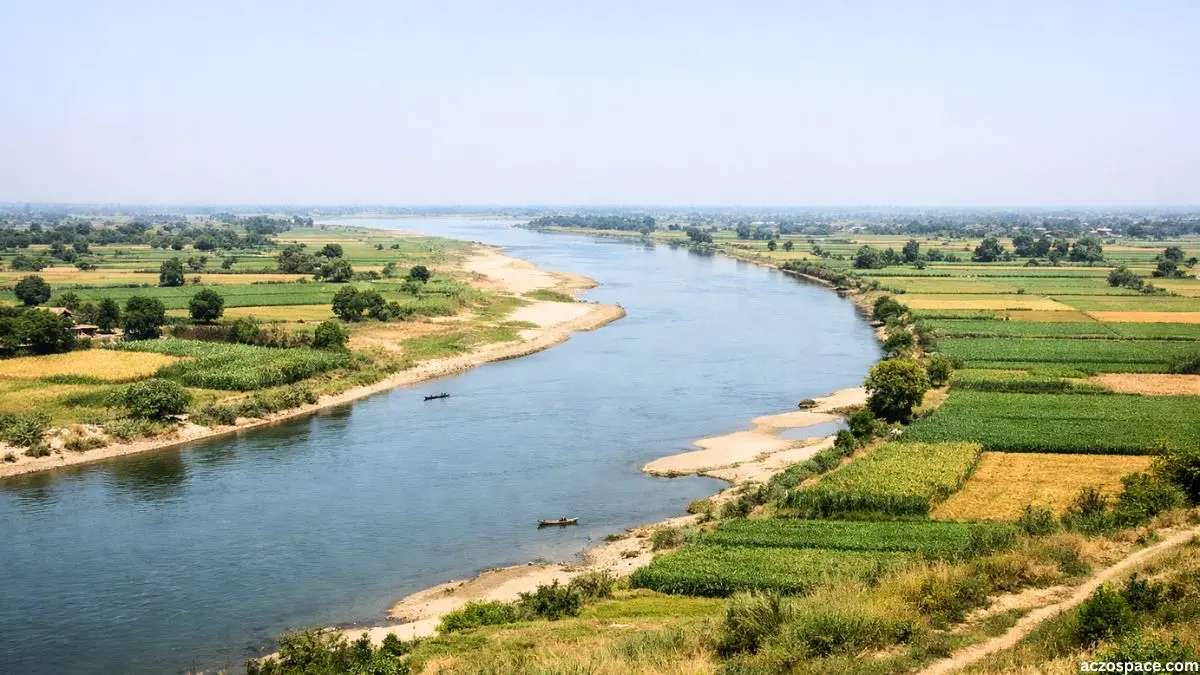
From the very beginnings of human history, rivers have played a decisive role in the rise of civilization. Among these life-giving waterways, the great river systems of the ancient world stand out as the foundations upon which early societies were built. Rivers supported human settlement, agriculture, trade, and culture, acting as lifelines for developing communities.
With a constant supply of fresh water and naturally fertile soil enriched by seasonal floods, river valleys became ideal locations for early human settlement. Over time, small communities that formed along riverbanks began to settle permanently. They developed farming practices, learned to manage water resources, and used rivers as natural routes for transportation and trade.
As these settlements grew, they gradually transformed into organized civilizations with structured social systems, economic activities, and rich cultural traditions. This article explores the key reasons why so many ancient civilizations emerged, strengthened, and flourished along major rivers.
Table of Contents
Quick Facts
| Fact | Detail |
| Topic | Ancient Civilizations of the Ganges (Ganga) Basin |
| River System | Ganges (Ganga) River — major river of northern Indian subcontinent, sacred in Hinduism and key for settlement development |
| Geographic Area | Indo‑Gangetic Plain — fertile plains nourishing agriculture, trade and early settlement |
| Early Settlements | Neolithic farming communities along Ganges by c. 5000 BCE (tools, pottery, agriculture) |
| Vedic Period | Ganges region rose in prominence during Vedic era (~1500–600 BCE) with early religious/cultural development |
| Mahajanapadas | City‑state civilizations (e.g., Magadha, Koshala) developed in the central Ganges region (~7th–6th century BCE) |
| Famous Cities | Varanasi, Pataliputra (ancient capital), Haridwar, Prayagraj — trade, governance, religion hubs |
| Cultural Contributions | Hinduism rituals, early philosophy, literature, pilgrimage traditions |
| Influence on Empires | Later became heartland for Maurya and Gupta Empires, major classical Indian powers |
| Legacy | Ganges basin shapes religion, politics, economy and culture in South Asia for millennia |
What Are Ancient River Valley Civilizations?
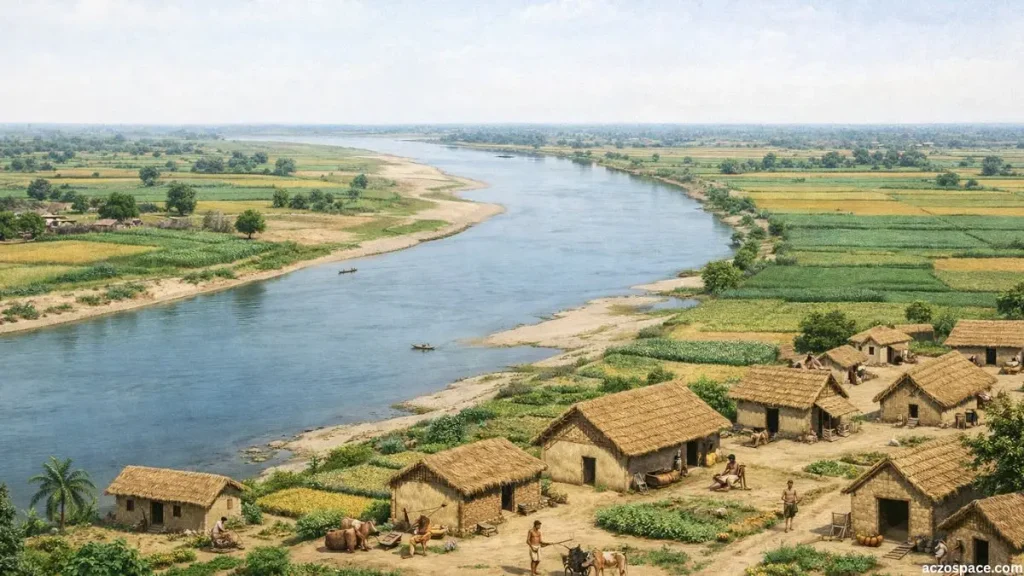
Ancient river valley civilizations were early organized societies that developed along the banks of major rivers. These communities lived in close connection with nature, and their daily lives depended heavily on river water. Rivers were essential not only for drinking and farming but also for sustaining livestock, transportation, and communication.
The reliance on river systems marked a turning point in human history. It enabled stable settlements, encouraged agricultural innovation, and laid the groundwork for complex social structures. In many ways, rivers shaped the rhythm of life, work, and belief systems in these early societies.
What Kind of Societies Were Ancient River Civilizations?
Ancient river civilizations shared several defining characteristics that set them apart from simple nomadic or rural settlements. These societies typically featured:
- Permanent settlements established along riverbanks
- An economy primarily based on agriculture.
- Clearly organized social structures
- Systems of leadership, laws, and long-standing traditions
Because of these features, river valley civilizations evolved into strong, well-organized societies capable of managing large populations and resources.
Common Features of Ancient River Valley Civilizations
Despite being spread across different regions of the world, ancient river civilizations shared many common traits, including:
- Agriculture is the main economic activity.
- Dependence on river water for irrigation and farming
- Surplus food production, allowing population growth
- Organized settlements in the form of villages and cities
- The development of cultural and religious beliefs
These shared characteristics explain why river valley civilizations hold such an important place in human history. They laid the foundations for later advancements in governance, science, culture, and urban life—shaping the course of civilization for thousands of years to come.
Why Were Rivers So Important to Early Human Life?
For early humans, survival depended on three basic needs: water, food, and safety. River valleys uniquely provided all three in one place. As a result, early human groups were naturally drawn to areas near rivers, where they could secure a more stable and sustainable way of life.
By settling close to rivers, people gained reliable access to drinking water and food sources, while also benefiting from natural protection. These advantages allowed early communities to move away from a purely nomadic lifestyle and begin forming permanent settlements supported by steady resources.
A Reliable and Continuous Water Supply
Even during dry seasons or periods of low rainfall, rivers offered a dependable source of fresh water. This constant availability was essential for human survival, supporting daily life and long-term settlement. Unlike seasonal ponds or rainfall alone, rivers provided continuity, making them especially valuable in unpredictable climates.
How Early Humans Used River Water
River water was central to almost every aspect of daily life. Early communities depended on it for:
- Drinking and cooking
- Hygiene and everyday household needs
- Access to natural food resources
The abundance of water encouraged the growth of plants, animals, and fish, creating a rich ecosystem around riverbanks.
Major Sources of Food Near Rivers
River environments offered a wide variety of easily accessible food sources, including:
- Fish caught directly from the river.
- Edible aquatic plants and fruits
- Wild animals that came to the rivers to drink
These resources helped early humans meet their daily nutritional needs more easily than in drier or less fertile regions.
Natural Protection and Strategic Advantages
Rivers also provided important defensive benefits. Settlements near rivers enjoyed natural protection from both wild animals and rival groups. The landscape itself worked as a form of security, reducing external threats.
Key Defensive Benefits
- Rivers acted as natural barriers.
- Reduced risk of surprise animal attacks
- Clear visibility of the surrounding environment
- A safer and more manageable daily lifestyle
Because life near rivers was more secure and predictable, early humans were able to remain in one place for longer periods. This stability played a crucial role in the formation of villages and, eventually, cities.
How Rivers Shaped Human Life
Human life gradually became closely tied to river systems, leading to several long-term developments:
- The beginning of permanent settlement
- Stronger social relationships within communities
- The establishment of organized and structured ways of living
In this way, rivers did far more than supply water—they shaped the foundations of human society and paved the way for the rise of civilization itself.
Rivers and the Growth of Agriculture

Agriculture played a decisive role in the rise of ancient civilizations, and easy access to river water made this development possible. Communities living near rivers could irrigate their fields without difficulty, ensuring that crops received water even during dry seasons. As a result, farming activities continued year-round, and food production remained stable.
Many ancient rivers flooded once or several times a year. While floods could be destructive, they also brought an important benefit: layers of nutrient-rich silt were deposited on the surrounding land. This natural process renewed soil fertility and made river valleys exceptionally suitable for farming. With fertile soil and a reliable water supply, early farmers could plant seeds with confidence and achieve higher crop yields.
Over time, people learned to manage river water more effectively. Simple irrigation systems—such as small canals and channels that directed water to fields—were developed to control and distribute water. Agriculture gradually became more than a natural advantage; it evolved into a planned and organized activity that required cooperation, knowledge, and labor.
Together, these factors led to a significant increase in food production. Surplus food allowed people to devote time to activities beyond farming, including craftsmanship, trade, administration, and cultural practices. In this way, the close relationship between rivers and agriculture laid the foundation for strong and lasting ancient civilizations.
How Rivers Supported Transportation and Trade
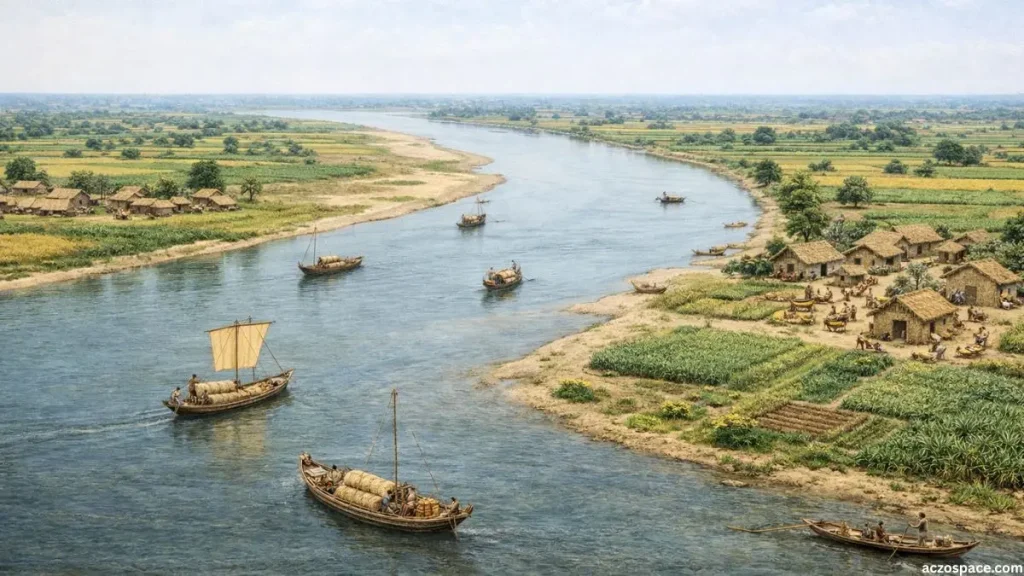
In the ancient world, rivers served as vital routes for travel and trade. At a time when roads were poorly developed or entirely absent, waterways offered a safer and more efficient means of transportation. People used small boats and simple vessels to travel long distances along rivers.
River transport made the movement of goods much easier and encouraged the expansion of trade networks. Food, raw materials, and locally produced goods could be carried from one region to another with less effort. This strengthened economic connections between villages and cities and played a key role in building regional economies.
Rivers did more than move goods—they also carried ideas. As traders and travelers from different regions met along river routes, they exchanged knowledge, customs, and technologies. This interaction contributed to social and cultural development, helping civilizations grow more complex and interconnected.
Over time, trading centers and ports emerged along major rivers. These locations became hubs of economic activity and population growth. By supporting transportation and trade, rivers helped ancient civilizations prosper and remain sustainable over long periods, reinforcing their importance in human history.
Rivers and the Development of Trade Networks
Rivers played a crucial role in strengthening connections between ancient societies. In the early stages, small-scale trade took place between nearby villages along riverbanks. Over time, these local exchanges expanded into wide-reaching trade networks that linked entire regions. Because goods could be transported easily by water, trade gradually became more organized and efficient.
Through these river-based networks, people exchanged food supplies, raw materials, handcrafted items, and everyday necessities. This exchange helped reduce regional shortages and ensured that communities had access to resources not available locally. As trade expanded, specialized professions began to emerge. Craftspeople, merchants, transport workers, and storage managers all played important roles in supporting growing economies.
River trade networks also encouraged cultural exchange. When people from different regions met along these waterways, they shared languages, customs, beliefs, and ways of life. This interaction made societies more open and interconnected, contributing to greater social organization and cultural richness.
For these reasons, trade networks were a foundational element in the growth of ancient river civilizations. They strengthened economies while deepening social ties, helping civilizations expand and endure over time.
Rivers and the Rise of Ancient Cities
As people settled permanently near rivers, small villages gradually developed into cities. The combination of reliable water supplies, fertile land, and access to trade made river regions highly attractive. These advantages encouraged population growth and supported the development of urban lifestyles.
Permanent Settlements and Urban Expansion
Access to dependable water sources allowed communities to remain in one place for long periods. This stability encouraged the construction of permanent houses, storage facilities, and shared public buildings. Over time, these settlements expanded and became centers of economic, social, and administrative activity.
Urban Planning and Structured Living
Life in river-based cities became increasingly organized. Residential areas, marketplaces, and religious spaces were clearly defined, reflecting early forms of urban planning. Since rivers flowed through or near these cities, water distribution and daily activities could be planned efficiently. This contributed to a more structured and manageable urban environment.
Population Growth and Social Organization
As cities grew, populations increased rapidly, and social life became more complex. New professions emerged, leading to clearer divisions between farmers, artisans, traders, and administrators. This division of labor strengthened social organization and created a stable framework that allowed cities to function successfully over long periods.
Water Management and Political Power in Ancient Civilizations
Because daily life in ancient civilizations depended heavily on water, it was viewed as one of the most valuable resources. The ability to use, distribute, and protect river water effectively was essential for maintaining social stability. As a result, strong links developed between water management and political authority. Only organized systems of governance could oversee these tasks efficiently, making control of water a key source of power.
Water Management and Leadership
Agriculture, urban life, and everyday survival all relied on river water, placing great responsibility on leaders and administrators. Those who planned and maintained canals, reservoirs, and irrigation systems held influential positions within society. Leaders who successfully managed water resources earned the trust and respect of the population, as their actions directly affected food security and living conditions.
In many ancient societies, effective water management became a defining quality of good leadership. A stable water supply often meant a stable government.
Law, Order, and the Distribution of Resources
During periods of limited water availability, fair distribution became a critical social concern. To address this, early societies developed laws, rules, and customs governing water use. These regulations controlled irrigation schedules, access to rivers, and acceptable practices related to water consumption.
Such legal frameworks helped reduce conflicts and prevent disputes between communities or farmers. By managing water fairly and predictably, these systems supported peaceful coexistence and long-term social stability.
Strengthening Political Authority
Successful control of water resources significantly strengthened political power. Large-scale river projects required coordination, labor, and administrative oversight, leading to the growth of strong state institutions. In many ancient civilizations, the authority of rulers was closely tied to their ability to manage rivers and irrigation systems effectively.
As a result, water control became one of the foundations of political legitimacy and long-term governance.
Rivers and Their Religious and Cultural Significance
In ancient civilizations, rivers were far more than physical waterways. They held deep religious and cultural meaning and were often seen as sacred elements of life. River water symbolized purity, abundance, and well-being, and many societies treated rivers with reverence and respect.
Rivers and Religious Beliefs
In many ancient cultures, river water played a central role in religious practices. Rituals such as worship, purification ceremonies, and seasonal festivals were often conducted using river water. Over time, rivers became spiritual centers, deeply woven into the religious life of communities.
Some civilizations even associated rivers with deities or divine forces, reinforcing their sacred status.
Rivers and Cultural Traditions
The daily lives of people living near rivers were closely connected to the water. Cultural traditions—including art, music, dance, and customs—often reflected the importance of rivers. Festivals held along riverbanks strengthened social bonds and reinforced shared identities.
These cultural practices helped preserve traditions across generations and contributed to the richness of ancient societies.
The Symbolic Meaning of River Water
River water held powerful a symbolic meaning in ancient life. It represented life itself, prosperity, purification, and continuity. Because of this symbolism, not only were cities and settlements carefully maintained near rivers, but religious and cultural ceremonies centered on the river were also preserved with great care.
In this way, rivers shaped both the physical and spiritual foundations of ancient civilizations.
Notable Examples of Ancient River Valley Civilizations
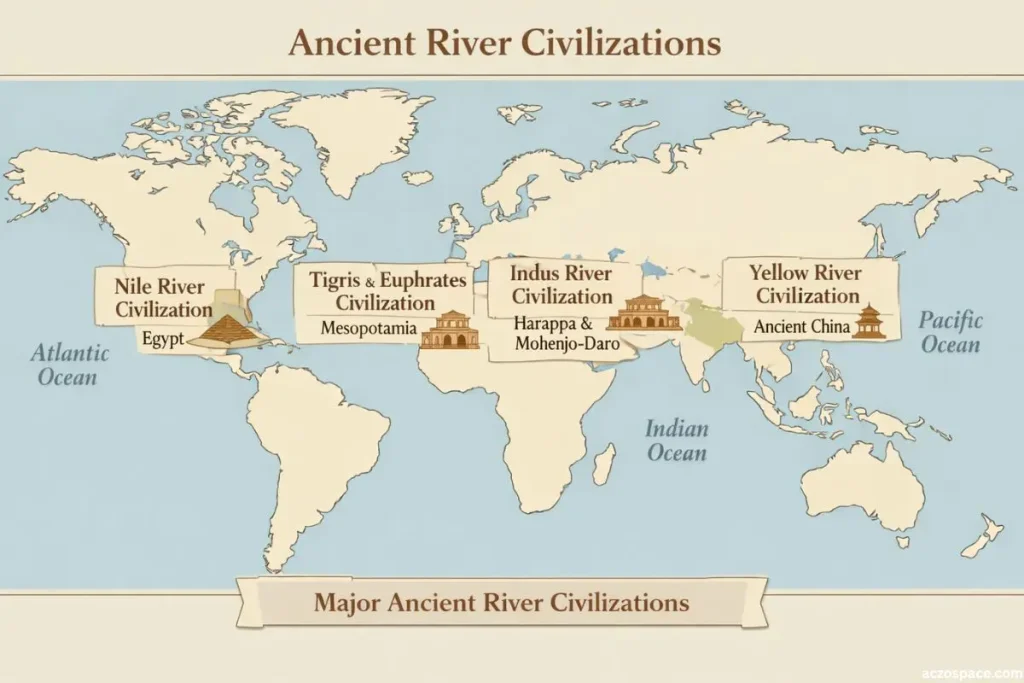
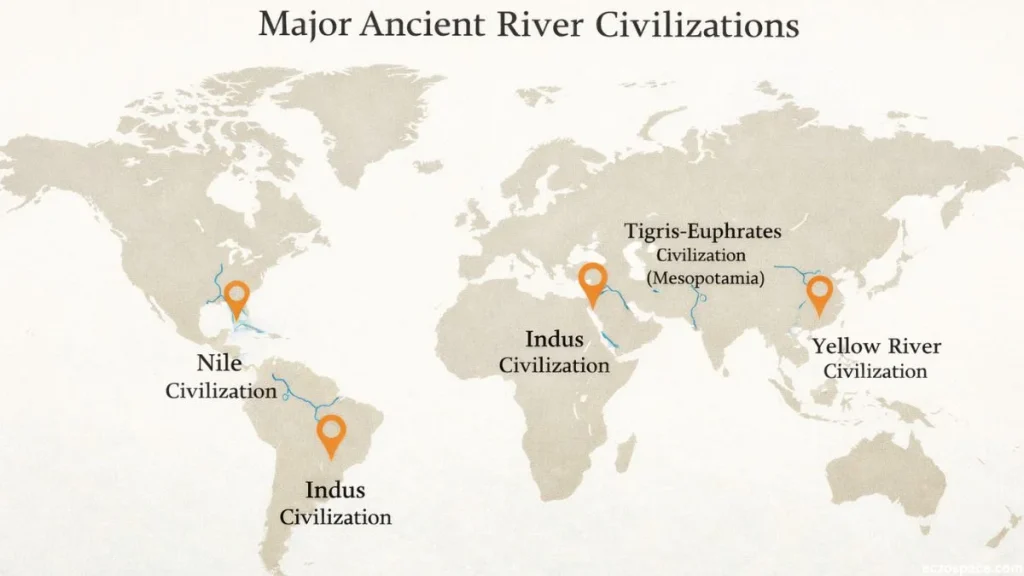
While this article focuses primarily on the role of rivers in shaping early human societies, similar patterns of development can be seen in several ancient civilizations around the world. These civilizations grew strong through effective use of water resources, agriculture, trade, and cultural practices, allowing them to thrive both socially and economically. Below are some of the most well-known examples of ancient river valley civilizations.
The Nile River and Ancient Egypt
The Egyptian civilization developed along the banks of the Nile River, benefiting greatly from its reliable water supply, fertile soil, and annual floods. These floods deposited nutrient-rich silt that supported productive agriculture and ensured a stable food supply.
The Nile played a central role in everyday life, enabling the growth and organization of cities along its banks. Ancient Egyptians developed systems of law, religious beliefs, and cultural festivals closely tied to the river. This strong connection between the Nile and society helped Egypt remain one of the most stable and enduring civilizations of the ancient world.
The Tigris and Euphrates Rivers and Mesopotamia
Mesopotamian civilization emerged between the Tigris and Euphrates rivers, a region often referred to as the “Cradle of Civilization.” Agriculture, advanced irrigation systems, and extensive trade networks formed the backbone of this society.
Mesopotamia is especially known for its early cities, legal systems, and religious traditions. Innovations in governance, writing, and water management made it a highly influential civilization that shaped the development of human society for centuries.
The Indus River and the Indus Valley Civilization
The Indus Valley Civilization developed along the Indus River and is notable for its advanced urban planning. Well-organized cities, efficient drainage systems, food production, and long-distance trade defined this civilization.
Its carefully designed streets, water management systems, and cultural practices continue to be studied today. The Indus Valley stands out as one of the most sophisticated and well-planned ancient civilizations.
The Yellow River and Chinese Civilization
Early Chinese civilization formed along the Yellow River, where fertile soil supported agricultural growth. This agricultural foundation enabled the rise of cities, trade networks, religious practices, and rich cultural traditions.
Communities along the Yellow River developed social structures and cultural customs that became the basis of Chinese civilization. The river’s influence can still be seen in China’s historical identity and cultural heritage.
Challenges of Living Near the Ganges
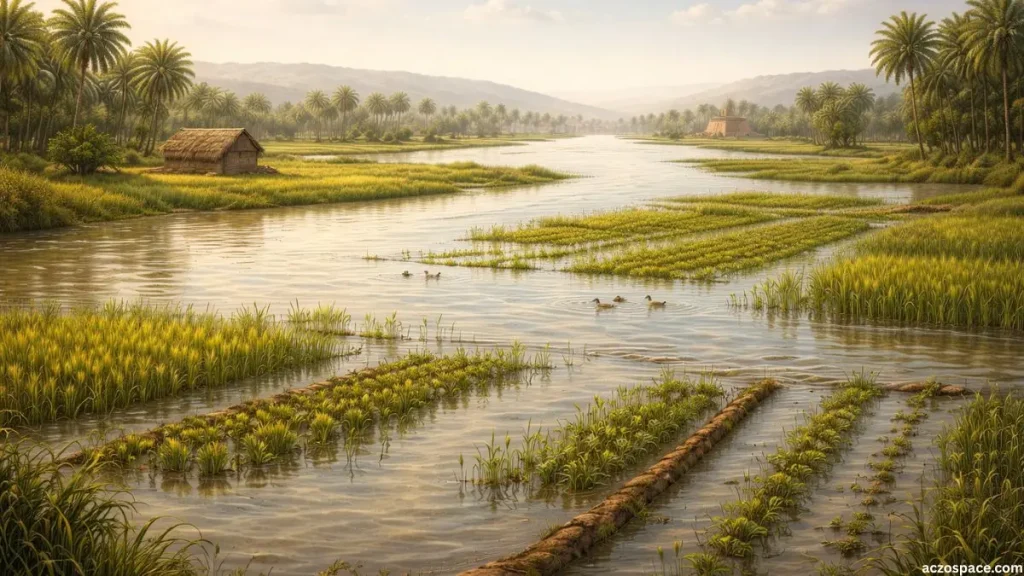
Although living near rivers offered many advantages, it also exposed early communities to serious challenges and risks. While access to water, fertile land, and food made river valleys attractive, floods and river-related dangers posed constant threats to early settlers.
Floods and Natural Disasters
Many rivers flood once or several times a year. At times, these floods overwhelmed villages and cities, damaging homes and farmland. Sudden flooding could disrupt food production and daily life, creating hardship for entire communities.
In response, ancient societies were forced to develop better water-control methods, such as embankments, canals, and drainage systems. These early efforts at flood management reflect humanity’s growing ability to adapt to natural forces.
Disease and Environmental Risks
Rivers could also carry health risks. Waterborne organisms and contaminated water sometimes led to the spread of disease, posing serious threats to human health. Outbreaks caused by polluted water affected entire populations and highlighted the dangers of uncontrolled water use.
As a result, early civilizations began to recognize the importance of clean water, proper sanitation, and organized water management. Rules and practices related to water use became essential for protecting public health.
Social and Economic Challenges
As populations grew along riverbanks, competition for limited resources increased. Conflicts over water, land, and food occasionally disrupted social harmony and economic stability. These pressures sometimes led to leadership struggles and weakened economic activity.
Such challenges pushed societies to become more organized and efficient. Clear systems of governance, resource distribution, and social coordination became necessary to maintain order and stability.
Lessons We Learn from Ancient Ganga Civilizations
The civilizations that developed along ancient rivers offer valuable lessons that remain relevant today. Their approaches to water management, agriculture, trade, and social organization continue to serve as important examples for modern societies.
These civilizations demonstrate the importance of balancing economic growth, social stability, and environmental care. By using water resources, fertile land, and trade routes wisely, they built organized cities and resilient communities. Many of these principles can still be applied to today’s urban planning, agriculture, and economic systems.
Ancient river societies also teach us the importance of managing environmental challenges. Faced with floods, disease, and limited resources, they developed early water-management systems and legal frameworks. Even today, these lessons guide modern approaches to water conservation, environmental protection, and sustainable development.
Ultimately, ancient river civilizations remind us of the deep connection between water, agriculture, economy, social organization, and environmental management. By learning from their successes and challenges, modern societies can work toward a more stable, sustainable, and balanced future.
Conclusion
Ancient civilizations that developed along river valleys hold a central place in human history. Access to water, fertile land, trade routes, and reliable food production made it possible for early humans to settle permanently, build cities, strengthen social organization, and foster cultural growth. Faced with the challenges of survival, these societies successfully created systems and laws to manage water resources, food supplies, and social structures.
Because of these achievements, ancient river civilizations can be seen as foundational models that continue to offer valuable lessons. Their ability to adapt to environmental challenges while maintaining social stability laid the groundwork for long-lasting human development.
Even in the modern era, these lessons remain highly relevant. By applying principles drawn from ancient civilizations—such as sustainable water management, balanced use of natural resources, and organized trade networks—today’s cities, agricultural systems, and economies can develop in more resilient and environmentally responsible ways.
Ultimately, the resources, governance systems, and cultural and religious values shaped by ancient river civilizations continue to guide humanity toward stability and long-term success. Their legacy reminds us that careful management of natural resources, especially water, is essential for building prosperous and sustainable societies.
FAQs
Why did most ancient civilizations develop along rivers?
Rivers provided water, fertile land for farming, food resources, and easy transportation.
Why is the Ganges River significant to ancient India?
The Ganges supported agriculture, settlements, trade, and cultural life in ancient India.