
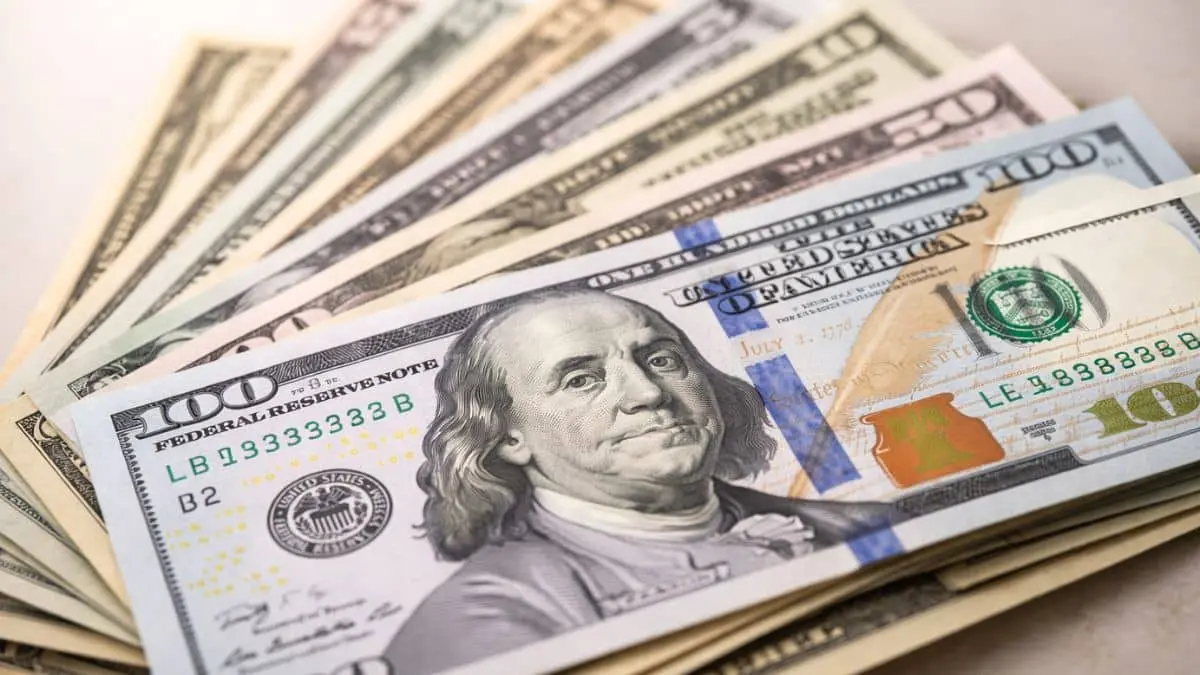
Today, the U.S. dollar is widely recognized as the world’s leading global reserve currency. It dominates international trade, underpins global financial markets, and serves as the primary currency held by central banks around the world. Institutions such as the International Monetary Fund regularly report that a majority of global foreign exchange reserves are still held in U.S. dollars.
But the dollar’s position at the center of the international monetary system did not happen overnight.
Its story began in an era of colonial instability, economic experimentation, and financial uncertainty. From the early struggles of the American colonies to the establishment of a formal monetary system, and later the adoption of the gold standard, the U.S. dollar evolved through critical turning points that shaped global finance.
Understanding the history of the U.S. dollar is essential for anyone interested in:
- The evolution of global reserve currencies
- The origins of modern central banking
- The rise of the United States as an economic power
- The foundations of today’s international financial system
In this article, we explore the early development of the U.S. dollar, its legal foundation in the 18th century, and the transformative impact of the gold standard era.
Table of Contents
Quick Facts
| Fact | Details |
| Official Name | United States Dollar |
| Currency Code | USD |
| Symbol | $ |
| Issuing Authority | Federal Reserve |
| Established As Official Currency | 1792 (Coinage Act) |
| Early Monetary System | Bimetallic (Gold & Silver) |
| Gold Standard Adopted | 1900 (Gold Standard Act) |
| Bretton Woods Role | Pegged to gold at $35 per ounce (1944–1971) |
| Gold Convertibility Ended | 1971 (Nixon Shock) |
| Current System | Fiat currency with floating exchange rate |
| Reserve Currency Status | World’s primary global reserve currency |
| Share of Global Reserves | Largest share reported by International Monetary Fund |
| Major Use Cases | International trade, oil pricing, central bank reserves |
| Largest Competitors | Euro, Chinese Yuan |
| Global Influence | Widely used in commodities, debt markets, and foreign exchange trading |
Early History of the U.S. Dollar (18th–19th Century Foundations)
Colonial Currency Challenges: A Nation Without Stable Money
Before the United States became an independent nation, its colonies operated in a fragmented and often unstable monetary environment. There was no single, unified currency. Instead, colonial economies relied on a mix of:
- Foreign coins (especially Spanish silver dollars)
- Barter systems
- Commodity money (such as tobacco)
- Paper notes issued by individual colonies
This patchwork approach created serious problems. Currency values fluctuated widely, inflation was common, and trust in paper money was limited. When the Revolutionary War began, the Continental Congress issued paper currency known as “Continental dollars.” However, without solid backing or centralized control, these notes quickly lost value — giving rise to the phrase “not worth a Continental.”
The early monetary instability made one thing clear: a newly independent nation would need a more reliable and unified financial system.
The Vision of a National Currency
After independence, economic stability became a priority. One of the key figures in shaping America’s early financial system was Alexander Hamilton, the first U.S. Secretary of the Treasury.
Hamilton believed that a strong national currency would:
- Build confidence in the new government
- Encourage trade and investment
- Strengthen creditworthiness domestically and internationally
- Support long-term economic growth
His financial vision laid the groundwork for a centralized monetary system — a crucial step in the evolution of the U.S. dollar.
The Coinage Act of 1792: Establishing the Dollar
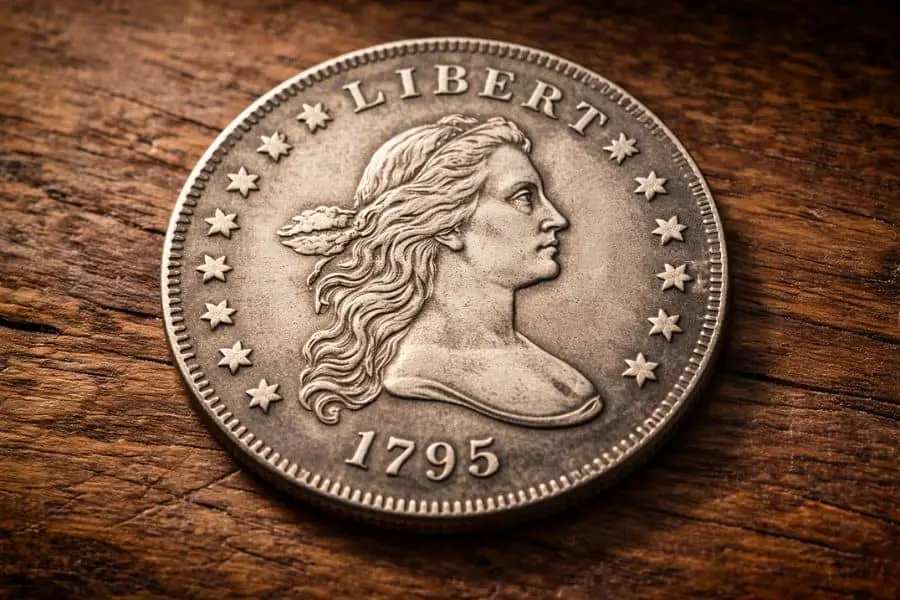
A major milestone in U.S. dollar history came with the passage of the Coinage Act of 1792. This law officially established the U.S. dollar as the nation’s standard unit of money and created a federal minting authority.
The Act led to the creation of the United States Mint and introduced a bimetallic system based on both gold and silver.
Key features of the Coinage Act included:
- The dollar defined as a specific weight in silver
- Gold coins issued alongside silver coins
- A decimal-based monetary system (unusual at the time)
- Federal oversight of coin production
The decision to adopt a decimal system made U.S. currency simpler and more modern compared to many European systems that relied on complex subdivisions.
This act provided the structural foundation that allowed the dollar to function as a stable national currency — a critical first step toward its eventual international role.
Early Banking and Financial Instability
Despite establishing a national currency, early American finance remained turbulent.
The First Bank of the United States (1791–1811) and later the Second Bank of the United States (1816–1836) were attempts to stabilize the monetary system. However, both institutions faced political opposition and were eventually dissolved.
Without a permanent central bank, the 19th century saw:
- Frequent banking crises
- Inconsistent issuance of paper money by private banks
- Regional economic instability
State-chartered banks issued their own notes, and their reliability depended heavily on the bank’s financial health. This period, sometimes referred to as the “Free Banking Era,” highlighted the need for stronger financial oversight.
Even so, the dollar gradually gained credibility as the U.S. economy expanded westward, industrialized, and increased trade both domestically and internationally.
The Gold Standard Era: Stability and Constraint
What Was the Gold Standard?
The gold standard was a monetary system in which a country’s currency was directly tied to a fixed quantity of gold. Under this system:
- Paper money could be exchanged for gold at a set rate
- The money supply was limited by gold reserves
- Exchange rates between countries were relatively stable
The gold standard became widely adopted in the 19th century as global trade expanded. It provided predictability and reduced exchange rate volatility, making international commerce more efficient.
For countries seeking financial credibility, linking their currency to gold was seen as a sign of strength and discipline.
The United States and the Gold Standard

Although the U.S. initially operated under a bimetallic system, it gradually moved toward a stronger gold-based framework. By the late 19th century, debates over gold versus silver dominated American politics, reflecting broader concerns about inflation, debt, and economic fairness.
The Gold Standard Act of 1900 officially placed the United States on a full gold standard, defining the dollar in terms of gold alone.
This shift had significant implications:
- It increased international confidence in the U.S. dollar
- It aligned the U.S. with major European economies using gold
- It reinforced stable exchange rates for global trade
At the time, the United States was emerging as a major industrial power. A gold-backed dollar enhanced its credibility in international markets and laid the groundwork for future global influence.
Benefits of the Gold Standard
The gold standard provided several advantages during its peak years:
- Price Stability: Limiting money supply helped control long-term inflation.
- Predictable Exchange Rates: Facilitated global trade and investment.
- Financial Discipline: Governments faced constraints on excessive money creation.
For a growing economic power like the United States, these factors contributed to expanding trade networks and increasing capital flows.
Limitations and Economic Pressures
Despite its strengths, the gold standard had important drawbacks.
Because currency supply depended on gold reserves, economic growth could be constrained if gold production did not keep pace. During periods of financial stress, governments had limited flexibility to respond.
Some of the key challenges included:
- Reduced ability to manage recessions
- Deflationary pressures during economic downturns
- Dependence on physical gold reserves
These limitations would become more visible in the early 20th century, eventually contributing to major reforms in the global monetary system.
The Creation of the Federal Reserve (1913)
Why the United States Needed a Central Bank
By the early 1900s, the U.S. financial system was fragile. Banks operated independently, currency supply was inflexible, and there was no central authority to provide emergency liquidity during crises.
The Panic of 1907 became a wake-up call. A failed attempt to corner the stock market triggered widespread bank runs. Without a lender of last resort, private financiers had to intervene to stabilize the system. The crisis revealed the urgent need for reform.
Lawmakers recognized several structural problems:
- No centralized control over money supply
- Frequent banking panics
- Limited ability to respond to economic downturns
- Regional imbalances in credit availability
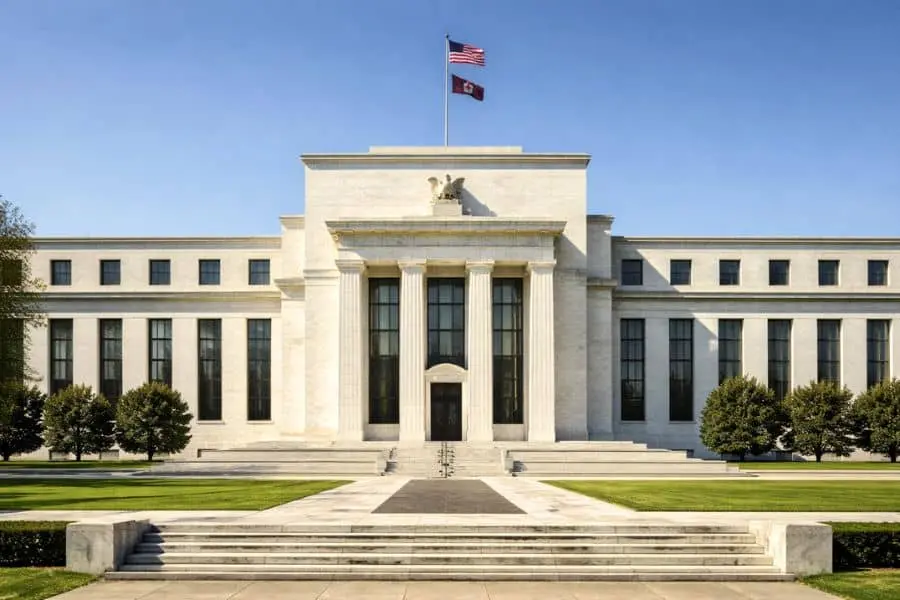
To address these issues, Congress passed the Federal Reserve Act in 1913, creating the modern U.S. central banking system.
Establishment of the Federal Reserve
The Federal Reserve (often called “the Fed”) was designed to balance public oversight with regional representation. It introduced a structured system composed of:
- A Board of Governors in Washington, D.C.
- Twelve regional Federal Reserve Banks
- A framework for supervising and regulating banks
Its primary goals included:
- Maintaining financial stability
- Controlling inflation
- Supporting sustainable economic growth
- Acting as lender of last resort
For the first time, the United States had a permanent institution responsible for managing monetary policy and stabilizing the dollar.
How the Federal Reserve Strengthened the Dollar
The Fed introduced tools that remain central to modern monetary policy:
- Interest rate adjustments
- Open market operations (buying and selling government securities)
- Reserve requirements for banks
These mechanisms allowed the government to respond more effectively to economic cycles. Over time, this stability increased confidence in the U.S. dollar domestically and internationally.
The establishment of the Federal Reserve marked a crucial step toward the dollar’s eventual role in the global financial system.
World Wars and the Rise of the U.S. Dollar
The Decline of the British Pound Sterling
Before World War I, the British pound sterling was the world’s dominant reserve currency. The United Kingdom led global trade and finance, and London was the center of international banking.
However, the economic consequences of two world wars dramatically weakened Britain’s financial position. Massive war debts, reduced gold reserves, and slower post-war recovery shifted the balance of power.
Meanwhile, the United States experienced a different trajectory.
America’s Economic Expansion
During and after World War I, the United States emerged as a major creditor nation. It supplied goods, food, and financial support to European allies. As a result:
- Gold flowed into U.S. reserves
- Industrial output expanded significantly
- The U.S. economy grew stronger relative to Europe
By the end of World War II, the United States held a large share of the world’s gold reserves and possessed the most powerful industrial economy.
This economic strength positioned the dollar to take on a leadership role in the global monetary system.
The Bretton Woods Agreement (1944): Building a New Global Order
A World in Need of Stability
The devastation of World War II left much of Europe and Asia economically shattered. Policymakers understood that rebuilding global trade required a stable and cooperative monetary framework.
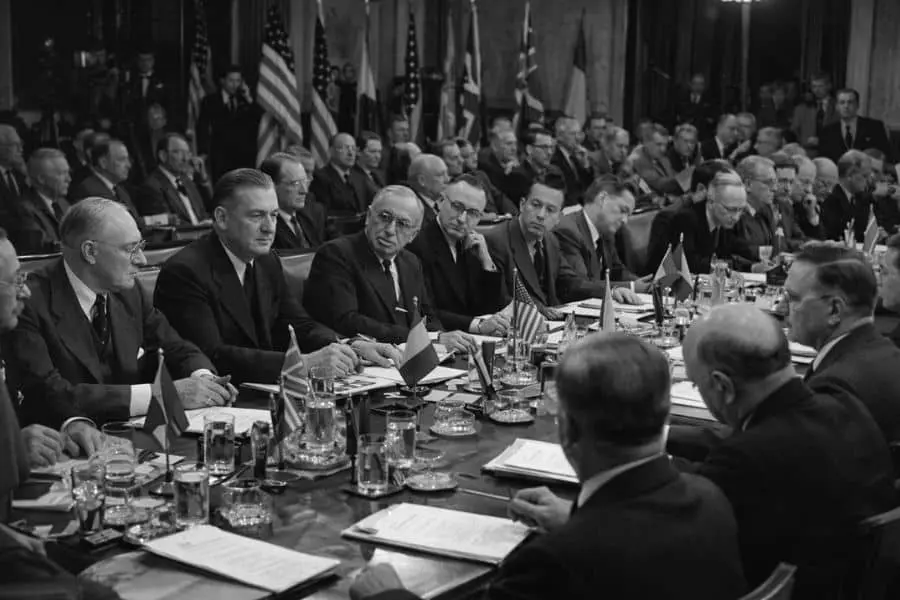
In 1944, representatives from 44 countries gathered in Bretton Woods, New Hampshire, to design a new international financial system. The result was the Bretton Woods Agreement — a turning point in the evolution of the global reserve currency system.
The Bretton Woods System Explained
The new system established a structured framework for international exchange rates:
- The U.S. dollar would be convertible into gold at $35 per ounce.
- Other countries would peg their currencies to the U.S. dollar.
- Exchange rates would remain relatively fixed but adjustable under certain conditions.
This arrangement effectively placed the dollar at the center of global finance.
The agreement also led to the creation of two key international institutions:
- The International Monetary Fund (IMF)
- The World Bank
These organizations were designed to promote financial stability, support reconstruction, and encourage economic cooperation.
Why the Dollar Became the Anchor Currency
Several factors made the U.S. dollar the logical choice:
- The United States held the majority of global gold reserves.
- Its economy was the largest and most stable at the time.
- It had avoided the widespread destruction seen in Europe and Asia.
Under Bretton Woods, the dollar became the primary reserve asset for central banks. Countries accumulated dollar reserves to stabilize their own currencies and facilitate international trade.
This system solidified the dollar’s dominance and formally established it as the backbone of the international monetary system.
The Nixon Shock (1971): The End of Gold Convertibility
Growing Strains in the Bretton Woods System
By the late 1960s, the Bretton Woods framework faced mounting pressure.
The United States was running significant trade deficits and financing large government expenditures, including social programs and the Vietnam War. As more dollars circulated globally, foreign governments began questioning whether the U.S. had sufficient gold reserves to maintain convertibility.
Countries started converting dollars into gold, reducing U.S. reserves and increasing financial stress.
President Richard Nixon Ends the Gold Standard
In August 1971, President Richard Nixon announced that the United States would suspend the dollar’s convertibility into gold. This decision, often referred to as the “Nixon Shock,” effectively ended the Bretton Woods system.
The consequences were profound:
- The dollar was no longer backed by gold.
- Fixed exchange rates gave way to floating exchange rates.
- Currency values began to be determined largely by market forces.
The global monetary system entered a new era — one based on fiat currency rather than precious metals.
The Transition to a Fiat Dollar
Under a fiat system, a currency’s value is not tied to physical commodities like gold. Instead, it is supported by:
- Government authority
- Economic performance
- Monetary policy credibility
- Market confidence
Although some feared instability, the dollar maintained its dominant role. The size of the U.S. economy, the depth of its financial markets, and the influence of its institutions helped preserve global trust.
The Nixon Shock marked the end of one chapter in monetary history — but it did not end the dollar’s leadership.
The Petrodollar System: Oil and the Strength of the Dollar
The Shift After the Gold Standard
When President Nixon ended gold convertibility in 1971, the U.S. dollar became a full fiat currency. Its value was no longer tied to gold, but to economic strength and government credibility.
However, another powerful factor soon reinforced global demand for dollars: oil.
In the 1970s, global energy markets were rapidly expanding. Oil had become the most strategically important commodity in the world economy. The pricing of oil would play a decisive role in the dollar’s continued dominance.

The Agreement with Saudi Arabia
During the mid-1970s, the United States reached an understanding with Saudi Arabia, one of the world’s largest oil exporters. The arrangement ensured that:
- Oil exports would be priced in U.S. dollars.
- Oil-producing nations would reinvest surplus dollars into U.S. financial markets.
As Saudi Arabia was a leading member of OPEC, oil transactions worldwide increasingly required dollars. This system became known as the petrodollar system.
Although not a formal treaty in the traditional sense, this arrangement had lasting consequences.
Why the Petrodollar Strengthened the U.S. Dollar
Because oil is essential for industrial production, transportation, and energy security, nearly every country must import it. If oil is priced in dollars, then countries must hold dollar reserves to purchase it.
This created:
- Constant global demand for U.S. dollars
- Increased dollar reserves among central banks
- Stronger demand for U.S. Treasury securities
In effect, oil trade reinforced the dollar’s reserve status, even without gold backing it.
The petrodollar system helped anchor the U.S. dollar within the international financial system during a period of major transition.
Why the U.S. Dollar Became the Primary Global Reserve Currency
While oil pricing played a significant role, the dollar’s dominance rests on broader structural foundations.
Reserve currency status is not granted by declaration. It develops over time based on economic strength, institutional trust, and market depth.
1. Size and Stability of the U.S. Economy
The United States has consistently maintained one of the largest economies in the world. A large, diversified economy creates confidence in a nation’s currency.
Key factors include:
- Strong GDP performance
- Advanced financial markets
- Transparent legal systems
- Deep capital markets
Investors and central banks prefer currencies supported by stable institutions and predictable governance. The scale of the U.S. economy gives the dollar global relevance in trade, finance, and investment.
2. U.S. Treasury Securities as Safe Assets
Another major pillar of dollar dominance is the market for U.S. government debt.
The U.S. Department of the Treasury issues Treasury bonds that are widely considered among the safest financial assets in the world.
Central banks hold Treasury securities because they offer:
- High liquidity
- Relative safety
- Reliable interest payments
- Ease of global trading
The size and accessibility of the U.S. bond market make it uniquely attractive for foreign reserves.
3. Institutional Trust and Monetary Policy Credibility
The role of the Federal Reserve is equally important. Over decades, the Fed has developed credibility in managing inflation and responding to economic crises.
Stability in monetary policy supports:
- Investor confidence
- Lower borrowing costs
- Currency reliability
Reserve currency status depends heavily on trust. The institutional strength of U.S. financial governance continues to reinforce the dollar’s position.
Dollar Dominance in the 21st Century
As globalization accelerated in the 2000s, the dollar remained central to international transactions.

Share of Global Reserves
According to data from the International Monetary Fund, the U.S. dollar consistently accounts for the largest share of global foreign exchange reserves.
Although percentages fluctuate, the dollar typically represents more than half of total reported global reserves — far exceeding other major currencies.
Comparison with Other Major Currencies
Several currencies compete for reserve status, but none have displaced the dollar.
- The Euro is widely used in Europe and international trade, yet political and fiscal fragmentation within the Eurozone limits its dominance.
- The Chinese Yuan has grown in global trade settlements, but capital controls and limited financial transparency reduce its reserve appeal.
- The Japanese yen and British pound play important roles but on a smaller scale.
The U.S. dollar continues to dominate global trade invoicing, cross-border lending, and commodity pricing.
Challenges to Dollar Dominance
While the dollar remains the leading reserve currency, it faces evolving challenges in the 21st century.
These challenges do not necessarily signal immediate replacement, but they reflect shifts in global economic power.
1. The Rise of China
China’s economic growth has significantly reshaped global trade patterns. As the world’s second-largest economy, China promotes greater international use of its currency.
Efforts include:
- Expanding yuan-based trade agreements
- Developing cross-border payment systems
- Promoting financial integration across Asia
Although the Chinese Yuan is gaining influence, it has not yet matched the dollar’s liquidity or global trust level.
2. De-Dollarization Efforts
Some countries have explored reducing reliance on the dollar in trade and reserves. These efforts, often described as “de-dollarization,” involve:
- Bilateral trade agreements in local currencies
- Diversification of central bank reserves
- Regional financial cooperation initiatives
However, replacing a reserve currency requires:
- Deep financial markets
- Global confidence
- Legal and institutional transparency
At present, no alternative fully meets all these criteria at the scale of the U.S. dollar.
3. Digital Currencies and Financial Innovation
Technological change is another emerging factor. Central Bank Digital Currencies (CBDCs) and cryptocurrencies introduce new models for cross-border payments.
Digital systems may:
- Reduce transaction costs
- Increase settlement speed
- Offer alternative payment networks
Still, digital innovation does not automatically eliminate the need for a stable reserve asset. Even in digital form, global finance depends on trusted monetary systems.
The Future of the Global Reserve Currency System
1. A Gradual Shift Toward a Multipolar Currency World?
In recent years, the global economy has become more multipolar. The United States remains the largest economy by many measures, but other nations — particularly China and the European Union — play increasingly important roles.
A possible future scenario is not the sudden replacement of the dollar, but a diversified reserve system, where:
- Central banks hold a broader mix of currencies
- Regional trade blocs settle transactions in local currencies
- The dollar’s share declines modestly but remains dominant
Historically, reserve transitions — such as the shift from the British pound to the dollar — took decades, not years. Any meaningful change in global currency leadership would likely follow a similarly gradual path.
2. The Role of Digital Currencies
Technology is reshaping financial systems worldwide. Central banks are exploring digital versions of their national currencies, often referred to as Central Bank Digital Currencies (CBDCs).
Digital innovation could:
- Improve cross-border payment efficiency
- Reduce transaction costs
- Increase financial inclusion
However, a digital format does not automatically create reserve status. Trust, transparency, market depth, and political stability remain essential.
Even if digital currencies become widely adopted, the U.S. dollar — supported by institutions such as the Federal Reserve — could continue to play a central role in global finance.
3. Economic Strength and Policy Credibility
The long-term outlook for the dollar depends largely on domestic fundamentals.
Key factors that influence reserve currency status include:
- Sustainable economic growth
- Responsible fiscal management
- Low and stable inflation
- Independent and credible monetary policy
- Deep, liquid financial markets
Institutions like the International Monetary Fund regularly monitor global reserve allocations. While the dollar’s share has fluctuated over time, it continues to represent the largest portion of reported foreign exchange reserves.
Maintaining this position will require continued policy discipline and global confidence.
4. Geopolitics and Global Trade Patterns
Global trade networks also influence currency use. The dollar remains widely used for:
- Commodity pricing (including oil and agricultural goods)
- International loans and debt issuance
- Cross-border business contracts
Even countries that are not directly tied to the U.S. economy often rely on the dollar because it is deeply embedded in the global financial infrastructure.
Future geopolitical developments could reshape these patterns, but large-scale transitions require strong institutional alternatives — something that takes time to develop.
Conclusion: The Dollar’s Enduring Influence
The story of the U.S. dollar is one of adaptation.
It survived the end of the gold standard. It anchored the Bretton Woods system. It adjusted to floating exchange rates. It strengthened through global trade and financial integration. And it continues to serve as the backbone of the international monetary system.
Several key themes explain its resilience:
- Institutional credibility
- Economic scale
- Financial market depth
- Global usage in trade and commodities
- Policy flexibility in times of crisis
Challenges exist. Global power is more distributed than it was in 1945. Digital innovation is transforming payment systems. Countries are exploring diversification strategies.
Yet reserve currency status depends on more than ambition. It requires sustained confidence — built over decades.
While the global monetary system may evolve toward greater diversity, the U.S. dollar remains deeply embedded in international finance. Its future will depend not on a single event, but on long-term economic performance, responsible governance, and continued global trust.
For readers seeking to understand the global reserve currency system, the history and future of the U.S. dollar offer valuable insight into how economic power, institutional strength, and international cooperation shape the world’s financial architecture.
FAQs
When did the U.S. dollar replace the British pound?
The transition occurred gradually between World War I and World War II. By 1944, under the Bretton Woods system, the dollar formally replaced the British Pound Sterling as the dominant global reserve currency.