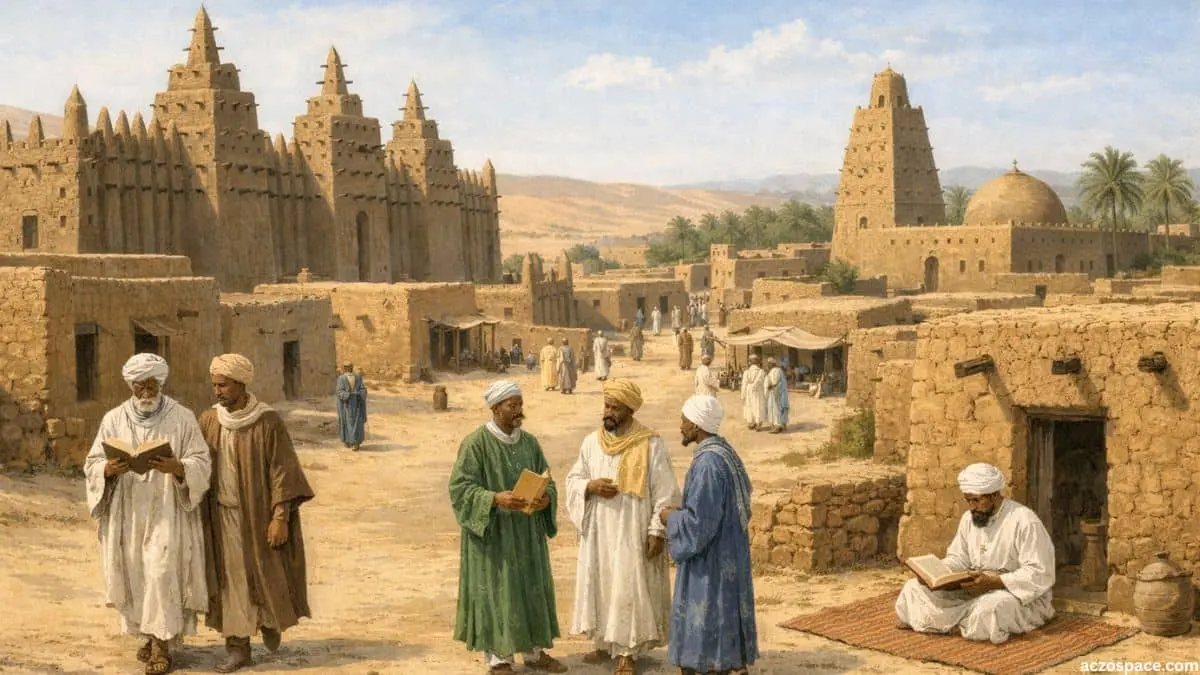
Timbuktu: City of Knowledge & Heritage
Timbuktu is one of the most renowned cities in world history, long celebrated as a remote, mysterious, and immensely wealthy city. While popular imagination often associates it with gold and trade, its true historical significance lies elsewhere. Timbuktu earned its reputation as a hub of knowledge, education, and culture, leaving a legacy that continues to inspire today.
Even now, the city is home to universities, libraries, and research centers. But during the Middle Ages, such institutions were extremely rare, making Timbuktu a beacon for scholars and students across Africa and beyond. From science and mathematics to law, astronomy, and philosophy, intellectuals from many lands traveled to Timbuktu to learn, teach, and exchange ideas.
This article explores the city’s origins, its unique geographical advantages, its rise as a center of learning, and the lessons its history offers the modern world.
Table of Contents
Quick Facts
| Fact | Details |
| City Name | Timbuktu |
| Country | Mali |
| Region | West Africa |
| Historical Period | Medieval period (approx. 12th–16th century) |
| Famous For | Center of knowledge, education, and manuscripts |
| Major Institutions | Sankore Madrasah and other learning centers |
| Key Subjects Studied | Mathematics, astronomy, law, medicine, philosophy |
| Notable Heritage | Timbuktu Manuscripts |
| Geographical Importance | Located near the Niger River and Sahara Desert |
| Global Significance | Influenced education, culture, and knowledge exchange |
The Geographic Advantage of Timbuktu
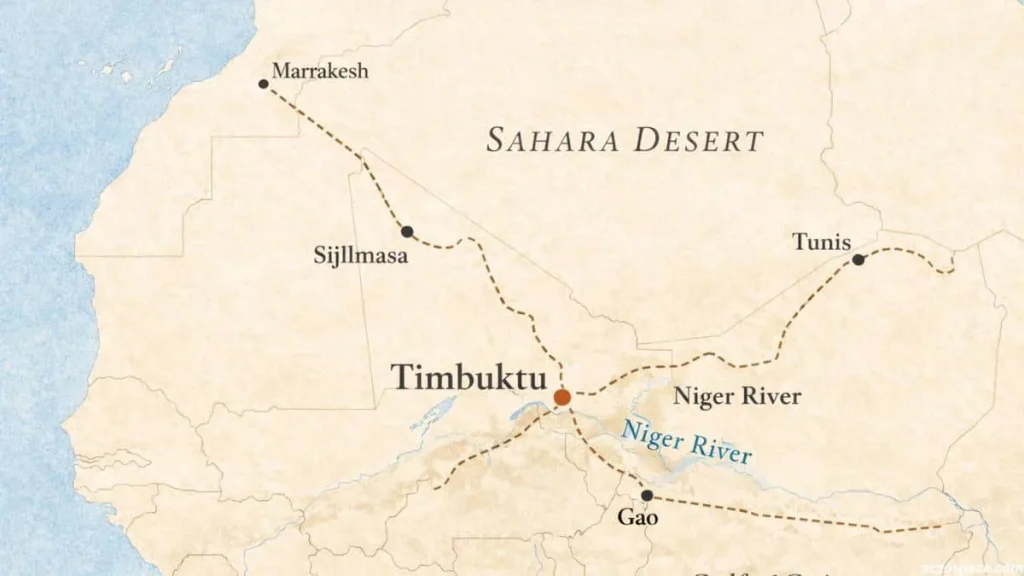
Timbuktu’s location played a crucial role in its emergence as both a commercial and intellectual hub. Today, it sits on the edge of the Sahara Desert, but in the past, its position along major trade networks made it a pivotal center for cultural and knowledge exchange.
The Region of Timbuktu
Timbuktu lies in northern Mali, in the western part of Africa. In earlier centuries, this region was linked to an extensive network of trade routes stretching across the continent. This connection allowed Timbuktu to develop into a crossroads of commerce and culture, linking Africa, the Middle East, and even Europe.
Proximity to the Sahara Desert
Timbuktu’s location near the Sahara Desert gives the city special significance in terms of its history. For traders and travelers passing through the desert, Timbuktu served as a suitable place to rest, exchange goods, and share new information.
Due to this, Timbuktu became not just a commercial city but also a hub for the exchange of knowledge.
Proximity to the Sahara Desert
Being close to the Sahara Desert gave Timbuktu both challenges and opportunities. Caravans crossing the desert relied on safe stopping points to rest, trade goods, and share news. Timbuktu became that vital oasis, providing travelers with water, shelter, and a marketplace for exchanging ideas as well as merchandise. This dual role as a commercial hub and knowledge center distinguished Timbuktu from other desert towns.
Access to the Niger River
Timbuktu’s nearness to the Niger River ensured a reliable source of water, stabilizing daily life and supporting agriculture. This geographic feature made the city sustainable despite its desert-adjacent location, facilitating trade and long-term settlement. Goods could be transported efficiently, communities could thrive, and the city could endure for centuries.
Why Geography Made Timbuktu Exceptional ?
The combination of desert and river access created a rare geographical advantage. Timbuktu was more than a trading outpost—it became a melting pot of learning, culture, and intellectual exchange, earning its place in history as a “city of knowledge.”
The Origins of Timbuktu
The exact beginnings of Timbuktu are shrouded in history, but the city did not spring up overnight as a large urban center. Instead, it developed gradually, shaped by trade, settlement, and the pursuit of knowledge.
From Small Settlement to Strategic Stop
Historical accounts suggest that Timbuktu emerged around the 12th century. Initially, it was a small settlement where travelers and merchants could rest during long desert journeys. Water, food, and safety were scarce along the trade routes, making even a modest oasis settlement critical.
Though humble in its early days, this settlement laid the groundwork for the city’s later prominence. The basic infrastructure and community organization that grew around trade prepared Timbuktu for a much larger role.
Trade-Driven Urban Growth
Trade was the engine of Timbuktu’s growth. Positioned along trans-Saharan routes, the city became a hub for merchants who exchanged goods, news, and cultural ideas. Markets in Timbuktu were more than economic spaces—they were arenas for intellectual exchange, helping the city become a focal point for diverse peoples and ideas.
Merchants and travelers stopped to:
- Exchange goods from distant lands
- Share news and information.
- Exchange cultural and religious ideas
Through this vibrant trade network, Timbuktu evolved from a simple trading post into a cosmopolitan city renowned across the medieval world.
Daily Life and Urban Organization
As Timbuktu expanded, its urban landscape and social life became more structured. Temporary shelters gave way to permanent buildings, and trade became intertwined with education, religion, and cultural activities. This organization enabled:
- Long-term sustainability of the city
- Cohabitation of diverse populations
- A nurturing environment for learning and scholarship
Early Historical Significance
Even at its modest beginnings, Timbuktu set the stage for its future as a center of knowledge. By combining trade, daily life, and cultural exchange, the city created the conditions for a flourishing intellectual community. In this way, Timbuktu’s early history is not just a story of a small settlement—it is a lesson in how knowledge and culture can grow from strategic geographic and social foundations.
Timbuktu: A Global Center of Knowledge and Learning
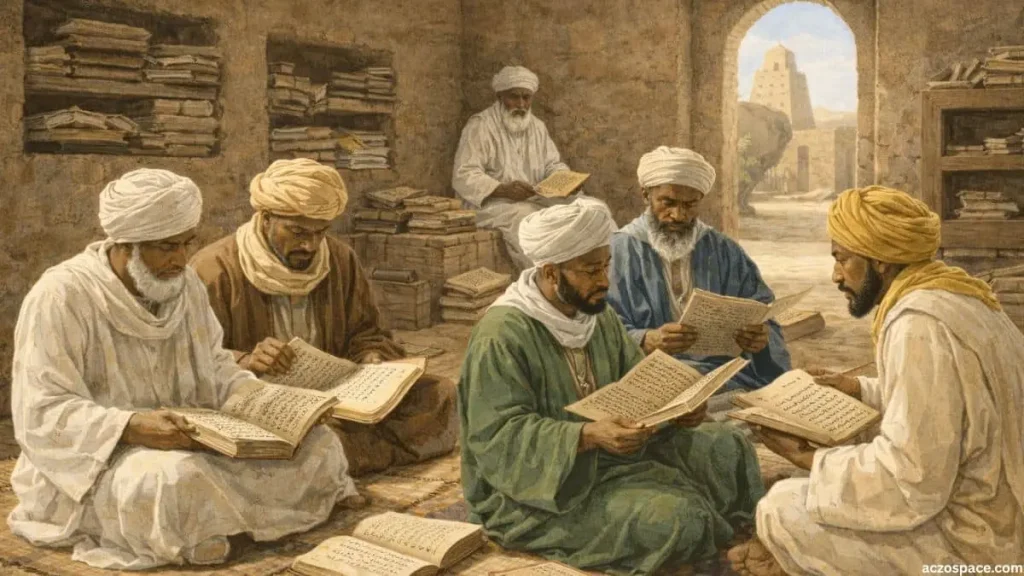
Timbuktu is often remembered in popular imagination as a city of wealth and exotic trade. Yet its true historical significance lies in something far richer than gold—knowledge. During the Middle Ages, when education was limited across much of the world, Timbuktu became a thriving intellectual hub, attracting scholars, students, and thinkers from across Africa and beyond. It was a city where learning, research, and intellectual inquiry were held in the highest regard.
Education and Social Value in Timbuktu
A Hub for Diverse Fields of Study
Timbuktu’s educational offerings were remarkably broad. Its institutions covered subjects that today would be considered part of higher education. Students could study:
- Mathematics and astronomy
- Medicine and health sciences
- Law and philosophy
- History and languages
This variety made Timbuktu a multidisciplinary center of learning, fostering expertise in both scientific and humanistic fields.
International Scholars and Students
Timbuktu’s reputation extended far beyond West Africa. Students and scholars traveled from distant regions, bringing new ideas and perspectives. This influx of foreign intellect enriched the city’s academic environment, creating a dynamic exchange of knowledge.
The presence of these international students helped establish Timbuktu as a global intellectual center, demonstrating that the pursuit of knowledge could transcend borders and cultures.
Manuscripts and the Preservation of Knowledge
Education in Timbuktu was not limited to oral instruction. A strong tradition of writing and manuscript preservation underpinned its learning culture. Teachers and students painstakingly recorded their knowledge in written form, ensuring that ideas could be passed from generation to generation.
This manuscript culture allowed scholars to deepen their research and produce works that would later become invaluable to the world. Timbuktu’s manuscripts—covering topics from law and science to theology and literature—remain a testament to its enduring intellectual legacy.
Timbuktu’s Contribution to World History
Timbuktu demonstrates how a society built on education and intellectual achievement can influence the world. The city’s impact was not the result of military conquest or political power, but through the cultivation of learning and the exchange of ideas.
Historians recognize Timbuktu’s educational system as representing one of the highest levels of intellectual achievement in the medieval world. Its legacy endures today, earning it the title of “the ancient city of knowledge.”
Universities and Madrasas: Centers of Higher Learning
Timbuktu’s fame as a learning center was not the product of ordinary schools but of its universities and extensive network of madrasas. During the Middle Ages, such institutions were rare worldwide, and Timbuktu was at the forefront of educational development.
The Role of Madrasas
Madrasas in Timbuktu were far more than religious schools. They offered rigorous instruction in science, philosophy, law, and mathematics. Teachers emphasized reasoning and debate, encouraging students to question and think critically. Learning in Timbuktu was therefore not a rote exercise but an interactive process of discovery.
The Sankore Madrasa
Among Timbuktu’s educational institutions, the Sankore Madrasa held a particularly prestigious position. It was recognized as a leading center of learning in the medieval world, teaching subjects such as law, philosophy, mathematics, astronomy, linguistics, and literature. The diversity of studies at Sankore made it comparable to a modern university in scope and ambition.
Teachers and Scholars
The city’s educational success rested on the respect and support given to teachers and scholars. These educators were esteemed members of society, able to teach advanced subjects in depth while guiding students in research, writing, and the generation of new ideas. This created a stable, enduring educational system that could flourish over centuries.
Contribution to the Modern University Concept
Historians suggest that Timbuktu’s madrasas and scholarly institutions laid the groundwork for the modern concept of the university. Central features—teaching multiple disciplines in a single institution, promoting research, and preserving knowledge in written form—reflect ideas that are fundamental to today’s global education system.
In this way, Timbuktu’s educational legacy is not only historically significant but continues to influence contemporary learning worldwide.
The Manuscripts and Trade of Timbuktu: How Knowledge and Commerce Shaped a Legendary City
Timbuktu is remembered not only as a trading hub but as a beacon of knowledge in world history. Its reputation owes as much to its unique tradition of preserving knowledge in written form as to its gold, salt, and commerce. The Timbuktu manuscripts—ancient, hand-written documents—represent a treasure trove of African scholarship, research, and intellectual heritage, offering a rare glimpse into the continent’s rich intellectual history.
What Are the Timbuktu Manuscripts?
The Timbuktu manuscripts are a collection of centuries-old books and handwritten records, carefully preserved by families, teachers, and educational institutions over generations. These texts are far more than simple records—they contain sophisticated scholarship spanning science, philosophy, religion, and law.
They showcase a city where intellectual life was meticulously documented, reflecting the value placed on knowledge as a legacy for future generations.
Subjects Covered in the Manuscripts
The diversity of topics in the manuscripts illustrates the depth and breadth of learning in Timbuktu. Key areas of study included:
- Mathematics and Astronomy
- Medicine and Health Sciences
- Law and Social Regulations
- History, Languages, and Philosophy
By recording such knowledge in written form, Timbuktu not only preserved intellectual achievements but also demonstrated the city’s respect for science and learning in the medieval world.
Preserving Knowledge Through Writing
In Timbuktu, knowledge was never considered disposable or fleeting. It was seen as a valuable heritage for future generations. Teachers carefully compiled lessons in writing, and students made copies, often stored and maintained by families. This meticulous system ensured that manuscripts survived through centuries, allowing the world today to access Timbuktu’s intellectual treasures.
Challenges in Manuscript Preservation
Despite their value, the manuscripts faced significant threats over time. The harsh desert climate, dryness, dust, and political instability posed ongoing risks. Yet the people of Timbuktu remained committed to protecting this heritage.
Today, institutions like the Ahmad Baba Institute play a crucial role in preserving, studying, and safeguarding these manuscripts, ensuring that Timbuktu’s intellectual legacy continues to inspire.
A Global Intellectual Heritage
Timbuktu’s manuscripts are not just a local or national treasure—they are a heritage of world knowledge. They provide insight into Africa’s intellectual traditions and show how knowledge circulated across the ancient world. These manuscripts solidify Timbuktu’s reputation as the “City of Knowledge,” highlighting its enduring significance on a global scale.
Trade and Economic Influence
Timbuktu’s historical importance was shaped not only by learning but also by commerce. Its thriving trade networks fueled economic prosperity, which in turn supported education, scholarship, and cultural exchange.
Strategic Location on Ancient Trade Routes
Situated along the trans-Saharan trade routes, Timbuktu became a crucial stop for caravans crossing the desert. Travelers relied on the city for rest, trade, and the exchange of information. These routes connected West Africa with North Africa and the Middle East, turning Timbuktu into more than a trading town—it became a central hub in a vast, interregional economic network.
Wealth from Trade
The wealth generated through trade did more than enrich merchants. It funded schools, supported teachers, and enabled scholars and writers to focus on research. This economic foundation allowed a culture of learning to flourish alongside commerce, creating a unique symbiosis between wealth and intellectual achievement.
Cultural Exchange Through Trade
Merchants arriving from distant regions brought more than goods—they introduced new languages, ideas, and cultural practices. Conversations and exchanges between traders and locals helped Timbuktu evolve into a cosmopolitan, multicultural city. These interactions enriched education, encouraging the blending of diverse knowledge systems and teaching methods.
Linking Economy and Knowledge
Timbuktu’s history demonstrates that a strong economic base is essential for nurturing knowledge. Without the wealth generated by trade, establishing educational institutions, preserving manuscripts, and supporting scholars would have been far more difficult. The city’s prosperity and scholarship were mutually reinforcing, allowing it to gain its legendary status as a City of Knowledge.
Timbuktu: Architecture, Culture, and the Lifeblood of Trade

Timbuktu’s global significance extends far beyond its legendary manuscripts and intellectual legacy. This desert city earned its reputation not only through learning but also through its distinctive architecture, rich cultural heritage, and strategic economic role. Even amid the harsh Saharan environment, its buildings, mosques, and madrasas (Islamic schools) were designed with both functionality and wisdom in mind, allowing them to endure centuries of intense heat, sandstorms, and arid winds.
Architectural Ingenuity and Cultural Heritage
The architecture of Timbuktu reflects a unique harmony between the city’s environment and cultural identity. The mud-brick structures, flat-roofed homes, and intricately designed religious buildings were perfectly suited to the desert climate. Thick walls insulated interiors from heat, while compact layouts minimized sand intrusion, demonstrating both practical engineering and aesthetic elegance.
These structures were more than shelters—they played a vital role in the city’s intellectual life. Madrasas, libraries, and homes were built to support education and scholarship, preserving knowledge in a way that complemented the city’s thriving cultural and academic scene. The result was a cityscape where both development and heritage were preserved, enabling Timbuktu to become a lasting repository of West African culture and history.
Because of this combination of practical ingenuity and cultural richness, Timbuktu became a critical center for safeguarding Africa’s knowledge and traditions, a status that remains historically significant to this day. It is no exaggeration to call it the “City of Knowledge and Heritage.”
Trade and Cultural Exchange
Timbuktu was not only important locally; it connected West Africa to North Africa, the Middle East, and even Europe. The city became a crossroads for commerce and culture, hosting merchants, scholars, and students from distant lands.
Trade was the engine of this prosperity. Goods, food, and manuscripts flowed through the city, while cultural ideas, religious practices, and learning systems traveled alongside them. This convergence of people from diverse religious, linguistic, and cultural backgrounds turned Timbuktu into a vibrant, cosmopolitan center of intellectual and cultural exchange.
The outcome of these networks was a city where knowledge, education, commerce, and culture evolved together. Its manuscripts and schools thrived, commerce flourished, and Timbuktu earned international recognition as a historical center of learning and cultural significance.
Conclusion: A Timeless Center of Knowledge and Heritage
Timbuktu’s history is far more than a story of trade or a stop along a caravan route. It is the story of a city that valued knowledge, nurtured education, and preserved cultural heritage. Its strategic location near the Niger River, thriving madrasas and libraries, centuries-old manuscripts, and robust trade networks combined to create a society where intellectual, cultural, and economic life reinforced each other.
Foreign scholars and students who visited Timbuktu helped sustain its tradition of learning, while trade and commerce funded the institutions that protected and shared knowledge. The city’s enduring legacy demonstrates how societies built on knowledge, education, and cultural preservation can achieve lasting global importance.
Today, Timbuktu remains an emblem of world heritage, intellectual achievement, and cultural richness, representing the profound historical value of Africa’s contributions to global knowledge and civilization.
FAQs
What is the heritage of Timbuktu?
Timbuktu, in Mali, is a historic center of Islamic scholarship, culture, and trans-Saharan trade. Founded in the 12th century, it became famous in the 15th–16th centuries for its universities, libraries, and mosques (such as Djinguereber, Sankore, and Sidi Yahya). It is a UNESCO World Heritage Site and symbolizes Africa’s rich intellectual and cultural history.
What are the Timbuktu Manuscripts and why are they important?
The Timbuktu Manuscripts are ancient handwritten documents that preserve Africa’s intellectual, scientific, and cultural history, making them an important part of the world’s knowledge heritage.