
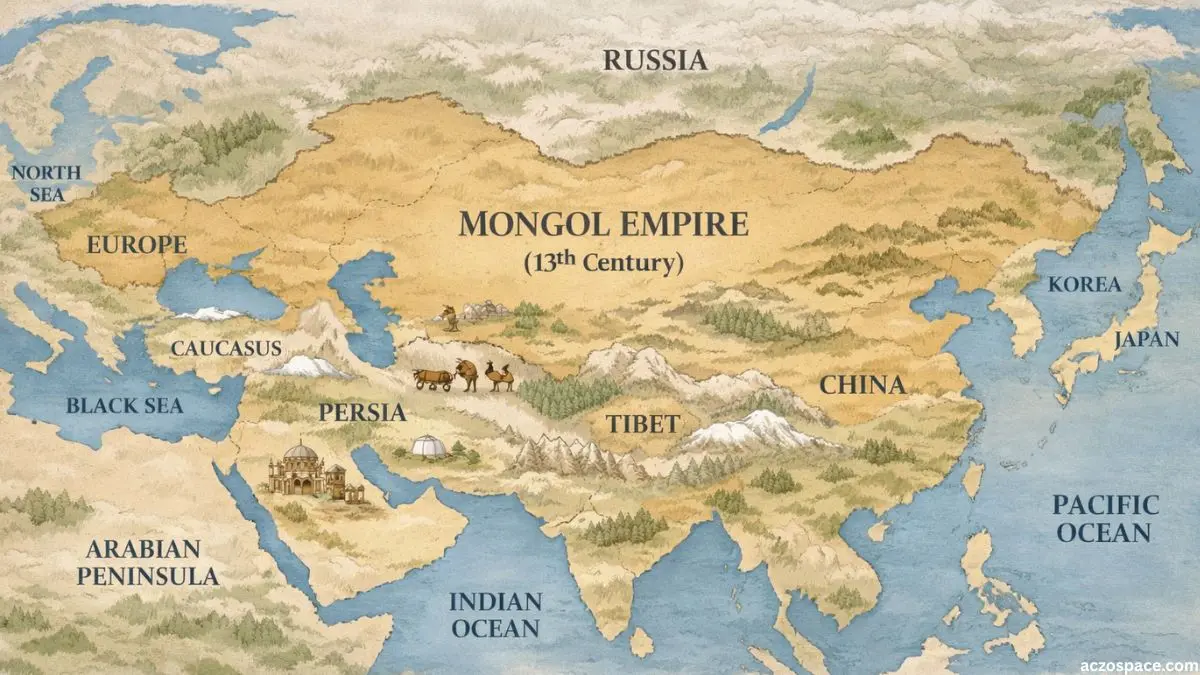
Among the many empires that rose and fell throughout world history, the Mongol Empire continues to attract special attention even today. This is not only because it controlled an enormous land area, but because it achieved that dominance in an astonishingly short period of time.
At a time when settled civilizations with cities, agriculture, and long political traditions struggled to expand their influence, few could have imagined that a nomadic people—living largely on horseback and without permanent cities—would come to rule vast parts of Asia and Europe.
The Mongol Empire is often remembered primarily for warfare, conquest, and destruction. However, modern historians present a more balanced picture. Beyond military power, the Mongols played a significant role in shaping global trade networks, encouraging cultural exchange, and developing effective administrative systems that connected distant regions of the world.
This article explores how the Mongol Empire emerged, the background of the Mongol people, and the key factors that enabled their rapid and unprecedented expansion.
Table of Contents
Quick Facts
| Fact | Detail |
| Empire Name | Mongol Empire |
| Founded | 1206 — Temüjin proclaimed Genghis Khan (“universal ruler”) and united Mongol tribes |
| Founder | Genghis Khan — first Great Khan |
| Peak Era | 13th century — largest contiguous land empire in history |
| Extent | From Eastern Asia to Eastern Europe & Middle East — spanned most of Eurasia |
| Government | Ruled by a Great Khan with loyal commanders and later divided into khanates |
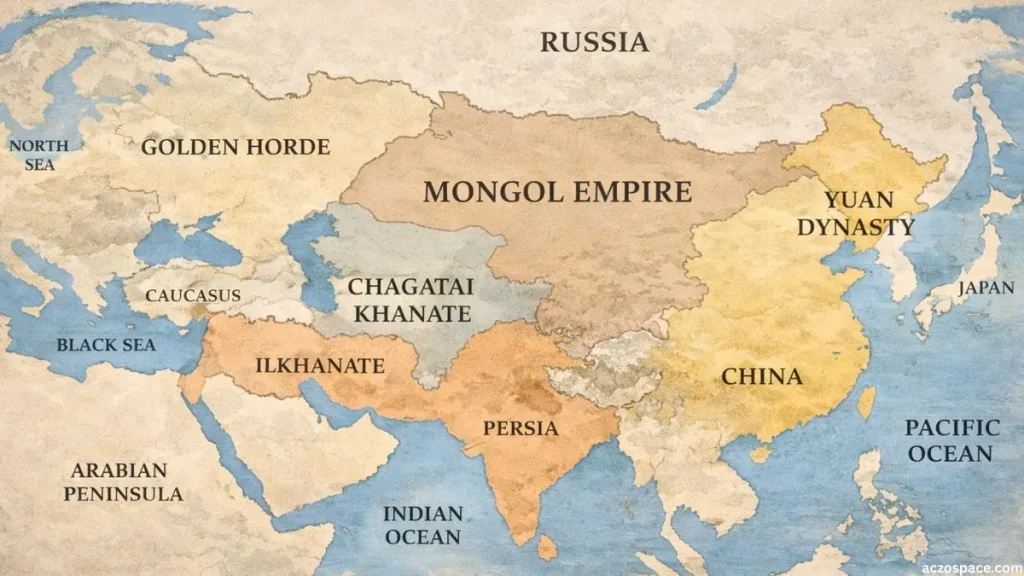
| Major Successors (Khanates) | Golden Horde (Russia), Chagatai Khanate (Central Asia), Ilkhanate (Persia), Yuan Dynasty (China) |
| Key Military Strength | Fast cavalry, mobility, psychological warfare, effective communication |
| Silk Road Impact | Created Pax Mongolica, boosting trade & intercultural exchange across Eurasia |
| Decline | Fragmentation after death of Khans; independent khanates emerged by late 13th–14th century |
| Legacy | Influenced global trade, cultural exchange, technology diffusion, and shaped history of Asia & Europe |
Origin of the Mongol People
The Central Asian Steppe
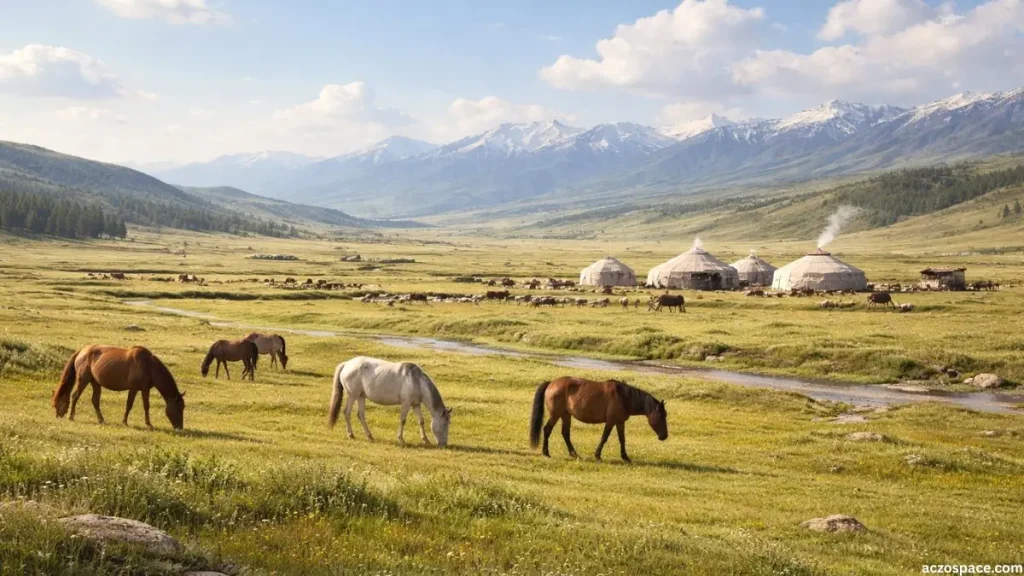
The original homeland of the Mongol people was the vast Central Asian steppe, a region characterized by wide open grasslands rather than fertile farmland. This environment was largely unsuitable for agriculture and made the development of permanent villages or cities extremely difficult.
As a result, the people of the steppe adopted a nomadic lifestyle, moving with the seasons in search of grazing land for their animals. Livestock herding formed the foundation of their economy, and among all animals, horses were the most essential. Horses provided transportation, food, and military strength, becoming inseparable from daily life.
Over time, this way of life forged a society that valued mobility, endurance, and adaptability—qualities that would later become decisive advantages in warfare and empire-building.
Mongol Society and Culture
Mongol society was organized around clans and tribes, each led by its own chief. Loyalty was usually limited to one’s clan, and unity among different groups was often weak. As a consequence, the Mongols experienced long periods of internal conflict before their eventual unification.
Religiously and culturally, however, Mongol society was remarkably open and tolerant. Their spiritual beliefs were largely rooted in Tengrism, a system centered on reverence for the sky, nature, and unseen spiritual forces. Rather than enforcing strict doctrines, this belief system emphasized harmony with the natural world.
Respect for other religions gradually became an accepted part of Mongol culture. This tradition of tolerance later proved crucial when the Mongols came to rule over vast and diverse populations, helping them govern people of different faiths and cultures with relatively little resistance.
The Founder of an Empire: Genghis Khan
From Temujin to Genghis Khan
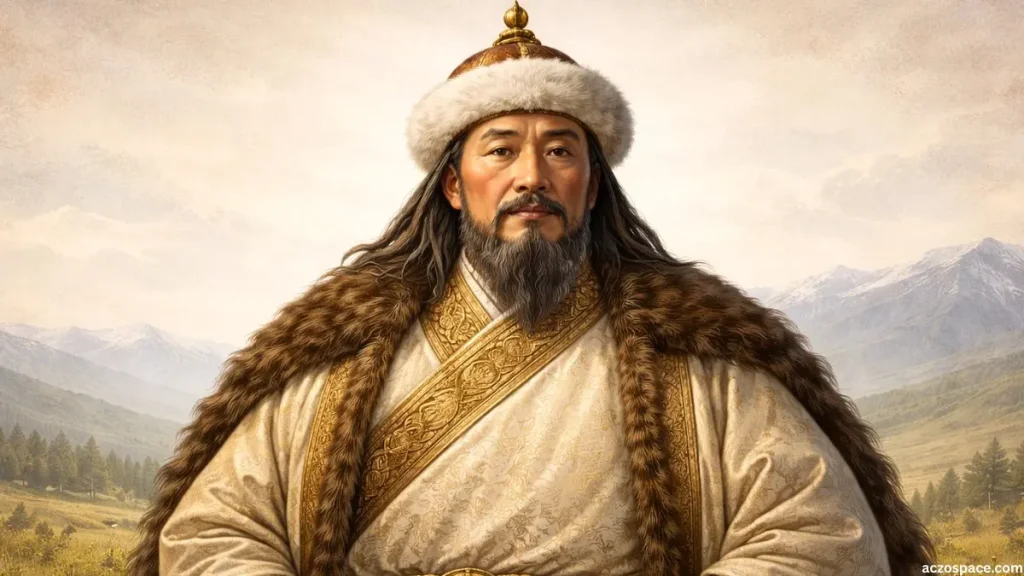
The man history remembers as Genghis Khan was born with the name Temujin, during a period of intense rivalry and violence among the Mongol tribes. His early life was marked by hardship. After the death of his father, Temujin’s family was abandoned by their allies and pushed to the margins of steppe society, forced to survive under extremely harsh conditions.
These formative experiences deeply shaped Temujin’s worldview. Through personal struggle, he came to recognize the greatest weakness of Mongol society: constant division between clans and tribes. Rather than accepting this as inevitable, he set himself a bold goal—to unite all Mongol tribes under a single leadership.
Through a combination of strategic alliances, military skill, and political insight, Temujin gradually overcame his rivals. In 1206, he was proclaimed Genghis Khan, meaning “Universal Ruler,” marking the birth of a unified Mongol state and the beginning of an empire that would transform world history.
Leadership Qualities of Genghis Khan
Genghis Khan’s leadership style differed sharply from traditional tribal rule. Instead of granting power based on noble birth or clan status, he promoted individuals according to ability, loyalty, and merit. This approach broke long-standing social hierarchies and allowed talented warriors and administrators to rise regardless of their background.
One of his most influential reforms was the introduction of the Yassa, a legal code that applied across Mongol society. The Yassa established discipline, reduced internal conflict, and encouraged cooperation among previously rival tribes. By enforcing common rules and shared responsibility, Genghis Khan transformed a fragmented society into a unified political and military force.
These reforms laid the foundation for the Mongols’ rapid expansion and long-term stability during the early years of the empire.
Building the Mongol Empire
The Unique Strength of the Mongol Army
A major factor behind the rise of the Mongol Empire was the exceptional organization of its military. The army was divided into small, clearly structured units, each operating under strict command and coordination. This system allowed Mongol forces to move quickly and respond flexibly on the battlefield.
The Mongols mastered advanced tactics such as mounted archery, feigned retreats, and highly coordinated maneuvers across vast distances. Every soldier was trained to fight on horseback, giving the Mongol army unmatched speed and mobility. These innovations made it one of the most effective fighting forces in military history.
As a result, Mongol armies often defeated much larger and more established powers, including kingdoms that relied on heavy infantry or static defenses.
Strategies Beyond Warfare
Despite their reputation as conquerors, the Mongols did not build their empire through warfare alone. In many conquered regions, they chose to preserve existing administrative systems rather than dismantle them. Local rulers and officials were often allowed to remain in power, provided they accepted Mongol authority and paid tribute.
By integrating regional leaders into their system of governance, the Mongols reduced resistance and ensured efficient administration across vast territories. This pragmatic approach allowed the empire to expand rapidly while maintaining control over culturally and politically diverse regions.
Through a combination of military innovation, flexible governance, and strong leadership, the Mongol Empire emerged as one of the largest and most influential empires the world has ever known.
The Mongol Empire: Conquering Vast Lands in Record Time
What sets the Mongol Empire apart in world history is not only the sheer size of the territory it controlled, but also the incredible speed with which it expanded. Under the leadership of Genghis Khan, Mongol power stretched across Asia and reached into Europe within just a few decades—a pace unmatched by any previous empire. This extraordinary rapid expansion makes the Mongols a unique phenomenon in global history.
The Scale of Mongol Territory
The Mongol Empire initially established its power in Central Asia, but it soon spread eastward into China, westward to Persia and parts of Russia, and even touched some regions of Europe. Among the territories under Mongol rule were:
- Large portions of China
- Persian lands (modern-day Iran and surrounding areas)
- Parts of Russia
The idea of such an extensive and diverse landmass under one empire was unprecedented. However, the Mongols did not enforce uniform rule across all regions. Instead, they adapted governance to fit local geography, culture, and administrative traditions, a pragmatic approach that contributed to their success.
A Comparison with Other Empires
When compared to other historically massive empires like Rome or Britain, the Mongol Empire’s expansion is even more striking. Rome and Britain took centuries to reach their largest extents, while the Mongols achieved a similar scale within a single generation. This is why historians often describe the Mongol Empire as the fastest-growing empire in history.
Leadership After Genghis Khan
Genghis Khan’s death in 1227 did not lead to the immediate collapse of his empire. Thanks to the administrative systems and leadership structures he established, the Mongol Empire continued to thrive and expand under his successors.
Ögedei Khan
After Genghis Khan, his son Ögedei Khan became the Great Khan. During his rule, the Mongol Empire expanded further. He introduced new administrative centers, laws, and economic systems, strengthening governance across the empire. Ögedei’s leadership transformed the Mongols from a primarily military power into a more organized and administratively sophisticated empire.
Kublai Khan
Kublai Khan, one of Genghis Khan’s grandsons, holds a particularly important place in Mongol history. By establishing the Yuan Dynasty in China, he integrated Mongol rule with existing Chinese administrative traditions. Under Kublai, the empire shifted from a nomadic, conquest-driven power to a stable, bureaucratic state, marking a new chapter in Mongol governance.
The Fragmentation of the Empire
Over time, the Mongol Empire became difficult to manage as it expanded across vast territories. Eventually, it split into regional khanates, such as the Golden Horde in Russia and the Ilkhanate in Persia.
Even though the empire was divided, these regions remained connected by Mongol influence and culture, demonstrating that the end of a unified empire did not mean the end of Mongol power. For decades, the legacy of Mongol rule continued to shape trade, governance, and cultural exchange across Eurasia.
The Mongol Empire and Economic Impact
The influence of the Mongol Empire extended far beyond warfare and conquest. It also played a transformative role in global trade and economics, connecting regions and stimulating commerce across continents.
Reviving the Silk Roads
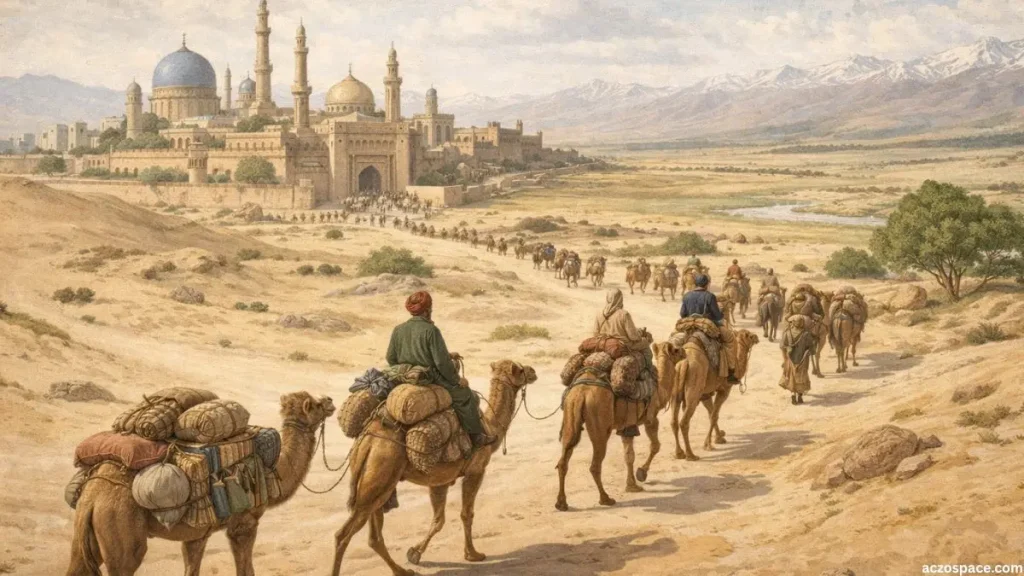
Under Mongol rule, the Silk Roads experienced a remarkable revival. Trade routes that had long been fragmented became safer and more efficient, a period historians often call the Pax Mongolica, or “Mongol Peace.” With vast territories unified under a single authority, merchants could travel long distances with significantly less risk.
This stability allowed trade to flourish—not just in goods like silk, spices, and precious metals, but also in ideas, culture, and scientific knowledge, which traveled from Asia to the Middle East and into Europe.
New Cities and Commercial Hubs
The Mongols also fostered the growth of new cities and commercial centers. These hubs were more than just sources of tax revenue; they became vibrant economic spaces, offering local populations opportunities for trade, craftsmanship, and entrepreneurship.
Through these initiatives, the Mongol Empire accelerated economic activity on a scale rarely seen in history, effectively linking diverse regions in a vast network of commerce.
Science, Culture, and Knowledge
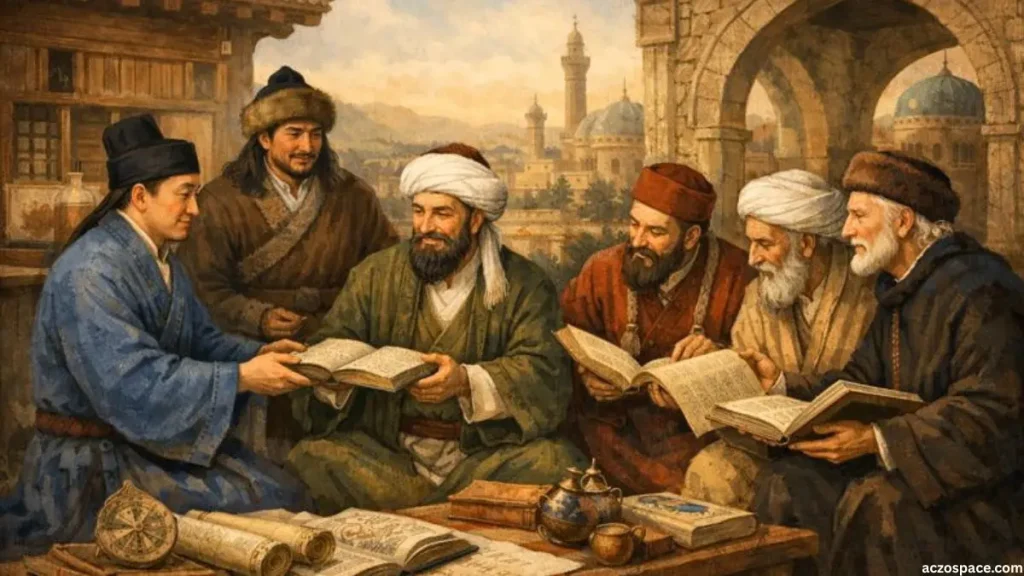
Contrary to the popular image of the Mongols as mere conquerors, their empire also served as a bridge between cultures, ideas, and knowledge systems. By governing a vast, multi-ethnic empire, the Mongols facilitated unprecedented exchanges of intellectual and cultural resources.
Integrating Diverse Cultures
From Asia to Europe, people from a variety of languages, religions, and traditions came under Mongol rule. This allowed for cross-cultural interactions that were rare in other contemporary empires.
Mongol leaders frequently respected local customs, protected religious authorities, and allowed scholars and experts to continue their work. This cultural openness helped maintain relative stability across the empire and made governance over such a diverse population feasible.
Contributions to Global Knowledge
Knowledge was one of the empire’s most valuable exports. Scientific, medical, mathematical, and cartographic advancements traveled across the empire, reaching regions that had previously been isolated.
For example, Chinese innovations in technology and engineering reached the Middle East, and from there, via Mongol-protected trade routes, many ideas eventually reached Europe.
This exchange of knowledge helped lay the groundwork for global interconnectedness, making the Mongol Empire a critical period in world history for the transfer and dissemination of learning.
The Collapse of the Mongol Empire
The Mongol Empire, like all empires, eventually faced challenges that led to its decline. Its collapse did not happen suddenly but was instead a gradual process unfolding over decades, shaped by internal and external pressures.
Challenges of Size
While the Mongol Empire was enormous, governing such vast territories under a single central authority was extremely difficult. Distant regions often required local governors to make independent decisions, which gradually weakened central control. Communication and enforcement across thousands of miles of territory were slow and inconsistent, creating structural vulnerabilities that would eventually contribute to fragmentation.
Internal Conflicts
Power struggles also emerged within the Mongol leadership. Disputes over succession and territorial authority among Genghis Khan’s descendants intensified divisions, undermining the cohesion of the empire. These internal conflicts were a persistent obstacle to long-term stability and made it increasingly difficult to maintain unified governance.
Myths and Realities About the Mongol Empire
Despite centuries of study, many misconceptions about the Mongols persist. Much of what the popular imagination recalls—stories of indiscriminate destruction and terror—is oversimplifications or half-truths.
Common Misunderstandings
A widespread misconception is that the Mongol Empire was purely destructive. While the Mongols were formidable warriors, this view ignores their contributions to trade, administration, and cultural exchange. Under Mongol rule, many regions experienced increased economic activity, safer trade routes, and political stability, highlighting a more nuanced legacy than mere conquest.
Historical Perspectives
Modern historians approach the Mongol Empire from multiple angles. Many emphasize that it was not only a military powerhouse but also a force for connecting the world—facilitating trade, knowledge transfer, and cross-cultural interactions on an unprecedented scale.
By this measure, the Mongol Empire stands as a historical paradox: both fearsome and enlightened, destructive yet integrative. Its legacy illustrates that empires are rarely one-dimensional; the Mongols reshaped not just territories but the way societies, economies, and cultures interacted across continents.
Lessons the Modern World Can Learn from the Mongol Empire
The Mongol Empire left an indelible mark on world history, not only because of its sheer size and rapid expansion but also through its leadership, organization, and global impact. Even today, this remarkable empire offers valuable lessons that are surprisingly relevant for our modern world.
Leadership
Genghis Khan and his successors demonstrated that effective leadership is rooted in skill, vision, and trust, rather than simply birthright or status. By selecting capable individuals based on merit, they united diverse peoples and cultures under a single banner.
Today, whether in business, politics, or global organizations, strong leadership remains essential for uniting teams, inspiring loyalty, and achieving ambitious goals.
Organization
The power of the Mongol military lay in its exceptional organization. The army was divided into small, manageable units with clearly defined leadership, enabling swift and coordinated action across vast distances.
In modern global commerce and enterprise, the same principle holds true: structured, well-organized systems are key to efficiency and success, allowing complex operations to function smoothly across borders.
Cultural Respect
Under Mongol rule, different cultures, religions, and traditions were respected, fostering relative stability and cooperation. The empire’s openness encouraged knowledge exchange and allowed local customs to flourish under centralized authority.
In today’s multicultural workplaces and international collaborations, cultural sensitivity and respect remain critical leadership traits for building trust and maintaining productive relationships.
Trade and Globalization
The Mongols revitalized trade routes like the Silk Roads, connecting regions across Asia, the Middle East, and Europe. Merchants, ideas, and knowledge moved more freely than ever before, creating an early model of globalization.
Modern international trade, cross-border knowledge sharing, and global networks echo the foundations laid under Mongol rule, showing that even centuries ago, strategic connectivity could transform economies and societies.
Conclusion
The Mongol Empire stands out in world history as the fastest-expanding empire ever recorded. Under the leadership of Genghis Khan, nomadic tribes were united, long-standing rivalries between clans were resolved, and a new era of centralized authority emerged. His strategic brilliance and highly organized military structure were the driving forces behind the empire’s unprecedented rapid expansion.
Mongol rulers maintained stability across their vast territories by respecting the diverse cultures, religions, and communities under their control. This inclusive approach not only promoted trade but also facilitated the exchange of scientific knowledge and the revitalization of critical trade routes like the Silk Roads.
Over time, however, the empire’s enormous size, internal conflicts, and succession disputes led to its fragmentation. Yet, despite its eventual decline, the Mongol Empire offers enduring lessons in leadership, organization, and cultural as well as economic influence. Rather than being remembered solely for conquest and destruction, it serves as a powerful example of how visionary leadership and innovative systems can reshape the world and leave a lasting impact on global history.
FAQs
What impact did the Mongol Empire have on the world?
The Mongol Empire had a great impact on world history through trade (Silk Road), cultural exchange, and the spread of scientific knowledge.
What were the reasons for the fall of the Mongol Empire?
The Mongol Empire eventually fell due to its vast size, internal conflicts, and divided leadership.