History of the Tenerife Airport Disaster
The 1977 Tenerife airport disaster remains one of the most intensely studied events in aviation history—not because of mechanical failure or terrorism, but because of the profound safety lessons it revealed. The tragedy unfolded at Los Rodeos Airport in Spain’s Canary Islands, now known as Tenerife North Airport, and involved a catastrophic collision between two Boeing 747 aircraft: KLM Flight 4805 and Pan Am Flight 1736.
What makes this accident especially haunting is that it was not caused by an engine malfunction or an act of sabotage. Instead, it was the result of a deadly chain of human error, communication breakdowns, and severe weather conditions. This account presents a clear and factual overview of how a series of seemingly small decisions led to the deadliest accident in commercial aviation history.
Table of Contents
Quick Facts
| Fact | Detail |
| Event Name | Tenerife Airport Disaster |
| Date | March 27, 1977 |
| Location | Los Rodeos Airport, Tenerife, Canary Islands, Spain |
| Aircraft Involved | KLM Flight 4805 & Pan Am Flight 1736 |
| Type of Accident | Runway collision in dense fog |
| Total Fatalities | 583 (deadliest aviation accident) |
| Survivors | 61 (all from Pan Am flight) |
| Primary Cause | Human error and communication miscommunication amid poor visibility |
| Triggering Factors | Diversions due to previous bombing, fog, congested taxiways |
| Legacy | Major reforms in aviation safety, communication, and Crew Resource Management |
The Unlikely Chain of Events Leading to Disaster

The Tenerife disaster did not begin on the island itself. Both aircraft were originally scheduled to land at Gran Canaria Airport on March 27, 1977. Earlier that day, however, a terrorist bombing at the Gran Canaria terminal forced authorities to temporarily shut down the airport.
As a result, several inbound flights—including the KLM and Pan Am Boeing 747s—were diverted to Los Rodeos Airport. This small regional airport was never designed to handle such a sudden surge of large international aircraft.
At the time, Los Rodeos Airport faced serious limitations:
- Only one runway was available.
- Taxiways were limited and easily congested.
- There was no ground radar system to track aircraft positions.
As traffic built up, dense fog began to roll across the airport. Visibility dropped to less than 300 meters, sometimes changing within seconds. Combined with overcrowded ground conditions and rising operational pressure, the situation quickly became extremely dangerous.

The Critical Moments on the Runway
The runway collision at Tenerife was not a sudden or random event. It was the tragic outcome of a sequence of misunderstandings and missed warnings.
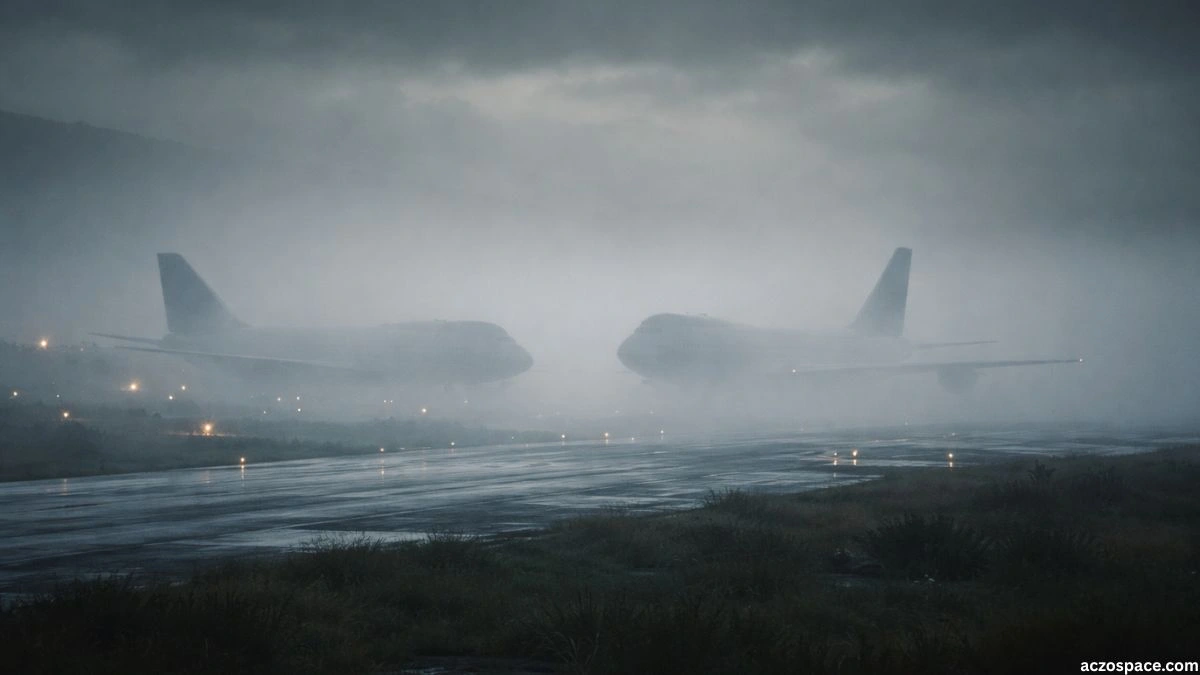
After refueling, KLM Flight 4805 was preparing for departure. At the same time, Pan Am Flight 1736 was still taxiing along the same runway, searching for its designated exit (Taxiway C4). Because of the thick fog, neither flight crew could see the other aircraft.
KLM’s captain, Jacob van Zanten—one of the airline’s most senior and respected pilots—believed he had received clearance for takeoff. In reality, air traffic control had instructed him only to hold position and await final takeoff clearance. Radio interference and overlapping transmissions further obscured the message.
At approximately 5:06 p.m., KLM Flight 4805 began its takeoff roll.
Unbeknownst to the KLM crew, the Pan Am 747 was still on the runway ahead. Moments later, the Pan Am crew spotted the approaching KLM aircraft through the fog. They immediately attempted to steer off the runway to avoid a collision, but the lack of time and visibility made escape impossible.
In a last desperate effort, the KLM pilot pulled the aircraft into a premature climb, attempting to lift over the Pan Am jet. The maneuver failed. The underside of the KLM aircraft struck the Pan Am plane, tearing both aircraft apart. Massive fuel fires erupted almost instantly.
The impact and resulting fires destroyed both aircraft. Of the 583 people on board the two flights, only 61 survived—all of them passengers from the Pan Am aircraft.
Why Tenerife Still Matters Today
The Tenerife disaster permanently changed aviation safety worldwide. It led directly to major reforms in cockpit communication, standardized phraseology, and the development of Crew Resource Management (CRM), which emphasizes teamwork and the authority to challenge decisions—regardless of rank.
More than four decades later, Tenerife remains a sobering reminder that even advanced technology cannot compensate for unclear communication and human misunderstanding. Its legacy continues to shape how pilots, air traffic controllers, and airlines operate—ensuring that the lessons paid for at such a high cost are never forgotten.
Immediate Aftermath of the Collision

The scene at Los Rodeos Airport in the moments following the crash was nothing short of catastrophic. All 248 passengers and crew aboard KLM Flight 4805 were killed instantly. On Pan Am Flight 1736, 335 of the 396 people on board lost their lives. Only 61 passengers survived, many of them suffering severe burns and life-altering injuries.
Emergency response efforts were severely hindered. Thick fog continued to blanket the runway, making it difficult for rescuers to navigate through the burning wreckage. At the time, Los Rodeos Airport lacked sufficient firefighting resources for an accident of this scale. Communication delays and confusion further complicated rescue operations, allowing fires to spread rapidly.
The sheer loss of life shocked the world. With 583 fatalities, the Tenerife runway collision became—and remains—the deadliest accident in the history of commercial aviation.
The Investigation: What Caused the Tenerife Airport Disaster?
Subsequent investigations concluded that the Tenerife disaster was not the result of a single mistake. Instead, it was caused by a dangerous combination of human error, environmental conditions, and systemic weaknesses within aviation operations at the time.

Key Contributing Factors
Human Error and Faulty Judgment
One of the most critical findings was that the KLM captain initiated takeoff without explicit clearance. He genuinely believed authorization had been granted, but in reality, no such clearance was ever issued. This incorrect assumption proved fatal.
Communication Failures
Radio communication played a decisive role in the disaster. The KLM crew used the phrase “We are now taking off,” which was ambiguous and non-standard. The control tower’s response was partially blocked by radio interference, preventing the crucial instruction to wait for clearance from being clearly heard.
Fog and Severely Limited Visibility
Dense fog on the runway made it impossible for both pilots and air traffic controllers to visually confirm aircraft positions. Visibility conditions changed rapidly, leaving crews effectively blind at critical moments.
Airport Infrastructure Limitations
Los Rodeos Airport had no ground radar system, meaning air traffic controllers could not track aircraft movements on their screens. They had to rely entirely on radio reports, which were already compromised by interference and ambiguity.
Stress, Fatigue, and Operational Pressure
Both flight crews had experienced long delays, leading to heightened stress and fatigue. For the KLM crew in particular, concerns about duty-time limits and further delays increased pressure to depart quickly. Investigators later recognized this psychological strain as a significant human factor in the accident.
Assigning Responsibility and Lasting Impact
The Dutch investigation formally acknowledged KLM’s primary responsibility for the crash. However, it also emphasized contributing failures in air traffic control procedures and the lack of standardized radio phraseology at the time.
These findings reshaped global aviation practices. Clear, unambiguous communication standards were introduced, cockpit authority structures were reevaluated, and modern Crew Resource Management (CRM) training became mandatory worldwide.
The Tenerife disaster stands as a powerful reminder that aviation safety depends not only on technology, but on clarity, discipline, and human judgment—especially under pressure.
Lessons Learned: Aviation Safety Reforms After Tenerife
The 1977 Tenerife disaster was a turning point for commercial aviation. In its aftermath, the industry undertook sweeping reforms aimed at preventing a tragedy of a similar scale.
Crew Resource Management Training
One of the most important changes was the introduction of Crew Resource Management (CRM) training. Pilots and flight crews were trained to challenge decisions when safety concerns arose and to communicate more effectively with colleagues and air traffic controllers. Coordination between different departments within airlines was also strengthened. Today, CRM training is mandatory across the aviation industry and credited with saving countless lives worldwide.
Installation of Ground Radar Systems
Airports with poor visibility, like the former Los Rodeos, were upgraded with ground radar systems to monitor aircraft movements during taxi and takeoff. This technology allows controllers to track planes even when fog or other conditions obscure visual observation, significantly reducing the risk of runway collisions.
Improved Air Traffic Control Procedures
Air traffic control protocols were overhauled to ensure strict adherence to takeoff clearances, radio communication standards, and operational procedures. Controllers now follow standardized phraseology designed to eliminate ambiguity, ensuring pilots fully understand their instructions.
Thanks to these reforms, skies became markedly safer. The likelihood of accidents like Tenerife has been drastically reduced, proving that lessons learned from tragedy can translate into life-saving improvements.
Survivors and Personal Stories
While the disaster claimed hundreds of lives, 61 passengers from Pan Am Flight 1736 survived by escaping through the aircraft’s fuselage before it was engulfed in flames. Many later recounted harrowing experiences navigating the burning wreckage, praising the bravery and coordination of crew members during the emergency.
Families lost loved ones traveling for vacations, business, or reunions, leaving deep emotional scars across both Dutch and American communities. The human impact of Tenerife extended far beyond the airport, shaping airline culture and public awareness of air travel safety.
Today, annual memorial services are held in Tenerife, the Netherlands, and the United States to honor the victims. The Tenerife memorial, listing all 583 lives lost, stands as a solemn reminder of the high cost of communication failures and human error, and of the safety improvements that arose from the tragedy.
The Legacy in Aviation History
The Tenerife airport disaster stands as a profound turning point in the history of commercial aviation. It demonstrated how a series of seemingly minor errors, when combined with challenging conditions, can lead to catastrophic consequences.
Today, pilots and air traffic controllers worldwide study the 1977 Tenerife disaster as part of human factors and Crew Resource Management (CRM) training. The accident highlights the importance of clear procedural discipline, unambiguous communication, and situational awareness in high-pressure environments. It is a stark reminder that technology alone cannot prevent accidents; effective human judgment and teamwork are equally essential.
The collision between the KLM and Pan Am Boeing 747s reminds us that even the most advanced aircraft are vulnerable when human error, poor visibility, and miscommunication converge. The lessons learned from Tenerife continue to shape safety culture, ensuring that aviation operations remain as safe as possible for millions of travelers every day.

Conclusion
The 1977 Tenerife disaster remains one of the most significant chapters in aviation history. Unlike mechanical failures, this tragedy resulted from human error, dense fog, and critical communication failures.
Yet, progress emerged from the disaster. The reforms and safety improvements implemented in its wake—enhanced crew training, upgraded airport systems, standardized communication protocols, and global cooperation—have saved countless lives since.
Even decades later, the legacy of Tenerife continues to serve as both a warning and a lesson. Airlines, regulators, and travelers alike are reminded that vigilance, discipline, and clear communication are vital to aviation safety. Understanding this disaster helps modern passengers appreciate the rigorous safety procedures that now protect every flight.
FAQs
Why is the Tenerife Airport Disaster important in aviation history?
The Tenerife Airport Disaster is important because it led to major improvements in pilot communication, crew coordination, and air traffic control procedures, making global aviation safer.
What lesson did the aviation industry learn from the Tenerife disaster?
The disaster showed that clear communication and teamwork are just as important as technology in preventing aviation accidents.
How many died in the Tenerife Airport Disaster?
It is recognized as the deadliest aviation accident in recorded history.