
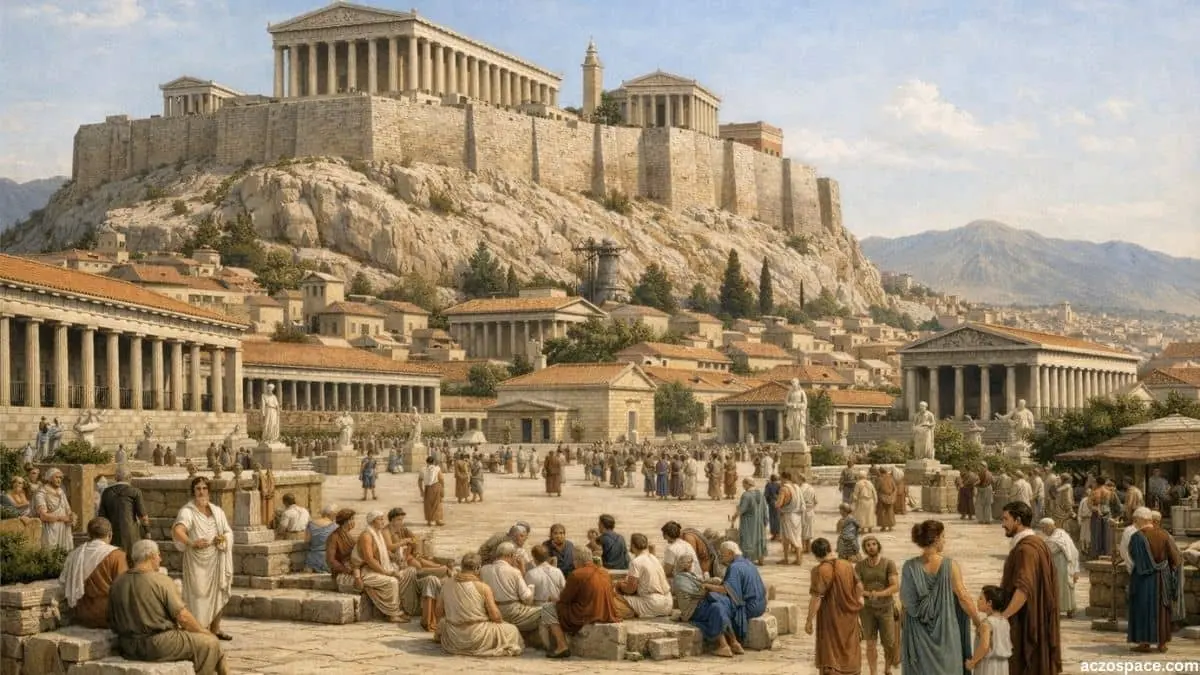
Greek Democracy: Foundation of Modern Governance
Ancient Greek democracy is widely regarded as one of the most influential political innovations in human history. Emerging around 2,500 years ago in the city-state of Athens, this system laid the foundation for modern democratic governance worldwide. Unlike monarchies or autocracies that dominated other regions, Greek democracy emphasized citizen participation, public debate, and collective decision-making. Its principles of equality, civic responsibility, and popular sovereignty continue to inspire contemporary political thought.
Greek democracy was revolutionary, complex, and distinctly different from modern representative democracy. It was a direct democracy, where citizens actively participated in legislative and judicial affairs. Although women, slaves, and non-citizens were excluded, this early system provided a framework for civic engagement, public accountability, and the rule of law that endured for centuries.
This article explores the origins, structure, key figures, and enduring legacy of ancient Greek democracy, shedding light on why it remains a cornerstone of political thinking today.
Table of Contents
Quick Facts
| Fact | Detail |
| Concept | Democracy (rule by the people) — from Greek demos (people) + kratos (power) |
| First Known Democracy | Athenian democracy, established ~507–508 BCE under reforms by Cleisthenes |
| Key Reformers | Solon (early reforms), Cleisthenes (major democratic restructure), Ephialtes & Pericles (later expansions) |
| Main Institutions | Ekklesia (Assembly), Boule (Council), Dikasteria (Popular courts) |
| Voting Base | Only free male citizens could directly participate (not women, slaves, or foreigners) |
| Unique Features | Direct democracy — citizens voted directly on laws & policies |
| Influence | Provided foundational ideas for modern democratic governance and political participation globally |
| Limitations | Exclusion of many groups (women, slaves); limited by scale & population size |
| Duration | Athenian democracy flourished roughly 5th–4th centuries BCE before decline after Macedonian conquest |
The Historical Context of Greek Democracy
The City-States of Ancient Greece
In ancient Greece, the concept of the polis, or city-state, was central to both political and social life. Each polis functioned as an independent entity with its own government, army, and legal system. Among these city-states, Athens became the cradle of democracy, distinguished by its focus on citizen participation, public debate, and institutional innovation.
Before democracy, many Greek city-states were ruled by kings, tyrants, or aristocrats. Wealthy landowners and noble families controlled political decisions, leaving the majority of citizens excluded from power. Social tensions and widespread dissatisfaction eventually led to reforms aimed at redistributing political influence more broadly among the citizenry.
Early Political Reforms in Athens
The path toward Athenian democracy unfolded gradually through a series of crucial reforms. Three statesmen—Draco, Solon, and Cleisthenes—played pivotal roles in shaping the city’s political landscape.
Draco (c. 620 BCE)
Draco codified Athens’ laws for the first time in written form. While his laws were notoriously harsh, they established a legal framework that limited the arbitrary power of aristocrats and laid the groundwork for a more organized society.
Solon (c. 594 BCE)
To address economic inequality and social unrest, Solon introduced sweeping political and economic reforms. He restructured debt laws, allowed common citizens to participate in governance, and created mechanisms to hold public officials accountable. Solon’s reforms marked an early effort to balance wealth and political influence in Athens.
Cleisthenes (c. 508 BCE)
Often called the “Father of Athenian Democracy,” Cleisthenes reorganized Athens’ political system and created the Council of 500, expanding citizen involvement in governance. His reforms set the stage for direct democracy, giving citizens a voice in both lawmaking and judicial matters and breaking the dominance of traditional aristocratic families.
These early reforms dismantled entrenched aristocratic power and paved the way for a political system centered on citizen participation. Athens became a model of civic engagement, demonstrating how collective governance could function in practice.n and paved the way for citizen-centered governance.
Legacy of Ancient Greek Democracy
Although limited in scope, ancient Greek democracy introduced concepts that resonate even today: the value of public debate, civic responsibility, equality before the law, and governance by the people. Its direct approach to citizen involvement and accountability influenced political thinkers for centuries and continues to inform modern democratic systems worldwide.
From Draco’s codification to Cleisthenes’ institutional reforms, Athens created a political experiment that tested the potential of ordinary citizens to shape their society. While imperfect by today’s standards, this experiment established enduring principles that remain foundational to democratic governance.
Foundations of Athenian Democracy
Citizenship: The Cornerstone of Democracy
In Athens, citizenship was the bedrock of democratic life. Full political rights were granted only to free-born men over the age of 18. Women, slaves, and resident foreigners—known as metics—were excluded from participation. Despite these limitations, Athenian citizens had significant political powers: they could vote, speak at public assemblies, serve on juries, and hold public office. This active participation allowed citizens to shape laws, influence policy, and hold leaders accountable, creating a vibrant political culture rooted in civic responsibility.
Core Principles of Greek Democracy
Ancient Greek democracy rested on several fundamental principles that distinguished it from prior forms of government:
- Equality Before the Law (Isonomia): All citizens, regardless of wealth or social status, were subject to the same laws.
- Direct Participation: Citizens engaged personally in the legislative process rather than delegating decisions solely to representatives.
- Rotation of Office: Many political positions were filled by lottery, ensuring broad participation and minimizing corruption.
- Accountability (Euthyna): Public officials were held responsible for their actions during their term in office.
- Open Debate (Parrhesia): Public assemblies and councils encouraged frank discussion and debate in decision-making.
These principles marked a radical departure from the autocratic or aristocratic systems that preceded them and laid a foundation that influenced later democratic thought throughout history.
Institutions of Ancient Greek Democracy
The Assembly (Ekklesia)
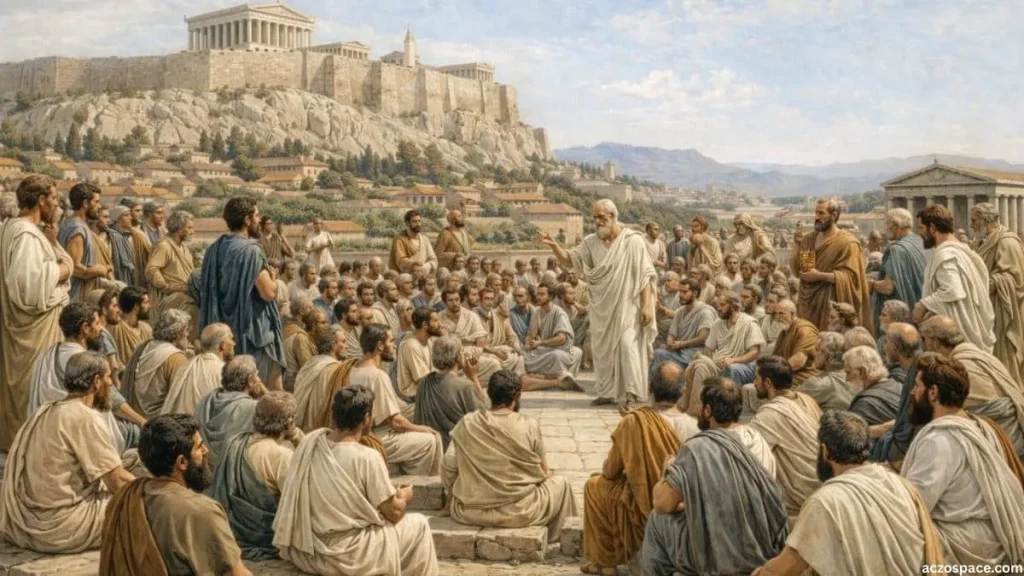
The Ekklesia, or Assembly, was the central institution of Athenian democracy. All male citizens could attend meetings, debate important issues, and vote on matters such as laws, war, and taxation. The Assembly convened roughly 40 times a year, making decisions by majority vote. This system of direct participation gave citizens real power to influence policy and ensured that political leaders remained accountable to the people.
The Council of 500 (Boule)
The Boule, or Council of 500, managed the legislative agenda for the Assembly. Members were chosen by lottery from the ten tribes of Athens, with 500 citizens serving one-year terms. The Council oversaw government officials, managed public finances, and supervised major state projects. By representing the needs of citizens and ensuring that Assembly decisions were implemented effectively, the Boule functioned as a bridge between ordinary citizens and the administrative machinery of the city-state.

The Courts (Dikasteria)
Judicial authority in Athens rested with the Dikasteria, or popular courts. Male citizens over 30 could serve as jurors, often in large panels, ensuring that the law reflected the will of the people. The courts handled both civil and criminal cases, and jurors were selected by lottery to prevent corruption. This system emphasized fairness, transparency, and civic participation, reinforcing the democratic principle that justice belonged to the people rather than a select few.
Public Officials and Lot System
Many administrative and judicial positions in ancient Athens were filled not through elections but by lottery. This system helped prevent the concentration of power in the hands of a single individual or group and promoted equality among citizens.
This provided ordinary citizens with the opportunity to participate directly in the governance process. However, since specific skills and experience were required for certain positions, offices such as generals (strategists) were filled through elections.
Public Officials and the Lottery System
Most administrative and judicial positions in Athens were filled not by election but by lottery. This method prevented the concentration of power in the hands of a single individual or elite group and promoted equality among citizens. By giving ordinary Athenians a direct role in governance, the lottery system strengthened democratic participation. Certain positions, such as generals (strategoi), required specialized skills and experience and were therefore filled through elections rather than by lot.
Roles of Citizens, Women, and Non-Citizens in Ancient Athens
Male Citizens: Rights and Responsibilities
In ancient Athens, male citizens were not only granted political rights but were also expected to fulfill civic duties. They could vote, speak at public assemblies, and actively participate in decision-making, but their involvement came with responsibilities to society.
Military service, jury duty, and contributions to public works were considered essential civic obligations. Fulfilling these duties was seen as both a moral commitment and a key aspect of responsible citizenship. Through active participation, male citizens reinforced the democratic values of accountability, service, and engagement in public life.
Women in Athenian Society
Women in ancient Athens were largely excluded from political life. They could neither vote nor hold public office, and their attendance at public assemblies was restricted. As a result, women had little direct influence over political decision-making.
However, this does not mean they were completely isolated from society. Athenian women managed households, oversaw domestic affairs, and played active roles in religious festivals, civic rituals, and social celebrations. These responsibilities allowed them to contribute meaningfully to civic identity and strengthen social cohesion, even without formal political power.
Slaves and Metics
Slaves formed a significant part of Athenian society but had no political rights. While they played a crucial role in the city’s economy, they were entirely excluded from governance and public decision-making.
Resident foreigners, known as metics, were allowed to engage in commerce and participate in social activities. Although they made valuable contributions to Athenian life, metics, like slaves, were denied citizenship and the right to influence political processes.
Key Figures of Ancient Greek Democracy
Pericles: Champion of the People
Pericles (c. 495–429 BCE) was a prominent statesman and gifted orator who played a pivotal role in expanding Athenian democracy. Under his leadership, salaries were introduced for public offices and jury service. This innovation allowed even poor citizens to participate actively in governance, attend the courts, and serve in institutions central to the functioning of democracy.
Pericles’ reforms strengthened citizen engagement and helped make political participation a practical reality for a broader segment of society, solidifying Athens’ democratic foundations.
Philosophers: Socrates, Plato, and Aristotle
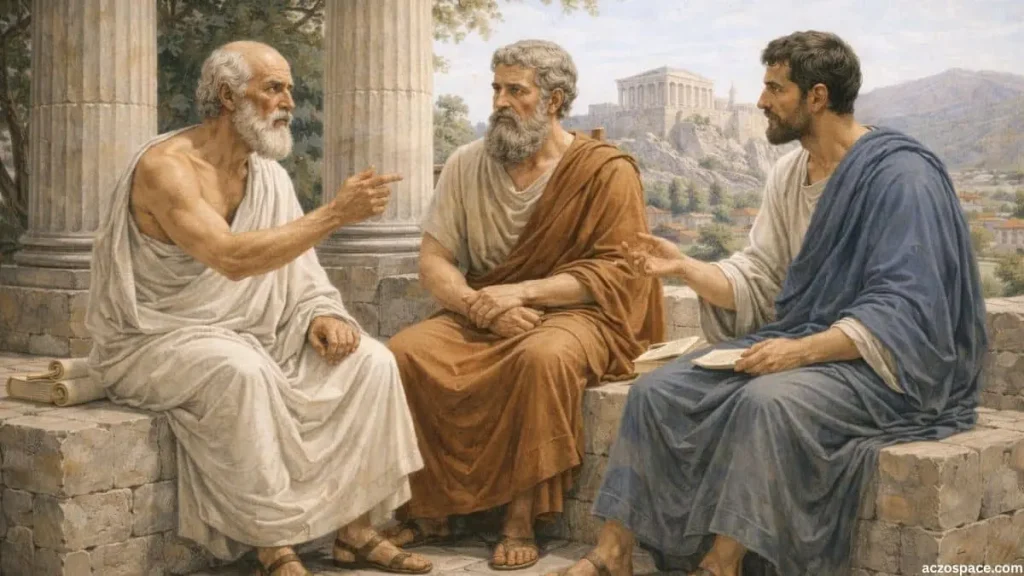
Greek philosophers critically examined Athenian democracy, exploring both its strengths and its limitations:
- Socrates questioned the wisdom of rule by majority and emphasized the importance of reasoned dialogue and ethical reflection in political life.
- Plato criticized democracy for its susceptibility to populism and argued that governance by enlightened philosophers would prevent poor decision-making and societal instability.
- Aristotle analyzed various political systems and envisioned a balanced government that incorporated democratic elements while avoiding the extremes of oligarchy or tyranny.
The ideas of these thinkers profoundly influenced later political theory, shaping the evolution of democratic thought in the centuries that followed.
Strengths and Limitations of Ancient Greek Democracy
Strengths
Ancient Greek democracy, particularly in Athens, had several notable strengths that made it a pioneering political system:
- Citizen Participation: By involving citizens directly in governance, Athens encouraged civic responsibility and accountability. People felt invested in their city-state because they were not just subjects—they were active participants shaping policy, justice, and public projects.
- Rule of Law: Athenian democracy emphasized equality before the law. By maintaining transparent institutions and ensuring that even the most powerful individuals were bound by legal rules, Athens limited arbitrary power and reinforced trust in its government.
- Innovation in Governance: Athens introduced several groundbreaking political practices. Officials were often selected by lottery, citizens were given space to participate in public debates, and juries included ordinary citizens. These innovations fostered inclusivity, minimized corruption, and created a system where governance was a shared responsibility rather than a concentrated privilege.
Limitations
Despite its strengths, ancient Greek democracy had significant limitations:
- Exclusion of Groups: Women, slaves, and resident foreigners (metics) were denied political rights. As a result, only a limited portion of the population could engage in decision-making, leaving the majority of society without formal political influence.
- Short-Term Decision Making: The frequent rotation of offices and reliance on immediate public opinion sometimes led to hasty or inefficient policies. Long-term strategic planning was often sacrificed for quick responses to current events.
- Vulnerability to Populism: Skilled orators could sway public opinion, sometimes leading to decisions driven more by emotion than careful consideration. This created the risk of unstable or poorly thought-out policies.
Even with these limitations, Athenian democracy represented a remarkable step forward in political thought, laying a foundation for future democratic systems.
Comparing Ancient and Modern Democracy
Unlike the direct democracy of ancient Athens, modern democratic systems are largely representative. Today, citizens elect officials to make decisions on their behalf, allowing broader participation across genders, social groups, and minority populations.
Yet, the legacy of ancient Greek political thought remains at the heart of contemporary democracy. Key principles such as citizen engagement, the rule of law, accountability of leaders, and public debate continue to shape modern political institutions. Parliaments, juries, and civic committees can trace their conceptual roots back to the innovative practices of Athens, demonstrating how the ideas of over two millennia ago continue to influence governance today.
The Legacy of Ancient Greek Democracy
The principles of Athenian democracy have left a lasting mark on the evolution of political thought, stretching from the Roman era and the Renaissance to modern Western democracy. Ideas that first took shape in the bustling assembly halls of Athens fundamentally changed how humans understand governance, citizenship, and civic responsibility.
Enlightenment thinkers like John Locke and Montesquieu drew inspiration from ancient Greek ideas, advocating concepts such as constitutional government, the separation of powers, and active citizen participation. These thinkers emphasized that governments exist to serve the people and that political authority should be limited and accountable—a direct reflection of the Athenian model.
Today, Greek democracy is celebrated not only as the birthplace of participatory government but also as an enduring symbol of civic responsibility. Its emphasis on active citizen engagement, accountability, and public debate continues to influence how societies organize themselves politically.
Conclusion
Ancient Greek democracy represents a pivotal moment in human history. By promoting active citizen involvement, respect for the law, and the creation of innovative political institutions, it laid a foundation upon which modern democratic systems are built.
Yet, it was not without its limitations. Women, slaves, and resident foreigners were excluded from political life—a major shortcoming by modern standards. Even so, the Athenian system demonstrated that governance could be guided by the people themselves and sustained over time.
Studying Greek democracy offers valuable insights into civic participation, political accountability, and the origins of public debate. Its legacy reminds us that true power in governance does not rest solely in the hands of rulers but thrives through the active involvement of citizens. Around the world, modern democracies continue to draw from this heritage, underscoring the enduring relevance of Athens’ political experiment.
FAQs
How did ancient Greek democracy influence modern government?
Ancient Greek democracy, especially in Athens, introduced the idea that citizens could participate directly in decision-making. This influenced modern governments by inspiring representative democracy, voting rights, civic participation, and the concept of equality before the law.
Who was the Greek founder of modern democracy?
Greek founder of modern democracy: Cleisthenes.