Many of the greatest discoveries in history have happened by chance. In 1895, while German physicist Wilhelm Conrad Röntgen was experimenting with cathode rays, he noticed a strange glow. This accidental observation led to the creation of X-rays, one of the most powerful tools for the human race. For the first time, doctors were able to see inside the human body without surgery. This marked the birth of medical imaging. Within a few months, hospitals around the world began using X-rays to accurately detect fractures, tumors, and diseases.

Beyond medical science, X-ray physics, engineering, and security have converged, paving the way for a journey that shaped the modern world. They deepened our understanding of energy, matter, and atomic structure. It laid the foundation for nuclear science and electronics. Röntgen’s unexpected discovery opened a window to the unseen. Curiosity and observation remind us that they can lead to discoveries that change the course of history. This article explores how X-rays were discovered. It examines Wilhelm Conrad Röntgen’s life, the scientific background that guided his work, the serendipitous circumstances of the discovery, and its subsequent far-reaching consequences. It looks into how X-ray technology evolved, the challenges and obstacles it presented, and how it shapes the world today.

Quick Facts

FactDetail
Discovery NameX‑Rays (Roentgen rays)
Discovered ByWilhelm Conrad Röntgen 🇩🇪 (German physicist)
Discovery DateNovember 8, 1895
LocationWürzburg, Germany (University lab)
Experiment ContextCathode ray experiments with Crookes tube
Initial ObservationFluorescent glow on screen despite opaque shielding
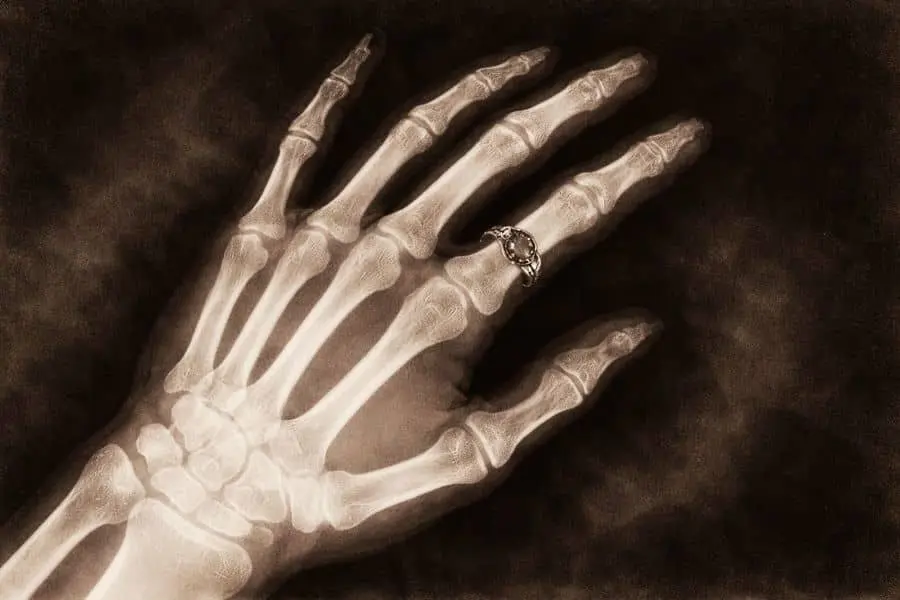
First Famous ImageHand X‑ray of Röntgen’s wife showing bones & wedding ring
Original Name“X‑rays” — X for unknown
First Scientific PaperÜber eine neue Art von Strahlen (On a New Kind of Rays), Dec 1895
Immediate ImpactRevolutionized medical diagnosis & imaging

Wilhelm Conrad Röntgen – The Man Behind the Discovery

The story of X-rays is inseparable from the life and character of Wilhelm Conrad Röntgen, due to his curiosity and relentless effort that led to one of the greatest scientific discoveries in history.

Röntgen was born on March 27, 1845, in Lennep, Germany (now Remscheid), and grew up in an ordinary family. His father was a cloth merchant. His mother came from a well-educated Dutch family. From a young age, Röntgen displayed a quiet but determined interest in understanding how things worked. Although he was not considered a particularly gifted student, he became known for his perseverance, attention, and practical intelligence—qualities that were essential for his later success as a research physicist.

Röntgen’s educational journey faced no significant obstacles. While studying at a technical school in Utrecht, he was temporarily dismissed following a false accusation related to drawing a caricature of a teacher. This setback could have ended the professional life of a less determined individual.

However, Röntgen’s relentless efforts led him to the Polytechnic Institute in Zurich. There, in 1869, under the guidance of the renowned physicist August Kundt, he earned a doctorate in mechanical engineering.

During the early years of his professional career, he assisted Kundt with several experiments on air, light, and electricity. In doing so, he gained an appreciation for laboratory experience and research precision.

Over the next two decades, Röntgen held academic positions at several universities, including Strasbourg, Giessen, and finally Würzburg, where he made his historic discovery.

Colleagues described him as a man of few words. He was highly meticulous, modest, and deeply dedicated to his research.

He preferred to stay isolated in his laboratory. Most of the time, he worked until late at night, driven not by a desire for fame but by his own curiosity.

By the early 1890s, Röntgen was conducting experiments with cathode rays and Crookes tubes. This was a field that had attracted many physicists at the time. His interest was in investigating how these invisible electrical emissions behaved under different conditions. He did not know that these simple experiments would soon lead to the discovery of an entirely new type of radiation (which could reveal things not visible through solid matter).

In summary, Röntgen’s life story reflects a perfect blend of discipline, curiosity, and serendipitous discoveries. His perseverance and precision set the stage for a remarkable event that would forever change science and medicine.

Scientific background before the discovery

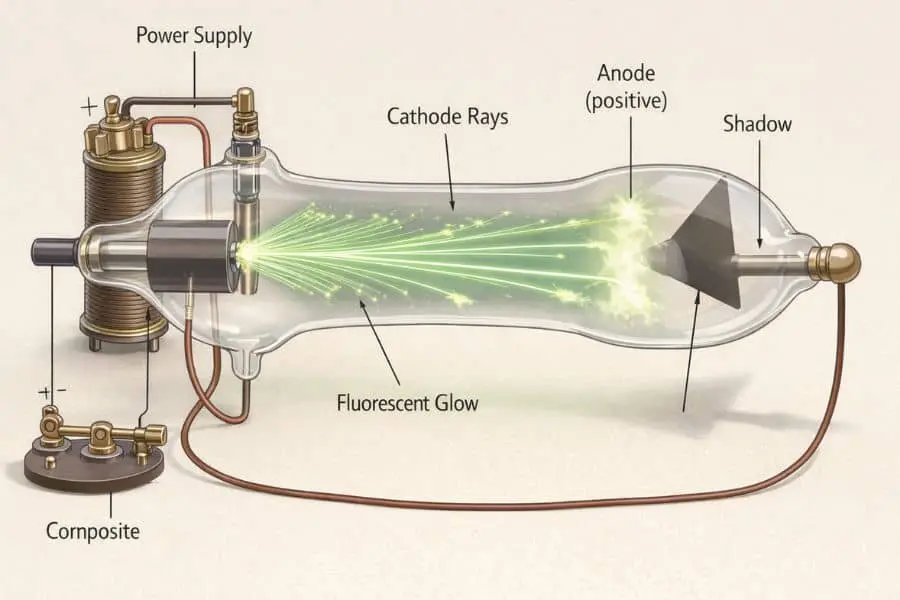
Illustration of a Crookes tube used in cathode ray experiments before X-ray discovery

To truly understand the significance of Wilhelm Conrad Röntgen’s discovery, it is important to look at the scientific landscape of the late 19th century. This was a period marked by tremendous curiosity and rapid progress in the fields of electricity, magnetism, and light.

Across Europe, scientists conducted experiments to uncover the mysterious behaviors of invisible forces they referred to as ‘rays’ or ‘radiation.’ Although they were not yet aware of it, these studies were laying the groundwork for the emergence of modern physics and atomic theory.

One of the most important developments of that time was the Crookes tube, named after the British scientist Sir William Crookes. It was a glass tube that had most of the air removed (a partial vacuum). It contained two metal electrodes connected to a high-voltage source. When electricity passed between these electrodes, it produced unusual glowing effects. These glows were referred to as cathode rays (scientists were intrigued because they seemed to behave like invisible streams of particles that could cause some materials to fluoresce or emit light). 

Physicists such as Heinrich Hertz, Philipp Lenard, and J.J. Thomson studied these remarkable cathode rays. Hertz demonstrated that the rays could pass through thin metal plates, and Lenard constructed a tube with a thin aluminum window to study how they behaved outside the glass. These discoveries informed the scientific community that there exist invisible types of radiation capable of penetrating materials, challenging their understanding of matter and light. However, the exact nature of these rays was still not known. 

During this period, although the concept of electromagnetic radiation had been established by James Clerk Maxwell, scientists had not yet grasped that radiation could extend beyond visible light to include ultraviolet rays, X-rays, and gamma rays. The equipment was rudimentary, and researchers often relied more on observation than on theory.

In this environment of rigorous experimentation and semi-informed conditions, Röntgen’s work naturally emerged. Like many of his contemporaries, he was experimenting with cathode rays in a vacuum tube. However, unlike others, his meticulous attention to detail and habit of examining every anomaly allowed him to witness something completely unexpected: a new type of radiation capable of passing through wood, books, and even human flesh.

Accordingly, the scientific foundation was ready. The world was on the brink of its most important discovery. And it occurred not by deliberate design, but accidentally in a quiet laboratory in Würzburg.

The accidental discovery of X-rays

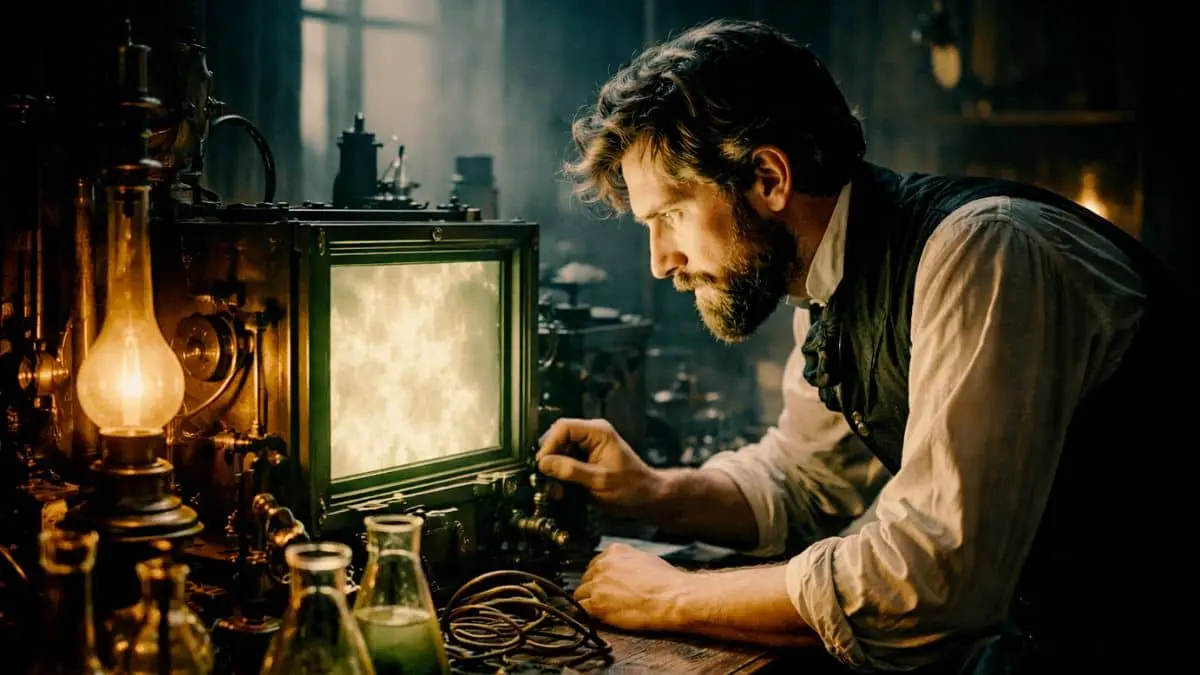
Early X-ray experiment showing fluorescent screen glowing during cathode ray testing

On the afternoon of November 8, 1895, in his small laboratory at the University of Würzburg in Germany, Wilhelm Conrad Röntgen was working alone. The air was cold and quiet, and the room was filled only with the faint hum of electrical equipment. Röntgen was experimenting with a Crookes tube, a partially evacuated glass tube designed for studying cathode rays. That night, his goal was simple: to observe how these rays behaved when surrounded by various materials.)

Röntgen had covered his Crookes tube with black cardboard so that any faint glimmer or effect produced by the cathode rays could be observed. This ensured complete darkness. When a high-voltage current passed through the tube, he suddenly noticed a strange, flickering glow coming from a bench several feet away. On that bench was a small screen coated with barium platinocyanide. This is a material known to fluoresce when exposed to certain types of radiation.

The glow was a puzzle to him. The illuminated screen was positioned too far to affect the ordinary light coming through the tube or the cathode rays, and it was impossible to pass through cardboard or air. Something invisible was passing through the cardboard and striking the screen. Curious, Röntgen systematically began to experiment. He placed various objects—wood, books, and metal plates—between the tube and the screen. Despite the different intensities, the strange glow continued to appear. 

Then an even more astonishing observation was made. When he placed his own hand between the tube and the screen, he saw that the projected image on the glowing surface displayed the shadows of his bones. Although the flesh appeared transparent, the bones were dark and dense. Röntgen discovered a new, invisible, powerful kind of ray that could penetrate materials that ordinary light could not.

Over the next few weeks, Roentgen continued his experiments repeatedly and meticulously, working in complete secrecy. He needed to obtain objective confirmation of what he had discovered before announcing it to the world. He investigated how this new kind of ray behaved as it passed through various materials, metals, glass, paper, and even water. He noted that dense materials absorbed more of the rays, while lighter materials allowed them to pass through easily. 

To record his results, he used photographic plates to capture permanent images of the shadows created by the rays.

On December 22, 1895, Röntgen captured something that became one of the most famous scientific photographs in history; it was an image of his wife, Anna Bertha. The photograph revealed the bones in her hand and a dark shadow of her wedding ring. When she saw it, she exclaimed in shock, ‘I have seen my death!’ This remarkable image became the first X-ray photograph of part of the human body, symbolizing the beginning of a new era in science and medicine.

Röntgen referred to his mysterious rays as ‘X-rays,’ using ‘X’ to signify the unknown. He then immediately prepared a detailed scientific paper under the title ‘On a New Kind of Rays’ (Über eine neue Art von Strahlen). He presented it to the Würzburg Physical-Medical Society in late December 1895. In January 1896, the paper was published along with the photograph that astonished the scientific community.

Within a few days, this news spread across Europe and America, arousing equal measures of excitement and disbelief. Scientists hurried to replicate Röntgen’s results. Newspapers around the world celebrated his astonishing discovery.

The discovery of X-rays was not merely a chance occurrence; it was the result of Röntgen’s discipline, patience, and curiosity. While others dismissed that faint glow as a mere curiosity in the laboratory, Röntgen’s investigative intelligence led him to reveal one of the most powerful natural phenomena known to humanity. His approach reflected the true spirit of science.

That one evening in November 1895 marked a turning point in human history. With the discovery of X-rays, the invisible world became visible, and for the first time, structures hidden within and beyond the human body were revealed.

Registration and Initial Experiments

In the latter part of 1895, after Wilhelm Conrad Röntgen’s groundbreaking discovery, the scientific community was swept up in waves of excitement, agitation, and astonishment. No one had ever seen anything like this invisible ray, which could pass through flesh and reveal the hidden structures of bones and metallic objects. Using the mathematical symbol X to denote the unknown, Röntgen called them “X-rays.” The name quickly became popular, but in some countries, like Germany, they were also referred to as “Röntgen rays” in honor of their discoverer.

Within a few weeks of Röntgen’s announcement, laboratories around the world began replicating his experiments. Scientists in France, England, the United States, and Russia were all able to reproduce the remarkable rays using their own Crookes tubes. By early 1896, scientific journals were filled with reports of new X-ray photographs, showing even bullets and small animals lodged within hands, coins, and torsos. The world was witnessing the birth of a new branch of science.

The first public protests

Röntgen was cautious and humble. Believing that scientific knowledge should be freely available to all of humanity, he refused to patent his discovery. However, others were eager to show the new technology to the public. In early 1896, throughout Europe, physics professors began giving famous lectures demonstrating the strange new rays. People lined up to see projections of their own bones on glowing screens. Newspapers described it as ‘seeing the invisible.’

In Paris, the famous physicist Henri Becquerel took an interest in X-rays. While studying them, later that same year, he accidentally discovered radioactivity. In London, scientists at the Royal Institution took numerous photographs using X-rays, which attracted the attention of both doctors and the general public. This event brought the concept from the laboratory into the mainstream of public imagination.

Early medical applications

Historical illustration of early medical use of X-ray imaging

Almost immediately, doctors recognized the tremendous medical potential of Röntgen’s discovery. Before X-rays, doctors had to rely on painful exploration and speculation to identify broken bones, swallowed objects, or tumors inside patients. Now, from a single photograph, they could see inside the human body without a single incision.

In January 1896, just a month after Röntgen published his paper, a Scottish doctor named John Macintyre conducted the first medical X-ray examination in the United Kingdom. He managed to identify a coin accidentally swallowed by a patient. Soon after, hospitals in Europe and America began installing X-ray machines. Soldiers injured in battle could now have their wounds accurately located before surgery. Pain was reduced, and countless lives were saved. It was a medical revolution that expanded overnight.

Curiosity and misconceptions

This discovery sparked public fascination as well as a wave of false beliefs. Some people believed that X-rays could read minds or see through clothing. Entrepreneurs promoted ‘X-ray safe undergarments,’ photographers set up X-ray studios in large cities, offering curious clients ‘bone photographs,’ and newspapers printed cartoons that embarrassed people.

Although many of these ideas were highly imaginative exaggerations, they reflected how mysterious the discovery seemed at the time. Very few people knew the true nature of X-rays. Many believed they might have magical or mental powers. Scientists still were not certain whether X-rays were a form of light, a new particle, or something entirely different.

The dawn of a new era

Within a few months of Röntgen’s announcement, X-ray science became a tool of intense curiosity in a range of fields, including science, medicine, and even art. Early experimenters used X-rays to study the internal structures of plants, insects, and metals. Artists were inspired by the ethereal beauty found in X-ray images. Engineers used them to inspect machinery and detect fractures invisible to the naked eye.

However, behind all this enthusiasm, there was a hidden danger that few understood at the time. Early X-ray operators often suffered burns and injuries due to prolonged exposure. They did not realize that the rays could harm living tissues. It would take many years before the medical risks of X-rays were recognized and safety precautions were introduced.

Yet, in the early months of 1896, the world watched in amazement at Röntgen’s remarkable rays. They had opened a window to the unseen, transforming science, medicine, and human imagination forever.

The Scientific response and global spread

News about Wilhelm Conrad Röntgen’s extraordinary ‘X-rays’ spread faster than any scientific discovery of that time. By the early part of 1896, just two months after Röntgen published his paper, the entire scientific world was captivated. From Europe to North America and Asia, physicists, doctors, and engineers began conducting experiments with cathode-ray tubes to reproduce the effects. As remarkable as this discovery was, many newspapers described it as ‘the wonder of the new era.’

A wave of experiments spread worldwide

Scientific institutions and universities were quick to confirm Röntgen’s results. In England, Sir William Crookes, who had developed the capability to detect rays using a vacuum tube, verified the existence of X-rays. He praised Röntgen’s systematic approach. In France, Henri Poincaré and Henri Becquerel conducted their own experiments, and by the end of that year, Becquerel discovered natural radioactivity. In the United States, Thomas Edison, who was always attentive to new inventions, began building his own X-ray apparatus and testing fluorescent materials to improve image clarity.

This discovery was remarkable not only for its novelty but also for its simplicity. Any physics laboratory could reproduce X-rays using a Crookes tube, a Ruhmkorff coil (for high voltage), and a photographic plate. As a result, within a few weeks, numerous laboratories in Europe and America generated X-rays and distributed photographs through newspapers and scientific journals.

Scientific Wonder and Appreciation

The meticulously written documents by Röntgen astonished even the most skeptical scientists. His paper entitled “On a New Kind of Rays” became a model of accuracy and restraint. It presented photographic evidence that could not be dismissed without doubt. When depicting the images of bones, coins, and metallic objects, disbelief gave way to admiration.

The Royal Society of London, the French Academy of Sciences, and many other institutions immediately recognized the significance of this work. Many leading physicists described it as the greatest discovery since electricity. In a world beginning to understand electromagnetism, the idea that invisible rays could pass through dense matter opened new dimensions in physical understanding.

Röntgen’s recognition and humility

Without seeking sudden fame, Röntgen remained humble. He turned down publicity and refused to take out a patent for his new invention. Later in life, he donated his Nobel Prize money to his university. When asked why he called them ‘X-rays,’ he simply replied, ‘I did not know what they were.’

In 1901, Röntgen received the first Nobel Prize in Physics. It was awarded for ‘the extraordinary services he rendered by discovering the remarkable rays later named after him.’ Nevertheless, he downplayed his achievement, stating that he ‘continued the work that was in progress,’ and that the discovery ‘was a chance combination with persistent effort.’

It quickly spread through medicine and industry

By the late 1890s, X-rays were transforming medical treatments around the world. In Britain, France, and the United States, hospitals were already using X-rays to detect fractures, locate bullets, and diagnose invisible diseases. During wartime, X-ray units were transported to the battlefield. This helped save soldiers’ lives through precise surgical guidance.

Beyond medicine, scientists used X-rays to study the structure of crystals and metals. This contributed to the development of X-ray crystallography, which later became a field that revealed the secrets of DNA and other macromolecules. Engineers used them to detect faults in pipelines and machinery. Artists and archaeologists used X-rays to examine paintings, fossils, and ancient artifacts without causing damage.

A discovery that unified the world

Roentgen’s discovery proved to be something rare. It united scientists, doctors, and the general public in a shared sense of wonder. It demonstrated how careful observation, combined with curiosity and a bit of luck, could reveal new worlds hidden within ordinary things. X-rays bridged the gap between physics and medicine, theory and application, creating one of the earliest examples of interdisciplinary science.

In less than a year, X-rays had traveled from a quiet laboratory in Würzburg to every continent on Earth. For the first time in history, humanity could see the invisible not through imagination but through the power of science.

The impact on medicine and modern science

In 1895, the discovery of X-rays did more than introduce a new scientific phenomenon. It redefined the relationship between science and human life. For the first time in history, doctors could see inside the human body without surgery. What began as a laboratory curiosity quickly became one of the most powerful diagnostic tools ever discovered. Its influence on medical science, physics, chemistry, and even biology has continuously contributed to shaping modern science for more than a century.

The revolution in medical diagnostics

Before Röntgen’s discovery, identifying internal injuries was often a matter of estimation. Broken bones, swallowed objects, or internal bleeding could only be confirmed through painful or invasive methods. Within a few months of his discovery, hospitals in Europe and America began using X-ray machines to obtain images of patients’ bones and organs. This allowed:

  • Doctors need to clearly see fractures.
  • Detection of bullets or metal pieces.
  • Accurate identification of hidden infections or tumors.

In 1896, a year after Röntgen’s announcement, doctors in the United Kingdom and the United States were already publishing medical journals filled with X-ray images. Surgeries became more precise, safer, and less invasive.

Dental science was also transformed by X-rays. Dentists began to use X-ray images to detect cavities, root infections, and bone damage that were previously invisible. This early form of dental radiology still remains a standard practice today, even though more than a century has passed.

The birth of radiology

Roentgen’s discovery gave rise to an entirely new branch of medical science called radiology. Radiologists became specialists in interpreting X-ray images. They developed artistic techniques to distinguish between healthy and diseased tissues. The medical field quickly expanded. Subsequently, new equipment was developed to control exposure time, enhance image clarity, and protect both patients and operators from radiation.

By the early part of the 20th century, dedicated departments of radiology had been established in hospitals. The profession of radiologic technologists and skilled operators capable of handling X-ray equipment emerged. As technology advanced, scientists developed contrast agents that made blood vessels and organs more visible under X-rays. This allowed doctors to map the body with unprecedented detail.

Radiation therapy and cancer treatment

Another unexpected result of Röntgen’s discovery was the use of X-rays for cancer treatment. A short time after his discoveries, scientists like Marie and Pierre Curie discovered radioactive elements such as radium and polonium. They realized that radiation could not only reveal hidden structures but also destroy diseased cells.

By the early 1900s, doctors were experimenting with controlled doses of radiation to treat cancers and skin cancer. This approach evolved into radiation therapy, one of the most important treatments in modern oncology. Today, millions of cancer patients worldwide receive life-saving radiation treatments, which can be directly traced back to Röntgen’s discovery.

Expanding scientific boundaries

Beyond medicine, X-rays completely opened up a new field of research. In physics, they revealed the internal structure of matter. In 1912, Max von Laue demonstrated that X-rays could be diffracted by crystals. He proved that X-rays are similar to light, but in many ways are a form of highly penetrating electromagnetic radiation. This led to the development of X-ray crystallography, a revolutionary method for studying molecular structures.

To honor crystallography, scientists later discovered the double helix structure of DNA in 1953. This is one of the greatest scientific achievements of all time. Chemists used X-rays to analyze substances and discover new elements. Engineers used them to test welding and detect defects in aircraft and machinery, ensuring safety and accuracy in industrial design.

A lasting legacy

Even today, more than a century later, X-rays remain at the heart of modern science and medicine. They form the basis for advanced imaging techniques such as CT scans (computed tomography), fluoroscopy, and airport security scanners. Every time a patient undergoes a chest X-ray or a doctor examines a broken bone, they are using the same Roentgen principle discovered by accident in 1895.

Roentgen’s discovery changed not only how humans see their bodies but also how they understand the universe. It demonstrated that curiosity, patience, and observation, even when born by accident, can lead to discoveries that transform the world.

The Hidden dangers and developments in safety

Although Wilhelm Conrad Röntgen’s discovery of X-rays was celebrated worldwide, the potential hazards were not initially known. In the enthusiasm to see bones and hidden objects through dense materials, early scientists and doctors did not pay much attention to the harmful effects of long-term radiation exposure. It took many years of observation and experimentation for the medical community to fully understand the risks associated with X-rays.

Early incidents of radiation injuries

Within a few months of the widespread availability of X-rays, reports emerged of burns, hair loss, and skin injuries among scientists and medical personnel who worked closely with the new rays. Doctors who frequently conducted X-ray examinations on patients often suffered from reddened skin, persistent wounds, and even tissue damage. In some cases, long-term exposure led to serious conditions, including cancer.

These initial injuries largely occurred due to a lack of safety measures. Operators often held photographic plates by hand or positioned patients close to the X-ray tubes, unaware that X-rays could penetrate human tissue. Protective coverings, safety aprons, and maintaining the proper distance were not yet standard practice, and the first laboratories lacked controlled exposure equipment.

Identifying Hazards

X-rays are a type of ionizing radiation capable of altering the atomic structures within cells, which medical professionals began to understand in the early part of the 20th century. Research conducted by scientists such as Marie Curie and Herman Joseph Muller highlighted the long-term effects of radiation. This emphasized the necessity of caution in both medical and research practices.

As awareness grew, scientific and medical communities began implementing safety protocols. Protective aprons, gloves, and lead shielding became standard. X-ray machines were redesigned to focus radiation only on the targeted area. Exposure times were reduced, and distance from the source was emphasized as a primary factor for safety.

Development of radiation protection standards

By the mid-20th century, regulatory institutions had established radiation protection standards. Organizations such as the International Commission on Radiological Protection (ICRP) and national health authorities developed guidelines for both practitioners and patients to ensure maximum exposure limits. Monitoring devices, such as dosimeters, allowed professionals to track cumulative exposure over time.

Modern X-ray equipment includes many safety features:

  • Automatic shut-off. 
  • Adjustable beam intensity and precise targeting mechanisms. 
  • Digital imaging enhances image clarity while further reducing exposure.

Today, the risks of X-rays are well understood, and when used responsibly, the benefits far outweigh the dangers.

Lessons Learned

The initial misuse of X-rays serves as a reminder that scientific discoveries often carry unexpected risks. Roentgen’s accidental discovery brought unimaginable benefits but also highlighted the need for caution, study, and regulation. It demonstrates that for every new technology, no matter how promising, its potential impacts on human health and safety must be carefully considered. Despite these challenges, X-rays remain one of the most important tools in medicine, science, and industry. They have transformed our ability to see the invisible, diagnose diseases, and explore the world on atomic and molecular scales. All of this continues to evolve to become safer and more accurate than ever before.

The modern evolution of X-ray technology

After Wilhelm Conrad Röntgen’s accidental discovery in 1895, X-ray technology evolved dramatically. It has progressed from fragile glass tubes capable of producing very detailed images in seconds to modern digital systems. Modern innovations not only improve image quality but also significantly reduce radiation exposure, making X-rays safer and more effective than ever before.

Modern digital X-ray technology used in contemporary medical imaging

Digital X-rays

The transition from traditional photographic plates to digital X-ray detectors brought a revolutionary change in medical imaging. Instead of layers, digital sensors electronically capture X-ray images. This allows them to be instantly viewed and manipulated on computer screens. It:

  • Reduces the need for repeated exposures.
  • Lowers radiation doses.
  • Improves diagnostic accuracy.
  • Allows radiologists to make adjustments.
  • Enables enlargement and side-by-side comparison in areas of interest.

Digital X-rays are widely used in the fields of dentistry, orthopedic medicine, and general medicine, providing clear and detailed images of bones, teeth, and organs. Due to the efficiency and convenience of digital systems, X-rays can be accessed more quickly and easily for disease diagnosis, even in small clinics and mobile health units.

Computed Tomography (CT)

One of the most significant advances following Röntgen’s discovery is Computed Tomography (CT). Developed in the 1970s, CT scans use X-rays from multiple angles to create three-dimensional images of internal structures. Unlike standard X-rays that produce flat images, CT scans provide detailed cross-sectional views, allowing accurate detection of tumors, internal bleeding, and organ abnormalities.

CT technology has been transformative in medical science. It allows for earlier disease diagnosis, minimally invasive treatments, and better surgical planning. Today, it is essential in emergency treatment rooms, oncology, cardiology, and neurology.

Fluoroscopy Examination and Real-Time Imaging

Another advancement in X-ray technology is the fluoroscopy examination, which produces moving images of the body in real time. Surgeons and cardiology specialists use fluoroscopy to accurately guide catheters, implants, and other devices, reducing risks during procedures. Modern systems incorporate low-dose protocols to minimize radiation exposure while maintaining high-quality images.

AI-Assisted X-ray Analysis

Artificial Intelligence (AI) has recently entered the field and further enhances the ability to diagnose diseases through X-rays. Machine learning algorithms can now identify fractures, hidden infections, cancer, and other abnormalities with high accuracy, often faster than human radiologists. AI helps optimize imaging parameters, reduce unnecessary exposure, and improve workflow efficiency.

In developing countries and remote areas, mobile X-ray units powered by AI are useful in providing high-quality diagnostics where specific expertise is lacking. This integration of automation and human oversight represents a new frontier in medical imaging.

Industrial, security, and scientific applications

In addition to medical science, X-ray technology is used for industrial inspection, airport security, and scientific research. Engineers use X-rays to examine welding, pipelines, and aircraft components for hidden defects. Archaeologists and art historians use X-ray images to examine fossils, artifacts, and paintings without causing damage. Security agencies scan luggage and cargo to detect illegal items and threats.

In science, X-ray crystallography and other advanced technical methods are continuously used to reveal the structures of molecules, proteins, and DNA. It enables progress in the fields of chemistry, biology, and medicine.

It is a continuously evolving technology

From Roentgen’s first accidental glow in a dark laboratory to today’s complex imaging tools, X-ray technology has evolved beyond imagination. Modern developments emphasize safety, accuracy, and multifunctionality. What began as an experiment with cathode rays has proven to provide immeasurable benefits to humanity.

The journey of X-rays showcases the power of curiosity and innovation, illustrating how a single discovery can evolve into transformative technology spanning medicine, science, and industry.

Conclusion

The accidental discovery of X-rays by Wilhelm Conrad Röntgen in 1895 remains one of the most remarkable events in the history of science. What began as a simple laboratory experiment with a Crookes tube revealed an invisible form of radiation that could pass through solid objects. It permanently transformed medicine, physics, and technology.

X-rays brought a revolutionary change in medical diagnosis. They allowed doctors to identify bone fractures, detect foreign objects, and diagnose diseases without invasive procedures. This led to the development of radiology, radiation therapy, and advanced imaging techniques such as CT scans and fluoroscopy. Beyond medicine, X-rays opened new pathways in physics, crystallography, and industrial testing, shaping scientific understanding and practical applications worldwide.

The journey from Röntgen’s first dazzling screen to today’s AI-assisted imaging demonstrates the power of curiosity, careful observation, and relentless effort. It reminds us that every discovery carries both opportunities and responsibilities. Early radiation injuries prompted the development of strict safety protocols, ensuring that X-rays could be used effectively and safely. More than a century later, X-rays remain essential in medicine, science, industry, and security, and Röntgen’s accidental discovery continues to touch lives. This proves it expands human knowledge. It is a story about serendipity, innovation, and lasting impact. A spark of curiosity illuminates what is unseen and demonstrates how the world can be fundamentally transformed.

FAQs

Who discovered X-rays?

Wilhelm Conrad Roentgen discovered X-rays in 1895 during an experiment with cathode rays.

How was X-ray discovered by accident?

Roentgen noticed a fluorescent glow on a screen while testing tubes—revealing invisible rays that could pass through objects.

References

Disclaimer

This is an educational blog created solely for informational purposes. All written content is researched and prepared by the author. Some images used on this website are generated or enhanced using OpenAI for illustrative purposes only and may not always represent exact real-life or historical accuracy. Readers are encouraged to use this information for learning purposes and to consult reliable sources for verification.

Author

Lulu Freeman, a Stanford University History graduate, specializes in researching wars, cultures, and ancient civilizations. With years of experience in historical research and cultural studies, she shares insightful articles that explore humanity’s heritage and evolution. Her passion for uncovering the past inspires readers to understand the roots shaping our modern world

Write A Comment