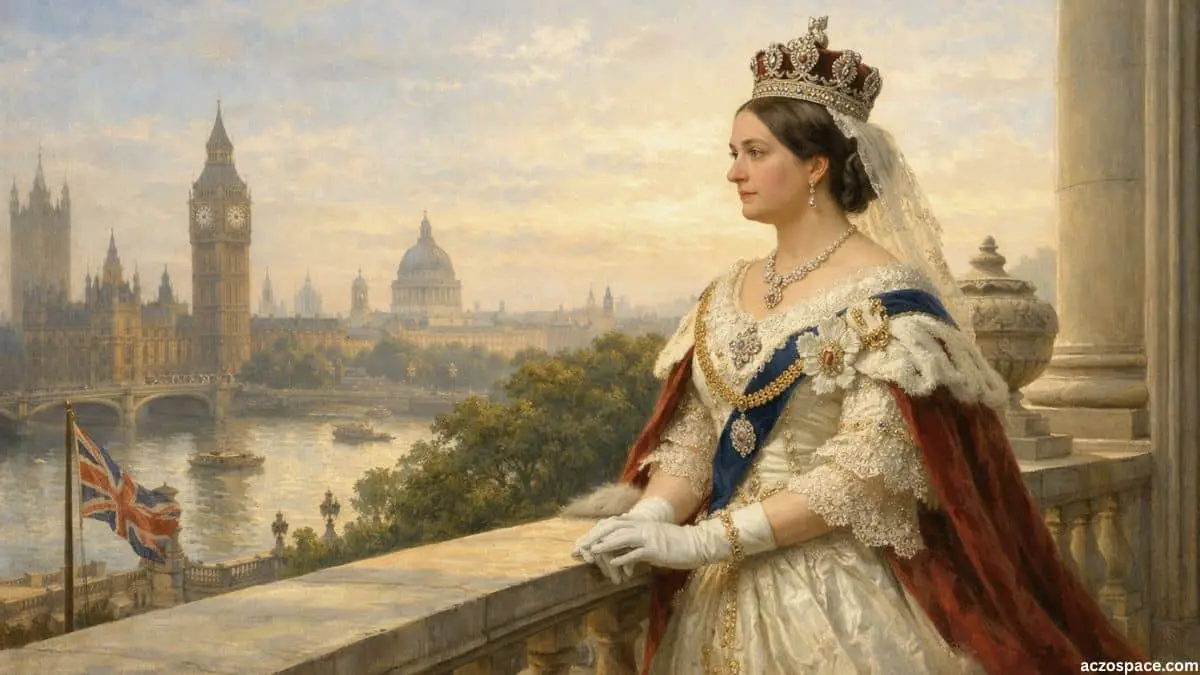
Queen Victoria: The Monarch Who Shaped an Empire
Few names in world history mark a turning point as distinctly as Queen Victoria. During her remarkably long reign, Britain transformed from a relatively modest kingdom into the largest empire the world had ever seen. Ascending the throne in 1837, she ruled for 63 years, becoming one of the most powerful and influential monarchs in British history.
Victoria was more than just a figurehead. The era that bears her name—the Victorian Age—was defined by industrial revolutions, sweeping social changes, legal reforms, and the expansion of global trade. Under her reign, Britain not only consolidated domestic power but also extended its influence across Asia, Africa, Australia, and North America, solidifying its status as a global superpower. Particularly in India, she was recognized as the “Empress of India,” highlighting her central role in the British Empire.
This article explores Queen Victoria’s life, her historical significance, and the impact she had on building the British Empire. From her early years, through her marriage to Prince Albert, to the social and economic transformations of the Victorian era, we’ll examine the legacy she left for the world.
Table of Contents
Quick Facts
| Fact | Detail |
| Full Name | Alexandrina Victoria |
| Born | May 24, 1819 |
| Birthplace | Kensington Palace, London |
| Parents | Prince Edward, Duke of Kent & Princess Victoria of Saxe-Coburg |
| Became Queen | June 20, 1837 |
| Age at Coronation | 18 years old |
| Spouse | Prince Albert |
| Marriage Year | 1840 |
| Children | 9 |
| Reign Length | 63 years, 7 months |
| Title in India | Empress of India (1876) |
| Era Named After Her | Victorian Era |
| Died | January 22, 1901 |
| Legacy | Expansion of the British Empire & Industrial Revolution leadership |
Early Life of Queen Victoria
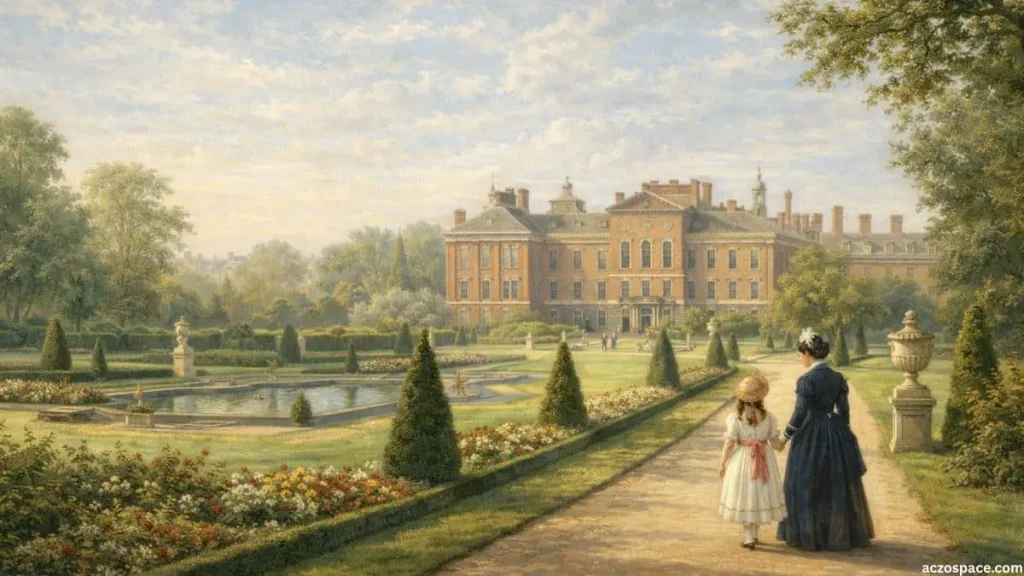
Queen Victoria’s early years hold a unique place in British royal history. Though she would later become the ruler of the largest empire in history, her childhood was far from carefree. The strict supervision, rigid rules, and unconventional education she experienced profoundly shaped her character and leadership style.
Birth and Royal Heritage
Victoria was born on May 24, 1819, at Kensington Palace in London. Her full name was Alexandrina Victoria. She belonged to the House of Hanover, a dominant royal family that had guided Britain through the 18th and early 19th centuries.
Her father, Prince Edward, Duke of Kent, was the fourth son of King George III. This connection placed Victoria directly in line for the throne. Her mother, Princess Victoria of Saxe-Coburg-Saalfeld, came from a German royal family, linking young Victoria to the wider network of European monarchies.
After her father’s early death, Victoria’s upbringing was closely controlled by her mother and her appointed governess, leading to a highly sheltered and structured childhood. This environment of constant oversight instilled both discipline and resilience, qualities that would define her reign.
Childhood Challenges and Education
Victoria’s youth was marked by isolation and strict rules under a system known as the “Kensington System,” designed to control almost every aspect of her life. She was kept largely separated from other children and required to follow rigid routines, limiting her independence.
Though often lonely, these challenges strengthened her character, building the self-confidence and determination that would later define her reign.
Her education was extensive and carefully curated. She studied English, German, French, history, geography, and music—subjects that prepared her for the intellectual and political demands of the throne. This rigorous training helped Victoria develop the disciplined mind, strong judgment, and leadership skills necessary for a monarch guiding a rapidly changing empire.
Through these formative experiences, Victoria evolved into a resilient and decisive young woman, ready to assume the responsibilities of ruling one of the world’s most powerful nations.
Ascension to the Throne
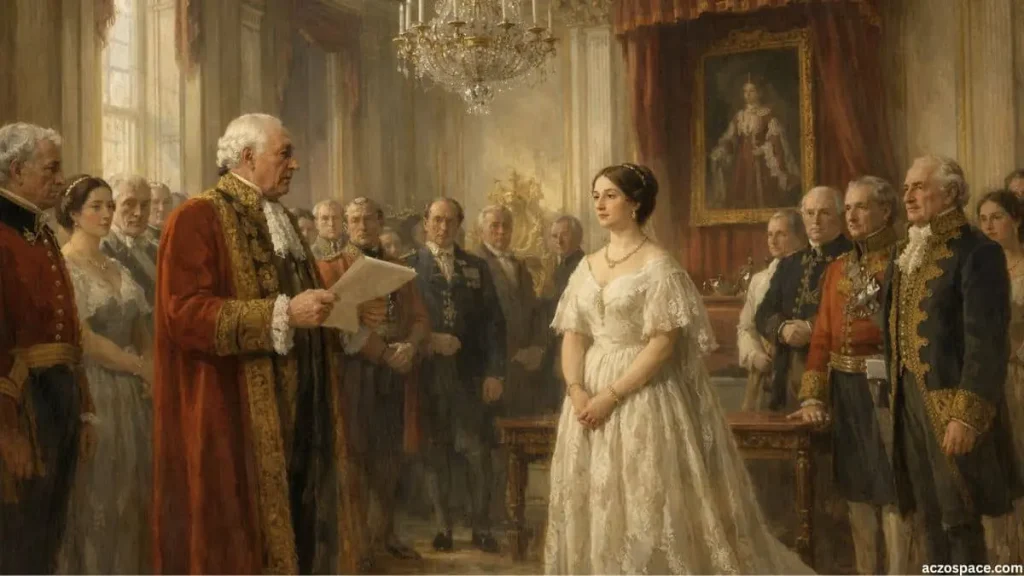
Victoria’s accession marked the beginning of a new era in British history. Although she was only 18 when she became queen, her rise to power coincided with a period of dramatic social, economic, and political change.
Becoming a Young Queen
On June 20, 1837, following the death of King William IV, Victoria became queen at just 18 years old. She assumed leadership over a kingdom undergoing rapid industrialization, urban growth, and political transformation. Rising to the throne at such a young age was both a personal and political challenge, as doubts about her inexperience initially caused public concern.
Despite these challenges, Victoria’s intelligence, composure, and dedication quickly won over her subjects. Her early years as queen set the stage for a reign that would profoundly shape Britain and the wider world.
Early Decisions and Establishing Independence
One of Victoria’s first acts as queen was to assert her independence from the strict oversight of her mother and her advisor, Sir John Conroy. This decision signaled that she was ready to govern on her own terms and make her own choices—a bold step for such a young ruler.
She also worked closely with her prime ministers, especially Lord Melbourne, whose guidance helped her navigate the complexities of governance. Her early interactions with political leaders allowed Victoria to quickly develop a deep understanding of British politics, laying the foundation for decades of influential rule.
Public perception of the young queen evolved rapidly. Initial skepticism about her youth and inexperience gave way to admiration for her dedication, discipline, and the dignity with which she carried out her duties. These early years solidified the authority and popularity that would carry her through a long and historic reign.
Marriage to Prince Albert and Its Impact
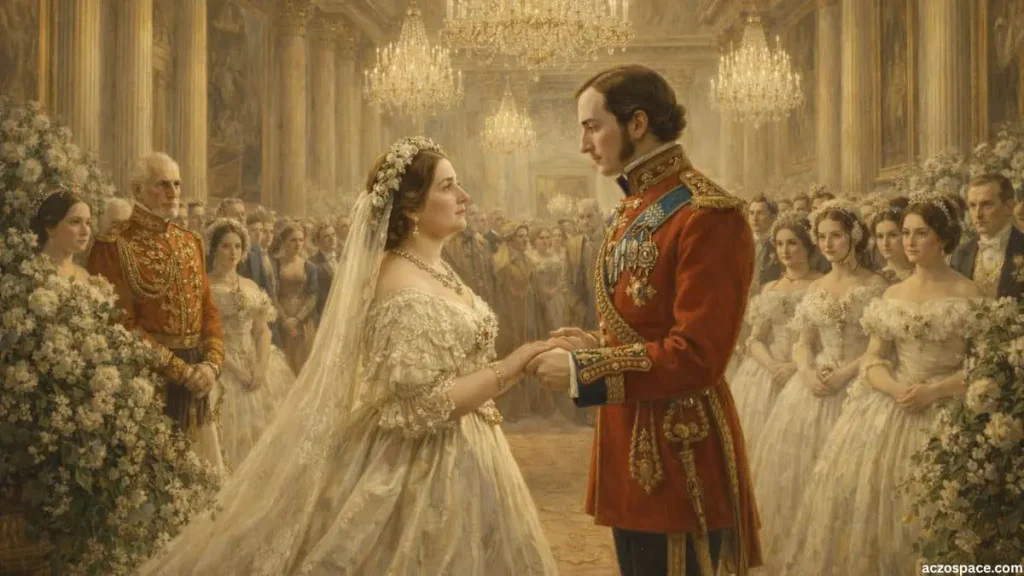
Queen Victoria’s marriage was not just a pivotal moment in her personal life—it had profound implications for British governance and the royal household. Her union with Prince Albert shaped her character, political thinking, and approach to statecraft, setting a standard for monarchy during the Victorian era. Together, they became an iconic royal couple whose partnership influenced both the nation and the broader empire.
A Love Story and Royal Wedding
Victoria’s relationship with Prince Albert of Saxe-Coburg and Gotha began as a typical European dynastic connection but quickly evolved into a deep personal bond. They first met as children, but the path toward marriage only opened after Victoria ascended the throne.
On February 10, 1840, Victoria and Albert were married in a ceremony celebrated with great pomp and enthusiasm throughout Britain. Their marriage was remarkable not only for its public grandeur but also for the genuine affection between them, clearly reflected in Victoria’s diaries and letters. Their emotional closeness was unusually strong for a royal marriage, emphasizing mutual respect and partnership.
This deep personal connection bolstered Victoria’s emotional stability and confidence in her political duties. Albert became her most trusted advisor, companion, and confidant, playing a central role in both her private and public life.
Prince Albert’s Role in Governance
Though he was never a king, Prince Albert exerted considerable influence over British political life. He acted as Victoria’s principal advisor, helping her navigate complex decisions and supporting the efficient management of state affairs.
Albert had a keen interest in education, science, industrial innovation, and administrative reform. He worked to streamline royal correspondence, official documents, and parliamentary communications, introducing a level of organization and efficiency that would shape modern monarchy. His guidance helped Victoria implement a more structured approach to governance, leaving a lasting imprint on the British political system.
Beyond politics, Albert helped present the royal family as a model of social responsibility and moral propriety. The couple’s visible commitment to family values reinforced middle-class ideals and societal norms, strengthening the cultural foundations of the Victorian era.
Family Life and Legacy
Victoria and Albert had nine children, whose marriages into various European royal families earned Victoria the nickname “Grandmother of Europe.” These dynastic alliances strengthened Britain’s political and diplomatic connections across the continent.
By presenting the royal household as a model of domestic order and moral discipline, Victoria and Albert popularized values such as family loyalty, responsibility, and civic virtue. Their marriage became a public example of emotional partnership and moral guidance, shaping perceptions of monarchy in Victorian society.
Victoria’s union with Prince Albert was more than a personal milestone; it was a defining event in British history. It enhanced the stability of the monarchy, influenced the governance of the empire, and left a legacy of family and social ideals that endured throughout the Victorian era.
The Victorian Era: A Period of Transformation
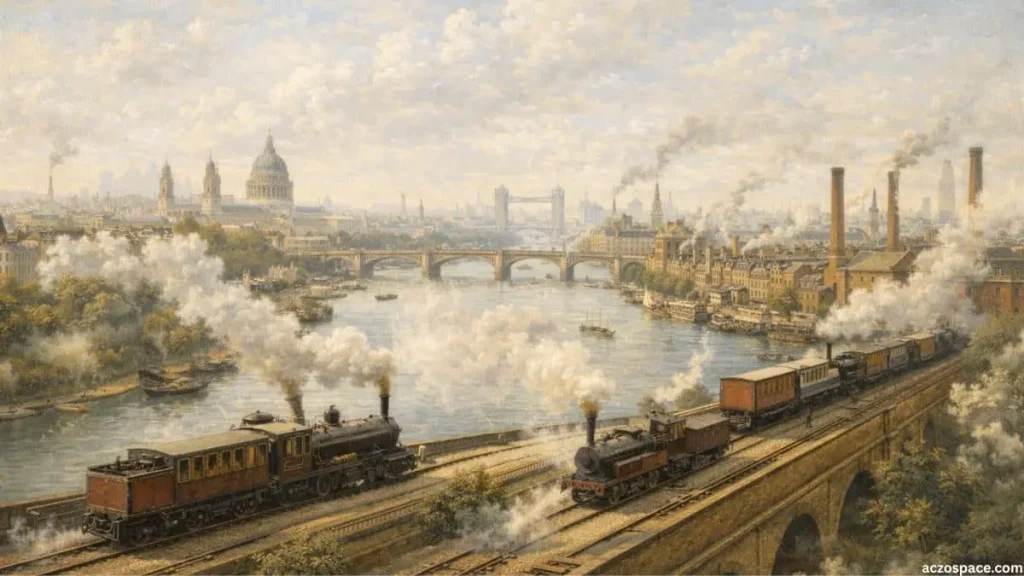
The Victorian era stands as one of the most transformative periods in British history. During Queen Victoria’s long reign, Britain experienced profound economic, social, and cultural changes that propelled it to global prominence. This era saw the Industrial Revolution reshape every aspect of daily life, creating new social structures and ways of living while establishing Britain as a leading world power.
The Industrial Revolution and Economic Growth
The Industrial Revolution was the defining feature of the Victorian era. Traditional agricultural economies gave way to industrialized systems, with factories replacing farms as the primary centers of production. This shift prompted mass migration from rural villages to urban centers, a process historians call urbanization.
Technological advancements like steam engines and railways revolutionized transportation and trade, allowing Britain to dominate global commerce. Industrialization reduced production costs, expanded markets, and accelerated economic growth—hallmarks of Victorian Britain’s prosperity.
However, industrial growth also brought significant challenges. Factory workers faced long hours, low wages, and hazardous working conditions. Child labor was common, and urban housing often lacked basic sanitation. These hardships highlighted the darker side of industrial progress and spurred early social reforms.
Social Change and Class Structure
Victorian society was sharply divided into three main classes:
- The upper class, composed of aristocrats and wealthy landowners.
- The middle class, including business owners, engineers, and professionals.
- The working class is made up of industrial laborers and urban poor.
The Industrial Revolution empowered the middle class, giving rise to a new social and economic force. Yet for the working class, daily life was often grueling. Children and women worked long hours in factories, while overcrowded housing and limited access to education created widespread hardships.
These inequalities eventually led to social reform initiatives. During the Victorian era, legislation was introduced to protect workers’ rights, restrict child labor, improve education, and advance public health. Such measures were critical in shaping a more equitable society and laid the groundwork for modern social welfare.
Cultural and Moral Values of the Era
Beyond economics and social structure, the Victorian era was defined by its distinctive cultural and moral values. Victorian morality emphasized discipline, proper behavior, family life, and social responsibility. These ideals guided both public life and personal conduct, creating a strong sense of social order.
Gender roles were clearly defined: men dominated economic and political spheres, while women were largely responsible for domestic life and child-rearing. At the same time, debates about women’s education and social rights began to emerge, setting the stage for future movements toward gender equality.
The Expansion of the British Empire Under Queen Victoria
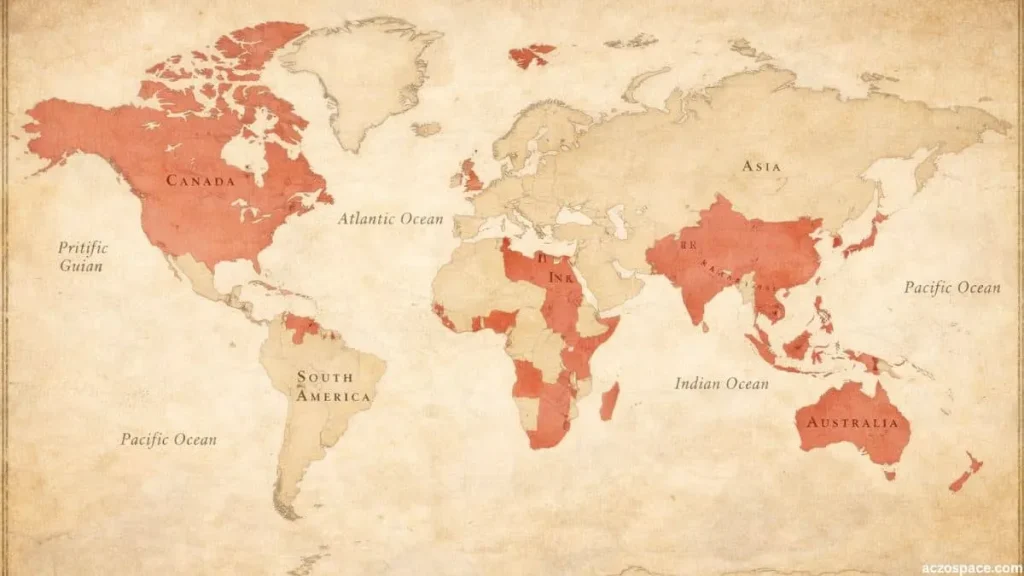
During the 19th century, no empire shaped global politics more profoundly than the British Empire under Queen Victoria. Her reign saw the empire grow to unprecedented scale, earning Britain the title of the “Empire on which the sun never sets.” Economic might, political influence, and military power combined to make imperial expansion a defining feature of the Victorian era.
Colonies Across Continents
Under Queen Victoria, the British Empire expanded rapidly across Asia, Africa, and Australia. This expansion was driven by industrialization, which created demand for raw materials, opened new markets for British goods, and fueled ambitions for political dominance.
In Asia, territories such as India, Sri Lanka, Burma (modern Myanmar), and the Malay states came under British control. In Africa, Britain established authority over South Africa, Nigeria, Kenya, and Egypt. Meanwhile, Australia and New Zealand grew into significant colonial outposts, forming the foundation of Britain’s presence in the Pacific.
Among these territories, India held a special place in the empire. Its vast resources, population, and strategic location made it the “jewel in the crown” of British imperial power.
India and the Title “Empress of India”
In 1876, Queen Victoria was officially proclaimed “Empress of India.” This symbolic event underscored both the importance of India within the empire and the global reach of its authority. British administration introduced profound political, economic, and infrastructural changes, including railways, legal systems, and bureaucratic governance.
While these measures strengthened imperial control, they also created economic and social inequalities for the local population. Nevertheless, India’s central role in the empire highlighted its unparalleled strategic and economic value, making it the linchpin of Victoria’s global power.
Global Power and Trade Networks
Britain’s rise as a dominant global power during Victoria’s reign rested on its formidable navy. Control of the seas allowed Britain to secure trade routes, connect distant colonies, and project military power worldwide.
This naval supremacy, combined with an extensive network of colonies, created a vast global trade system. Raw materials flowed from colonial territories to Britain, where they were processed into manufactured goods and exported back to global markets. This cycle reinforced both economic prosperity and imperial authority, solidifying Britain’s dominance in international trade.
By the end of her reign, Queen Victoria presided over an empire that was not only politically and militarily influential but also the central hub of global commerce—a legacy that marked the Victorian era as one of the most remarkable periods in world history.
Political Influence and Constitutional Monarchy
Queen Victoria’s political role illustrates the transformation of traditional royal authority into a modern constitutional monarchy. During the Victorian era, Britain shifted from a near-absolute monarchy to a parliamentary system in which the sovereign’s direct power diminished, though her influence remained significant.
Relationships with Prime Ministers
Victoria’s political impact was most evident in her relationships with prime ministers, particularly Benjamin Disraeli and William Gladstone.
Her bond with Disraeli was warm and respectful. Disraeli valued her opinions, notably consulting her on the decision to crown her “Empress of India.” While Victoria wielded no formal legislative authority, her input could subtly influence policy and reinforce royal symbolism.
In contrast, her relationship with Gladstone was often tense. Gladstone’s liberal policies and forthright style occasionally clashed with Victoria’s views. Yet, despite these disagreements, a professional mutual respect endured, exemplifying the balance between monarchy and elected government within the constitutional framework.
Evolution of the Constitutional Monarchy
Throughout the Victorian era, the queen’s direct political authority gradually decreased, with Parliament and the prime minister taking the lead in governance. Yet Victoria remained far from a purely ceremonial figure. She embodied national unity, serving as a symbolic link between the state and its citizens. Through royal ceremonies, public appearances, and national commemorations, Victoria strengthened both the visibility and the legitimacy of the monarchy.
Her reign redefined monarchy for a constitutional age: power was exercised not only through direct leadership but also symbolically, through experience, influence, and adherence to constitutional limits. This evolution laid the foundation for the modern monarchy of the United Kingdom, shaping the role of the crown as both symbolic and stabilizing.
Challenges, Criticism, and Controversies
Although Queen Victoria’s long reign was marked by significant achievements, it was not without its share of challenges, criticisms, and controversies. Public and historical scrutiny of her rule went beyond her personal leadership style—it often reflected global attention to the ethical and political complexities of the British Empire. As the empire expanded, opposition and resistance emerged in tandem, creating both domestic and international pressure on her monarchy.
Colonial Resistance and Conflicts
During Victoria’s reign, the British Empire faced intense resistance in several of its colonies. The most notable example was the Indian Rebellion of 1857, also known as the Sepoy Mutiny. This uprising, led by Indian soldiers and supported by civilians, challenged the authority of the British East India Company and highlighted widespread dissatisfaction with imperial policies.
The 1857 rebellion exposed significant weaknesses in British administration, including cultural insensitivity, exploitative economic practices, and political mismanagement. In response, governance of India was transferred from the East India Company to direct British Crown control, marking a turning point in colonial administration.
Such incidents fueled broader criticism of imperial policy. Scholars and political commentators increasingly questioned whether the empire’s expansion came at the expense of justice and fairness for the people under British rule. These debates prompted a re-evaluation of the moral and political foundations of Victoria’s global authority.
Public Opinion and the Role of Media
The Victorian era also witnessed the rapid rise of mass media. Newspapers, magazines, and pamphlets spread opinions about Queen Victoria and the royal family, amplifying public scrutiny. Criticism of royal spending and influence grew, especially after the death of Prince Albert, when Victoria withdrew from public life for an extended period.
However, media influence was not entirely negative. When Victoria eventually returned to public duties, participating in royal ceremonies and national celebrations, she helped restore public confidence and strengthen the monarchy’s image. The interplay between public opinion and royal visibility became a defining feature of her reign, illustrating how media could both challenge and reinforce authority.
Ultimately, understanding the challenges, criticisms, and controversies of Victoria’s reign is essential for a balanced view of her legacy. These moments reveal the social, political, and ethical tensions inherent in empire and monarchy, while also highlighting the adaptability of the Victorian state.
Prince Albert’s Death and the Later Years
The final decades of Queen Victoria’s life were profoundly shaped by personal loss and reflection. The death of her husband, Prince Albert, in 1861 had a deep and lasting impact, prompting a long withdrawal from public life that marked a somber chapter in the Victorian era. Yet her eventual return to public duties reaffirmed her commitment to the monarchy and national life.
Grief and Withdrawal from Public Life
Prince Albert’s untimely death plunged Victoria into deep mourning. For many years, she avoided public appearances, refraining from participating in state functions or engaging directly with the public. This period of seclusion reflected both personal grief and a temporary retreat from her symbolic role as the nation’s figurehead.
Victoria maintained limited contact with family and trusted advisors, but her absence shaped public perception and led to critiques of royal detachment. Despite this, her long-term influence on the monarchy remained secure, and the period of withdrawal was later seen as a testament to her humanity and personal devotion.
Return to Public Duties
Eventually, Victoria resumed her royal and public responsibilities, marked notably by the Golden Jubilee in 1887 and the Diamond Jubilee in 1897. These events symbolized both the endurance of the monarchy and the resilience of the queen herself. During the Golden Jubilee, she connected with people across the United Kingdom, demonstrating dignity and the symbolic power of the crown. The Diamond Jubilee further cemented her authority, celebrating the 60th anniversary of her reign and reaffirming her leadership even in her advanced age.
Through these public celebrations, Victoria not only restored her visibility but also reinforced national pride and loyalty. Her later years highlighted the monarchy’s ability to adapt to public expectations while maintaining historical continuity.
Legacy of the Later Years
Prince Albert’s death cast a long shadow over Queen Victoria’s personal life, yet she emerged from mourning to leave an enduring mark on the Victorian era. Her later years showcased a blend of personal resilience, public service, and symbolic leadership. By actively engaging in ceremonial and national events, she strengthened the monarchy’s image and secured lasting public respect.
These decades stand as a defining chapter in the history of the British Empire, illustrating how personal loss, public expectation, and imperial responsibilities intertwined to shape both the queen and the nation. Queen Victoria’s later life thus symbolizes the culmination of the Victorian era, marking the empire’s global significance and the monarchy’s continuing relevance in British society.
Queen Victoria’s Death and Legacy
The final years of the Victorian era marked not only the end of Queen Victoria’s life but also the culmination of a reign that profoundly shaped Britain and the wider world. Her 63-year rule symbolized the enduring strength and stability of the monarchy, and her passing in the early 20th century signaled the close of an era that had transformed both the British Empire and global history.
Death and Funeral
Queen Victoria died on January 22, 1901, bringing the Victorian era to a definitive close and ushering in a new chapter for the British Empire under her successor, King Edward VII. Her death sparked widespread mourning across the United Kingdom and the world, reflecting her global influence and the deep emotional connection the public had with their monarch.
Victoria’s funeral was marked by extraordinary pomp and ceremonial splendor. Attended by dignitaries, royalty, and the general public, it was recorded as one of the grandest royal funerals in modern history. Beyond mourning, it showcased the continuity of royal tradition and reinforced the monarchy’s cultural significance at the end of the Victorian age.
Long-Term Impact on Britain and the World
Queen Victoria’s reign cemented British global influence and left a lasting imprint on cultural, political, and economic life worldwide. Under her leadership, the empire expanded to unprecedented levels, spreading Victorian values and systems across continents.
The era saw the rise of industrialization, technological innovation, global trade networks, and maritime dominance—all hallmarks of Victoria’s influence. Victorian social norms, moral values, and family structures also left a deep imprint, shaping societies far beyond Britain. Her legacy is thus inseparable from the era’s social, cultural, and economic contributions, which continue to inform global history.
Why Queen Victoria Still Matters Today
Though more than a century has passed since her death, Queen Victoria’s influence remains foundational to the modern British monarchy. Her example of leadership, duty, and public service continues to guide royal protocol and civic engagement.
Victoria’s long reign, her fostering of cultural innovation, and her stewardship of the empire secured her a lasting place in world history. Studying her legacy offers unique insights into the exercise of imperial power, Victorian social values, and the evolution of constitutional monarchy.
Conclusion – The Enduring Influence of Queen Victoria

Queen Victoria’s reign provided the foundation for Britain’s transformation during the 19th century. Her legacy is reflected in the empire’s global reach, social reforms, cultural achievements, and political systems, all of which continue to shape the modern world.
The industrial revolution and the expansion of the British Empire during her reign made Britain one of the world’s preeminent powers. Victoria’s leadership, her resilience in the face of personal and political challenges, and her disciplined approach to governance helped establish the stability of the modern monarchy.
Her influence extended across continents, strengthening imperial administration, establishing legal frameworks, and shaping cultural heritage. Even today, her impact endures as a symbol of leadership, imperial reach, and societal transformation.
Ultimately, Queen Victoria’s legacy stands as a testament to a reign that defined a generation, shaped global history, and continues to inform our understanding of leadership, empire, and the enduring power of influence. The Victorian era—and Victoria herself—remains a guiding reference point for understanding Britain’s history and the broader evolution of modern monarchy.
FAQs
What was Queen Victoria famous for?
She was famous for her 63-year reign, the rapid growth of the British Empire, and leading Britain during the Industrial Revolution and major social changes.