U.S. Dollar History and Global Reserve Evolution Explained
The U.S. dollar is more than just a national currency; it is the backbone of global finance. From international trade and oil pricing to central bank reserves, the dollar plays a central role in how the modern world economy functions. Today, countries across the globe rely on the dollar for stability, liquidity, and trust, making it the most widely used currency in global transactions.
Understanding the U.S. Dollar History and Global Reserve Evolution is essential in today’s rapidly changing economic landscape. Issues like inflation, rising global debt, shifting trade alliances, and geopolitical tensions all tie back to the strength and influence of the dollar. Whether you’re a student, investor, or simply curious about world history, knowing how the dollar evolved helps you better understand the forces shaping today’s financial system.
Table of Contents
But this raises an important question: How did one currency rise from a young nation to become the foundation of the global economy?
The Origins of the U.S. Dollar
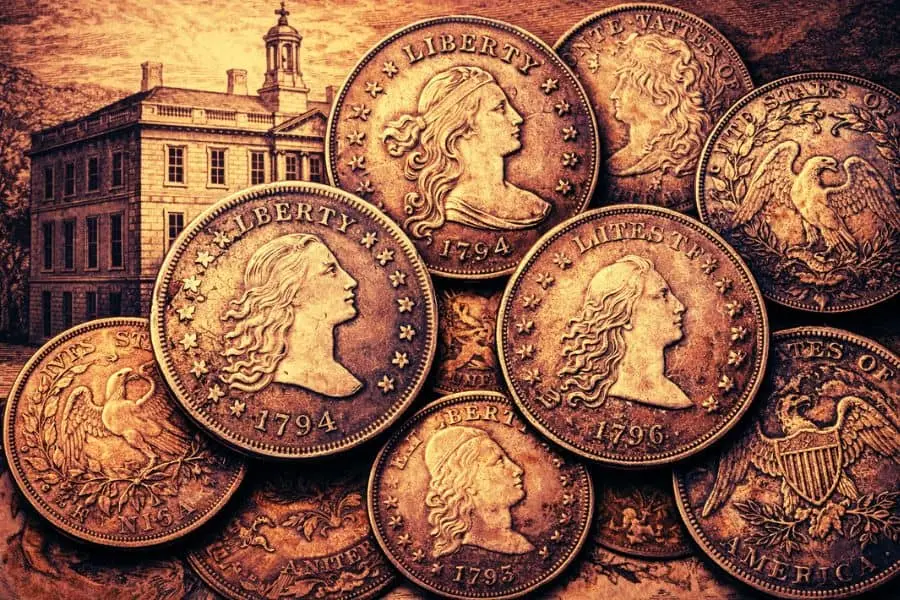
The foundation of the U.S. dollar traces back to the early years of the United States, when the young nation needed a stable and unified monetary system. After gaining independence, economic confusion and inconsistent currencies made trade difficult. This led to the creation of a standardized currency that would eventually evolve into the world’s most dominant financial instrument.
The Coinage Act of 1792
A major milestone in the U.S. Dollar History and Global Reserve Evolution was the Coinage Act of 1792. This law officially established the U.S. dollar as the nation’s standard unit of money and laid the groundwork for a centralized financial system.
One of its most important outcomes was the creation of the United States Mint, which was responsible for producing official coins. This ensured consistency and trust in the new currency.
The Act also introduced a bimetallic system, where the dollar’s value was backed by both gold and silver. This system aimed to provide stability by linking money to tangible assets, making it easier for people and businesses to trust and use the currency.
Early Challenges and Currency Instability
Despite these efforts, the early U.S. financial system faced significant challenges. Before the dollar became widely accepted, different states and banks issued their own currencies, leading to confusion and inefficiency in trade.
Another major issue was the absence of a central banking authority. Institutions like the First Bank of the United States were created to help stabilize the economy, but they were short-lived and politically controversial. Without a strong, permanent central bank, maintaining a consistent monetary policy proved difficult.
As a result, the early years of the U.S. dollar were marked by instability and experimentation. However, these challenges played a crucial role in shaping the resilient financial system that would later support the dollar’s rise to global dominance.
The Gold Standard Era and Its Impact

The gold standard marked a crucial phase in the U.S. Dollar History and Global Reserve Evolution, helping build global confidence in the dollar. By tying currency directly to a physical commodity, governments created a system that promoted trust, stability, and predictability; key ingredients for expanding international trade and investment.
Adoption of the Gold Standard
The United States formally embraced the gold standard with the Gold Standard Act of 1900, which established gold as the sole basis for redeeming paper currency. Under this system, every dollar in circulation could be exchanged for a fixed amount of gold.
In simple terms, the gold standard meant that money had real, tangible value. This reduced uncertainty and reassured both citizens and foreign investors that the currency was backed by something reliable.
Globally, the gold standard created a shared financial framework. Countries that adopted it could easily trade with one another because exchange rates were fixed based on gold values. This stability helped fuel the rapid growth of international trade in the late 19th and early 20th centuries, strengthening the dollar’s position on the world stage.
Benefits and Limitations
One of the biggest advantages of the gold standard was stability. Prices remained relatively consistent over time, and inflation was kept under control because governments couldn’t print money freely without increasing gold reserves.
However, this stability came with a trade-off: economic rigidity. During financial crises or recessions, governments had limited flexibility to respond. Since the money supply was tied to gold, expanding the economy quickly was difficult.
The impact on global trade was significant. While fixed exchange rates made international transactions easier and more predictable, they also meant that economic problems in one country could spread more easily to others. This interconnectedness sometimes amplified global downturns.
In the end, the gold standard helped establish long-term trust in the U.S. dollar, but its limitations eventually led to major changes in the global financial system.
The Bretton Woods System and Dollar Dominance
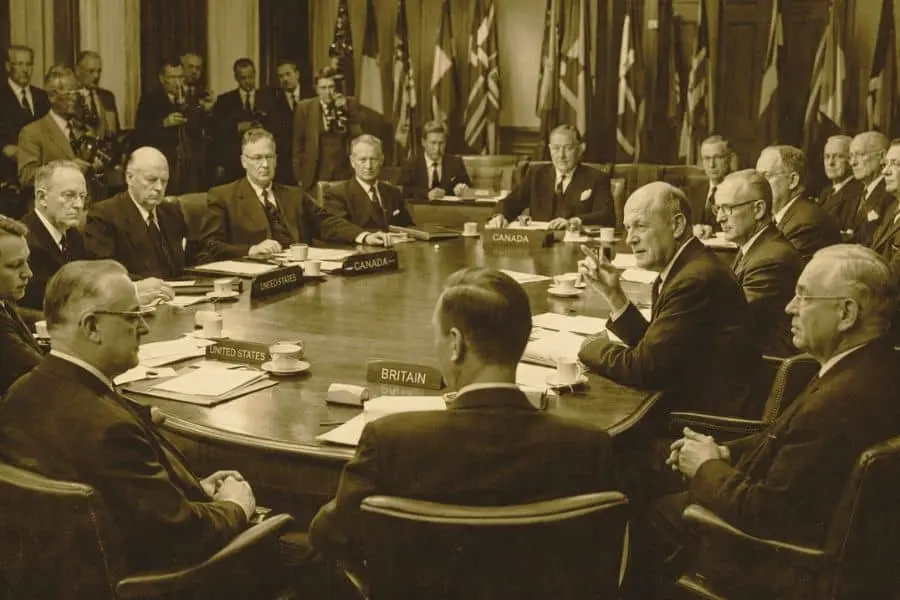
The Bretton Woods Agreement marked a turning point in the U.S. Dollar History and Global Reserve Evolution. After the devastation of World War II, global leaders sought a stable financial system to rebuild economies and prevent future crises. The result was a new international framework that placed the U.S. dollar at the center of global finance, cementing its role as the world’s primary reserve currency.
What Was the Bretton Woods Agreement?
The Bretton Woods system established a structure of fixed exchange rates, where participating countries pegged their currencies to the U.S. dollar. In turn, the dollar was directly convertible to gold at a fixed rate of $35 per ounce.
This effectively made the dollar the world’s anchor currency. Instead of holding gold reserves, countries could hold U.S. dollars, trusting that they could be exchanged for gold if needed. This system combined the stability of the gold standard with the flexibility of modern banking.
The agreement also led to the creation of key global financial institutions like the International Monetary Fund and the World Bank, which helped manage exchange rates, provide financial support, and promote global economic stability.
Why the U.S. Dollar Became the Global Reserve Currency
One of the main reasons for the dollar’s dominance was the unmatched economic strength of the United States after World War II. While much of Europe and Asia were rebuilding, the U.S. emerged as the world’s largest and most stable economy, with vast gold reserves and strong industrial output.
Additionally, international institutions like the IMF and World Bank reinforced the dollar’s global role by using it as a standard for lending and financial transactions. This increased global reliance on the dollar and deepened its integration into international trade and finance.
As a result, the Bretton Woods system didn’t just stabilize the post-war economy; it elevated the U.S. dollar to a position of global dominance that continues to influence the world economy today.
The End of the Gold Standard (1971)
A major turning point in the U.S. Dollar History and Global Reserve Evolution came in 1971, when the United States officially ended the dollar’s direct link to gold. This decision transformed the global financial system, shifting it from a commodity-backed model to one based entirely on trust and government policy. It marked the beginning of the modern monetary era we live in today.
The Nixon Shock
The dramatic policy change known as the Nixon Shock was introduced by Richard Nixon. Facing rising inflation, trade deficits, and declining gold reserves, the U.S. government suspended the dollar’s convertibility into gold.
This effectively ended the Bretton Woods system and the gold-backed dollar. From that point on, the U.S. dollar became a fiat currency, meaning its value was no longer tied to a physical asset but instead backed by government authority and economic strength.
The transition gave policymakers greater flexibility to manage the economy, allowing them to adjust interest rates and money supply without the constraints of gold reserves.
Immediate Global Reactions
The end of gold convertibility triggered significant changes across the global economy. Without fixed gold backing, currencies began to fluctuate more freely against one another, leading to increased volatility in exchange rates.
This shift gave rise to the modern system of floating exchange rates, where currency values are determined by market forces such as supply, demand, inflation, and economic performance.
While this new system introduced uncertainty, it also allowed countries to respond more effectively to economic challenges. Over time, it reinforced the U.S. dollar’s dominance; not because it was backed by gold, but because of the strength and stability of the U.S. economy.
Ultimately, the events of 1971 reshaped global finance, proving that trust in institutions could replace reliance on physical assets in sustaining a global reserve currency.
The Rise of the Dollar in Global Trade and Finance

After the collapse of the gold standard in 1971, many expected the U.S. dollar to weaken. Instead, it entered a new phase of dominance. Without being tied to gold, the dollar became more flexible, and through strategic global systems and economic influence, it strengthened its position as the world’s primary currency for trade and finance.
The Petrodollar System
One of the most important drivers of dollar dominance was the emergence of the petrodollar system. In the 1970s, the United States reached agreements with major oil-producing nations, particularly Saudi Arabia, to price oil exclusively in U.S. dollars.
This meant that any country wanting to buy oil, a critical global resource, needed to hold U.S. dollars. As a result, global demand for the dollar surged, regardless of whether countries traded directly with the United States.
This system reinforced the dollar’s global role by:
- Increasing worldwide demand for USD
- Strengthening U.S. financial influence
- Ensuring the dollar remained central to global energy markets
Role in International Trade and Banking
Beyond oil, the U.S. dollar became the default currency for international trade and finance. Today, a large percentage of global transactions from commodities to manufactured goods are conducted in dollars.
A key factor behind this dominance is the SWIFT system, which enables secure and standardized international banking communications. Most global financial institutions rely on SWIFT, and many of these transactions are denominated in U.S. dollars.
The dollar’s widespread use offers several advantages:
- Simplifies cross-border trade
- Reduces currency exchange risks
- Provides liquidity and global acceptance
Even countries that do not use the dollar domestically often depend on it for international transactions. This widespread adoption has made the U.S. dollar not just a national currency, but the default language of global finance.
Ultimately, the post-1971 era proved that the dollar’s strength no longer depended on gold, but on global trust, economic power, and its deep integration into the world economy.
Challenges to Dollar Dominance
While the U.S. dollar remains the world’s leading reserve currency, its dominance is no longer unchallenged. In recent years, economic shifts, geopolitical tensions, and technological innovation have introduced new competitors and alternative systems that could reshape the future of global finance.
Competing Currencies
Two major challengers to the dollar are the Euro and the Chinese Yuan.
The euro has established itself as a strong regional currency, widely used across Europe and held by central banks as a reserve asset. Its stability and backing by major European economies make it a credible alternative in global finance.
Meanwhile, China has been actively promoting the yuan for international trade. Through initiatives like cross-border trade agreements and financial partnerships, China aims to reduce reliance on the U.S. dollar and expand the yuan’s global footprint.
In addition, regional currencies are gaining influence in localized trade agreements. Some countries are increasingly settling transactions in their own currencies, gradually reducing dependence on the dollar in specific regions.
Digital Currencies and Crypto
Another major challenge comes from the rise of digital finance. Governments and central banks are exploring Central Bank Digital Currencies (CBDCs), which are digital versions of national currencies designed to improve payment systems and reduce reliance on traditional banking networks.
At the same time, decentralized cryptocurrencies like Bitcoin are introducing a completely new financial model. Unlike traditional currencies, Bitcoin operates without a central authority, offering an alternative to government-controlled money.
While these technologies are still evolving, they have the potential to:
- Reduce dependency on the U.S. dollar
- Increase financial decentralization
- Transform global payment systems
The Future of the U.S. Dollar as a Global Reserve

Despite these challenges, the U.S. dollar continues to hold a dominant position. However, its future will depend on how global economic and technological trends unfold in the coming decades.
Will the Dollar Remain Dominant?
The strength of the U.S. dollar is closely tied to the economic power of the United States. As long as the U.S. maintains a large, stable, and innovative economy, the dollar is likely to remain a key player in global finance.
Equally important is global trust. Investors, governments, and institutions rely on the dollar because of the stability of U.S. financial markets, legal systems, and monetary policies. This trust has been built over decades and is not easily replaced.
Possible Scenarios
Looking ahead, several outcomes are possible:
- Multipolar Currency System:
The global economy may shift toward a system where multiple currencies, such as the dollar, euro, and yuan, share influence rather than one dominating completely. - Continued Dollar Leadership:
Despite rising competition, the dollar could maintain its leading role due to its deep integration into global trade, finance, and institutions.
In reality, the future may lie somewhere in between. While the dollar’s dominance may gradually decline, it is unlikely to disappear anytime soon. Instead, the global financial system may evolve into a more balanced and diversified structure.
These developments highlight that the U.S. Dollar History and Global Reserve Evolution is still unfolding, shaped by innovation, competition, and the ever-changing dynamics of the global economy.
Conclusion
The journey of the U.S. Dollar History and Global Reserve Evolution is a story of transformation, resilience, and strategic influence. From its origins in the Coinage Act of 1792, through the discipline of the gold standard, to its global rise under the Bretton Woods Agreement, the U.S. dollar has continuously adapted to changing economic realities. Even after the dramatic shift of the Nixon Shock, the dollar not only survived but strengthened its role in global finance.
Today, despite growing competition from currencies like the euro and the Chinese yuan, as well as emerging digital alternatives, the dollar remains deeply embedded in international trade, banking, and financial systems. Its dominance is supported not just by economic size, but by global trust, institutional strength, and decades of integration into the world economy.
Yet, the future is not guaranteed. As financial systems evolve and new technologies reshape how money moves, the global monetary order may become more diverse and decentralized.The real question is no longer whether the dollar will remain dominant, but how it will adapt in a world where financial power is increasingly shared.
Trusted Sources
Using reliable sources to obtain accurate and truthful information is extremely important. All the information published on this website has been prepared in accordance with historical and scientific accuracy, based on recognized books, research articles, and publications from well-known institutions. Our aim is to provide readers with correct, up-to-date, and trustworthy knowledge.
For further reading:
https://www.federalreservehistory.org
https://www.worldbank.org/ext/en/home
FAQs
When was the U.S. dollar at its strongest?
The U.S. dollar was at its strongest in the early 1980s, especially around 1985, due to high interest rates and strong demand for the currency globally.
Why is the U.S. dollar falling?
The U.S. dollar can fall due to lower interest rates, high inflation, economic uncertainty, or reduced global demand compared to other currencies.