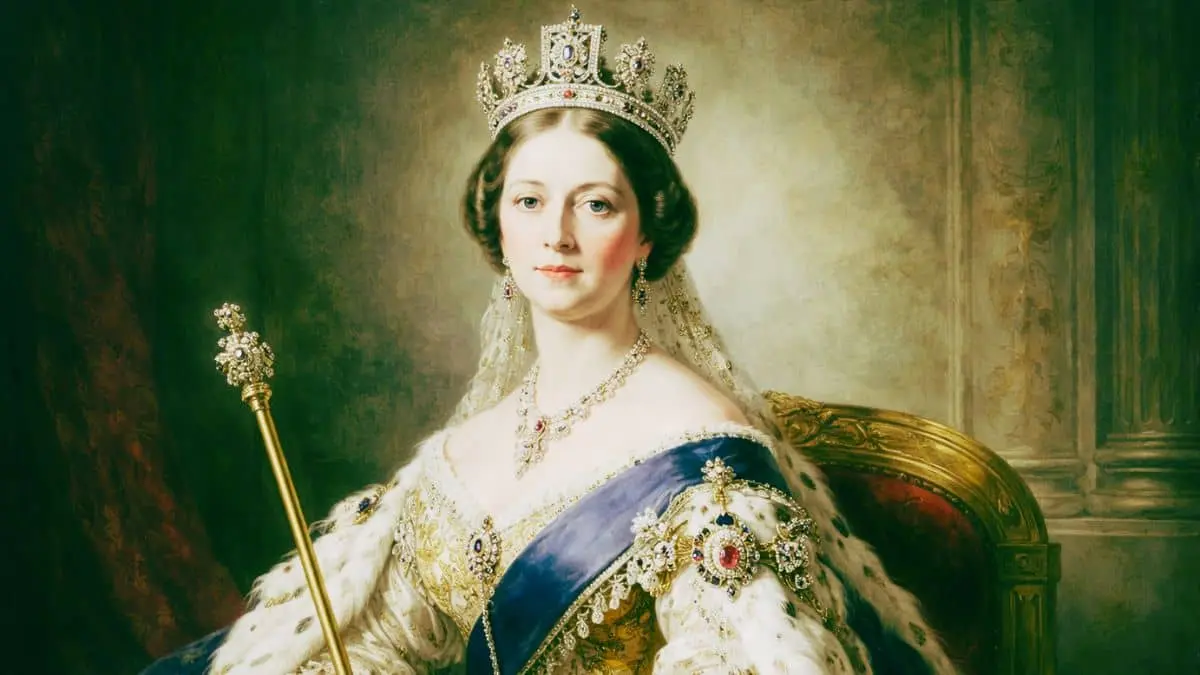
Queen Victoria Biography: The Young Queen Who Built the World’s Greatest Empire
Queen Victoria stands as one of the most influential rulers in world history, presiding over a transformative era that reshaped Britain and much of the globe. Ascending to the throne at just 18 years old, she went on to reign for more than six decades, a period now famously known as the Victorian Era. During her rule, the British Empire reached its peak, expanding across continents and establishing Britain as a dominant global power.
This Queen Victoria Biography not only tells the story of a young queen rising to power but also reveals how her leadership, personal life, and political influence contributed to the rapid growth of an empire “on which the sun never sets.” From industrial progress to cultural transformation, her reign left a lasting mark on modern society.
Table of Contents
In this article, you will explore the early life of Queen Victoria, her rise to the throne, her powerful partnership with Prince Albert, and how her reign shaped the expansion of the British Empire, along with the legacy she left behind.
Queen Victoria Biography: Early Life and Royal Background
Understanding the early years of Queen Victoria provides important insight into how she developed the strength, discipline, and sense of duty that later defined her reign. Her upbringing was carefully controlled, shaping her into a monarch prepared to lead one of the most powerful empires in history.
Birth and Family Heritage
Queen Victoria was born on May 24, 1819, at Kensington Palace in London. She was the only child of Prince Edward, Duke of Kent, the fourth son of King George III, and Princess Victoria of Saxe-Coburg-Saalfeld.
Although she was not initially expected to inherit the throne, a series of deaths within the royal family placed her next in line. This unexpected path to power meant that from an early age, her life was shaped by the expectations of royalty and leadership.
Childhood and Education
Victoria’s childhood was far from ordinary. She was raised under a strict set of rules known as the Kensington System, designed to control her environment and prepare her for future responsibility. She was rarely allowed to be alone and was closely supervised by her mother and advisors.
Despite these restrictions, Victoria received a strong education. She was taught history, languages, politics, and the arts, which helped her develop intelligence and confidence. This disciplined upbringing played a crucial role in shaping her character, giving her the resilience and determination she would later need as queen.
Queen Victoria Biography: Rise to the Throne
The rise of Queen Victoria to the British throne is one of the most remarkable moments in royal history. At just 18 years old, she transitioned from a protected royal upbringing to becoming the leader of a powerful nation, marking the beginning of a new era in British monarchy.
Becoming Queen at 18
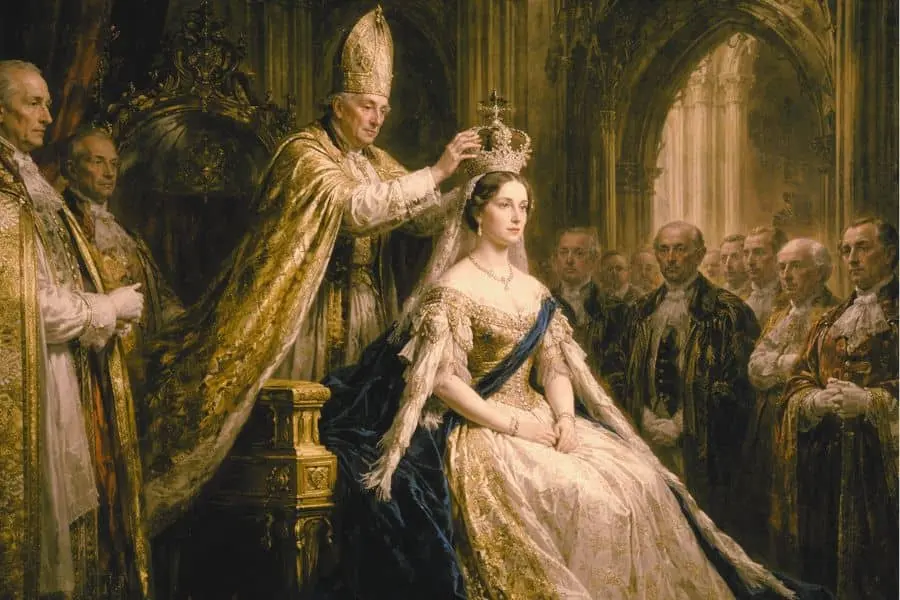
In 1837, following the death of King William IV, Victoria officially ascended the throne at the age of 18. Her accession marked a significant turning point, as it ended the personal union between Britain and Hanover. Due to different succession laws, the Kingdom of Hanover passed to a male heir instead of Victoria, effectively ending the Hanoverian connection.
Despite her young age, Victoria approached her new role with confidence and determination. Her early days as queen were defined by a strong sense of duty and a desire to establish herself as a capable and independent ruler.
Early Challenges as a Young Monarch
Victoria’s early reign was not without difficulties. As a young queen, she faced intense political pressure and had to rely on experienced advisors, including Lord Melbourne, who played a key role in guiding her through the complexities of governance.
At the same time, she had to prove her authority in a male-dominated political world. Establishing herself as a strong female ruler required confidence, resilience, and careful decision-making. Over time, Victoria successfully earned respect from both her government and her people, laying a solid foundation for her long and impactful reign.
Queen Victoria Biography: Marriage to Prince Albert
The marriage of Queen Victoria to Prince Albert was not only a deeply personal union but also a powerful partnership that influenced Britain’s political, cultural, and industrial development. Their relationship played a key role in shaping the direction of the monarchy during the Victorian Era.
A Royal Love Story
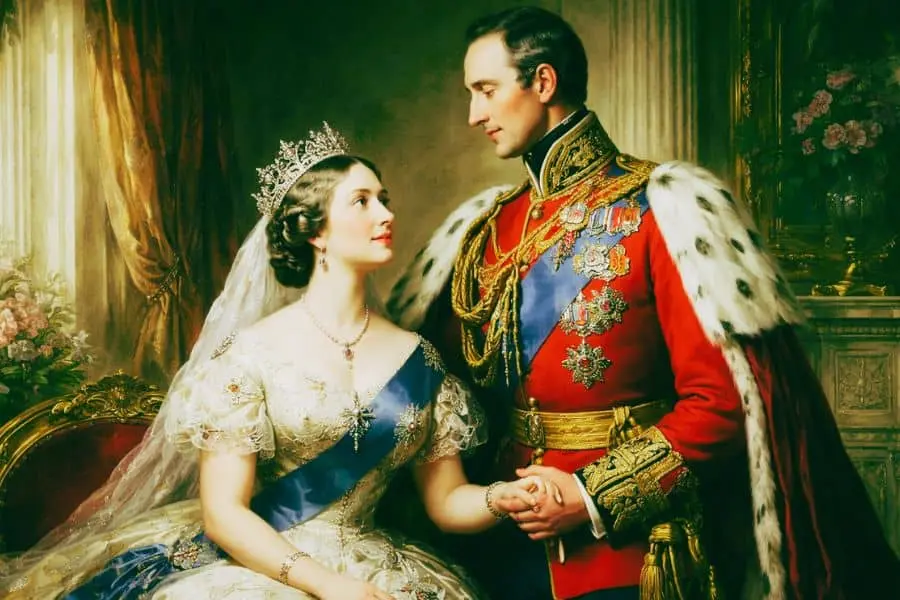
Queen Victoria married Prince Albert in 1840, and their relationship quickly became one of the most famous royal love stories in history. Unlike many political marriages of the time, their union was based on genuine affection, mutual respect, and shared values.
Victoria often expressed her deep love for Albert in letters and journals, describing him as her closest confidant and greatest support. Their strong emotional and intellectual bond helped create stability within the royal household and strengthened Victoria’s confidence as a ruler.
Prince Albert’s Influence on Governance
Prince Albert played a significant role behind the scenes in shaping Britain’s progress. Although he did not hold official political power, his influence extended into key areas such as education, science, and industry. He was a strong supporter of innovation and modernization, contributing to events like the Great Exhibition of 1851, which showcased Britain’s industrial strength.
During times of political difficulty, Albert acted as a trusted advisor to Queen Victoria, helping her navigate complex decisions and maintain stability in governance. His guidance not only strengthened her leadership but also helped position Britain as a leading global power during the height of the Victorian Era.
Queen Victoria Biography: Expansion of the British Empire
One of the most defining aspects of the Queen Victoria Biography is how Queen Victoria presided over the rapid expansion of British global power. During her reign, Britain became the world’s leading empire, influencing politics, trade, culture, and technology across multiple continents.
The Height of the British Empire
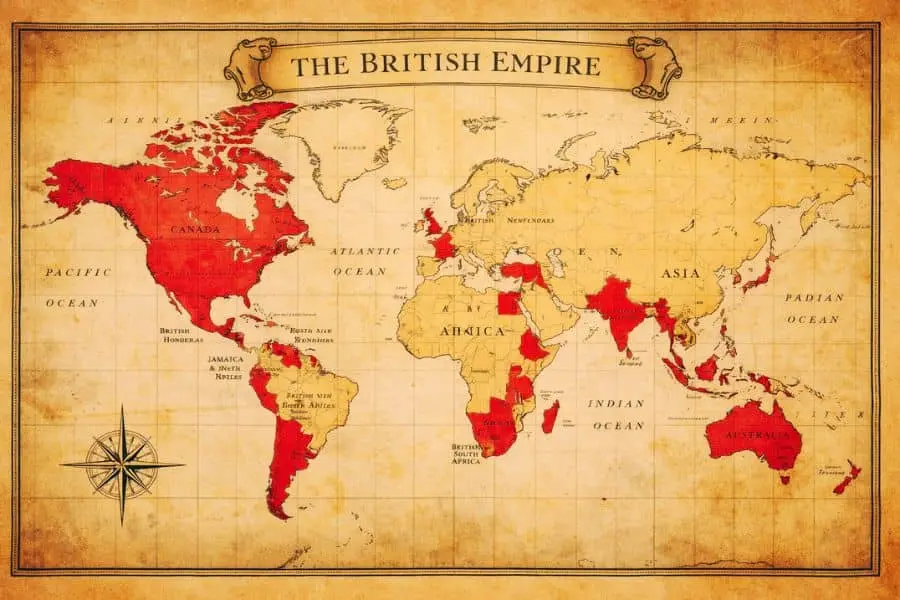
Under Queen Victoria’s rule, the British Empire reached its greatest extent, spreading across Asia, Africa, North America, and the Pacific. This vast network of territories made Britain the dominant global force of the 19th century.
The phrase “the empire on which the sun never sets” became widely used during this time, reflecting how British territories spanned the globe. This expansion increased Britain’s wealth and influence but also brought complex political and social challenges in its colonies.
Industrial Revolution and Global Influence

The expansion of the empire was closely linked to the Industrial Revolution, which transformed Britain into an economic powerhouse. Advances in machinery, transportation, and communication allowed Britain to produce goods on a massive scale and distribute them worldwide.
Railways, steamships, and telegraphs strengthened connections between Britain and its colonies, making global trade faster and more efficient. As a result, Britain dominated international markets, reinforcing its position as the center of global industry and commerce.
Title as Empress of India
In 1876, Queen Victoria was officially given the title “Empress of India,” a move that symbolized Britain’s authority over one of its most important colonies. This title strengthened the image of imperial unity and reinforced her status as a global monarch.
India played a crucial role in the empire’s economy and administration, and this new title highlighted its importance within British rule. It also marked a significant moment in Victoria’s reign, emphasizing her influence beyond Britain and solidifying her legacy as a ruler of a vast and powerful empire.
Queen Victoria Biography: Personal Struggles and Later Years
While the Queen Victoria Biography often highlights power and empire, it also reveals the deeply human side of Queen Victoria. Her later years were marked by personal loss, emotional struggles, and a gradual transformation in how the public perceived her.
Life After Prince Albert’s Death
The death of Prince Albert in 1861 had a profound impact on Queen Victoria. Devastated by the loss of her husband and closest advisor, she entered a long period of deep mourning. She withdrew from public appearances, wore black for the rest of her life, and avoided many royal duties.
This absence from public life led to growing criticism, with some questioning her commitment as a monarch. However, despite her grief, Victoria continued to fulfill her constitutional responsibilities behind the scenes. Over time, she slowly re-emerged, regaining public support and restoring confidence in the monarchy.
Changing Public Image
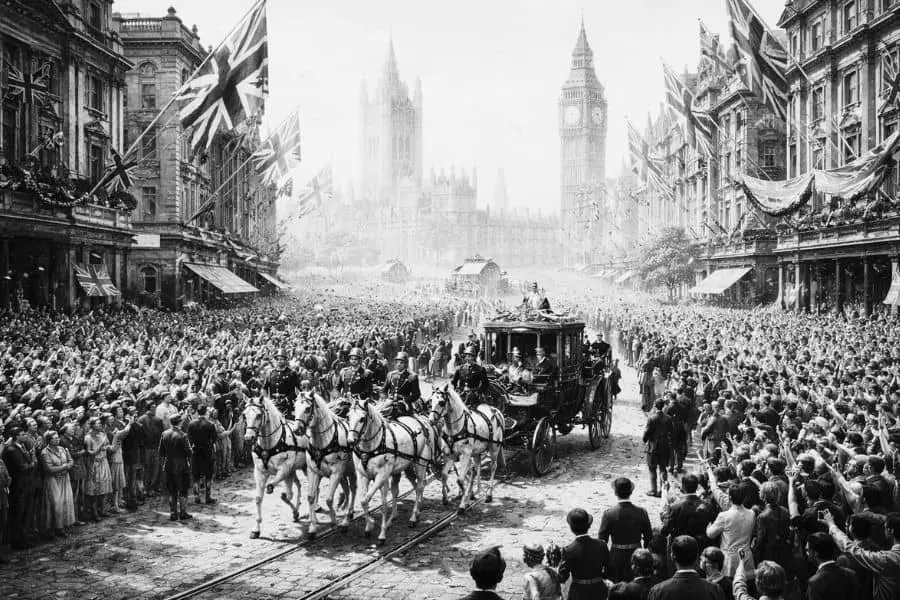
As the years passed, Queen Victoria’s image evolved significantly. From being seen as a distant and withdrawn ruler, she gradually became viewed as a symbol of stability and continuity. Her role shifted from an active political figure to a respected matriarch of the British Empire.
Major national celebrations, such as her Golden Jubilee in 1887 and Diamond Jubilee in 1897, marked her long and impactful reign. These events were celebrated across the empire, reinforcing her popularity and highlighting her enduring legacy as one of Britain’s most iconic monarchs.
Queen Victoria Biography: Legacy and Historical Impact
The lasting legacy of Queen Victoria extends far beyond her lifetime. The Queen Victoria Biography reflects an era of profound transformation that shaped modern Britain and influenced global history in lasting ways.
The Victorian Era Defined

The period known as the Victorian Era was marked by significant cultural, political, and social change. Britain experienced rapid industrial growth, urban expansion, and advancements in science and technology.
This era also saw the strengthening of constitutional monarchy, where the sovereign’s role became more symbolic while political power increasingly shifted to Parliament. Queen Victoria helped shape this transition, influencing how modern monarchies operate today with a balance between tradition and democratic governance.
Lasting Global Influence
Queen Victoria’s reign left a deep and complex impact on the world. The expansion of the British Empire connected diverse regions, spreading British culture, language, and systems of governance across continents.
Many former colonies still reflect aspects of this influence in their legal systems, education, and institutions. At the same time, her legacy is also viewed through a modern lens that examines both the achievements and the challenges of imperial rule.
Today, Queen Victoria remains a central figure in world history, and her story continues to be studied as a key example of leadership, empire-building, and the evolution of global power.
Conclusion
The story of Queen Victoria is far more than a royal biography. It is a powerful reflection of an era that transformed the world. This Queen Victoria biography highlights how a young queen rose to lead one of the most expansive empires in history, shaping global politics, culture, and industry. Her reign not only defined the Victorian Era but also left a legacy that continues to influence modern society.
From her early struggles to her role in expanding the British Empire, Queen Victoria’s journey remains an inspiring and complex chapter in world history. Her life teaches us about leadership, resilience, and the impact one individual can have on a global scale.
FAQs
What is Queen Victoria’s lasting legacy?
Queen Victoria’s legacy includes the modernization of the British monarchy, cultural and industrial advancements during the Victorian Era, and the global influence of the British Empire. She remains a symbol of resilience, leadership, and a transformative period in world history.
Who was Prince Albert and what role did he play in Victoria’s reign?
Prince Albert was Queen Victoria’s husband, marrying her in 1840. He was a trusted advisor and partner, influencing reforms in education, science, industry, and culture. His support helped Victoria navigate political challenges and strengthen the monarchy.