Important Turning Points in World History That Changed Everything Forever
History is full of moments that completely changed the direction of human life. These moments are known as turning points, events that created major shifts in society, culture, technology, or global power. Instead of slow changes, turning points bring rapid transformation, setting the stage for a new era.
Understanding these changes is important because they explain how the modern world came to be. From the way we live and work to how countries interact, many aspects of today’s society can be traced back to these key moments. By studying the important turning points in world history, we can better understand why the world looks the way it does today.
Table of Contents
These events also help us connect the past with the present. They show how human decisions, innovations, and conflicts shaped progress over time. Whether it’s the rise of civilizations, major wars, or technological breakthroughs, each turning point offers valuable lessons that are still relevant in our daily lives.
What Are the Most Important Turning Points in World History?
A turning point in history is a moment when something significant changes the direction of human society. It could be a major event, discovery, or idea that leads to long-term effects on how people live, think, and interact. In simple terms, it’s when the world “shifts” from one way of life to another.
Historians identify these moments by looking at their impact over time. If an event leads to lasting changes such as new political systems, economic growth, technological advancement, or cultural transformation, it is considered one of the important turning points in world history. These shifts are often visible through changes in population, lifestyle, innovation, or global power.
In this article, we’ll explore some of the most influential turning points that shaped human civilization. From the rise of agriculture to the digital age, each event played a key role in building the modern world we live in today.
The Agricultural Revolution – The Start of Civilization
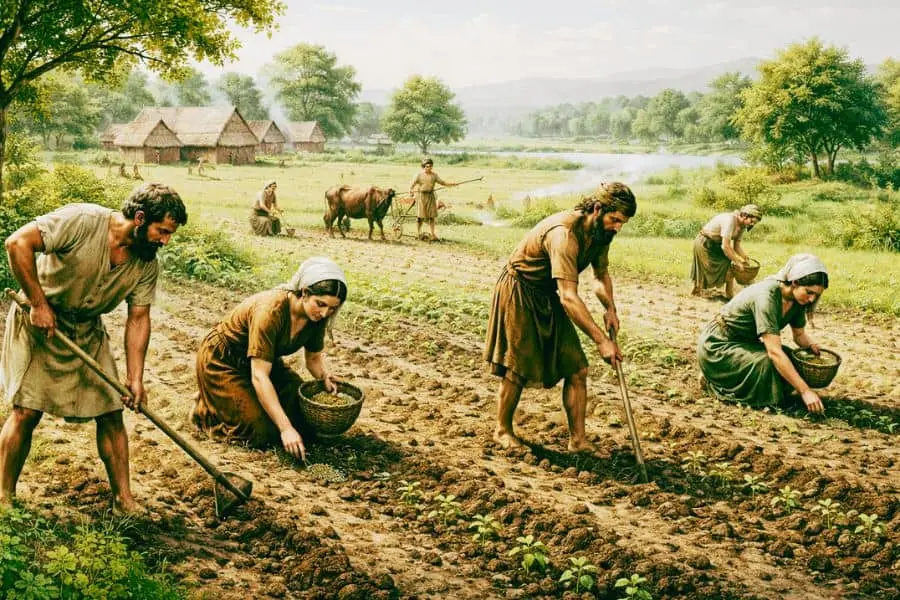
From Hunters to Farmers
Before the Agricultural Revolution, early humans lived as hunters and gatherers. They moved from place to place in search of food, relying on wild plants and animals for survival. This lifestyle meant small populations and temporary shelters.
The shift began when humans learned to grow crops and domesticate animals. This change allowed people to settle in one place, forming stable communities. With a reliable food supply, populations started to grow, and people could focus on activities beyond survival, such as tool-making and trade.
Why This Was a Major Turning Point
The Agricultural Revolution is considered one of the most important turning points in world history because it laid the foundation for modern civilization. Settled life led to the development of villages and eventually cities. As communities expanded, systems of trade and early forms of government began to emerge.
This period also marked the beginning of organized society. Social structures became more complex, and roles within communities were defined. In many ways, the Agricultural Revolution set the stage for everything that followed, making it one of the most significant milestones in human history.
The Fall of the Roman Empire – End of Ancient Power
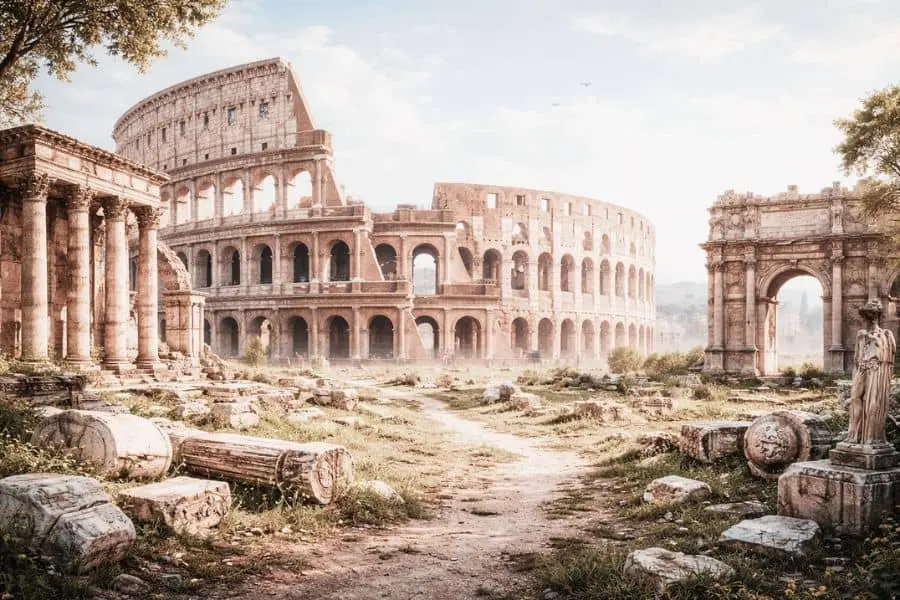
What Happened to Rome?
The fall of the Fall of the Western Roman Empire marked the end of one of the greatest civilizations in history. Over time, Rome faced serious challenges such as political instability, economic decline, corruption, and repeated invasions by Germanic tribes.
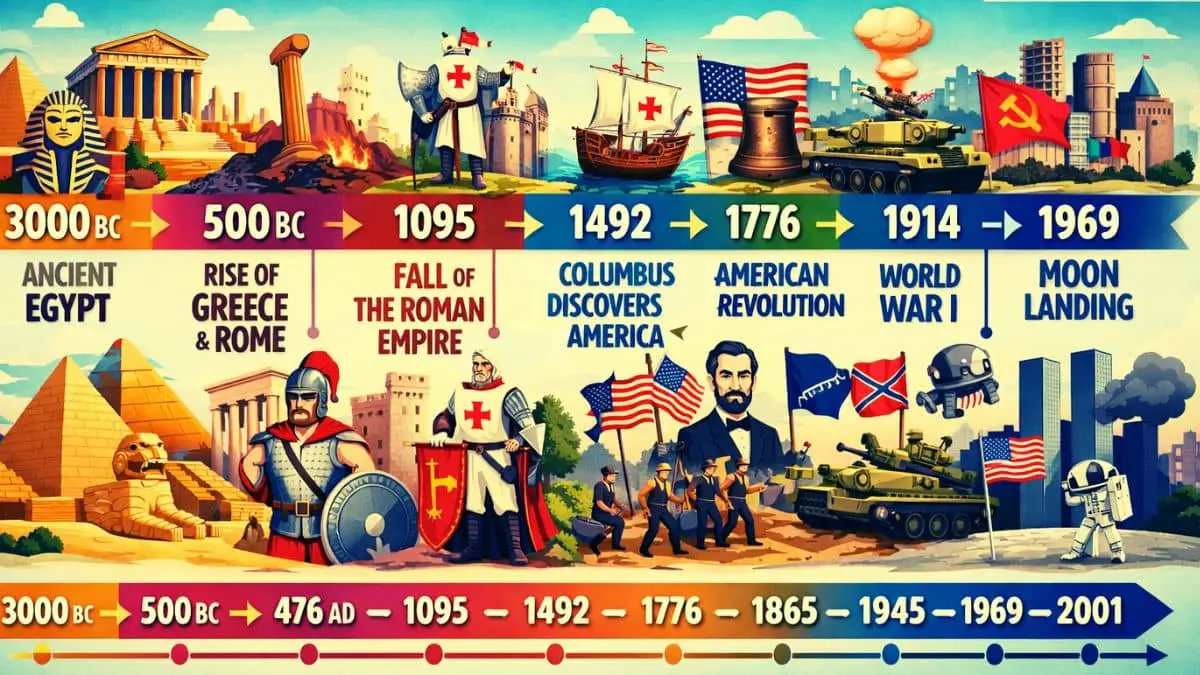
As the empire grew too large to manage effectively, it became divided into eastern and western regions. The Western Roman Empire gradually weakened, and in 476 CE, its last emperor was removed from power. This event is widely seen as the official end of ancient Roman rule in the West.
Impact on Europe and the World
The collapse of Rome is considered one of the most important turning points in world history because it led to major changes across Europe. It marked the beginning of the Middle Ages, a period often characterized by decentralized power and the rise of feudal systems.
Without a strong central authority, political structures shifted toward local rulers and kingdoms. Trade declined, cities shrank, and economies became more rural and agriculture-based. At the same time, cultural and intellectual life also changed, with the Church playing a central role in preserving knowledge and guiding society.
Overall, the fall of Rome reshaped Europe’s political, economic, and cultural landscape, influencing the development of the modern world.
The Renaissance – Rebirth of Knowledge and Culture
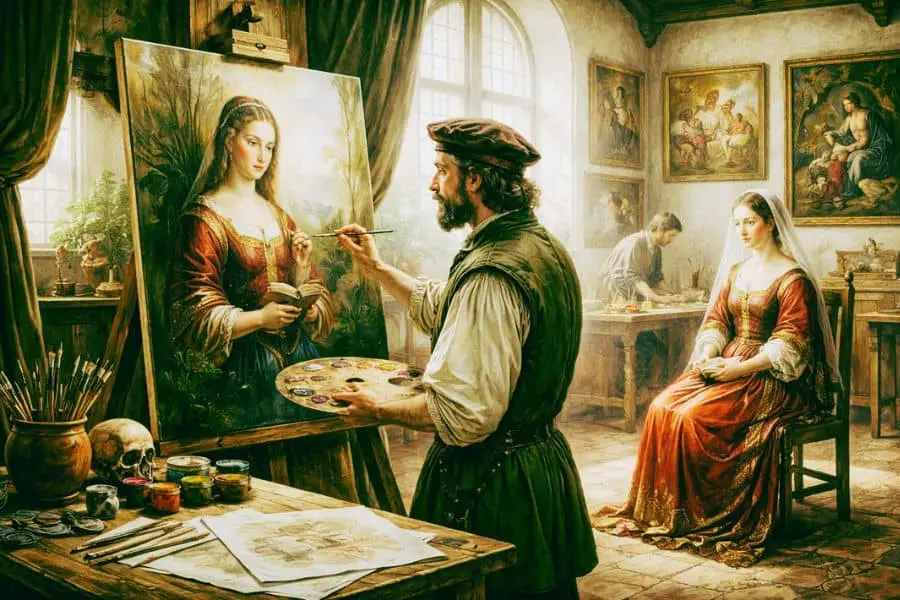
Rediscovery of Art and Science
The Renaissance was a period of renewed interest in art, science, and learning that began in Europe around the 14th century. After the Middle Ages, scholars and artists started rediscovering the knowledge of ancient Greek and Roman civilizations.
This era saw incredible growth in creativity and innovation. Artists like Leonardo da Vinci and Michelangelo created masterpieces that are still admired today. At the same time, scientists began to question old beliefs and explore new ideas, leading to important discoveries about the world and the universe.
How It Changed Society
The Renaissance is considered one of the most important turning points in world history because it changed how people thought about life, knowledge, and human potential. There was a clear shift from traditional, religion-centered thinking to a more human-focused approach known as humanism.
Education expanded beyond religious teachings to include subjects like science, literature, and philosophy. This new way of thinking encouraged curiosity and critical thinking, which later fueled the Age of Exploration. As a result, European explorers began traveling to new lands, expanding global connections and shaping the modern world.
The Industrial Revolution – The Birth of the Modern World
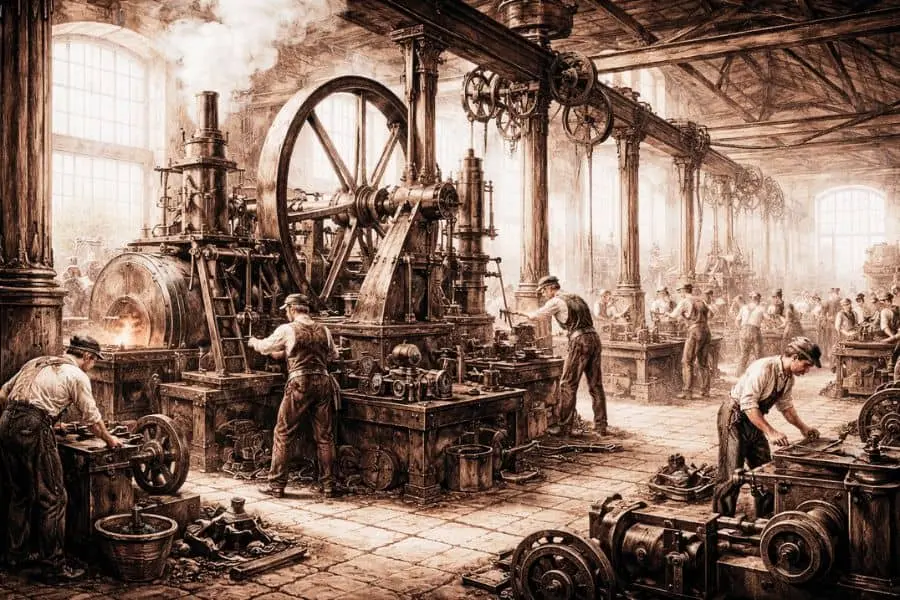
Machines Replace Manual Labor
The Industrial Revolution was a major shift from hand-made production to machine-based manufacturing. Before this period, most goods were created manually in small workshops or at home. However, new inventions like the steam engine and mechanized tools changed how work was done.
Factories began to appear, allowing goods to be produced faster and in larger quantities. This not only increased efficiency but also reduced costs, making products more accessible to people. Workers moved from rural areas to cities to find jobs in these factories, marking a huge change in daily life.
Global Impact
The Industrial Revolution is one of the most important turning points in world history because it transformed economies and societies worldwide. Cities grew rapidly as people migrated for work, leading to urbanization on a massive scale.
Economically, industries expanded, trade increased, and new business opportunities emerged. At the same time, social structures began to change. While some people became wealthier, others faced difficult working conditions, leading to the rise of labor movements and calls for reform.
Overall, this period laid the foundation for the modern industrial world, influencing how we work, live, and interact today.
World War I and II – Reshaping Global Power
Causes and Consequences
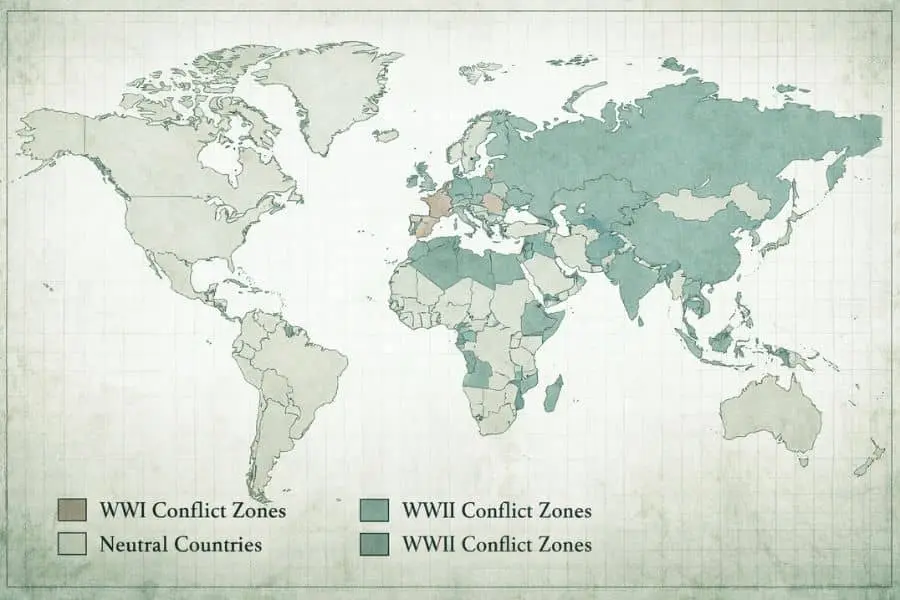
The World War I and World War II were two of the most devastating conflicts in human history.
World War I began due to a mix of factors such as nationalism, military alliances, and political tensions in Europe. Its consequences included the collapse of major empires and significant political changes. However, unresolved issues and economic struggles after the war helped lead to World War II.
World War II was even more widespread and destructive. It involved countries across the globe and resulted in massive loss of life and destruction. The war ended with the defeat of Axis powers and brought significant political and territorial changes.
Long-Term Effects
These wars are among the most important turning points in world history because they completely reshaped global power structures. After World War II, countries like the United States and the Soviet Union emerged as superpowers, leading to a new era of global influence and competition.
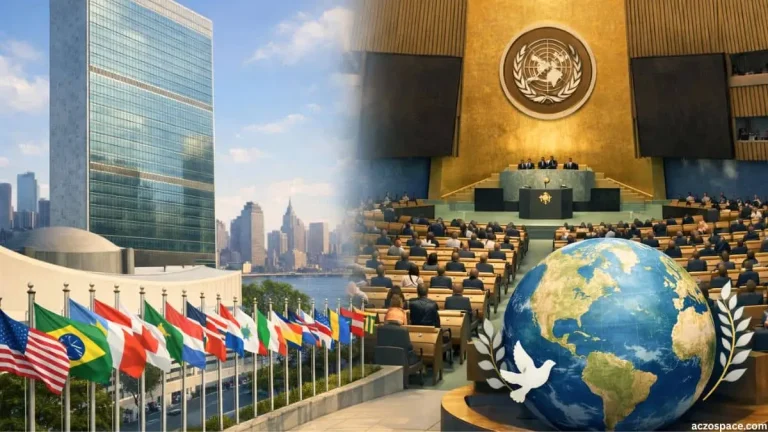
Another major outcome was the creation of international organizations such as the United Nations, aimed at promoting peace and cooperation between nations. These changes helped establish the modern international system and continue to influence global politics today.
The Digital Revolution – Entering the Information Age

Rise of Computers and the Internet
The Digital Revolution marks the transition from traditional industrial systems to a world driven by digital technology. This period saw the rapid development of computers, software, and the internet, completely transforming how information is created, stored, and shared.
Early innovations in computing eventually led to the global expansion of the internet, connecting people across continents in real time. Companies like IBM and Microsoft played a major role in developing technologies that made computers accessible to businesses and individuals alike. As digital tools became more advanced, they opened the door to new industries and opportunities.
How It Shapes Today’s World
The Digital Revolution is one of the most important turning points in world history because it continues to shape modern life in powerful ways. Communication has become faster and more convenient through emails, social media, and instant messaging platforms.
Economically, digital technology has created global markets, online businesses, and new career paths. From remote work to e-commerce, the way people earn and spend money has evolved significantly. In daily life, smartphones, apps, and online services influence how we learn, shop, travel, and interact.
Overall, the Digital Revolution has connected the world like never before, making it a defining feature of the modern era.
Why Understanding Important Turning Points in World History Matters Today
Understanding the important turning points in world history is not just about learning the past; it helps us make sense of the present and prepare for the future. These key events shaped the world we live in today, influencing everything from global politics to everyday life.
One major benefit is that it helps us better understand current global issues. Many modern challenges, such as international conflicts, economic systems, and cultural differences, have deep historical roots. By studying past turning points, we can see how these issues developed and why they continue to exist.
It also improves critical thinking skills. When we examine historical events, we learn to analyze causes and effects, compare different perspectives, and question how decisions impact societies over time. This kind of thinking is valuable not only in education but also in real-world decision-making.
Finally, learning about these turning points connects history to modern life. It shows how past innovations, conflicts, and ideas continue to influence how we live, work, and communicate today. This connection makes history more meaningful and helps us appreciate the progress and challenges of the world around us.
Conclusion
The journey through history reveals how a few key moments can completely change the course of human civilization. From the Agricultural Revolution that laid the foundation for societies, to the fall of powerful empires, the cultural rebirth of the Renaissance, the technological surge of the Industrial Revolution, the global impact of the World Wars, and finally the Digital Revolution, each stands out as one of the important turning points in world history.
These events did more than shape their own time; they created lasting changes that still influence our world today. They transformed how people live, think, work, and connect with one another across the globe.
By exploring these turning points, we gain a deeper understanding of how the modern world was built. History is not just about the past; it is a guide to understanding the present and making better decisions for the future. Keep exploring, stay curious, and you’ll discover that history has endless lessons to offer.
FAQs
What is a turning point in history?
A turning point in history is an event or moment that causes a significant and lasting change in the course of human civilization. These events often reshape societies, politics, economies, or cultures. Examples include the Industrial Revolution or the fall of the Roman Empire.
Why are the Agricultural Revolution and the Industrial Revolution considered turning points?
The Agricultural Revolution marked humanity’s shift from hunting and gathering to farming, enabling cities, trade, and early governments. The Industrial Revolution transformed manual labor into machine-driven production, reshaping economies, urban life, and technology globally.