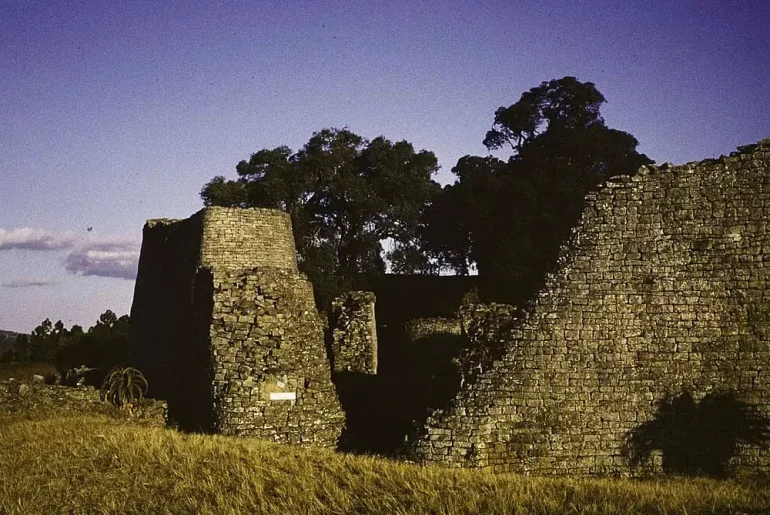

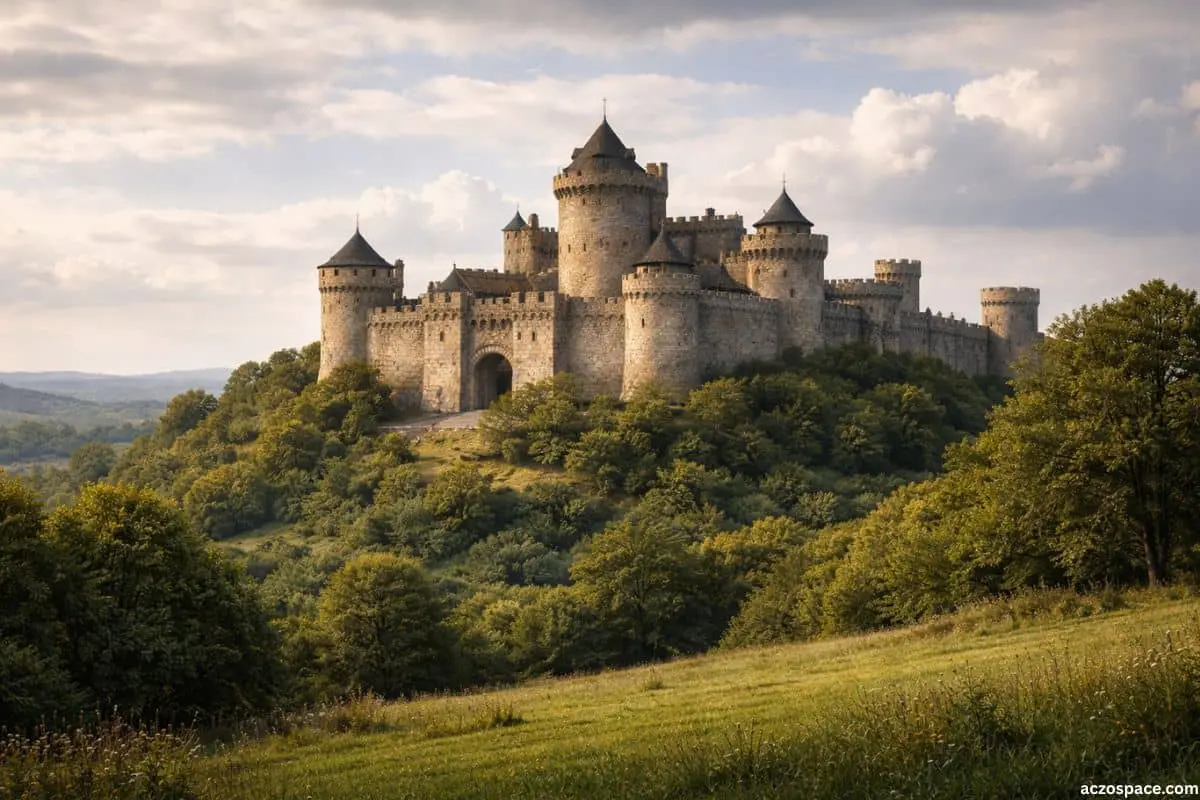
Medieval European castles occupy a central place in European history. Far more than simple buildings, they were powerful symbols of authority, military strength, and political control. One of their primary purposes was defense, but their towering presence also made royal and noble power unmistakably visible across the landscape.
The period known as the Middle Ages stretched roughly from the 5th century to the 15th century. Throughout these centuries, Europe was marked by frequent warfare, shifting borders, and ongoing political instability. Kingdoms rose and fell, and local rulers constantly fought to defend or expand their territories. In such uncertain times, personal and communal security became a major concern.
Ordinary homes offered little protection against invading forces. Villages could be attacked, looted, or destroyed with ease. As a result, there was a growing need for strong, elevated, and well-defended structures. This need gave rise to the development of castles—fortified buildings designed to withstand attack and provide refuge during conflict.
Today, medieval castles are regarded as priceless historical landmarks. Millions of visitors travel across Europe each year to explore these impressive structures. Castles have also gained renewed popularity through films, television series, and documentaries, which often portray them as dramatic backdrops to medieval life. This article explores the origins, development, and historical significance of medieval European castles.
Table of Contents
Quick Facts
| Fact | Detail |
| Topic | Medieval European Castles and Castle Life |
| Time Period | Middle Ages (~5th–15th century AD) |
| Main Purpose | Defense, residence of nobility, power symbol |
| Early Materials | Wood → later stone for durability |
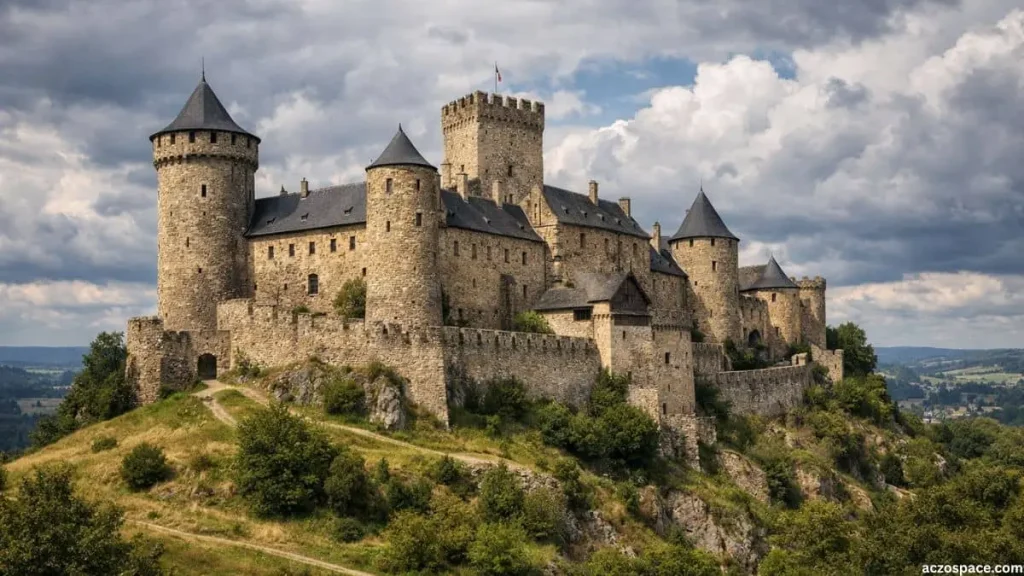
| Typical Features | Moat, keep, curtain walls, towers, gatehouse |
| Castle Types | Motte‑and‑bailey, hilltop/stone fortresses |
| Life Inside | Great hall, cold rooms, limited comfort |
| Decline Cause | Gunpowder & cannons reduced military value |
| Famous Examples | Windsor Castle, Prague Castle, Carcassonne |
| Modern Role | Heritage, tourism, cultural symbols |
The Origins of European Castles
European castles did not appear suddenly or in a single form. Instead, they evolved gradually over time in response to political change and military necessity. After the fall of the Roman Empire, much of Europe entered a period of fragmentation and instability. Centralized Roman authority collapsed, and new political systems began to emerge. Power shifted into the hands of regional lords and local rulers.
During the Roman period, cities were protected by fortified walls and organized military defenses. However, with the empire’s decline, many of these systems fell into disrepair or disappeared altogether. Europe became increasingly vulnerable to external threats, including Viking raids and other invasions. Small settlements and rural communities were especially exposed and often suffered devastating attacks.
In this unstable environment, local lords sought ways to protect their lands and assert their authority. They began constructing fortified residences, usually on high ground where approaching enemies could be easily seen. These early fortifications marked the beginnings of castle architecture in Europe.
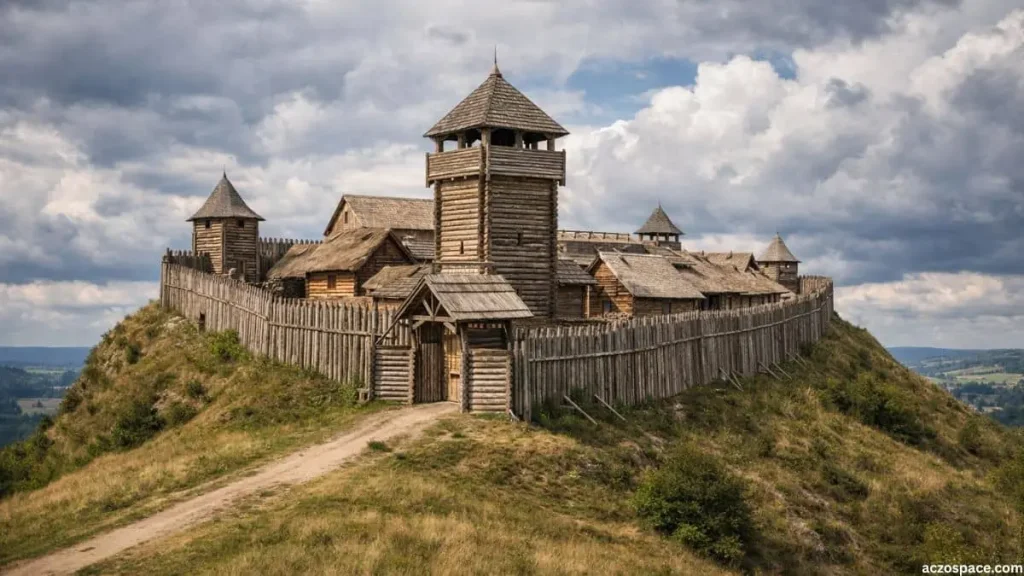
The earliest castles were primarily built from wood. Timber was readily available, relatively inexpensive, and quick to assemble. Wooden castles allowed rulers to establish defenses rapidly, but they had serious weaknesses. They were highly vulnerable to fire and could be destroyed more easily during prolonged sieges.
To overcome these limitations, stone gradually replaced wood as the primary building material. Stone castles were far more durable, resistant to fire, and better suited to long-term defense.
A major turning point in castle history occurred in the 11th century with the Norman Conquest. The Normans introduced advanced castle-building techniques and spread castle culture across much of Europe. In England alone, thousands of castles were constructed in the decades following the conquest. From there, the concept of fortified stone castles expanded throughout the continent.
Castles of the Early Middle Ages
In the early Middle Ages, castles were relatively simple structures. Comfort and luxury were not priorities. Survival and defense mattered far more than convenience or elegance. Life inside a castle was often harsh, reflecting the dangers of the outside world.
Castles were commonly built on hilltops or elevated terrain. This strategic positioning allowed defenders to monitor enemy movement and made direct attacks more difficult. Height provided both visibility and a psychological advantage over approaching forces.
Early castles were typically surrounded by wooden palisades and included basic defensive towers. Living spaces were small and functional rather than comfortable. The lord of the castle lived alongside his family, servants, and a limited number of soldiers, all within the same fortified enclosure.
As warfare evolved, attacks became more frequent and siege techniques more sophisticated. Wooden castles proved increasingly inadequate against battering rams, fire, and prolonged assaults. This reality accelerated the transition toward stone construction.
Building stone castles was a demanding and time-consuming process. Construction could take many years and required skilled stonemasons, engineers, and large labor forces. Despite the difficulty, the benefits were clear. Stone castles were far stronger, more durable, and significantly more resistant to fire and enemy weapons. Their imposing walls and towers transformed them into long-lasting symbols of medieval power.
Types of Medieval Castles
Motte-and-Bailey Castles
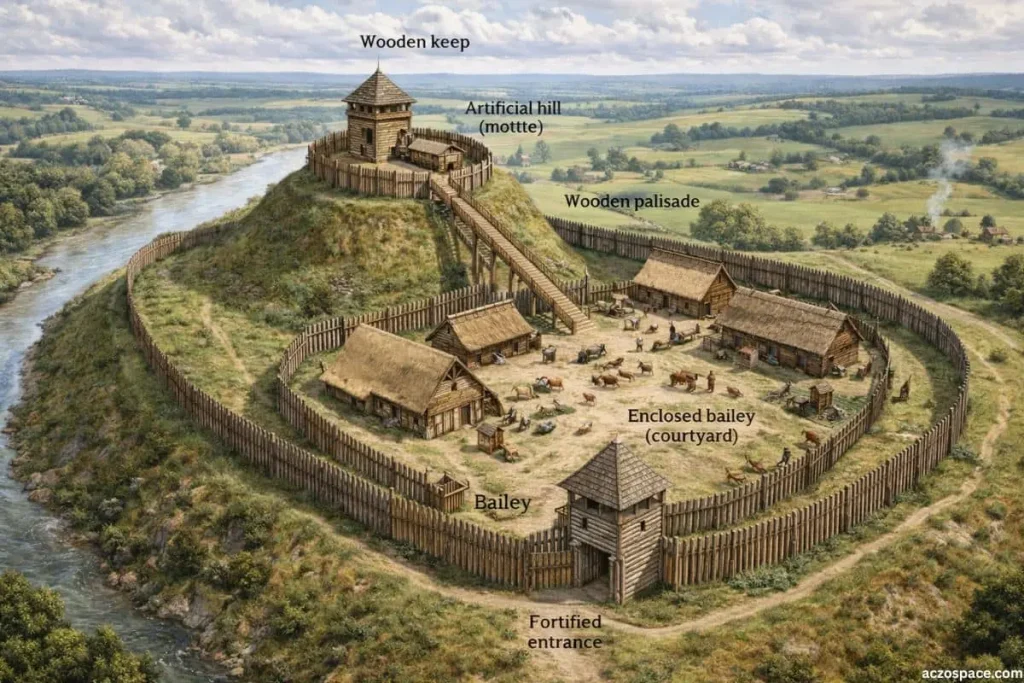
One of the earliest and most widespread forms of castles in medieval Europe was the motte-and-bailey castle. These structures were especially common in the early Middle Ages, when speed of construction and basic defense were more important than long-term durability.
The motte was an artificially raised earthen mound. At the top of this mound stood the main tower, often called the keep. This tower served as the lord’s residence and the final line of defense during an attack. From this elevated position, defenders could observe the surrounding land and respond quickly to threats.
The bailey was the enclosed courtyard located at ground level beside the motte. It was surrounded by fences or wooden palisades and contained the everyday functional spaces of the castle. Housing for servants, storage buildings, workshops, and shelters for animals were all typically found within the bailey.
Motte-and-bailey castles were relatively quick and inexpensive to build. They were usually constructed using wood, earth, and clay—materials that were readily available. From a defensive standpoint, they were surprisingly effective. The steep slopes of the motte made it difficult for attackers to climb, while the elevated keep offered strong tactical advantages.
However, these castles also had clear weaknesses. Wooden structures were highly vulnerable to fire, and exposure to harsh weather caused them to deteriorate over time. As siege warfare became more advanced, these limitations became increasingly obvious. As a result, many rulers began planning more permanent and resilient stone fortifications.
The Transition to Stone Castles
The move from wooden castles to stone castles marked a major turning point in medieval military architecture. Stone castles featured thick walls, solid towers, and massive gates designed to resist prolonged sieges and powerful weapons.
Wealthy nobles and royal families invested heavily in these imposing structures. Building a stone castle required enormous financial resources, skilled labor, and years of construction. Once completed, however, these castles quickly became powerful symbols of authority, wealth, and political dominance.
Life inside a stone castle was often harsh. Rooms were cold, lighting was limited, and heating was inefficient. Comfort was sacrificed in favor of security. Narrow windows, heavy doors, and fortified interiors reflected the constant threat of attack that defined medieval life.
Over time, castle design continued to evolve. Walls grew thicker, towers taller, and entranceways more complex. Features such as reinforced gates, narrow passageways, and improved defensive layouts made stone castles increasingly difficult to capture. These advancements transformed castles into formidable strongholds and lasting monuments of medieval power.
Castle Architecture in the Middle Ages
A medieval castle was never just a simple building. It functioned as a complete defensive system, carefully designed to resist attack. Every part of the structure—walls, towers, gates, and even open spaces—played a role in slowing down or stopping enemy forces.
Castle Walls
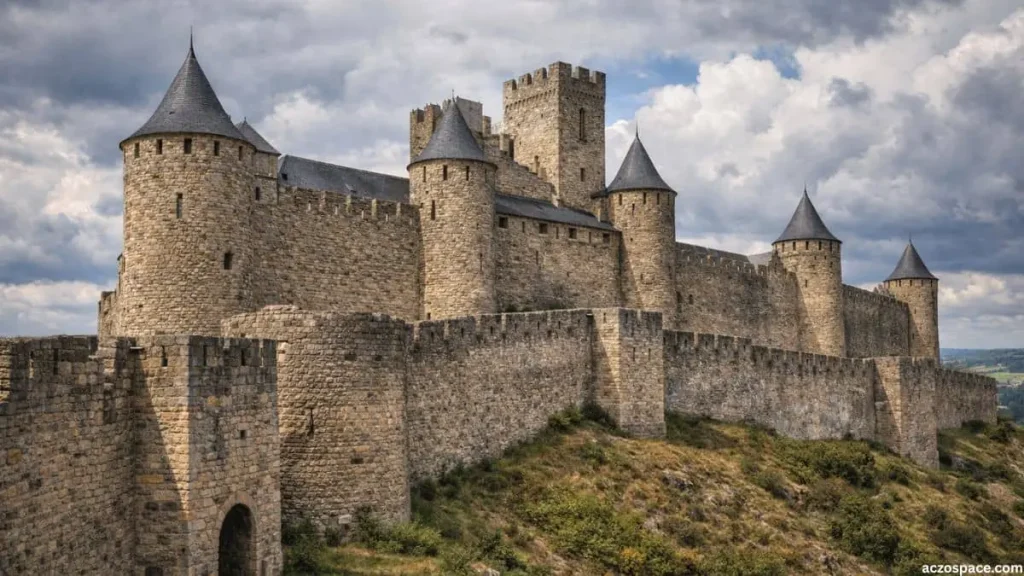
Massive stone walls dominated the castle’s outer defenses. These walls often rose high above the surrounding ground and, in some places, were more than ten feet thick. Their sheer size made them extremely difficult to break through using medieval weapons.
Guards were stationed along the top of the walls, where they could watch the surrounding countryside and respond quickly to approaching threats. From this elevated position, defenders had both visibility and a strong tactical advantage.
Towers
Towers were usually placed at wall corners or near the main entrance. Round towers became more common over time because they were stronger and better at deflecting enemy attacks than square ones, which were more vulnerable at the corners.
Inside the towers, soldiers were stationed for defense. Towers also served as storage spaces for weapons and supplies and were sometimes used for signaling during emergencies.
The Gatehouse
The gatehouse was one of the most critical parts of any castle. Since it controlled the main entrance, it was also the most likely point of attack. To protect it, builders constructed heavy wooden gates reinforced with iron.
The gatehouse was constantly guarded and often included multiple defensive features, making it extremely difficult for enemies to force their way inside.
The Drawbridge
Access to the castle was usually provided by a drawbridge. In times of danger, this bridge could be raised, cutting off entry completely. Once lifted, the castle became isolated from the outside world, offering a powerful defensive advantage during sieges.
The Moat
Surrounding many castles was a deep ditch known as a moat. Some moats were filled with water, while others were dry. Either way, they made it far more difficult for attackers to reach the castle walls or use siege equipment effectively.
Arrow Slits
Narrow openings in the walls, commonly called arrow slits or loopholes, allowed defenders to fire arrows while remaining protected. These openings were carefully designed to limit the chance of enemy arrows entering the castle, making them a highly effective defensive feature.
Battlements
The tooth-like structures along the tops of castle walls are known as battlements or crenellations. These allowed soldiers to take cover while fighting, stepping out to attack and retreating behind stone for protection. Battlements were a vital element of medieval defensive warfare.
Life Inside a Medieval Castle
Despite their impressive appearance, life inside a medieval castle was far from luxurious. The comfortable lifestyles often shown in movies and television series rarely reflect historical reality.
The Great Hall
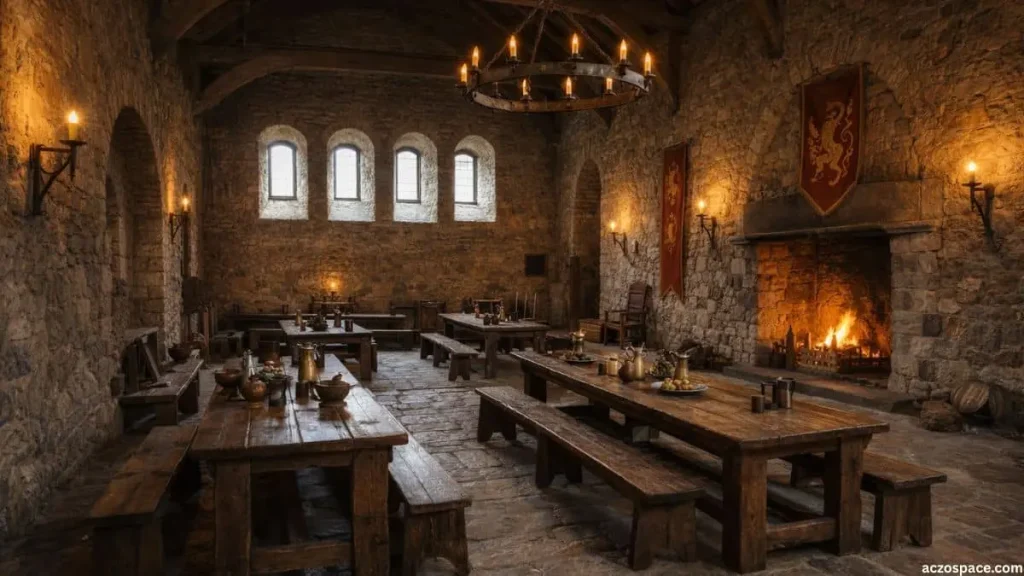
The Great Hall was the heart of the castle. It served as the main dining area, meeting place, and venue for celebrations. The lord and his family sat at the high table, while servants and guests were seated at long tables below.
Important decisions were made here, and it was one of the few spaces where the entire household gathered together.
Living Conditions
Most rooms inside the castle were cold throughout the year. Small fireplaces provided limited warmth, and thick stone walls trapped damp air. Windows were narrow and allowed little natural light inside.
Glass was rare and expensive, so windows were often left uncovered. Candles and torches were the primary sources of lighting, but they produced smoke that made indoor air uncomfortable. Privacy was minimal, as many people shared the same living spaces.
Food and Cooking
Meals were simple and repetitive, typically consisting of bread, meat, soups, and vegetables. Grains were valuable and used sparingly, especially during times of shortage.
Because of the constant risk of fire, kitchens were often built as separate structures away from the main living areas. This reduced the chance of flames spreading through the castle.
Water and Sanitation
Access to clean water inside castles was limited. Toilets, known as garderobes, were usually built into the castle walls. Waste often dropped directly outside, creating serious sanitation problems.
These conditions made castles breeding grounds for disease, particularly during long sieges when people were confined inside for extended periods.
Servants and Workers
A large workforce was required to keep a castle functioning. Servants handled cleaning, cooking, and daily maintenance. Skilled craftsmen, such as blacksmiths, lived nearby and were responsible for making and repairing weapons and tools.
Grooms and stable workers took care of horses, ensuring they were fed, sheltered, and ready for travel or battle. Without this network of workers, a medieval castle could not operate effectively.
Life of the People Who Lived in the Castle
A medieval castle was not only a military structure but also a busy community. Life inside followed a strict social hierarchy, with each group playing a clearly defined role in maintaining order, security, and daily operations.
The Lord and the Lady
The lord of the castle was the landowner and local ruler. He governed the surrounding territory and was responsible for maintaining law and order. Legal disputes were often settled within the manor itself, making the castle an important center of local authority. Under his rule, peace and stability in the region were closely tied to his leadership.
The lady of the castle played a vital role in managing daily life. She oversaw household operations and supervised servants. Education and moral guidance of the children were also part of her responsibilities. In many cases, she managed estates and made important decisions, especially when the lord was away at war.
Knights
Knights served as professional warriors and formed the military elite of the castle. They wore heavy armor and used advanced weapons suited for close combat. From a young age, future knights underwent strict training to prepare for warfare.
Their loyalty to the lord was central to the feudal system. In return for land or protection, knights pledged military service and obedience. They followed a strict code of conduct based on honor, loyalty, and duty—values that shaped medieval warfare and social order.
Soldiers and Guards
Soldiers and guards were responsible for the castle’s day-to-day security. They regularly patrolled the walls and monitored the surrounding area. Night watches were especially important, as surprise attacks were always a possibility.
Because threats could arise without warning, constant vigilance was required. Strict discipline ensured that guards remained alert and ready to respond at all times.
Defensive Systems and Warfare
The primary purpose of a castle was defense. Every architectural detail and strategic decision was carefully planned with protection in mind. Castles were designed to resist attacks for as long as possible and exhaust enemy forces.
Siege Warfare
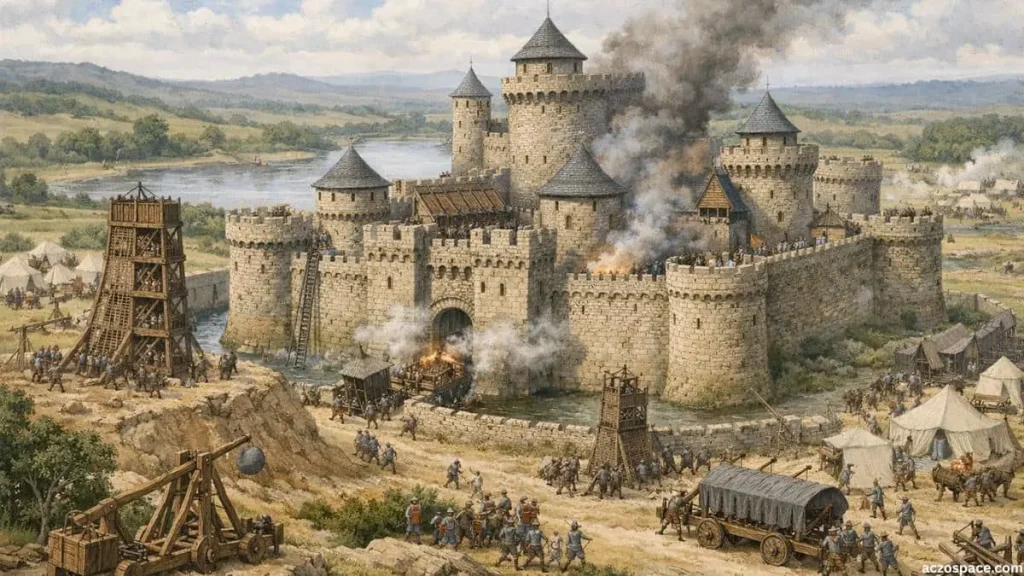
Rather than attacking directly, enemies often surrounded a castle and cut off all supply routes. This tactic, known as a siege, aimed to starve defenders into surrender. Many sieges lasted for weeks or even months, testing both physical endurance and morale.
Defensive Weapons
During battles, defenders launched projectiles from the walls to repel attackers. Crossbows were especially powerful and widely used due to their accuracy and penetrating force. Throwing stones from the walls was also common.
In some cases, defenders used hot liquids to discourage attackers, though popular myths exaggerate the frequent use of boiling oil. More often, heated water or sand was used, as oil was expensive and scarce.
Concentric Castles
In later periods, castles evolved into complex, multi-layered fortresses known as concentric castles. These featured multiple defensive walls. If attackers breached the outer wall, they were still trapped between inner defenses.
This layered design forced enemies to fight repeatedly under disadvantageous conditions, greatly increasing their exhaustion and losses.
Psychological Defense
Castles were designed to intimidate as much as to defend. Their towering walls and massive towers created a sense of fear and awe. This psychological impact often discouraged attacks or weakened enemy morale even before the battle began.
Fear played a powerful role in medieval warfare, and the sheer presence of a well-fortified castle could make confronting it feel nearly impossible.
Famous Medieval Castles of Europe
Medieval Europe was home to thousands of castles, but only a select few earned a lasting place in history. Their strategic importance, architectural sophistication, and continued influence over centuries set them apart. These castles were not only centers of power but also enduring symbols of political authority, defense, and cultural identity.
Windsor Castle – England
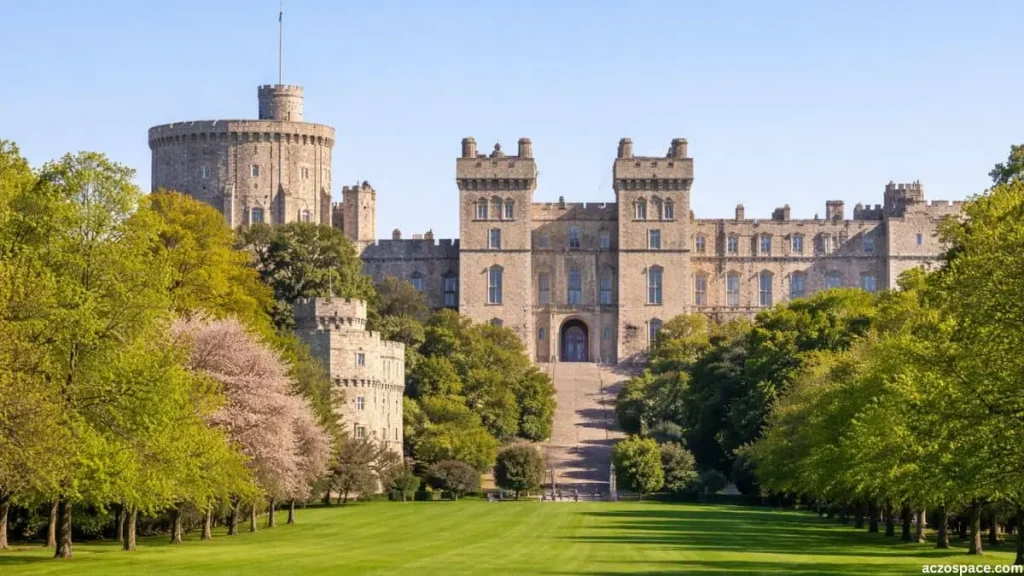
Windsor Castle is one of the oldest inhabited castles in Europe and remains in active use today. It serves as an official residence of the British royal family. The castle’s origins date back to the 11th century, when it was founded by William the Conqueror following the Norman Conquest.
Located near the River Thames, Windsor occupied a strategically strong position that supported both defense and royal administration. Over the centuries, its architecture evolved significantly. What began as a medieval fortress gradually transformed into a grand royal palace, reflecting changing tastes, technologies, and political needs.
Today, Windsor Castle is a major tourist attraction. Visitors from around the world come to explore its long history, impressive architecture, and deep connection to the British monarchy.
Neuschwanstein Castle – Germany
Neuschwanstein Castle is designed in a medieval style, but it is not a true medieval fortress. It was built in the 19th century by King Ludwig II of Bavaria, long after the Middle Ages had ended.
Perched dramatically on a mountainside, the castle resembles a fairy-tale palace. Its romantic design and picturesque setting famously inspired the castles seen in Disney films.
Rather than serving a defensive purpose, Neuschwanstein represents an idealized and imaginative vision of medieval castles. It reflects how later generations romanticized the Middle Ages rather than lived within its realities.
Carcassonne – France
Carcassonne is a fully fortified medieval city rather than a single castle. It features double defensive walls, numerous towers, and heavily protected gates designed to withstand invasion.
The site has origins dating back to Roman times, but it reached its full development during the Middle Ages. Due to its strategic location, Carcassonne played a key role in defending the region against enemy forces and maintaining royal control.
Today, Carcassonne is recognized as a UNESCO World Heritage Site. Visitors can walk through its streets and experience a remarkably preserved example of medieval urban life.
Prague Castle – Czech Republic
Prague Castle is considered the largest ancient castle complex in the world. Its history stretches back to the 9th century, making it one of the most significant political and cultural sites in Central Europe.
Over the centuries, it served as the residence of kings, emperors, and modern presidents. Throughout these periods, Prague Castle functioned as the central hub of government and royal authority.
The castle complex showcases a wide range of architectural styles, including Romanesque, Gothic, Renaissance, and Baroque. This architectural diversity reflects its continuous use and expansion across many historical eras.
Edinburgh Castle – Scotland
Edinburgh Castle stands atop a massive volcanic rock, providing it with a natural defensive advantage. Its commanding position made it one of the most secure fortresses in medieval Scotland.
Often described as the heart of Scottish history, Edinburgh Castle witnessed countless battles, sieges, and royal ceremonies. It played a central role in shaping the nation’s political and military past.
Today, Edinburgh Castle is regarded as a national symbol of Scotland, representing resilience, identity, and historical continuity.
The Evolution and Legacy of Medieval Castles
Medieval castles, while formidable, were never impervious. Over time, advancements in warfare and changes in lifestyle reshaped their function and significance.
The Impact of Gunpowder and Cannons
With the introduction of gunpowder across Europe, castles faced a new threat. Cannons and explosive artillery could breach even the thickest stone walls. The once-dominant defensive advantage of medieval fortresses diminished rapidly, shortening the duration and effectiveness of sieges.
Castles that had been nearly invincible during the early Middle Ages were suddenly vulnerable, signaling a shift in military strategy. The era of towering stone keeps as impregnable fortresses was beginning to wane.
Shifts in Warfare
As armies grew larger and professionalized, warfare itself became more mobile and dynamic. Cavalry and infantry strategies increasingly favored open battlefields over static sieges. The traditional static castle lost much of its tactical importance, prompting the construction of newer fortifications designed to withstand modern weaponry, such as star forts and bastions.
The Rise of Comfortable Palaces
Alongside defensive considerations, rulers began prioritizing comfort and style in their residences. Palaces featured large windows, ornate interiors, and spacious chambers. Castles became symbols of wealth and prestige as much as military strength.
Despite these enhancements, life within these grand structures was often uncomfortable. Many rooms were cold and dimly lit, with minimal heating and ventilation. Luxury coexisted uneasily with the practical challenges of medieval architecture.
Castles in the Modern Era
Today, castles no longer serve as military strongholds. Yet, their historical and cultural value remains undiminished. They have transitioned from strategic fortresses to centers of heritage, tourism, and scholarship.
Tourism and Economic Impact
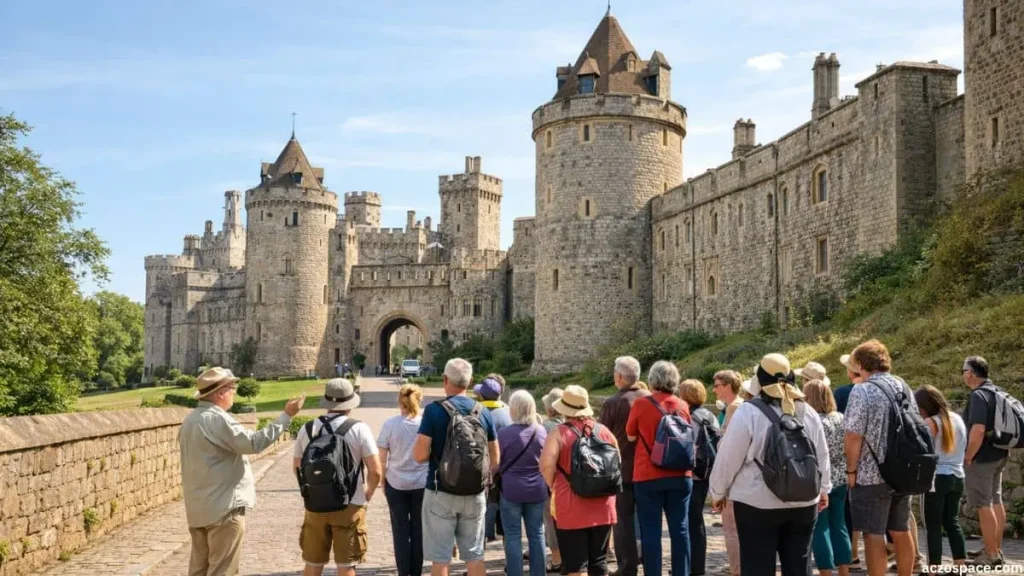
Castles now play a significant role in local and national economies. Millions of visitors tour these sites annually, drawn by history, architecture, and legend. Guided tours, museums, festivals, and events provide sustainable revenue streams while preserving the sites for future generations.
Cultural Heritage
Beyond economics, castles offer a tangible connection to the past. Schools, universities, and researchers study these structures to better understand medieval society, architecture, and politics. Castles bring history to life, allowing people to experience the Middle Ages in a more immersive way than books alone ever could.
UNESCO World Heritage Sites
Many European castles are recognized as UNESCO World Heritage Sites, ensuring their protection and preservation. These designations highlight the castles’ global significance, not only as defensive structures but as cultural and architectural treasures.
Castles in Popular Culture
Media and film have further cemented the cultural resonance of castles. Movies, TV shows, and historical dramas often feature castles as settings of intrigue, romance, and power. This portrayal enhances their mystique and attracts even more public interest.
In popular imagination, castles represent mystery, authority, and romance, reinforcing their iconic status. This fascination continues to fuel tourism, inspire storytellers, and maintain castles as enduring symbols of Europe’s medieval past.
Fascinating Facts About Medieval Castles
Medieval castles were far more than just stone walls—they were symbols of power, ingenuity, and survival. Some lesser-known facts about these remarkable structures include:
- Building a single castle could take up to 20 years or more.
- Many castle latrines emptied directly outside the walls, reflecting the limits of medieval sanitation.
- Winters inside castles were often bitterly cold, with minimal heating.
- Glass windows were considered a luxury, and only the wealthiest could afford them.
- Cats were commonly kept to control rodent populations.
- Despite their formidable defenses, many castles included hidden secret passages, used for escape or discreet movement within the walls.
These details reveal the practical, often harsh realities of castle life, far from the romanticized versions popular today.
Common Myths About Medieval Castles
Popular culture has shaped many myths about medieval fortresses, but historical evidence tells a different story:
- Myth: Castles relied heavily on hot oil for defense. In reality, oil was expensive and rare. Heated water or simple projectiles were far more common in repelling attackers.
- Myth: Dungeons were always underground. Many dungeons were built above ground for ventilation and accessibility.
Myth: Castles were luxurious palaces. While some rooms were grand, daily life was often uncomfortable. Cleanliness was limited, heating was sparse, and light was scarce. Comfort existed mostly for the elite, while servants and soldiers endured harsh conditions.
By separating fact from fiction, we gain a clearer understanding of what life inside a medieval castle truly entailed.
The Modern Significance of Castles
Today, castles serve as living bridges to the past. They allow us to experience history firsthand and understand the evolution of architecture, engineering, and social organization.
- Castles demonstrate advances in architectural design and engineering, from defensive walls to intricate layouts.
- They strengthen cultural identity, reflecting the power structures and artistic achievements of their time.
- They provide invaluable learning opportunities for future generations, from historians and archaeologists to students and tourists.
Even in modern society, castles are not mere relics—they are tools for education, cultural preservation, and inspiration.
Conclusion
Medieval European castles were never ordinary buildings. They symbolized power, permanence, and history, shaping the political and social landscape of Europe.
Although most castles are now quiet and devoid of battle, they still tell stories of kings, knights, battles, and dreams etched in stone. Their walls whisper lessons of governance, warfare, and survival, reminding us that history is not lost—it is etched into the fabric of these enduring monuments.
Castles are a heritage for both the past and the future, and protecting them is a responsibility we all share.
FAQs
What were medieval European castles used for?
Medieval European castles were used for protection, controlling land, and showing the power of rulers.
Why were castles built on hilltops?
Hilltops allowed defenders to see enemies early and made attacks more difficult.