How Petroleum Discovery Began: The Untold Global Story
Petroleum is one of the most influential natural resources in modern history, powering industries, transportation, and everyday life across the globe. From fueling cars and airplanes to forming the basis of plastics and chemicals, its impact reaches nearly every aspect of human development. The rise of petroleum transformed economies, accelerated industrialization, and reshaped how nations grow and compete.
Understanding how petroleum discovery began offers valuable insight into the foundation of today’s global economy. The journey from simple observations of natural oil seeps to advanced drilling technologies reveals how innovation, curiosity, and necessity drove progress. It also helps explain the rapid expansion of industries, the emergence of powerful energy markets, and the strategic importance of oil-rich regions.
Table of Contents
In this article, we’ll explore the origins of petroleum discovery, highlight key historical milestones, and trace how it spread across continents to become a cornerstone of modern civilization.
What Is Petroleum and Why It Matters
Petroleum, often called “crude oil,” is a naturally occurring liquid found deep beneath the Earth’s surface. It forms over millions of years from the remains of ancient plants and marine organisms that were buried under layers of sediment and exposed to heat and pressure. In simple terms, petroleum is a fossil fuel that can be refined into many useful products that power our daily lives.
One of the main reasons petroleum is so valuable is its wide range of uses. It is refined into fuels such as gasoline, diesel, and jet fuel, which keep cars, trucks, ships, and airplanes moving. Beyond energy, petroleum is also a key ingredient in producing plastics, synthetic fibers, chemicals, and even everyday items like cosmetics, fertilizers, and medicines. This versatility makes it one of the most important resources in the modern world.
The importance of petroleum in shaping modern civilization cannot be overstated. It played a central role in the Industrial Revolution’s later stages, enabling faster transportation, large-scale manufacturing, and global trade. Entire economies have been built around oil production and export, while technological advancements have depended heavily on petroleum-based products. Understanding this significance helps explain why learning how petroleum discovery began is essential to understanding the development of today’s interconnected and industrialized world.
How Petroleum Discovery Began in Ancient Times
Natural Oil Seeps in Early Civilizations
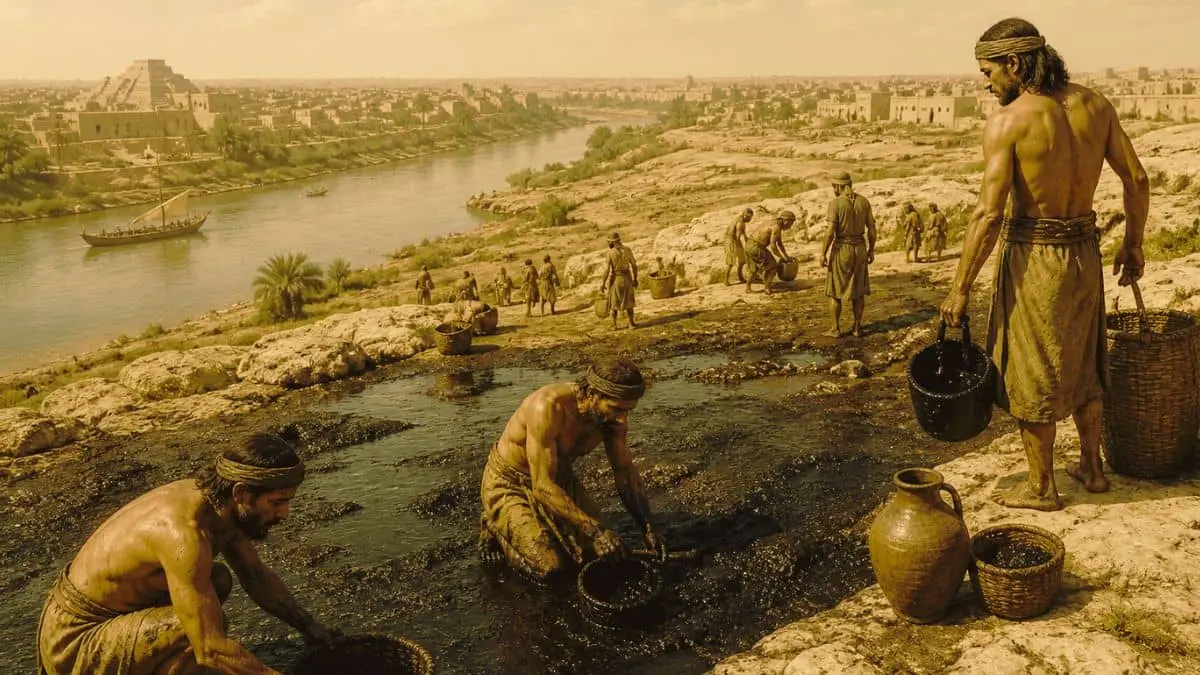
Long before modern drilling, early civilizations first encountered petroleum through natural oil seeps, places where crude oil rose to the Earth’s surface on its own. In regions like Mesopotamia (modern-day Iraq), people noticed sticky black substances, often called bitumen, seeping from the ground. Similarly, ancient societies in China and Egypt observed and collected these natural deposits.
These early cultures quickly found practical uses for petroleum. In Mesopotamia, bitumen was widely used as a waterproofing material for boats, buildings, and roads. Ancient Egyptians used petroleum-based substances in the mummification process and for sealing structures. In China, natural oil and gas were even used for heating and lighting. Although these societies didn’t fully understand what petroleum was, they recognized its usefulness and incorporated it into daily life.
Early Records of Petroleum Use
Historical records show that petroleum use was documented thousands of years ago, even if scientific understanding was limited. The Greek historian Herodotus wrote about the use of bitumen in the construction of Babylon’s walls. Ancient Chinese texts also describe early oil wells and the use of petroleum for fuel and salt extraction.
While these early records were not scientific explanations, they provide valuable insight into how petroleum was perceived and used. Knowledge was based largely on observation and experience rather than chemistry or geology. Even so, these early discoveries played an important role in shaping the long journey of how petroleum discovery began, laying the groundwork for future exploration and innovation.
The First Scientific Efforts in Petroleum Discovery
China’s Early Drilling Techniques
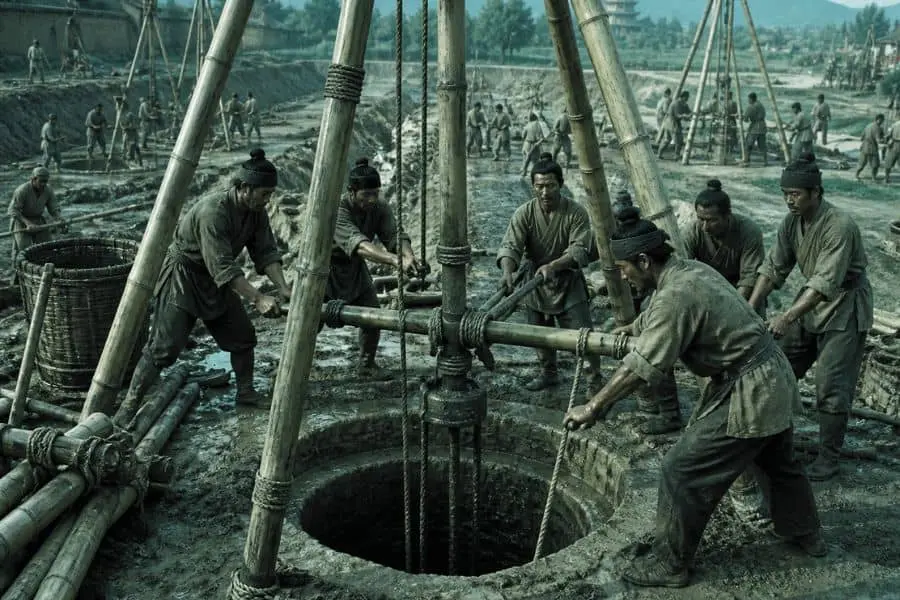
Centuries before modern oil rigs existed, ancient China developed remarkably advanced drilling methods, especially in the Sichuan region. As early as the 4th century, Chinese engineers used long bamboo poles and simple percussion drilling techniques to dig deep wells, sometimes reaching hundreds of meters below the surface.
These wells were originally drilled to extract salt brine, but workers soon discovered natural gas and crude oil deposits along the way. Bamboo was not only used for drilling but also for creating pipelines to transport gas, which was even burned for heat and light. This system represents one of the earliest known examples of organized resource extraction, making it a crucial step in understanding how petroleum discovery began in a more systematic, technological way.
The Transition from Surface Collection to Drilling
In ancient times, petroleum was mostly collected from surface seeps, places where oil naturally leaked out of the ground. While this method was simple, it was also limited, as it depended entirely on naturally available sources. As demand for petroleum grew, especially for fuel and industrial use, people began searching for ways to access larger underground reserves.
This need led to the gradual shift from surface collection to intentional drilling. Early innovators realized that oil existed beneath the Earth’s surface in much greater quantities than what was visible. By developing tools and techniques to dig deeper, they unlocked vast new supplies of petroleum. This transition marked a turning point, laying the foundation for the modern oil industry and advancing the global journey of how petroleum discovery began.
The Birth of the Modern Oil Industry
Edwin Drake and the First Oil Well (1859)
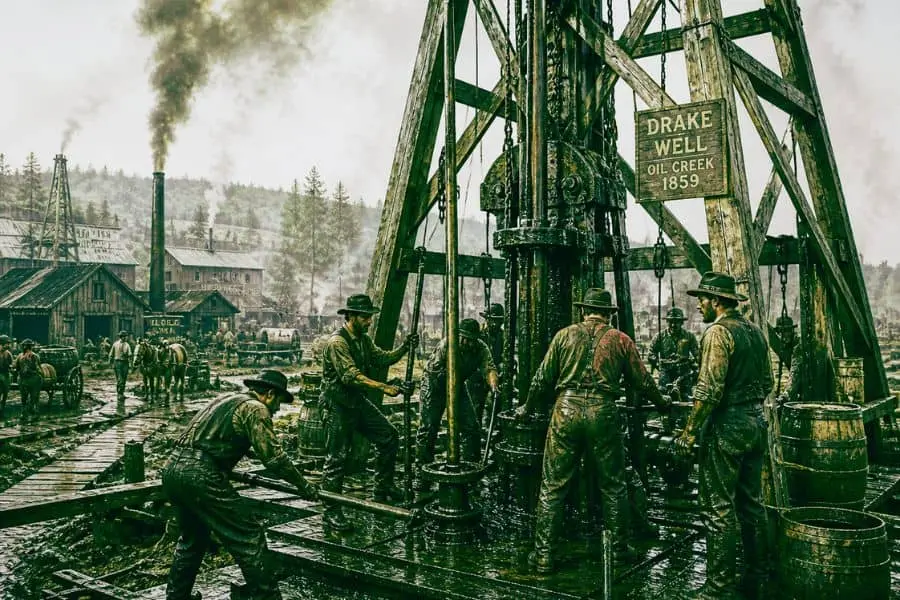
In 1859, Edwin Drake made history by drilling the world’s first successful commercial oil well in Titusville, Pennsylvania. Using a steam-powered drilling rig and an innovative method of driving a pipe into the ground to prevent collapse, Drake was able to reach oil beneath the surface at a depth of about 69 feet.
Before this breakthrough, oil was mainly collected from surface seeps, which limited supply and reliability. Drake’s success proved that petroleum could be extracted efficiently from underground reservoirs. This moment is widely recognized as a turning point in how petroleum discovery began in modern terms; it transformed oil from a curiosity into a dependable, scalable energy resource and laid the foundation for a global industry.
The Pennsylvania Oil Rush
Drake’s discovery sparked what became known as the Pennsylvania Oil Rush, a period of rapid exploration and economic excitement similar to the famous gold rushes of the 19th century. Investors, workers, and entrepreneurs rushed to the region, hoping to strike it rich by drilling their own wells.
This boom had a powerful economic impact. Small towns quickly transformed into bustling industrial centers filled with oil derricks, refineries, and transportation networks. The sudden availability of petroleum fueled innovation, reduced energy costs, and accelerated industrial growth across the United States and beyond.
The Pennsylvania Oil Rush marked the beginning of large-scale oil production and commercialization. It not only expanded the energy market but also played a major role in shaping modern economies, further advancing the story of how petroleum discovery began and evolved into a global force.
How Petroleum Discovery Spread Globally
Expansion into Russia and the Middle East
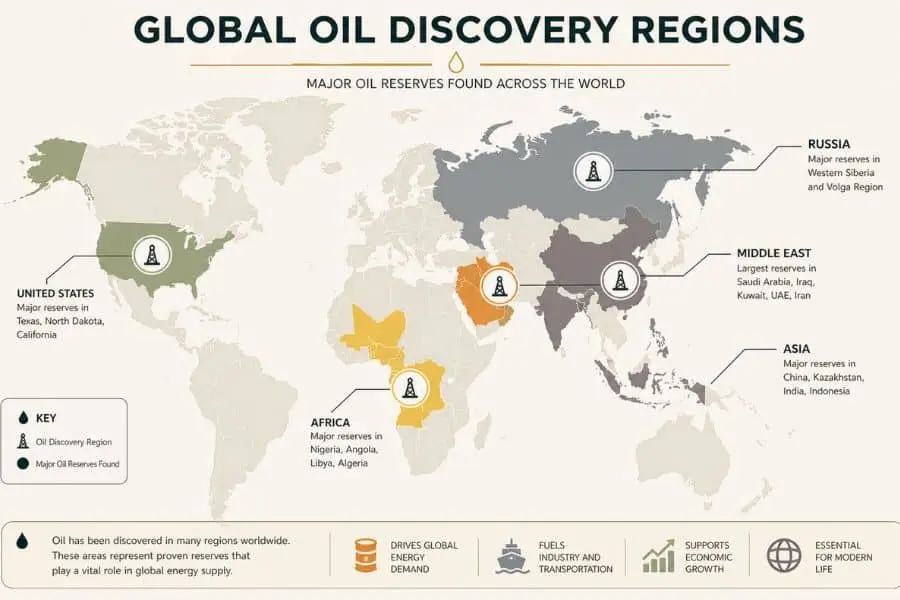
After the success of early oil drilling in the United States, petroleum exploration quickly expanded to other parts of the world. One of the most important early centers was Baku, located on the Caspian Sea. By the late 19th century, Baku had become one of the world’s leading oil-producing regions, attracting international investment and innovation.
Another major milestone came in Persia (modern-day Iran), where significant oil reserves were discovered in 1908. This discovery marked the beginning of large-scale oil production in the Middle East, a region that would later become central to the global energy supply.
As these regions developed, oil became more than just an industrial resource; it turned into a strategic asset. Nations began to recognize that controlling oil supplies meant economic power and political influence. This shift played a crucial role in shaping global relations and further expanded the story of how petroleum discovery began on an international scale.
Oil Discoveries in Asia, Africa, and Beyond
Following discoveries in Russia and the Middle East, petroleum exploration spread rapidly across Asia, Africa, and other parts of the world. Countries began investing in geological surveys and drilling operations to locate new reserves, leading to major finds in regions such as Southeast Asia, North and West Africa, and Latin America.
Technological advancements played a key role in this global expansion. Improved drilling methods, such as rotary drilling, allowed companies to reach deeper oil deposits more efficiently. Later innovations, including offshore drilling platforms and seismic surveying, made it possible to explore previously inaccessible areas beneath oceans and remote landscapes.
This worldwide expansion transformed petroleum into a truly global industry. It connected economies, fueled international trade, and increased competition for energy resources. As exploration continues today, the global spread of oil discovery remains a vital chapter in understanding how petroleum discovery began and evolved into a cornerstone of modern civilization.
The Role of Technology in Petroleum Exploration
Advancements in Drilling Techniques
As demand for energy grew, drilling technology evolved far beyond early wooden derricks. One of the most important breakthroughs was rotary drilling, a method that uses a rotating drill bit to cut through rock layers efficiently. Compared to earlier techniques, rotary drilling allowed operators to reach greater depths faster and with improved stability, making large-scale oil extraction more practical.
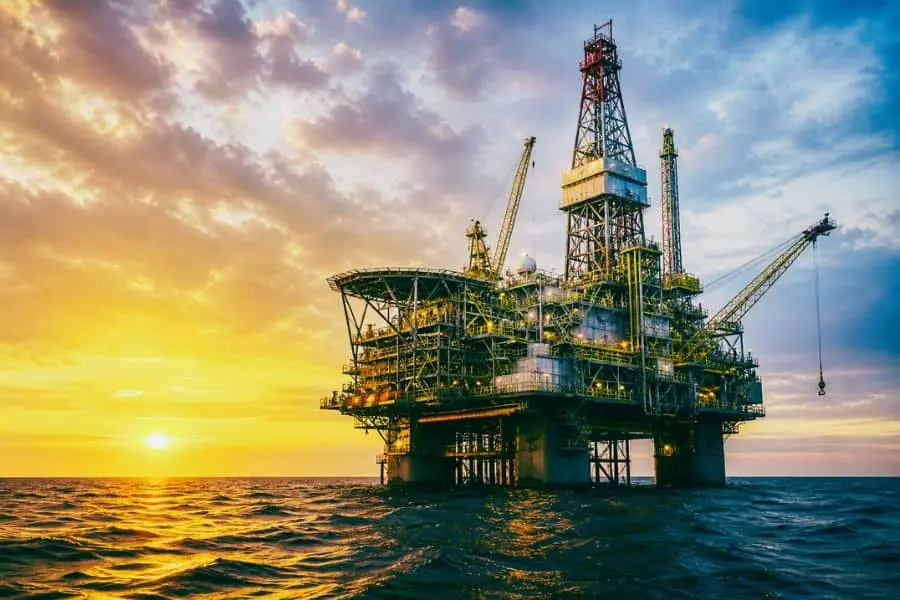
Another major advancement was the development of offshore drilling rigs, which made it possible to extract petroleum from beneath the ocean floor. These massive platforms can operate in deep waters and harsh environments, opening access to vast new reserves that were once unreachable.
Together, these innovations dramatically increased efficiency, reduced costs, and expanded the global supply of oil. They represent a key stage in the evolution of how petroleum discovery began, turning it into a highly advanced industrial process.
Modern Exploration Methods
Today, petroleum exploration relies heavily on advanced scientific tools and digital technologies. One of the most important methods is seismic surveying, which uses sound waves to create detailed images of underground rock formations. By analyzing how these waves travel through the region, geologists can identify potential oil and gas reserves with remarkable accuracy.
In addition, digital mapping and data analysis have transformed how exploration is conducted. Modern software can process vast amounts of geological data, creating 3D models of the Earth’s subsurface. This allows companies to pinpoint drilling locations more precisely and reduce the risks associated with exploration.
These technologies ensure that petroleum discovery continues even in challenging environments, from deep oceans to remote deserts. They highlight how far the industry has come from simple surface observations to highly sophisticated systems, further advancing our understanding of how petroleum discovery began and how it continues to evolve today.
The Global Impact of Petroleum Discovery
Economic Growth and Industrialization
The discovery and widespread use of petroleum played a major role in accelerating global economic growth and industrialization. Once reliable oil extraction became possible, factories could operate more efficiently using petroleum-based fuels instead of relying solely on coal or manual labor. This shift increased production speed and lowered costs, helping industries expand rapidly.
Transportation also experienced a dramatic transformation. Petroleum fuels such as gasoline and diesel power cars, trucks, ships, and airplanes, making travel faster, cheaper, and more accessible. As a result, goods could be transported across countries and continents with ease, boosting international trade and connecting global markets like never before.
In many ways, petroleum became the backbone of modern economies. It supported infrastructure development, created millions of jobs, and enabled technological progress. Understanding this impact is essential to fully grasp how petroleum discovery began and why it remains so significant today.
Environmental and Political Impacts
While petroleum has driven progress, it has also brought serious environmental and political challenges. The burning of fossil fuels releases greenhouse gases, contributing to climate change and air pollution. Oil spills and industrial accidents have also caused damage to ecosystems, affecting wildlife and local communities.
On the political side, petroleum has become a highly strategic resource. Countries with large oil reserves often hold significant global influence, and competition over these resources has sometimes led to conflicts and geopolitical tensions. Control over oil supply routes, pricing, and production levels continues to shape international relations.
At the same time, growing awareness of environmental issues has encouraged the development of renewable energy alternatives. Governments and industries are now balancing the benefits of petroleum with the need for sustainability. This balanced perspective helps us better understand the broader consequences of how petroleum discovery began and its lasting impact on the world.
Conclusion
From the earliest days of collecting oil from natural surface seeps in ancient civilizations to the development of advanced drilling technologies, the story of how petroleum discovery began is one of continuous innovation and adaptation. What started as a simple observation of a sticky substance in places like Mesopotamia and China eventually evolved into a global industry powered by science, engineering, and exploration.
Petroleum has played a central role in shaping the modern world. It fueled industrial growth, revolutionized transportation, and supported the development of countless products that define everyday life. Entire economies have been built around it, and its influence can be seen in global trade, infrastructure, and technological progress.
Looking ahead, the role of petroleum is gradually being redefined. As the world faces environmental challenges and shifts toward cleaner energy sources, the focus is moving toward sustainability and innovation. While petroleum remains important today, the future of energy will likely depend on balancing its use with renewable alternatives, continuing the long journey that began with the earliest discoveries of oil beneath the Earth’s surface.
Trusted Sources
Using reliable sources to obtain accurate and truthful information is extremely important. All the information published on this website has been prepared in accordance with historical and scientific accuracy, based on recognized books, research articles, and publications from well-known institutions. Our aim is to provide readers with correct, up-to-date, and trustworthy knowledge.
For further reading:
FAQs
How did they discover petroleum?
People first discovered petroleum when they noticed natural oil seeping from the ground. Ancient civilizations collected it and used it for waterproofing, medicine, and lighting. Later, in the 19th century, drilling techniques like Edwin Drake’s oil well helped extract it in large amounts.
Where and how did the formation of petroleum begin?
Petroleum formed millions of years ago from the remains of tiny plants and marine organisms. These were buried under layers of sediment on ancient sea floors. Over time, heat and pressure transformed them into crude oil deep underground, mainly in regions that were once ancient seas.