Great Zimbabwe Ruins: Africa’s Ancient Stone City Legacy
For generations, global narratives often underestimated the complexity of early African civilizations. Yet few archaeological sites challenge that misconception more powerfully than Great Zimbabwe.
Located in present-day Zimbabwe, this remarkable stone city stands as one of the most significant examples of advanced urban development in Sub-Saharan Africa before European contact. Between the 11th and 15th centuries, Great Zimbabwe flourished as a political, economic, and cultural center — built not by foreign settlers, but by indigenous African communities.
Today, the Great Zimbabwe Ruins provide compelling evidence of sophisticated engineering, long-distance trade networks, and organized state structures in medieval Africa. In this article, we explore:
- What Great Zimbabwe truly was
- Where it is located and why geography mattered
- Who built it
- Why it holds global historical importance
Table of Contents
Quick Facts:
| Category | Details |
| Site Name | Great Zimbabwe Ruins |
| Location | Southeastern Zimbabwe, near Masvingo |
| Construction Period | AD 1100 – 1450 |
| Builders | Ancestors of the Shona people |
| Civilization Type | Medieval African Kingdom |
| Construction Method | Dry stone masonry (built without mortar) |
| Maximum Wall Height | Approximately 11 meters (36 ft) |
| Wall Thickness | 4–5 meters |
| Estimated Peak Population | 10,000 – 20,000 people |
| Main Architectural Sections | Hill Complex, Great Enclosure, Valley Complex |
| Primary Economic Base | Gold and ivory trade |
| Trade Network | Linked to Indian Ocean trade routes |
| UNESCO Status | Designated World Heritage Site in 1986 |
| Historical Significance | Largest ancient stone structure in sub-Saharan Africa |
What Is Great Zimbabwe?
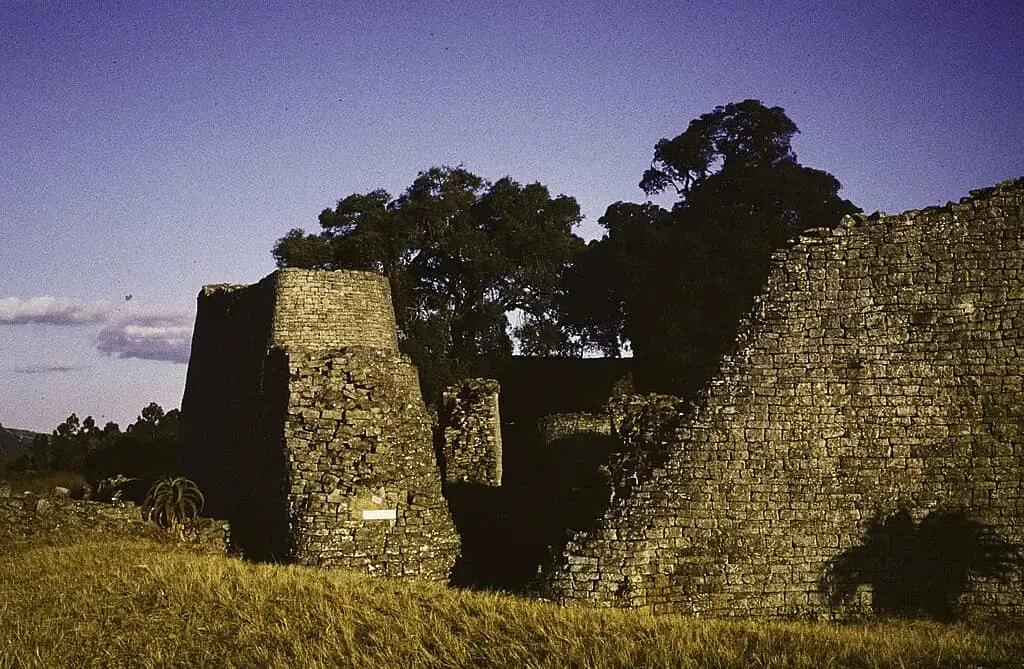
Great Zimbabwe was a vast medieval stone city constructed primarily between the 11th and 15th centuries. Built using carefully shaped granite blocks, the site represents one of the largest and most complex ancient structures south of the Sahara Desert.
The name “Zimbabwe” is derived from a Shona phrase often translated as “houses of stone,” reflecting the city’s most striking feature: massive dry-stone walls constructed without mortar. These architectural achievements continue to impress archaeologists and engineers alike.
Great Zimbabwe was far more than a settlement. It functioned as:
- A royal and political capital
- A religious and ceremonial center
- A hub of regional and international trade
Its existence demonstrates that highly organized African states developed independently, long before colonial involvement. The site plays a central role in reshaping how African history is understood today.
Where Is Great Zimbabwe Located?
Geographic Setting
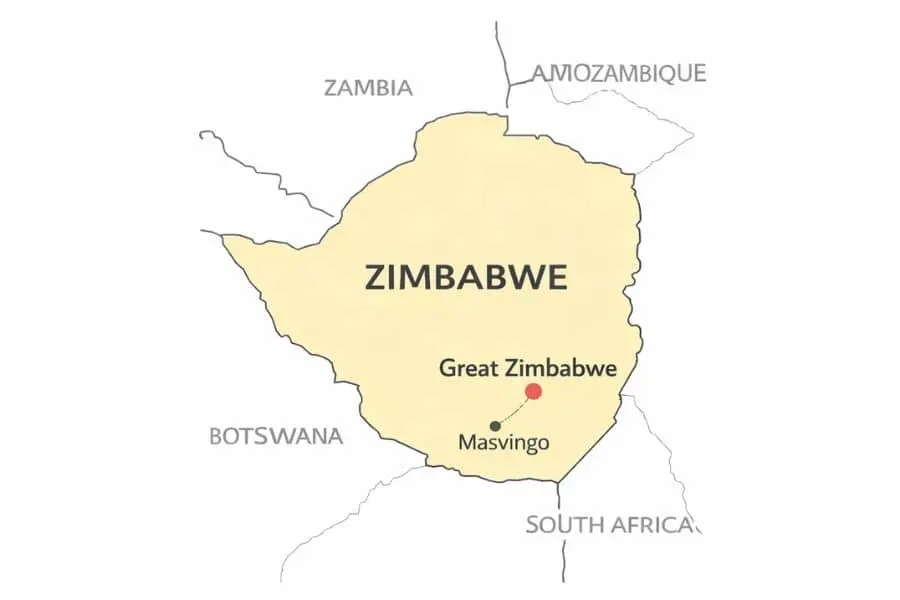
Great Zimbabwe lies in southeastern Zimbabwe, near the modern town of Masvingo. The site sits roughly 1,100 meters above sea level and is surrounded by open savanna landscapes and granite outcrops.
Its elevated position provided strategic advantages, both defensively and economically. The region’s natural resources and access to trade routes helped transform the settlement into a powerful regional capital.
Natural Defenses and Landscape Features
The location itself contributed to the city’s growth and security. Key geographical elements include:
- Granite hills and rocky ridges
- Naturally elevated terrain
- Nearby water sources
These features not only offered protection but also provided abundant building material. The availability of granite made the construction of monumental stone walls possible, allowing Great Zimbabwe to develop into a durable and visually striking urban center.
Its position also connected inland gold-producing regions with trade ports along the Indian Ocean coast, making it a strategic crossroads in regional commerce.
Who Built Great Zimbabwe?
The Shona People
Archaeological evidence confirms that Great Zimbabwe was constructed by the ancestors of the Shona people, a Bantu-speaking ethnic group of southern Africa.
Material culture, pottery styles, oral traditions, and settlement patterns all point to local origins. This conclusion overturns earlier colonial-era theories that falsely attributed the site to foreign builders.
The Shona communities were skilled in:
- Agriculture
- Cattle herding
- Metalworking
- Trade and resource management
Their social and political systems enabled the coordinated labor required to build and maintain such an extensive stone complex.
Social and Political Organization
Great Zimbabwe was not an isolated collection of structures; it was the center of a structured kingdom. Its social hierarchy likely included:
- A ruling king
- Elite families and advisors
- Religious leaders
- Merchants and craftsmen
- Agricultural workers
Such organization reflects a centralized authority capable of managing resources, trade networks, and large construction projects.
Governance and Royal Authority
Political and spiritual authority appear to have been closely connected. The elevated Hill Complex area, for example, is believed to have housed the ruling elite or served ritual purposes.
Control over valuable resources such as gold and ivory strengthened the kingdom’s economic influence. Through this system, Great Zimbabwe became one of the most powerful centers in medieval southern Africa.
Why Great Zimbabwe Matters Today
Great Zimbabwe stands as powerful evidence of indigenous African innovation and state formation. Its carefully engineered stone walls, economic influence, and cultural sophistication challenge outdated assumptions about Africa’s pre-colonial past.
Rather than a minor settlement, it was a thriving urban center that participated in wider trade networks and governed surrounding regions.
Today, historians and archaeologists regard Great Zimbabwe as a foundational symbol of African heritage, resilience, and achievement. Its legacy continues to shape national identity and global understanding of African civilization.
The Timeline and Historical Development of Great Zimbabwe
AD 1100–1450: A Flourishing Medieval African Kingdom
Archaeological excavations and radiocarbon dating indicate that Great Zimbabwe reached its peak between AD 1100 and 1450. However, its roots stretch back even further.
The site appears to have begun as a modest agricultural community around the 11th century. By the 13th and 14th centuries, it had transformed into one of the most influential urban centers in southern Africa.
A Brief Historical Timeline
- AD 1000–1100 – Early farming communities and small settlements emerge.
- AD 1100–1250 – Construction of monumental stone walls begins.
- AD 1250–1350 – Rapid population growth and expansion of long-distance trade.
- AD 1350–1450 – Peak political power, followed by gradual decline.
Phases of Growth
In its early stages, the economy was built primarily on:
- Agriculture
- Cattle herding
Over time, gold trade became a central pillar of economic strength. Gold extracted from surrounding regions entered far-reaching trade networks, elevating the city’s influence.
The construction of massive stone structures during this period demonstrates advanced urban planning and engineering ability. Great Zimbabwe evolved into a major political, religious, and economic capital.
Expansion and Political Power
At its height in the 13th and 14th centuries, researchers estimate that the population of Great Zimbabwe ranged between 10,000 and 20,000 residents, making it one of the largest cities in sub-Saharan Africa at the time.
Strategically positioned between the African interior and coastal trade ports, the city functioned as a commercial hub. This geographical advantage strengthened its authority and helped establish it as the center of a powerful kingdom.
Architecture and Engineering of the Stone City
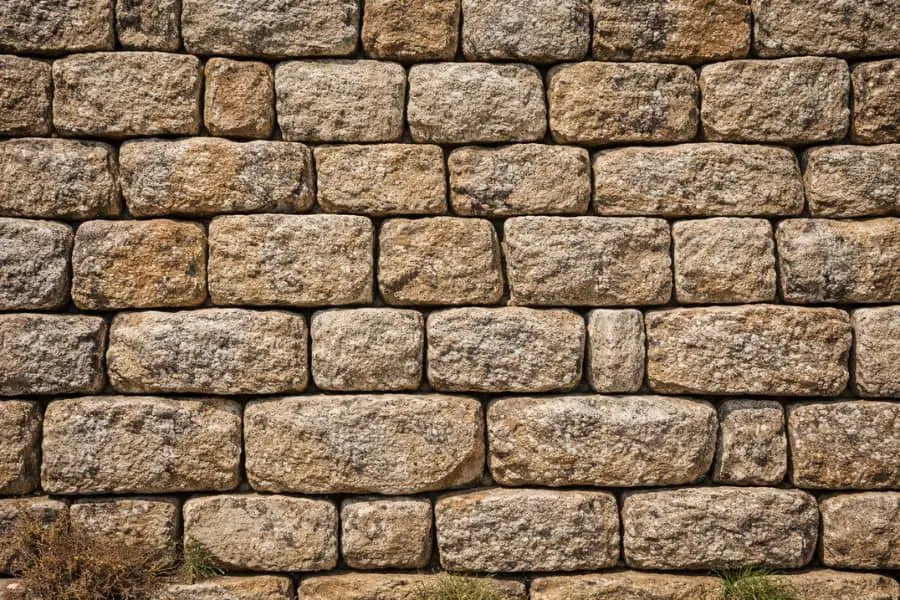
One of the most defining features of Great Zimbabwe is its extraordinary stone construction. The city’s design reflects technical precision and social organization rarely acknowledged in early representations of African history.
Dry Stone Construction Technology
The walls of Great Zimbabwe were built using dry stone masonry, meaning no mortar or cement was used. Instead:
- Granite blocks were carefully cut and shaped.
- Stones were stacked and balanced with exceptional precision.
- Structural stability was achieved through weight distribution and craftsmanship.
Some walls reach up to 11 meters (36 feet) in height and approximately 5 meters (16 feet) in thickness, standing as enduring testaments to the builders’ engineering expertise.
Use of Local Granite
Granite sourced from nearby outcrops was split into manageable slabs. Skilled artisans shaped each stone to interlock naturally.
Modern engineering analysis suggests that:
- The walls remain stable due to even load distribution.
- The slight inward curve in certain sections adds further strength.
The result is a resilient architectural legacy that has endured for centuries.
Urban Planning and Structural Organization
Great Zimbabwe’s layout reveals deliberate social and political organization. The city was divided into functional zones:
- Elite residential areas
- Ritual and ceremonial spaces
- Living quarters for common residents
This division highlights a structured and hierarchical society.
Hill Complex
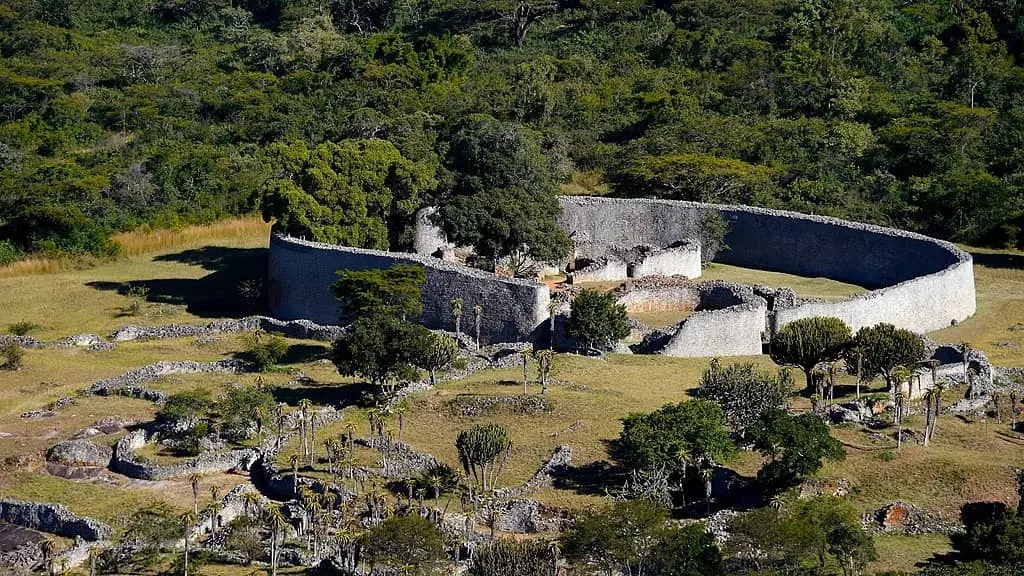
Situated on elevated ground, the Hill Complex is believed to have housed ruling elites and religious leaders. Its position symbolizes authority and spiritual importance.
Great Enclosure
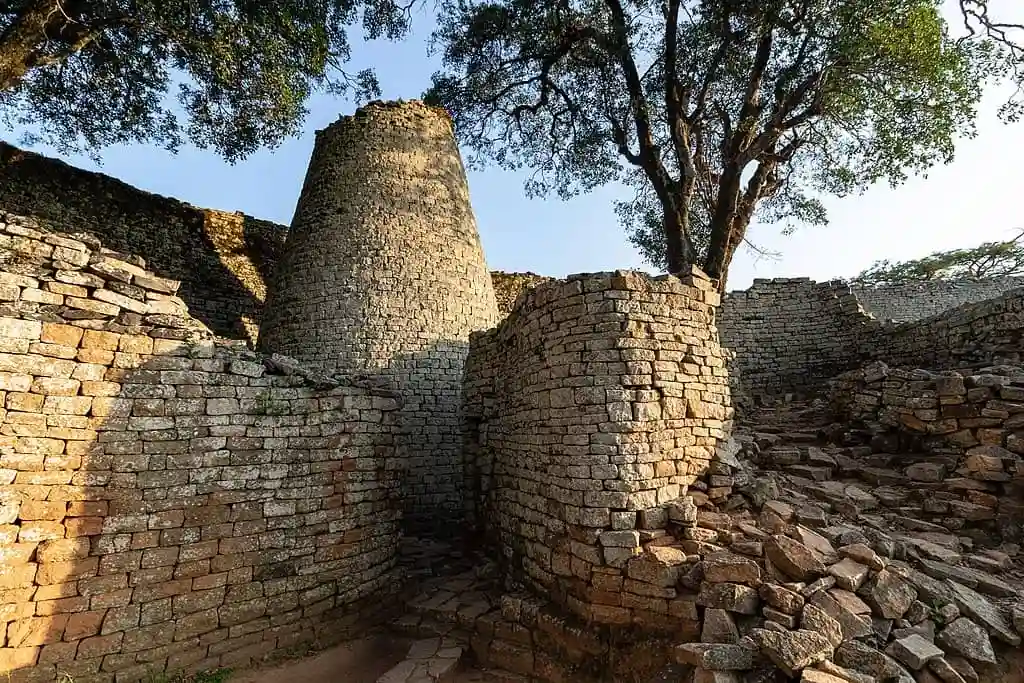
The Great Enclosure is one of the most iconic structures at the site. It features:
- A massive elliptical outer wall
- A circumference of roughly 250 meters
- One of the largest ancient stone structures in sub-Saharan Africa
Its exact purpose remains debated, but it likely served ceremonial or elite residential functions.
Valley Complex
The Valley Complex consists of residential areas occupied by the broader population. This area reflects the everyday life of citizens who contributed to the city’s economic vitality.
Compared with other ancient stone settlements in Africa, Great Zimbabwe stands out for both scale and architectural cohesion.
Great Zimbabwe and International Trade Networks
Gold Trade: The Economic Foundation
Gold formed the backbone of Great Zimbabwe’s prosperity. Southern Africa’s mineral resources enabled the kingdom to participate actively in regional and international trade.
Gold exports brought wealth and reinforced the authority of the ruling elite.
Indian Ocean Trade Network
Great Zimbabwe was linked to the broader Indian Ocean trade network, which connected Africa with Asia and the Middle East.
Trade partners included regions associated with:
- China
- India
- Persia
- Portuguese coastal traders (in later periods)
Archaeological discoveries at the site include:
- Chinese porcelain
- Glass beads
- Imported ceramics
- Exotic goods
These finds confirm that Great Zimbabwe was not isolated but integrated into a global economic system centuries before modern globalization.
Why Was Great Zimbabwe Abandoned?
By the late 15th century, Great Zimbabwe began to decline and was eventually abandoned. Scholars continue to debate the precise cause, but several contributing factors are widely discussed.
Possible Reasons for Decline
- Climate change – Extended droughts may have reduced agricultural productivity.
- Overgrazing – Large cattle populations could have degraded surrounding land.
- Political fragmentation – Internal disputes may have weakened centralized authority.
- Trade route shifts – Changing trade patterns may have reduced economic stability.
It is important to approach these explanations cautiously. No single theory fully accounts for the city’s decline, and researchers emphasize the complexity of historical transitions.
European Misinterpretations and Archaeological Truth
In the 19th century, some European explorers claimed that Great Zimbabwe could not have been built by African societies. Instead, they suggested foreign origins—reflecting colonial-era biases rather than evidence.
However, systematic archaeological research in the 20th century confirmed that the site was constructed by the ancestors of the Shona people.
These findings restored historical accuracy and reaffirmed African agency in building complex civilizations. The correction of earlier misconceptions marked a significant step toward acknowledging Africa’s indigenous architectural and political achievements.
UNESCO World Heritage Recognition
In 1986, Great Zimbabwe was designated a UNESCO World Heritage Site.
Why It Was Recognized
UNESCO acknowledged the site for:
- Being the largest ancient stone structure in sub-Saharan Africa
- Demonstrating advanced urban planning
- Representing a powerful center of regional and international trade
Global Heritage Importance
World Heritage recognition elevated international awareness of pre-colonial African civilizations. Preservation efforts continue to protect the ruins from environmental and human impact, ensuring that future generations can study and appreciate this remarkable site.
Great Zimbabwe and Modern National Identity
Today, Great Zimbabwe is central to the national identity of Zimbabwe. In fact, the country’s name itself is derived from the site.
Its symbolism appears in:
- The national emblem
- Cultural representations
- Tourism promotion campaigns
As a major tourist destination, Great Zimbabwe contributes significantly to the national economy while also serving as a critical center for archaeological research and education.
More importantly, it stands as a powerful reminder that complex, urbanized societies flourished in Africa long before colonial contact.
Conclusion: Preserving the Legacy of Africa’s Ancient Stone City
The ruins of Great Zimbabwe are far more than a collection of old stone walls. They represent a thriving medieval African civilization built on political organization, economic strength, and remarkable architectural skill.
This extraordinary site challenges outdated historical assumptions that once underestimated Africa’s pre-colonial achievements. Long before European influence in the region, indigenous communities developed sophisticated state systems, controlled long-distance trade networks, and constructed monumental stone architecture that continues to stand today.
Studying Great Zimbabwe with academic integrity and cultural respect is essential. It allows us to better understand Africa’s historical contributions to global civilization while correcting earlier misconceptions rooted in colonial narratives.
Preserving this World Heritage Site is not only a matter of protecting archaeological remains—it is about safeguarding cultural identity and ensuring that future generations can learn from one of Africa’s most important historical landmarks.
Great Zimbabwe truly remains a lasting symbol of Africa’s ancient urban legacy and enduring historical significance.
FAQs
What is Great Zimbabwe?
Great Zimbabwe is a vast medieval stone city in southeastern Africa, built between AD 1100 and 1450. It served as the political and economic center of a powerful African kingdom.
Where is Great Zimbabwe located?
Great Zimbabwe is located in the modern-day country of Zimbabwe, in the southeastern part of the country near Masvingo.