World War II: Causes, Major Events & Global Impact Explained
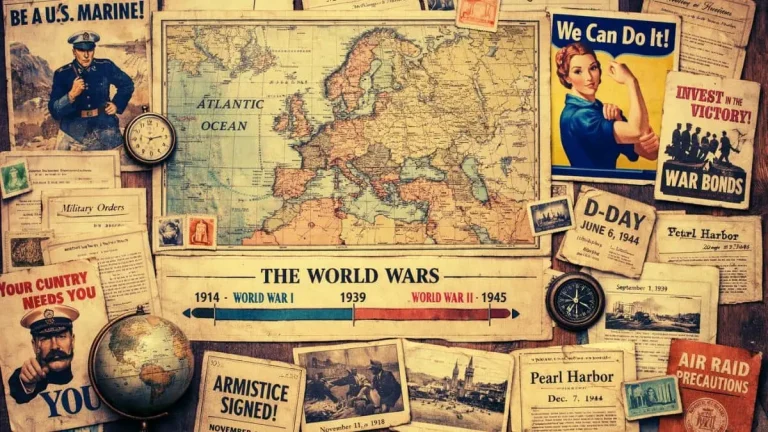
You have heard about the First World War. The subsequent devastating war was the Second World War. It is considered one of the most significant events in modern human history. From 1939 to 1945, more than 100 countries were involved in it. The lives of over 70 million people were lost. During this time, the geopolitical, social, and economic structures of the world were reshaped. Unlike the First World War, which was largely confined to Europe, the Second World War was truly global.
This war is remembered not only for its immense scale but also for its technological innovations, strategic military operations, and destructive human atrocities, including the Holocaust. It marked the first and only use of nuclear weapons in warfare, fundamentally changing the nature of military conflicts forever.
Table of Contents
Quick Facts
| Fact | Detail |
| Name | World War II (Second World War) |
| Period | September 3, 1939 – September 2, 1945 |
| Immediate Trigger | Germany invaded Poland (Sept 1, 1939), prompting Britain & France to declare war |
| Major Causes | Expansionism, Treaty of Versailles aftermath, rise of totalitarian regimes (Nazism, Fascism), nationalism |
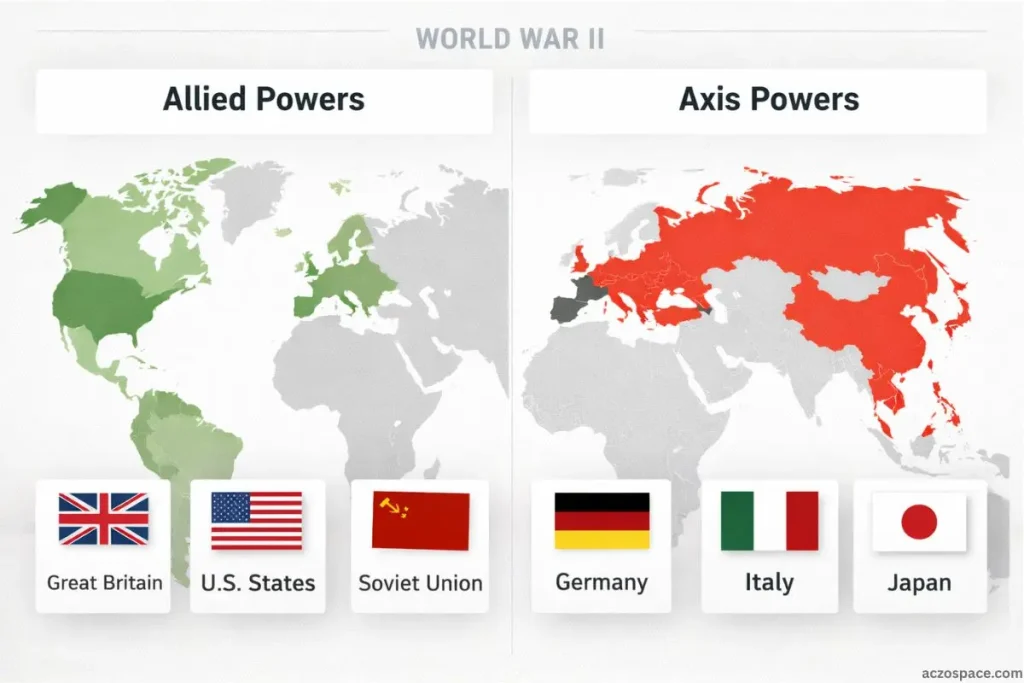
| Axis Powers | Germany, Italy, Japan |
| Allied Powers | United States, Soviet Union, United Kingdom, China, France |
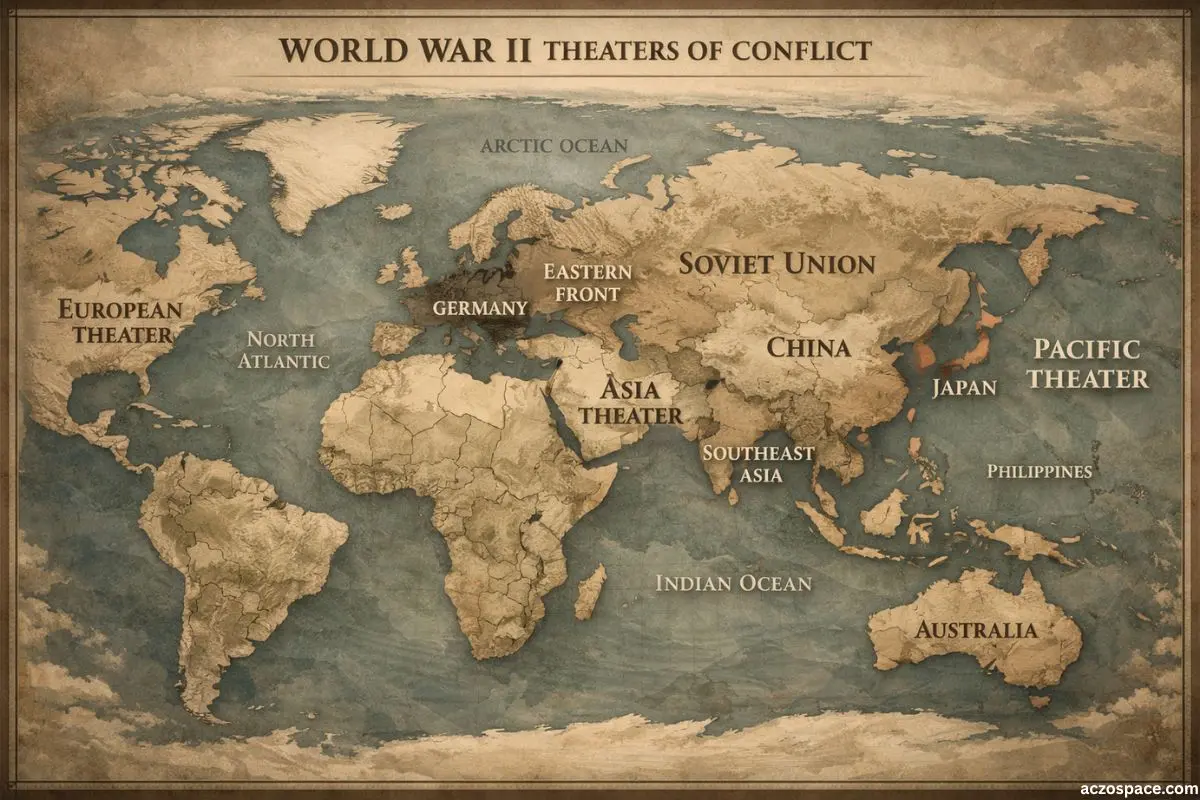
| Type of Warfare | Global multi‑theater war: Europe, Pacific, Africa, Asia |
| Key Events | Invasion of Poland, Pearl Harbor, D‑Day (Normandy), Battle of Stalingrad, Atomic bombings |
| Estimated Casualties | Millions of lives were lost. (70–85M+ overall; civilian & military) |
| Outcome | Axis defeat, end of colonial empires, rise of US & USSR as superpowers & foundations of the United Nations |
Causes of World War II

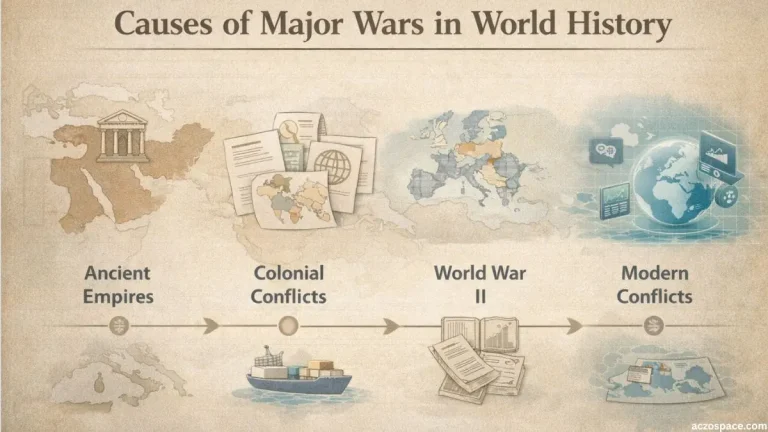
World War II was the result of a complex interplay of interconnected political, economic, and social factors. The conditions created by World War I and the interwar period set the stage for another global conflict. Now, let us explain them one by one.
The Treaty of Versailles and its consequences
The First World War officially came to an end with the signing of the Treaty of Versailles in 1919. However, Germany was humiliated and economically weakened. Many historians believe that the harsh conditions of the Treaty of Versailles created deep resentment within German society. This led to widespread anger within Germany. The combination of national humiliation and economic pressure provided fertile ground for Adolf Hitler and the Nazi Party to rise to power. They promised to restore German pride and strength.
The Rise of Fascism and Totalitarian Regimes
During the interwar period, countries like Germany, Italy, and Japan witnessed the rise of totalitarian leaders who rejected democratic norms. In Germany, Adolf Hitler promoted Aryan supremacy and militarism. In Italy, Benito Mussolini aimed to revive the glory of the Roman Empire. In Japan, militarists sought to dominate Asia and secure essential resources. These leaders used propaganda to manipulate public opinion, elevate war, and suppress opposition. This prepared societies for large-scale conflicts.
Expansionist Policies of Axis Powers
Germany: Followed the concept of ‘Lebensraum’ (living space) to expand eastward and reclaim lost territories.
Italy: Attempted to expand into North Africa and the Mediterranean Sea in an effort to recreate a modern Roman Empire.
Japan: Aggressively expanded across Asia, invading Manchuria in 1931 and China in 1937 to secure raw materials and territorial areas.
Failure of the League of Nations
The League of Nations, established to maintain world peace after the First World War, was visibly unsuccessful. It failed to prevent Japan from taking over Manchuria, Italy from invading Ethiopia, or Germany from remilitarizing the Rhineland. The League’s weakness encouraged aggressive nations to act without fear of international repercussions.
Economic Depression and Instability
Many historians argue that economic instability played a critical role in fueling extremism during the interwar period. The Great Depression (1929) caused widespread unemployment, poverty, and social unrest across the world. In countries like Germany, Italy, and Japan, the population turned to strong leaders who promised stability, national pride, and economic recovery.
Ideological Conflicts
World War II was not only a conflict over territory and power but also a clash of ideologies. Fascism, militarism, and totalitarianism fought against democracy, socialism, and communism. Ideological divisions heightened tensions and made a peaceful resolution extremely difficult.
These can be considered the main factors that led to the outbreak of World War II.
Major Powers Involved
Two major alliances were involved in the war: the Allied Powers and the Axis Powers.
Allied Powers
United States: The attack on Pearl Harbor in December 1941 led the United States to enter World War II. It also became a major force in the Allied efforts. Their industrial capacity and military power played a decisive role in defeating the Axis.
United Kingdom: Led by Winston Churchill, Britain opposed the German aggression and was fundamental in planning Allied strategic operations.
Soviet Union: Initially neutral due to the Molotov-Ribbentrop Pact, the Soviet Union joined the Allies after Germany’s invasion in 1941. It bore the brunt of the fighting on the Eastern Front.
China: Fought against Japan since 1937. Despite suffering millions of casualties, it played a key role in weakening the Japanese military.
France: Although captured in 1940, Free France under Charles de Gaulle continued to fight and contributed to the liberation efforts.
Axis Powers
Germany: Led by Hitler, Germany sought world domination through invasions and military innovations.
Italy: Mussolini’s Italy aimed to dominate the Mediterranean but eventually fell apart after 1943.
Japan: Aggressively expanding across Asia and the Pacific, various atrocities were committed against civilians and prisoners of war.
The Beginning of World War II
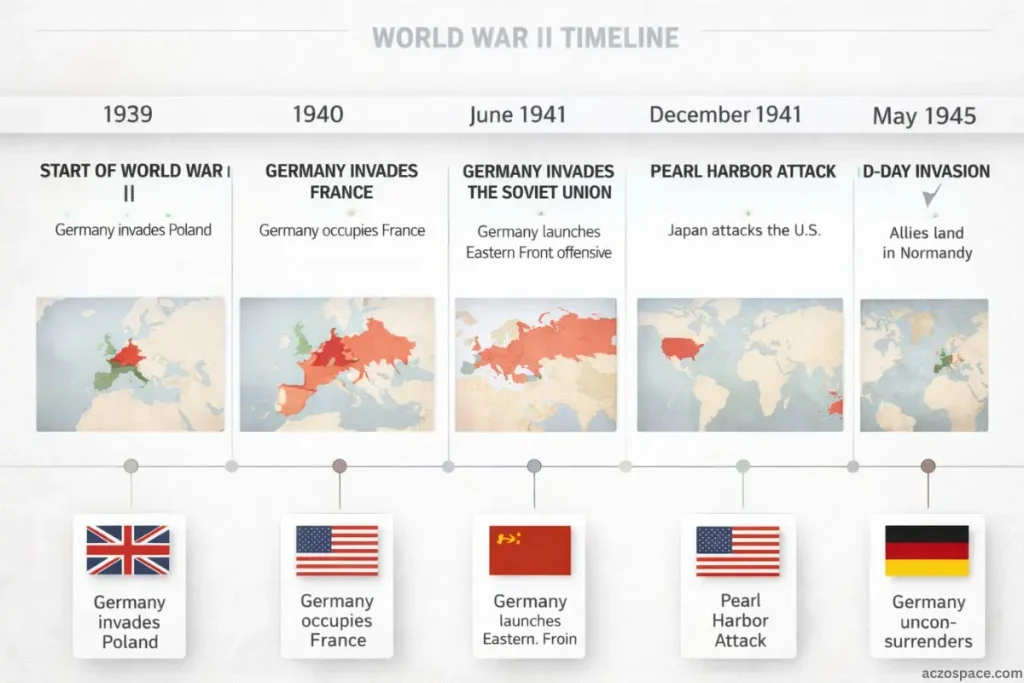
The war officially began on September 1, 1939, when Germany invaded Poland. Using blitzkrieg, or ‘lightning war,’ Germany quickly bypassed Polish defenses. Two days later, Britain and France declared war. This marked the beginning of a global conflict.
Poland was rapidly divided between Germany and the Soviet Union. Hitler’s intentions to aggressively expand, disregarding international law, became evident. This event revealed the failure of appeasement policies. It demonstrated that war could not be prevented through diplomacy alone.
Sequence of Events
Early Period (1939–1941)
During the early period of the war, both sides were able to conduct major offensives, along with ground and air battles. Mainly:
Fall of France (1940): Germany bypassed the Maginot Line and captured Paris within a few weeks.
Battle of Britain (1940): Germany’s attempt to gain air supremacy over Britain was unsuccessful. It marked the first significant defeat for the Nazis.
Axis Expansion: Italy joined Germany in North Africa. Japan continued its aggressive campaigns in China and Southeast Asia.
Turning Points (1941–1943)
Several events that led to the end of the war can be outlined.
Operation Barbarossa (1941): Germany’s invasion of the Soviet Union was initially successful. However, it ultimately failed due to the Soviet resistance and harsh winter conditions.
Pearl Harbor (1941): The sudden attack by Japan on the United States naval base led America into full-scale war.
Battle of Stalingrad (1942–1943): One of the deadliest battles in history. As a result, there was a decisive Soviet victory.
North African Campaign: Under Montgomery and Eisenhower, the Allied forces defeated the Axis armies and gained strategic control over the Mediterranean Sea.
Final Phase (1944–1945)
The final stage was reached between victories and defeats. Some of the key events include:
D-Day (1944): The Allies launched the Normandy invasion and opened the Western Front in Europe.
Liberation of Europe: The Allied forces advanced eastward, liberating France, Belgium, and the Netherlands.
Fall of Berlin (1945): Soviet forces captured Berlin. This led to Hitler’s suicide and Germany’s surrender.
Pacific Theater: To reach Japan, the United States followed an ‘island-hopping’ strategy.
Atomic Bomb Attacks: In August 1945, bombs were dropped on Hiroshima and Nagasaki.
The End of World War II
Over time, it led to the end of immense destruction. On May 8, 1945 (VE Day), Germany announced its surrender. This marked the end of the European conflict. After the dropping of atomic bombs and Soviet intervention, Japan announced its surrender on September 2, 1945. These surrenders officially marked the end of World War II.

Positive Global Developments After World War II
Amidst immense suffering, some positive outcomes emerged. These include:
The end of fascism: The defeat of Nazi Germany, Fascist Italy, and militarist Japan.
Establishment of the United Nations: An organization was founded to promote global peace, cooperation, and conflict resolution.
Technological advancement: Innovations emerged in radar, jet engines, nuclear power, and medical progress.
Post-war Reconstruction: The collapse of European empires led to the rise of independent enterprises worldwide.
Economic Recovery: Programs like the Marshall Plan helped rebuild Europe.
Women’s Rights: The war accelerated women’s participation in the global workforce and social changes.
These should be used for the well-being of the world.
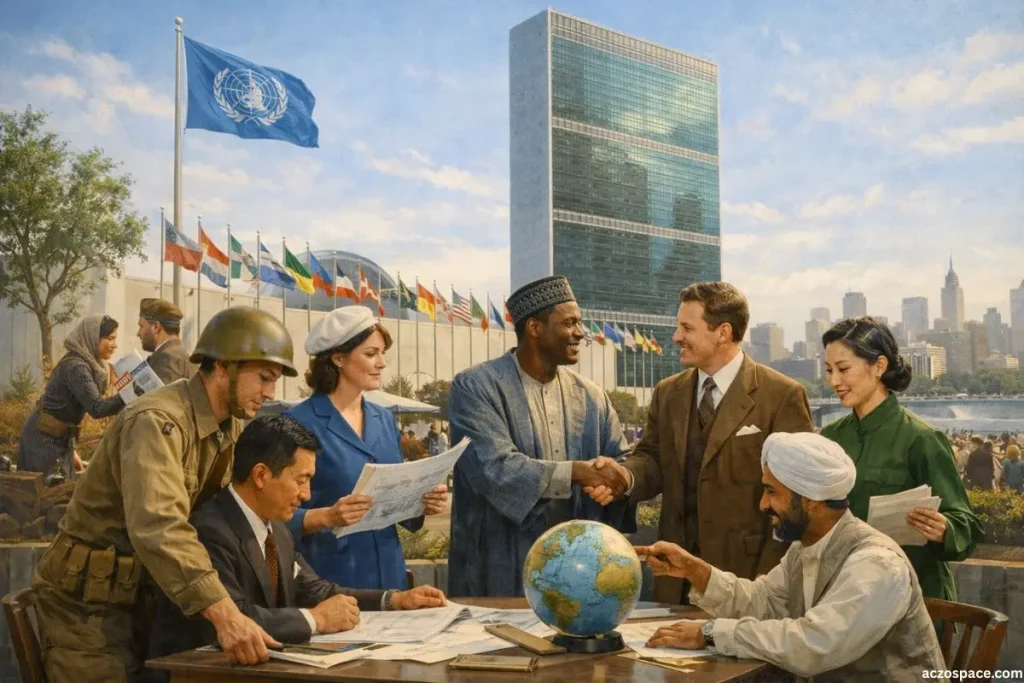
Disadvantages of World War II
The end of the war brought tremendous devastation. Among them:
Financial Damage: Bearing enormous expenses led to economic destruction.
Massive Human Losses: More than 70 million lives were lost, including civilians.
Destruction: Cities and infrastructure in Europe and Asia were destroyed.
Economic Difficulties: Widespread unemployment, poverty, and industrial destruction occurred.
Political Tensions: With the United States and the Soviet Union competing for global influence, the Cold War emerged.
All of these events can be considered collectively as a global setback.
Conclusion
The Second World War occurred due to unresolved grievances from the First World War, the rise of totalitarian regimes, aggressive expansionism, and global economic instability. The war led to profound political, social, and economic transformations across the globe.
According to historical studies, World War II reshaped international relations for several decades. The war fundamentally altered political boundaries, power structures, and diplomatic relations between states. It led to the emergence of new global superpowers and international institutions. Its impact extended beyond the battlefield, influencing social systems, economic policies, and global governance.
Remembering the Second World War is crucial not only to honor those who suffered and perished but also to inspire future generations to strive for peace, justice, and global harmony.
FAQs
When did World War II start and end?
World War II started on September 1, 1939 and ended on September 2, 1945.
What were the main causes of World War II?
Harsh Treaty of Versailles, rise of fascist leaders, economic depression, aggressive expansion by Germany, Italy, and Japan, and failure of the League of Nations.