
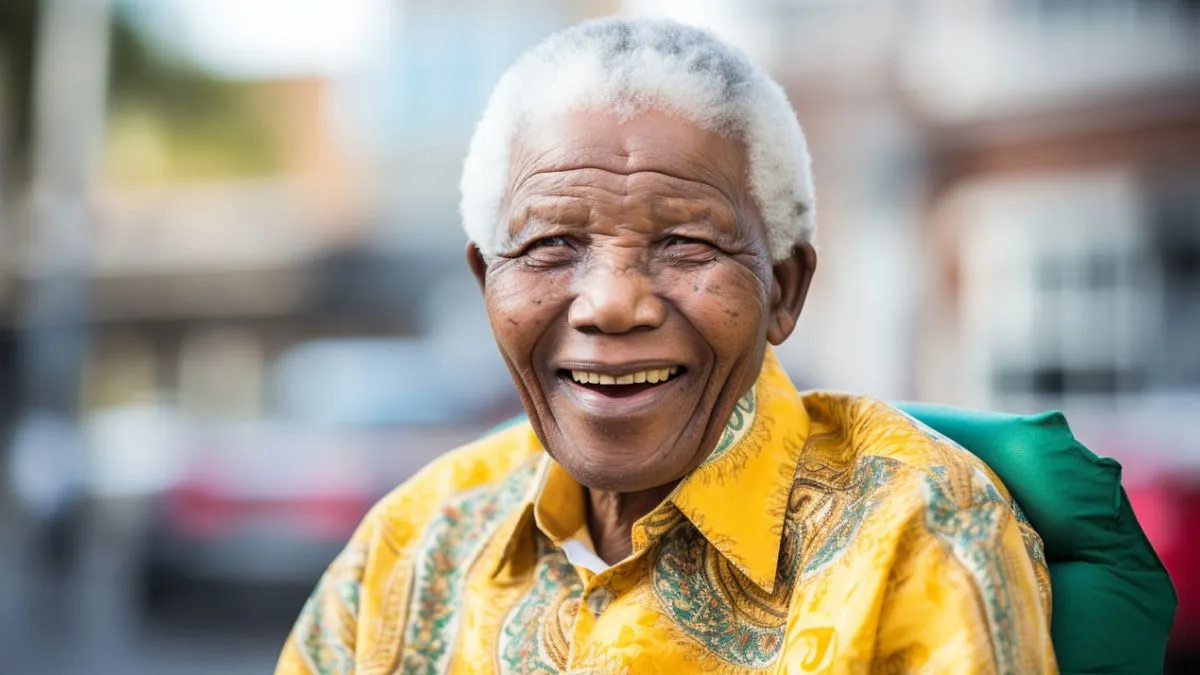
Nelson Mandela’s life stands as one of the most powerful examples of courage, forgiveness, and determination in modern history. Born into a world deeply divided by racial injustice, Mandela devoted decades of his life to the struggle for equality in South Africa. His journey—from a young activist to a political prisoner, and ultimately to the nation’s first Black president—is one of the greatest stories of human resilience ever told.
Mandela spent 27 years behind prison walls, cut off from the outside world. Yet he never allowed bitterness or defeat to shape his heart. Instead, he emerged as a global symbol of hope, firmly believing that true freedom could only be built through unity, compassion, and mutual understanding. His transformation from prisoner to president shocked the world and reminded humanity that even the darkest systems of oppression can be dismantled by the steady power of a determined voice.
Mandela is celebrated not only for helping to end apartheid, but also for how he chose to lead South Africa afterward. He rejected revenge in favor of reconciliation, chose dialogue over violence, and embraced forgiveness instead of division. His principles continue to influence world leaders, activists, educators, and ordinary people seeking justice within their own communities.
Even today, Mandela’s story teaches readers about struggle, inequality, the need for change, and the dangers of abused power—issues that still exist in many parts of the world. His life shows that meaningful change begins with courage, that true leadership requires compassion, and that our choices can shape the future for generations. Mandela’s legacy will continue to inspire the world for decades to come.
Table of Contents
Quick Facts
| Fact | Detail |
| Full Name | Nelson Rolihlahla Mandela |
| Born | July 18, 1918, Mvezo, South Africa |
| Died | December 5, 2013, Johannesburg (age 95) |
| Nationality | South African |
| Political Affiliation | African National Congress (ANC) |
| Major Role | Anti‑apartheid leader & first Black President of South Africa (1994–1999) |
| Imprisonment | Spent 27 years in prison (Robben Island & others) for anti‑apartheid activism |
| Nobel Peace Prize | 1993 (shared with F.W. de Klerk) for ending apartheid peaceably |
| Key Achievements | Ended apartheid; oversaw peaceful transition to majority rule; promoted reconciliation |
| Legacy | Symbol of freedom, equality & human rights; International Mandela Day (July 18) celebrated globally |
Early life and background
Birth in Mvezo and Childhood Roots
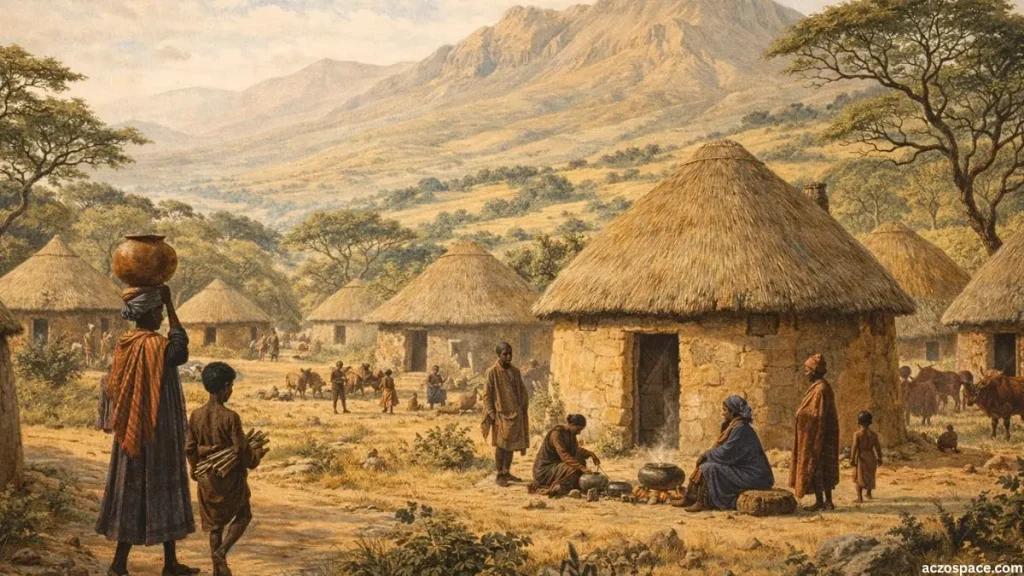
Nelson Rolihlahla Mandela was born on July 18, 1918, in the small village of Mvezo, located along the banks of the Mbashe River in South Africa. He was born into the Thembu royal family, a respected lineage within the Xhosa-speaking community. His father, Gadla Henry Mphakanyiswa, served as a local chief and advisor to the Thembu king, while his mother, Nosekeni Fanny, played a central role in nurturing and guiding Mandela during his formative years.
Growing up, Mandela listened closely to stories shared by elders about bravery, leadership, and justice. These stories planted early seeds of responsibility and moral duty within him. Although his family was not wealthy, they possessed a rich cultural heritage that emphasized dignity, wisdom, and the importance of community life.
Mandela began his formal education at a local missionary school in Qunu. Following a common practice at the time, a teacher gave him the English name “Nelson,” a reflection of the colonial education system imposed on African students. From an early age, Mandela showed a strong curiosity about the world beyond his village and developed a deep love for learning and reading. This early exposure to education laid the foundation for his lifelong respect for knowledge and self-improvement.
Growing Up Within South Africa’s Racial Landscape
Raised in a rural part of South Africa, Mandela became aware of two sharply contrasting realities. On one hand, he experienced the warmth, unity, and shared values of his traditional community. On the other hand, he gradually witnessed the harsh racial segregation enforced by South Africa’s white minority government.
Even as a child, Mandela sensed inequality. White citizens enjoyed privileges, opportunities, and political power, while Black communities faced severe restrictions in education, movement, and economic opportunity. These early experiences shaped his awareness long before he became politically active.
As Mandela entered adolescence, he began to understand the deep impact of discriminatory laws, forced removals, and the absence of basic rights for Black South Africans. Observing the struggles of his own people taught him that injustice was not merely a political issue—it was a human one that affected families, children, and entire communities.
Several influences shaped Mandela’s worldview. Traditional African values taught him the importance of unity, shared responsibility, and respect. His father’s role as a chief exposed him to the weight and accountability of leadership. Missionary education introduced him to Western ideas of freedom and equality. Stories of African heroes who resisted injustice strengthened his belief that the fight for justice was both necessary and honorable.
By the time Mandela left his village to pursue higher education, he had already developed a strong moral compass. He understood that South Africa needed change. Although he did not yet know exactly how that change would come, he felt deeply connected to the struggle that lay ahead—and ready, in his own way, to be part of it.ugh he did not yet know how, he felt deeply connected to the struggle that lay ahead.
Nelson Mandela’s Role in the African National Congress (ANC)
Joining the ANC in 1944
Nelson Mandela officially joined the African National Congress (ANC) in 1944, marking the beginning of a lifelong commitment to political activism. At the time, the ANC was a respected organization, but its methods were largely moderate. It relied heavily on petitions, appeals, and dialogue with the government, believing that change could be achieved through negotiation rather than confrontation.
Mandela, along with close friends and fellow young intellectuals such as Walter Sisulu and Oliver Tambo, felt that this cautious approach was no longer sufficient. They believed the organization needed new energy, bold leadership, and a more direct connection with the masses. This shared vision led to the founding of the ANC Youth League (ANCYL) in the same year.
The Youth League aimed to introduce a more disciplined, assertive, and mass-based strategy to challenge the growing oppression of apartheid. Mandela quickly became one of its most active and influential members. He contributed new ideas, organized young people across the country, and promoted an action-oriented political agenda. Over time, this shift helped transform the ANC into a powerful national force capable of confronting racial injustice on a much larger scale.
The Defiance Campaign and Rising National Influence
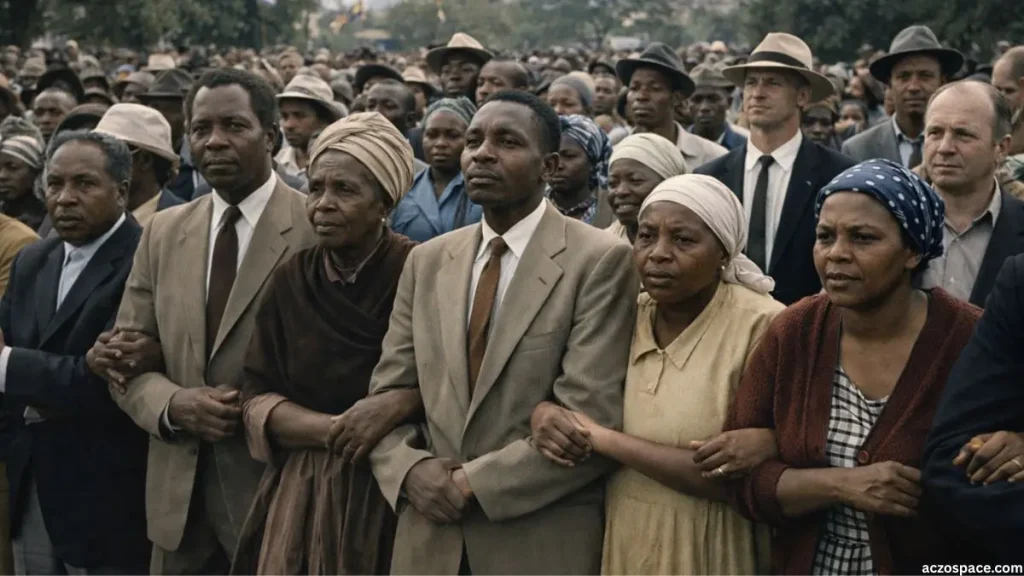
In 1952, Mandela played a leading role in one of the most important non-violent protest movements in South African history: the Defiance Campaign. This nationwide campaign encouraged ordinary citizens—Black, Indian, and mixed-race communities—to peacefully disobey unjust apartheid laws, including pass laws, segregation rules, and curfews.
Mandela served as the National Volunteer-in-Chief, responsible for coordinating protests across the country. His leadership demonstrated not only his strong organizational skills but also his firm commitment to disciplined, peaceful resistance. Under his guidance, thousands of people willingly faced arrest to challenge the moral legitimacy of apartheid.
The Defiance Campaign dramatically raised Mandela’s national profile. Newspapers, communities, and government officials began to recognize him as one of the most powerful voices in the anti-apartheid struggle. His speeches, ability to unite diverse groups, and courage in mobilizing public participation helped elevate him from a local activist to a nationally respected leader.
Although the government responded with mass arrests, banning orders, and tighter restrictions, the campaign succeeded in mobilizing thousands of new supporters. It strengthened the ANC and marked the beginning of a new, more determined phase in the liberation movement.
Armed Struggle and the Formation of Umkhonto we Sizwe (MK)
Why Mandela Turned to Armed Resistance
By the early 1960s, Mandela and other ANC leaders were facing a harsh reality. Despite years of peaceful protest, the apartheid government continued to respond with increasing brutality. Peaceful demonstrations were met with gunfire, communities were forcibly removed, and activists were imprisoned, assaulted, or threatened with death.
The turning point came in 1960 with the Sharpeville Massacre, when police killed 69 unarmed protesters. This event shocked the nation and the world. It convinced Mandela that relying solely on non-violent protest was no longer effective in the face of such ruthless repression.
While Mandela deeply respected non-violence, he believed that oppressed people had a moral right to defend themselves and to resist injustice when all peaceful avenues were closed. His shift in strategy was not driven by hatred, but by a sense of responsibility toward a population suffering under extreme state violence.
Violence and Resistance Under Apartheid
In 1961, Mandela helped establish Umkhonto we Sizwe (MK), meaning “Spear of the Nation.” MK became the armed wing of the ANC. Its operations focused on acts of sabotage against government buildings, railways, and infrastructure symbols of apartheid’s power.
Importantly, MK sought to avoid civilian casualties. Its goal was not to spread fear among the population, but to damage the apartheid system and pressure the state to negotiate. Mandela served as MK’s first commander-in-chief, playing a central role in developing strategy and securing support.
To gain training and assistance, Mandela traveled secretly within South Africa and to other African countries. His decision to support armed struggle was guided by necessity, not revenge, and was carefully framed within ethical limits.
The formation of MK marked a decisive shift in the liberation movement. Mandela’s leadership placed him at the center of both national and international efforts against apartheid. Eventually, he was arrested, put on trial, and sentenced to 27 years in prison—an imprisonment that would later define his global legacy as a symbol of resistance, sacrifice, and moral strength.
Arrest, Trial, and 27-Year Imprisonment
The Rivonia Trial and Mandela’s Historic “I Am Prepared to Die” Speech
In 1963, Nelson Mandela and several senior leaders of the African National Congress (ANC) were arrested by the apartheid government. They were charged with sabotage and conspiracy to overthrow the state—serious accusations intended to eliminate the leadership of the liberation movement once and for all. These arrests led to the Rivonia Trial, one of the most significant political trials of the twentieth century.
The apartheid regime hoped the trial would permanently silence Mandela. Instead, it turned him into a global symbol of resistance. What was meant to destroy his influence ultimately amplified it.
During the trial, Mandela delivered a speech that would echo around the world. In it, he declared that he had dedicated his life to the ideal of a democratic and free society—one in which all people could live together in equality and dignity. He ended with words that became historic, stating that this was an ideal for which he was prepared to die.
Why the Speech Mattered
Mandela’s statement marked a turning point not only in the anti-apartheid struggle but also in the global human rights movement. His words reflected moral courage, dignity, and unwavering conviction—not a pursuit of personal power, but a commitment to the freedom of millions.
The speech resonated far beyond South Africa. It strengthened oppressed communities worldwide and reframed the struggle against apartheid as a universal fight for justice and human dignity.
Global Reaction and Support
As news of the trial spread, countries across Africa, Europe, Asia, and the Americas began calling for justice. Human rights organizations, international media, and student movements rallied behind Mandela. Even governments that had previously remained silent began to openly criticize apartheid.
The Rivonia Trial transformed Mandela from a national activist into a global symbol of freedom, making his imprisonment an international concern rather than a domestic issue.
Life on Robben Island
Forced Labor and Harsh Conditions
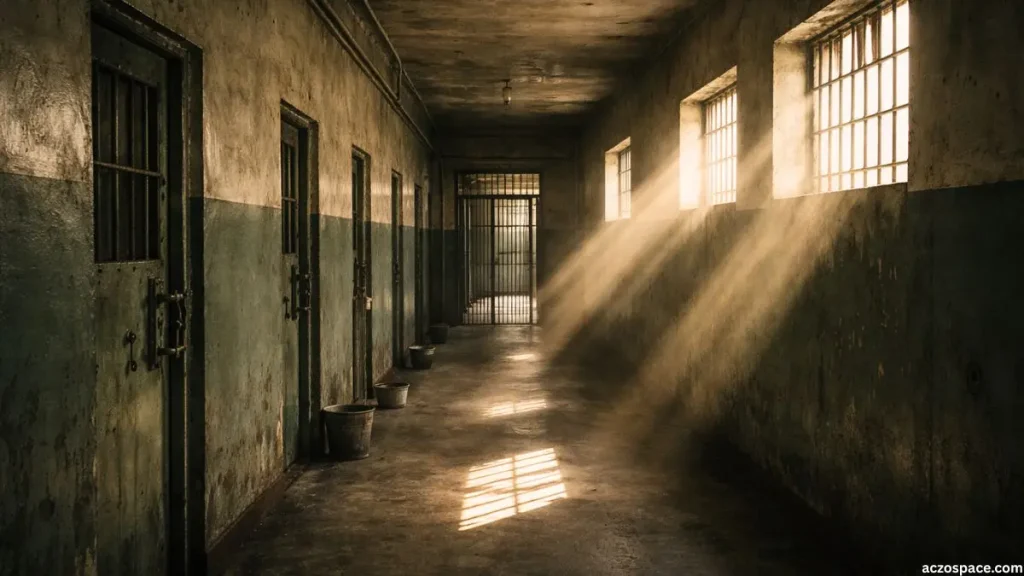
In 1964, after being sentenced to life imprisonment, Mandela was sent to Robben Island—a bleak, windswept prison off the coast of Cape Town. Conditions there were brutal. Prisoners were forced to perform hard labor under the burning sun, breaking stones for long hours. They slept on thin mats laid over cold stone floors and lived under strict discipline.
Mandela was assigned to work in a limestone quarry. The intense glare from the white stone permanently damaged his eyesight. Despite the physical suffering, he refused to surrender mentally or emotionally.
Through disciplined routines that included daily exercise, reading, and structured reflection, Mandela worked to keep both his body and mind strong. Even in captivity, he lived with purpose.
Mental and Emotional Strength
Mandela’s survival in prison was rooted in his extraordinary inner strength. Throughout his imprisonment, he encouraged fellow prisoners, helped resolve disputes, and treated even hostile guards with dignity and respect.
Over time, both inmates and warders began to see him as a natural leader. Mandela turned the prison into a place of learning, mentoring younger activists in politics, law, and history. This informal education network later became known as the “Robben Island University.”
Despite deep personal losses—including separation from his family and missing major life events—Mandela remained committed to his principles. He believed that freedom required patience, sacrifice, and unshakable determination. Prison did not weaken him; it refined him.
International Pressure for His Release
Throughout the 1970s and 1980s, global campaigns demanding Mandela’s release gained momentum. These efforts included:
- Mass protests in major world cities
- University-led boycott and strike movements
- International music concerts and cultural campaigns
- Economic sanctions imposed on South Africa
Protests, Movements, and World Leaders
Prominent global leaders such as Julius Nyerere, Indira Gandhi, and Olof Palme raised Mandela’s case in international forums. Anti-apartheid groups organized the worldwide “Free Nelson Mandela” movement. The United Nations repeatedly condemned apartheid and called for his release.
Artists and musicians also played a powerful role. Figures like Stevie Wonder and bands such as The Specials helped spread global awareness through music, making Mandela’s name known even to people far removed from politics.
By the late 1980s, South Africa faced deep political and economic isolation. Mandela’s imprisonment had not silenced him—it had strengthened his influence.
Events Leading to Mandela’s Release in 1990
Political Shifts Inside South Africa
By the late 1980s, apartheid was becoming unsustainable. Internal unrest, international sanctions, and economic decline weakened the regime. Resistance movements inside South Africa grew stronger as workers, students, and activists united across the country.
The government gradually realized that apartheid could no longer be maintained. Meaningful change was unavoidable. Talks with ANC leaders began, signaling a shift toward political reform.
Negotiations with F. W. de Klerk
When F. W. de Klerk became president in 1989, he recognized that South Africa could not progress without ending apartheid. Even while Mandela remained in prison, de Klerk initiated direct discussions with him. They spoke about political transition, the future of the ANC, and the urgent need for a peaceful path forward.
After 27 years behind bars, Nelson Mandela was finally released on February 11, 1990. Holding hands with his wife, Winnie Mandela, he walked out of Victor Verster Prison in a moment broadcast live around the world.
His release marked the beginning of a new era for South Africa—one filled with renewed hope for justice, dignity, reconciliation, and equality.
Mandela’s Presidency and the Challenge of Nation-Building
South Africa’s First Black President (1994)
A Historic Election
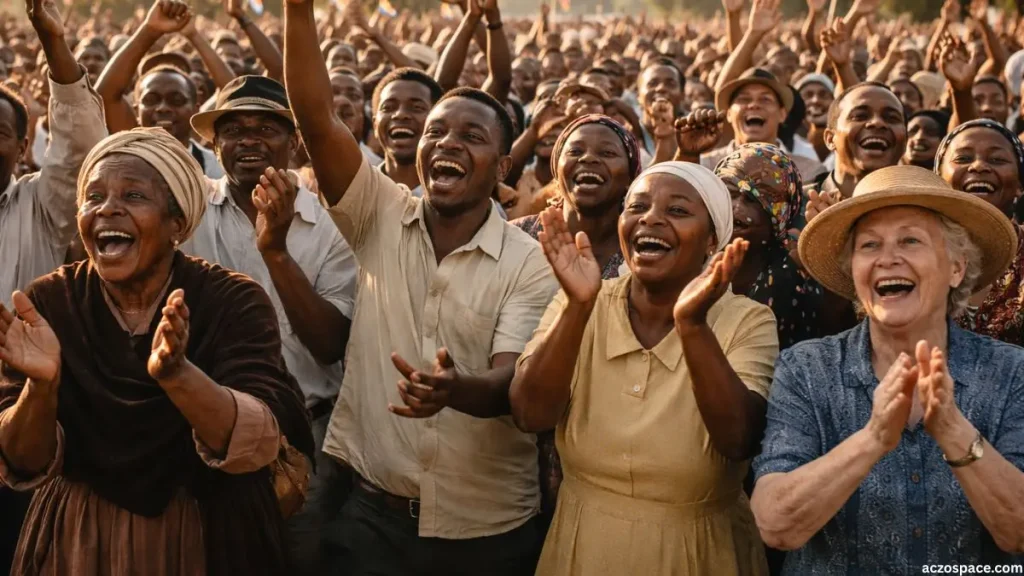
In 1994, South Africa held its first fully democratic, multiracial election—an event that marked the formal end of more than four decades of apartheid. For the first time in the country’s history, millions of citizens of all races were able to vote freely. The result was historic: Nelson Mandela was elected as South Africa’s first Black president.
Mandela’s victory represented far more than a political transition. It symbolized the triumph of justice over oppression and hope over fear. For a nation long divided by race, violence, and inequality, his election signaled the possibility of a shared future.
His inauguration was watched with emotion across the world. South Africans from all backgrounds gathered to celebrate the birth of a new era—one founded on unity, dignity, and equality rather than division.
What It Meant for the World
Mandela’s election sent a powerful message far beyond South Africa’s borders. It reaffirmed that even the deepest wounds caused by injustice can be healed through courage, empathy, and moral leadership. His presidency demonstrated that democratic transformation is possible when reconciliation is chosen over revenge.
For countries struggling with ethnic conflict, political repression, or historical injustice, Mandela became a global model of principled leadership and peaceful change. His rise to power proved that forgiveness could be a strength rather than a weakness.
The Truth and Reconciliation Commission (TRC)
Justice Through Forgiveness
One of Mandela’s most significant initiatives as president was the establishment of the Truth and Reconciliation Commission (TRC) in 1995. Rather than pursuing widespread punishment against those responsible for apartheid-era crimes, Mandela believed South Africa needed a path that balanced justice with healing.
The TRC created a public platform where victims of apartheid could share their experiences and where perpetrators could confess their actions. In cases where the full truth was revealed, amnesty could be granted. Through this process, the nation confronted the full scale of the abuses committed under apartheid.
This approach helped South Africa avoid large-scale civil conflict and laid the groundwork for rebuilding trust between deeply divided communities. While painful, the process allowed the country to face its past honestly rather than bury it.
The Role of Archbishop Desmond Tutu
The TRC was chaired by Archbishop Desmond Tutu, a close ally of Mandela and one of the world’s most respected human rights leaders. Tutu’s compassionate leadership gave the commission a strong moral foundation rooted in forgiveness, accountability, and shared humanity.
Together, Mandela and Tutu showed the world that true healing requires honesty, empathy, and moral courage—not denial or vengeance.
Nation-Building and Social Reform
As president, Mandela focused on improving the daily lives of ordinary South Africans while addressing the deep inequalities created by decades of institutionalized discrimination.
Education
Mandela famously believed that education was the most powerful tool for changing the world. His government expanded access to schooling, particularly for Black communities that had been systematically excluded under apartheid. Education funding was increased, and adult education programs were introduced to empower those who had been denied opportunities earlier in life.
Housing
Millions of South Africans continued to live in overcrowded townships with limited access to basic services. Mandela’s administration launched large-scale housing development projects aimed at providing affordable homes, clean water, and electricity to families in need. These efforts represented an important step toward restoring dignity to marginalized communities.
The Economy
Rebuilding an economy damaged by decades of racial exclusion was one of Mandela’s greatest challenges. His policies focused on economic stability, attracting foreign investment, creating jobs, and reducing poverty. By promoting responsible economic management, Mandela helped restore international confidence in South Africa’s future while laying the groundwork for long-term growth.
Global Political Influence
International Relations
Mandela quickly became one of the most respected leaders in the world. Under his presidency:
- South Africa rejoined the international community after years of isolation.
- Diplomatic relations with major global powers were strengthened.
- The country resumed an active role in international organizations.
- Mandela emphasized cooperation, peace, and mutual respect in global affairs.
His leadership restored South Africa’s standing as a moral voice on the world stage.
Peace Efforts Beyond South Africa
Having personally endured the cost of conflict, Mandela was deeply committed to promoting peace across Africa and beyond. He played a role in mediating conflicts in Burundi and supported peace initiatives in the Democratic Republic of the Congo. He worked closely with global leaders to strengthen African unity and regional stability.
Mandela’s influence extended far beyond formal politics. He became a global ambassador for justice, compassion, and moral courage—respected not for the power he held, but for the values he embodied.
Life After the Presidency
The Mandela Foundation and Global Humanitarian Work
After stepping down from the presidency in 1999, Nelson Mandela devoted the remainder of his life to humanitarian causes. He founded the Nelson Mandela Foundation, an organization committed to social justice, education, and preserving the legacy of peace he championed during his presidency.
Even in retirement, Mandela’s influence remained global. He continued to advocate for marginalized communities, offering guidance and support to international initiatives addressing human rights, equality, and social reform. His moral authority made him one of the most respected figures on the world stage, years after leaving formal political office.
The Fight Against HIV/AIDS
One of Mandela’s most impactful post-presidential efforts was his public advocacy against HIV/AIDS. At a time when stigma and silence surrounded the epidemic, he spoke openly about the disease—including the personal loss of his own son due to AIDS-related complications.
By breaking the culture of secrecy and denial, Mandela helped shift public perception, encouraging governments to implement robust national health programs. His advocacy emphasized compassion, education, and universal access to treatment, particularly for disadvantaged populations most affected by the epidemic.
Combating Poverty and Inequality
Mandela also dedicated significant energy to reducing poverty both in South Africa and globally. He supported programs that provided food, healthcare, education, and essential services to underserved regions.
For Mandela, true freedom was more than ending apartheid—it was giving people the opportunity to live with dignity. Through fundraising, awareness campaigns, and international partnerships, he helped channel resources to those most in need, reinforcing his lifelong commitment to equality and social justice.
Books and Inspirational Messages
Even in retirement, Mandela continued to inspire millions with his words. His writings and speeches remain essential resources for activists, leaders, and students worldwide.
Long Walk to Freedom
Mandela’s autobiography, Long Walk to Freedom, published in 1994, stands as one of the most powerful memoirs of the modern era. From his childhood to imprisonment and eventual rise to the presidency, the book chronicles his struggles, sacrifices, and unwavering hope. More than a memoir, it serves as a guide to courage, leadership, and humanity, inspiring readers across generations.
Famous Quotes
Mandela left behind a legacy of memorable quotations that continue to shape global conversations on justice and equality:
- “Education is the most powerful weapon which you can use to change the world.”
- “It always seems impossible until it’s done.”
- “I learned that courage is not the absence of fear—it is the triumph over it.”
These words remain timeless reminders of perseverance, moral strength, and hope.
Retirement and Later Years
A Quieter Life
In his final years, Mandela gradually withdrew from public duties, spending more time with his family. Although less visible in political and social arenas, his presence continued to carry immense symbolic weight. Even a brief message or public appearance commanded global attention.
Global Recognition
As he aged, the world increasingly honored Mandela with awards, statues, and commemorations recognizing his lifelong commitment to peace and service. In 2009, the United Nations declared July 18—Mandela’s birthday—as Nelson Mandela International Day, encouraging people to spend at least 67 minutes performing good deeds in honor of his 67 years of public service. When Mandela passed away on December 5, 2013, tributes poured in from every corner of the globe. Leaders, celebrities, ordinary citizens, and nations united to celebrate his life and legacy. His state funeral became one of the largest in modern history, reflecting the extraordinary global impact of a life dedicated to humanity, justice, and reconciliation.
Nelson Mandela’s Global Legacy
A Symbol of Freedom and Justice
Nelson Mandela’s life and work transformed him into a universal symbol of freedom, justice, and human dignity. His unwavering fight against apartheid showed the world that a single individual’s courage can challenge systemic oppression and inspire profound global change.
Mandela’s dedication to equality, reconciliation, and ethical leadership extended far beyond South Africa. His example influenced human rights movements, social justice initiatives, and leaders across continents. Millions—from political figures to grassroots activists—look to Mandela as a living example of persistence, moral courage, and the transformative power of principled leadership.
His legacy reminds us that freedom is not merely the absence of oppression; it is the presence of justice, fairness, and respect for every individual.
Mandela Day: A Global Celebration
In 2009, the United Nations officially declared July 18 as Nelson Mandela International Day, honoring his 67 years of public service. Mandela Day calls on people worldwide to dedicate at least 67 minutes to helping others, symbolizing one minute for each year of his service.
The day is more than a ceremonial event—it’s a call to action. Communities organize volunteer projects, educational programs, charitable initiatives, and social campaigns to address inequality, poverty, and injustice. From schools to governments, Mandela Day encourages collective effort, reflecting the spirit of generosity, responsibility, and civic duty that Mandela exemplified throughout his life.
Lessons for Modern Leaders
Leadership Style
Mandela’s leadership was defined by vision, humility, and inclusivity. He set a standard for ethical governance, fostering cooperation and participation among people from diverse backgrounds. Modern leaders can learn from his sensitivity, patience, and unwavering commitment to justice, especially when guiding nations and organizations toward positive change.
Compassion
One of Mandela’s greatest strengths was his ability to show compassion even to opponents. Choosing reconciliation over revenge became a cornerstone of his approach to nation-building. This principle teaches today’s leaders that true strength lies in empathy and understanding. Sustainable progress is achieved not through division, but through unity.
Negotiation Skills
Mandela was a masterful negotiator. During South Africa’s transition from apartheid to democracy and in resolving conflicts across the continent, he relied on dialogue, patience, and strategic compromise to secure lasting solutions. By creating opportunities for reconciliation and collaboration, he demonstrated how practical diplomacy can be balanced with moral principles—an enduring lesson for leaders facing modern crises.
Nelson Mandela’s Most Inspiring Quotes
Nelson Mandela’s words continue to inspire millions around the world. Each quote reflects his courage, wisdom, and unwavering commitment to justice, equality, and human dignity. His insights are timeless lessons on leadership, perseverance, and moral strength.
1. The Power of Education
“Education is the most powerful weapon which you can use to change the world.”
Mandela believed that education empowers individuals, transforms societies, and creates opportunities for progress and equality. Knowledge, he argued, is the first step toward freedom and justice.
2. Overcoming the Impossible
“It always seems impossible until it is done.”
Even the most daunting challenges can be overcome through persistence and determination. Mandela’s own life—from prisoner to president—embodied this principle.
3. True Courage
“I learned that courage is not the absence of fear—it is inspiring others to move forward despite fear.”
Courage, for Mandela, was about facing fear head-on and taking action anyway—a principle that guided him through decades of struggle.
4. The Power of Forgiveness
“Resentment is like drinking poison and then hoping it will kill your enemies.”
Forgiveness and letting go of bitterness are essential for personal peace and social reconciliation. Mandela demonstrated that reconciliation strengthens nations and communities.
5. Wisdom and Compassion
“A good head and a good heart are always a formidable combination.”
Leadership requires both intelligence and empathy. Mandela balanced logic with compassion in every decision, inspiring trust and loyalty.
6. Resilience Matters More Than Success
“Do not judge me by my successes, judge me by how many times I fell and got back up again.”
Persistence and the ability to recover from setbacks often matter more than early victories. Mandela’s resilience shaped the course of history.
7. Conquering Fear
“A brave man is not someone who does not feel afraid, but someone who conquers that fear.”
True bravery lies in action, not in the absence of fear. Mandela’s life proves that courage is a choice, not a condition.
8. Learning From Every Experience
“I never lose. I either win or learn.”
Every experience, even apparent failures, can teach lessons that strengthen character and wisdom.
9. The Urgency of Action
“We must use time creatively, and forever realize that the time is always ripe to do right.”
Delaying action often hinders justice and progress. Mandela reminded the world that the right time to act is always now.
10. Empowering Others
“Lead from the back—and let others believe they are in front.”
True leadership empowers others rather than dominating them. Mandela inspired cooperation and shared responsibility throughout his life.
11. Rejecting Prejudice
“No one is born hating another person because of the color of his skin, or his background, or his religion.”
Society has a responsibility to cultivate tolerance and empathy. Mandela emphasized that prejudice is learned—and therefore can be unlearned.
12. Courage in Leadership
“Courage is not the absence of fear—it is inspiring others to act despite it.”
A leader’s bravery motivates others to confront injustice and work toward meaningful change. Mandela’s courage continues to guide leaders and citizens alike.
Conclusion
Nelson Mandela’s life is a timeless testament to courage, forgiveness, and the power of one individual to change the world. From a young activist in rural South Africa to a prisoner with an unbroken spirit, and ultimately to the nation’s first Black president, Mandela showed that hatred and division can be overcome through justice, empathy, and reconciliation.
His legacy continues to inspire generations to fight for equality, lead with compassion, and never abandon the pursuit of freedom. Mandela’s story transcends history—it is a global lesson in perseverance, ethical leadership, and hope for humanity.
FAQs
What did Nelson Mandela believe in?
Nelson Mandela believed in equality, human rights, justice, and a non-racial society. He promoted peace, forgiveness, and unity as the foundation for a better future.
When did Mandela become president?
Nelson Mandela became president of South Africa in 1994, after the country’s first democratic election.