
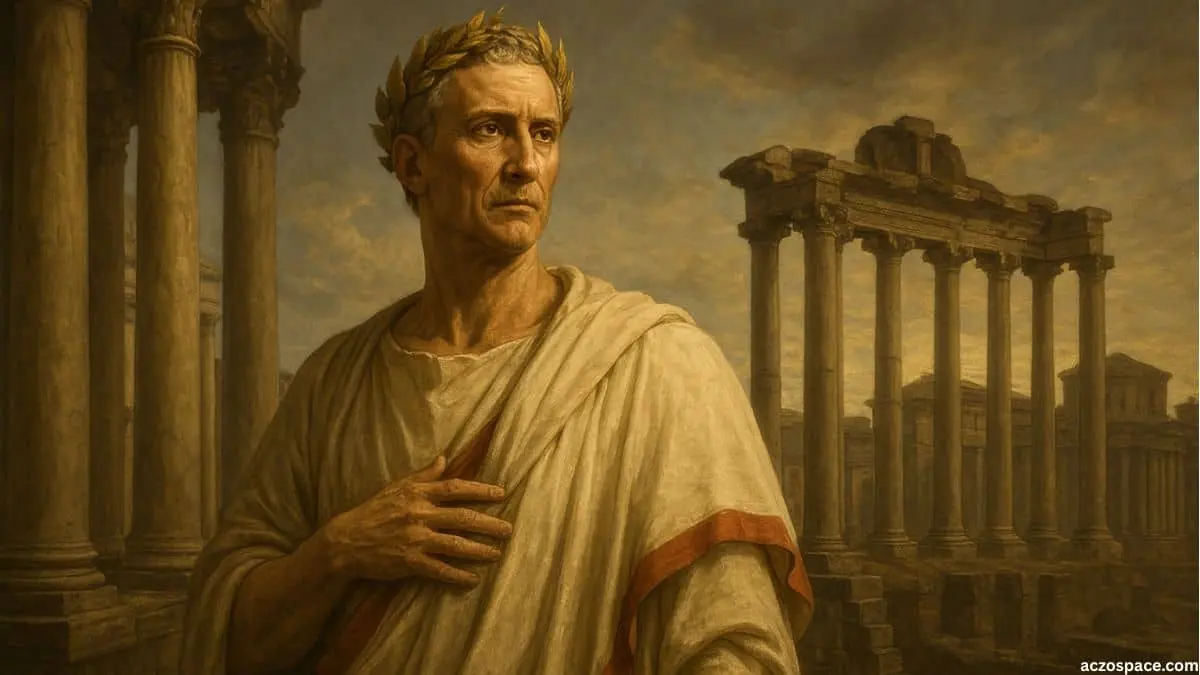
Julius Caesar is widely regarded as one of the most influential leaders in world history. He lived during a period of remarkable prosperity and political complexity in ancient Rome. While centuries have passed since his time, Caesar’s life, actions, and ideas continue to resonate today.
His military genius, political reforms, and profound impact on the Roman people made him an enduring figure whose story offers lessons on power, leadership, and ambition. This article explores Caesar’s background, rise to power, and the formative experiences that shaped him.
Table of Contents
Quick Facts
| Fact | Detail |
| Full Name | Gaius Julius Caesar |
| Born | July 12 or 13, 100 BCE — Rome, Italy |
| Died | March 15, 44 BCE (Ides of March) — Rome, Italy |
| Nationality | Roman Republic |
| Key Roles | General, Statesman, Dictator of Rome |
| Major Wars | Gallic Wars; Roman Civil War vs. Pompey |
| Political Alliance | Part of First Triumvirate (with Pompey & Crassus) |
| Famous Achievement | Implemented key political & social reforms; calendar reform (Julian calendar) |
| Famous Phrase | “Veni, vidi, vici” (I came, I saw, I conquered) — widely attributed |
| Assassination | Stabbed by senators including Brutus & Cassius on Ides of March |
| Historical Impact | Ended Roman Republic era → paved way for Roman Empire |
Early Life and Family Background
The Julian Lineage
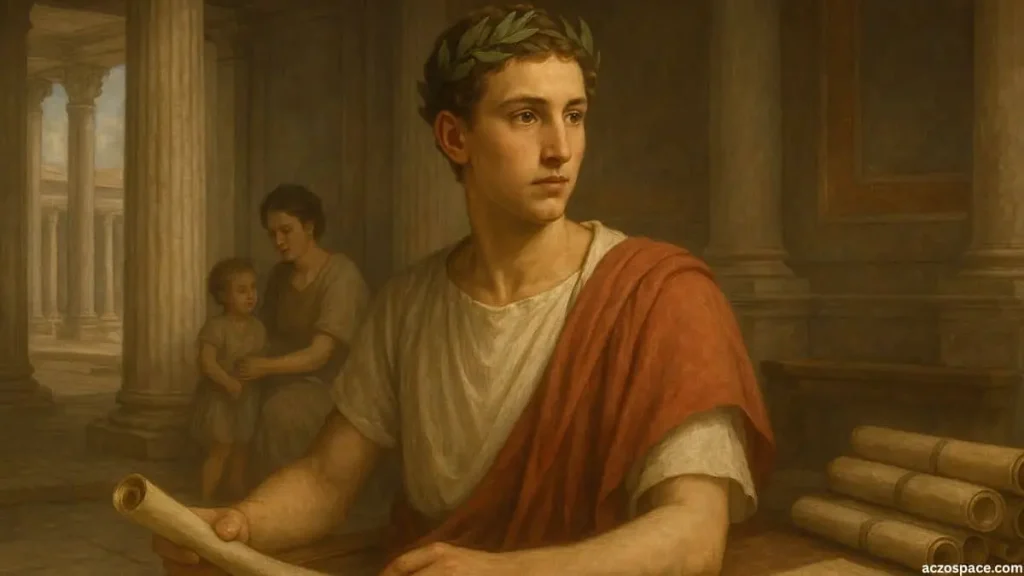
Julius Caesar was born into the prominent Julian family, one of Rome’s patrician clans. Although his family held a high social status, their political influence had declined by the time of Caesar’s youth. The Julii traced their origins to the goddess Venus, a lineage they valued as a mark of prestige and divine favor.
Caesar’s father, Gaius Julius Caesar, served as a praetor, a senior magistrate position in Rome, while his mother, Aurelia Cotta, was known for her intelligence and political acumen. Despite the family’s diminishing power, the values and knowledge imparted by his parents provided Caesar with a foundation for ambition and public service.
Social and Economic Context
Caesar grew up in a Rome marked by social unrest, economic disparity, and political instability:
- A stark divide existed between the patricians (wealthy aristocrats) and plebeians (common citizens).
- Ordinary Romans faced housing shortages, unemployment, and food scarcity.
- Civil conflicts, labor disputes, and political rivalries created a tense and volatile environment.
These challenges influenced Caesar’s worldview and inspired him to pursue reforms that could address inequality and strengthen the state.
Education, Skills, and Early Political Engagement
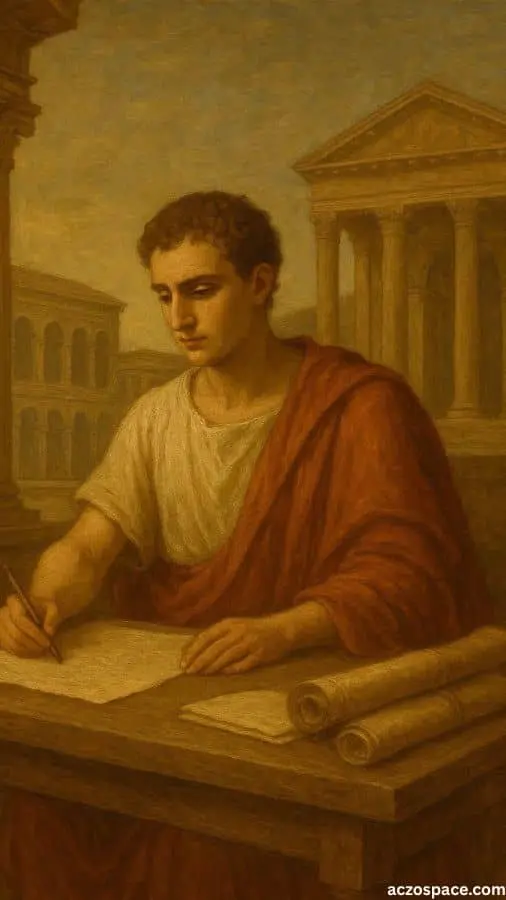
Education
As a member of a well-connected family, Caesar received an education that was exceptional even by Roman standards:
- He mastered both Latin and Greek, gaining access to classical literature, philosophy, and rhetoric.
- He trained extensively in military strategy and the art of warfare.
- He developed a strong understanding of law, politics, and governance.
Skills
Caesar’s natural abilities set him apart from his peers and helped shape his future leadership:
- Exceptional oratory skills allowed him to persuade and inspire audiences.
- Sharp intellect and analytical thinking guided his strategic decisions.
- Leadership and charisma enabled him to build loyalty among soldiers and political allies.
- He excelled in forging and maintaining relationships, an essential skill in Rome’s complex political landscape.
First Forays into Politics
By the age of sixteen, Caesar was already preparing for a political career. His family name opened doors, but the turbulent times required courage and resilience.
The rise of the dictator Sulla posed a personal threat to Caesar, forcing him to flee Rome temporarily. After Sulla’s death, Caesar returned to the city and began building his military and political career, setting the stage for the extraordinary achievements that would define his life.
Julius Caesar’s Political Rise
The First Triumvirate: Caesar, Pompey, and Crassus
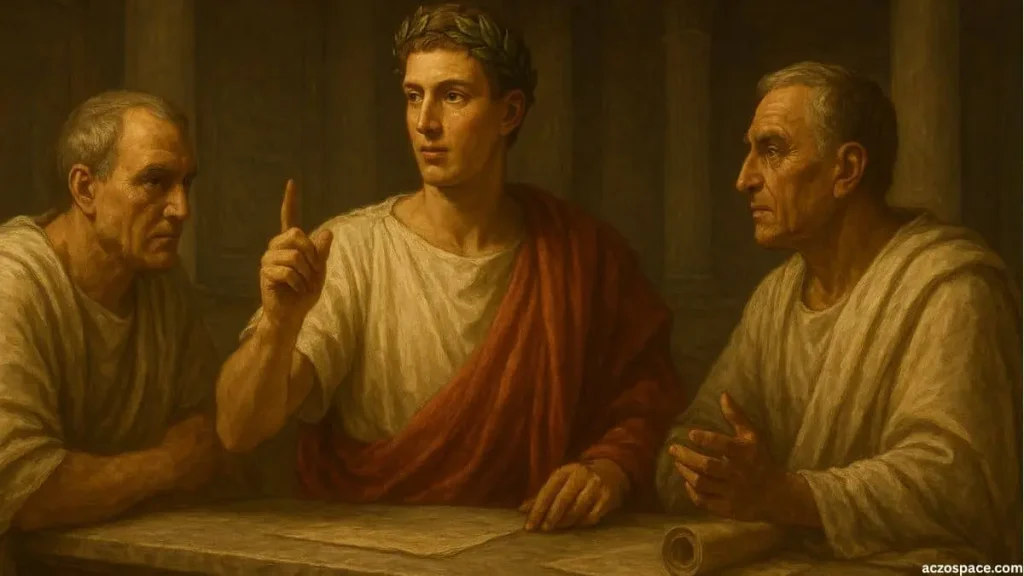
The First Triumvirate marked the beginning of Julius Caesar’s political career and laid the foundation for his rise to power. This informal political alliance united three of Rome’s most influential figures to consolidate power that none could achieve alone:
- Julius Caesar leveraged his popularity with the Roman people, exceptional oratory skills, and political acumen to challenge the traditional authority of the Senate.
- Pompey the Great, a renowned military leader, brought the support of Rome’s armies.
- Crassus, the wealthiest man in Rome, contributed immense financial resources to fund political campaigns and influence outcomes.
The alliance was essentially a pact to share power and gain mutual advantages. One of its immediate results was Caesar’s election as consul in 59 BCE, along with a proconsular command in Gaul, setting him on the path to military and political prominence.
Caesar’s Political Journey
Caesar’s political career was marked by consistent forward momentum, fueled by his reforms, strategic moves, and enduring popularity. Key stages included:
Early Political Offices (60–50 BCE)
In his youth, Caesar aligned with the populares faction, which championed the interests of the common people. He gradually climbed Rome’s political ladder in the traditional sequence:
Quaestor → Aedile → Praetor → Consul.
Each office strengthened his visibility and influence, laying the groundwork for more ambitious undertakings.
Military Success (58–50 BCE)
Caesar’s campaigns in Gaul were transformative. Through a combination of brilliant strategy, discipline, and leadership, he built a formidable army. These victories:
- Elevated him to legendary status among Roman citizens.
- Secured the loyalty and admiration of his soldiers.
- Enhanced his leverage against political rivals in Rome.
Political Strategy
Caesar skillfully used his growing popularity and military strength to diminish the influence of the conservative Senate. Through reforms and public initiatives, he built unprecedented support among the Roman populace.
Conflicts with the Roman Senate
Caesar’s rise posed a direct threat to Rome’s conservative elite, who feared the concentration of military and political power in a single individual. Key points of tension included:
Building Military Power
After the Gallic Wars, Caesar commanded a highly loyal army. This alarmed the Senate, which viewed his forces as a potential threat to the Republic’s stability.
Breakdown of the Triumvirate
The death of Crassus in 53 BCE shattered the alliance. Pompey eventually aligned with the Senate, emerging as Caesar’s chief political rival.
The Rubicon Decision (49 BCE)
In 49 BCE, the Senate, using Pompey’s influence, ordered Caesar to disband his army and return to Rome as a private citizen. Defying this command, Caesar crossed the Rubicon River with his army—a deliberate act of rebellion that directly triggered the Roman Civil War. This bold move demonstrated his willingness to challenge authority and fight for power, ultimately altering the course of Roman history.
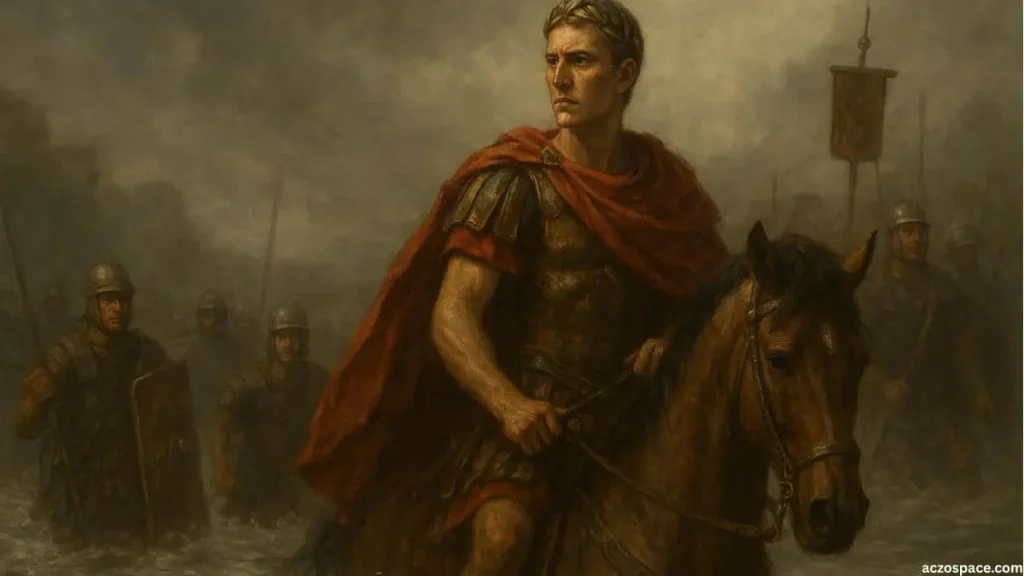
Julius Caesar: Military Triumphs and Transformative Reforms
Caesar’s Military Victories
The Gallic Wars (58–50 BCE)
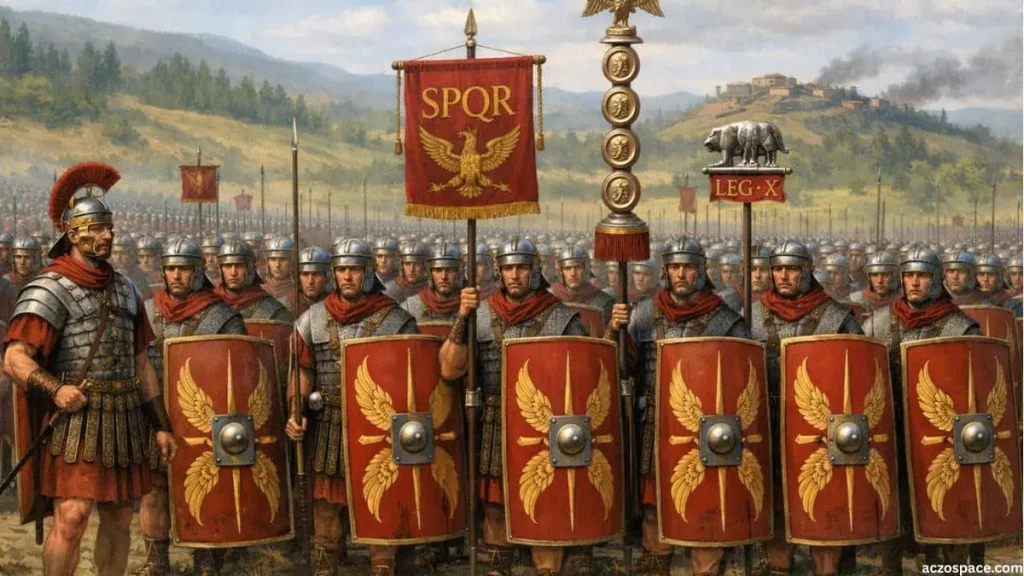
One of Julius Caesar’s most significant military campaigns was the Gallic Wars, fought in the region now known as France. Over the course of eight years, Caesar expanded Rome’s territory, bringing vast lands under Roman control and securing immense wealth and resources for the Republic.
These campaigns not only showcased his extraordinary military skill but also elevated his political influence back in Rome. Victories in Gaul won him the loyalty of his soldiers and the admiration of the Roman populace, further strengthening his position against the Senate and rival leaders.
The Power Struggle with Pompey
Although Caesar and Pompey had once been allies in the First Triumvirate, Crassus’ death in 53 BCE triggered a rivalry. Pompey represented the traditionalist faction of Rome, championing law, custom, and senatorial authority, while Caesar drew support from the people and his loyal army.
Tensions escalated into civil war. Fearing Caesar’s growing power and popularity, Pompey fled to Greece. Caesar pursued him relentlessly, eventually forcing Pompey to flee to Egypt, where he was assassinated by local factions. This marked the end of Caesar’s main political rival and cleared the path to supreme power.
Securing Absolute Power in Rome
After defeating Pompey and crossing the Rubicon River, Caesar returned to Rome as the uncontested ruler. The Senate’s authority was effectively nullified, and opposition was crushed. Caesar assumed the title of “dictator for life,” centralizing control and bringing stability to a Republic long plagued by political infighting.
Rome under Caesar: Culture, Economy, and Reforms
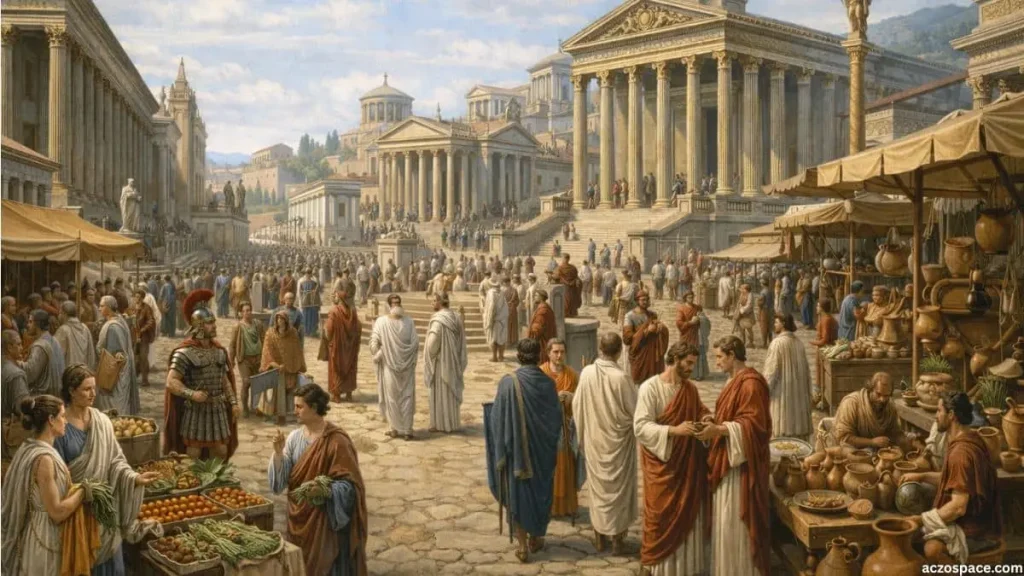
Julius Caesar was more than a military leader—he was a transformative statesman whose rule reshaped Roman governance, economy, and daily life. His reforms laid the foundation for what would later become the Roman Empire.
Calendar Reform: The Julian Calendar
One of Caesar’s most enduring legacies was his overhaul of the Roman calendar. The old calendar was irregular, often falling out of sync with the seasons, which disrupted agriculture, religious festivals, and civic administration.
To solve this, Caesar collaborated with the Greek mathematician Sosigenes to introduce the Julian calendar in 45 BCE:
- The year was standardized to 365.25 days.
- A leap year was added every four years to account for the extra 0.25 days.
- This reform stabilized agricultural cycles and allowed civic and political events to be scheduled accurately.
The Julian calendar remained in use worldwide until it was refined into the Gregorian calendar in 1582 CE.
Economic Reforms
Rome faced widespread economic hardship when Caesar came to power. Soldiers, merchants, and the poor suffered from instability and debt. Caesar implemented sweeping reforms to address these challenges:
- Controlled state expenditure – reduced lavish spending on government positions and curbed corruption.
- Land redistribution and infrastructure – provided land to soldiers and low-income citizens, while improving roads, granaries, and public works.
- Tax reforms – introduced a more organized and equitable system under state oversight.
- Monetary stability – standardized coinage and regulated currency to strengthen the Roman economy.
These measures not only stabilized the economy but also increased Caesar’s popularity among both the urban poor and the military.
Legal Reforms
Caesar also recognized that Rome’s legal system had become fragmented and corrupt. During his rule, he:
- Strengthened provincial governance – limited the powers of governors to prevent abuse and corruption.
- Improved administration – standardized legal processes to make justice more predictable and fair.
Through these reforms, Caesar left a lasting imprint on Rome’s legal and administrative structure, creating a foundation that would endure well into the imperial era.
Julius Caesar: Courage, Leadership, and Popularity
Public Opinion and Popularity
Julius Caesar was one of the most celebrated leaders in Roman history, and his popularity among the people played a key role in his rise to power. Several factors contributed to his widespread acclaim:
- Military Successes: Victories in the Gallic Wars and the defeat of Pompey were seen as monumental achievements that brought glory and security to Rome. The public recognized these campaigns as invaluable services to the state.
- Support for the People: Caesar implemented policies that helped ordinary citizens, such as distributing land, lowering the cost of essential goods, and offering assistance to veterans.
- Cultural Engagement: Through public games, theaters, infrastructure projects, and festivals, he connected with people on a personal and cultural level.
- Effective Communication: Caesar spoke in clear, accessible language that resonated with the public, enhancing his appeal as a leader.
Combined, these actions earned him not only influence but also a deep-seated respect and loyalty from the Roman populace.
Psychological Insights into Leadership
Modern analyses of leadership traits offer fascinating insights into why Caesar was so effective:
- Extraordinary Self-Confidence: Caesar acted decisively toward his goals, even in risky circumstances—a hallmark of top-tier leadership.
- Emotional Intelligence: He could read people’s emotions and intentions, whether allies, rivals, or subordinates, allowing him to anticipate and shape outcomes.
- Psychological Warfare: On the battlefield, Caesar skillfully used fear, perception, and morale to his advantage, understanding that psychological strategy often determined victory.
- Opportunity Recognition: Perhaps his most striking leadership trait was timing. The decision to cross the Rubicon River illustrates his ability to seize critical moments with precision.
Caesar on the Battlefield and in Politics
Caesar excelled not only as a general but also as a statesman, making his leadership multidimensional and highly effective.
On the Battlefield
- Exploiting Enemy Weaknesses: Caesar was adept at launching rapid attacks and counterattacks, taking advantage of his opponent’s vulnerabilities.
- Leading from the Front: Unlike many leaders, he fought alongside his soldiers, sharing the risks and hardships of campaigns.
- Enduring Hardship: He marched long distances, braved harsh weather, and survived food shortages, forging loyalty and respect from his troops.
In Politics
- Implementing Beneficial Laws: Caesar championed legislation that directly improved the lives of ordinary Romans.
- Social Reforms: He introduced policies that favored the majority, particularly veterans and the lower classes.
- Winning Hearts Through Words: His speeches were concise, persuasive, and emotionally engaging, helping him secure popular support.
- Economic Initiatives: Caesar’s fiscal reforms stabilized the economy, increased employment, and improved living standards, further solidifying his popularity.
Through his unique combination of courage, strategic insight, and public-minded policies, Julius Caesar demonstrated leadership that resonated across both the battlefield and the political arena. His ability to connect with soldiers and citizens alike made him a transformative figure in Roman history.
The Assassination of Julius Caesar – The Ides of March
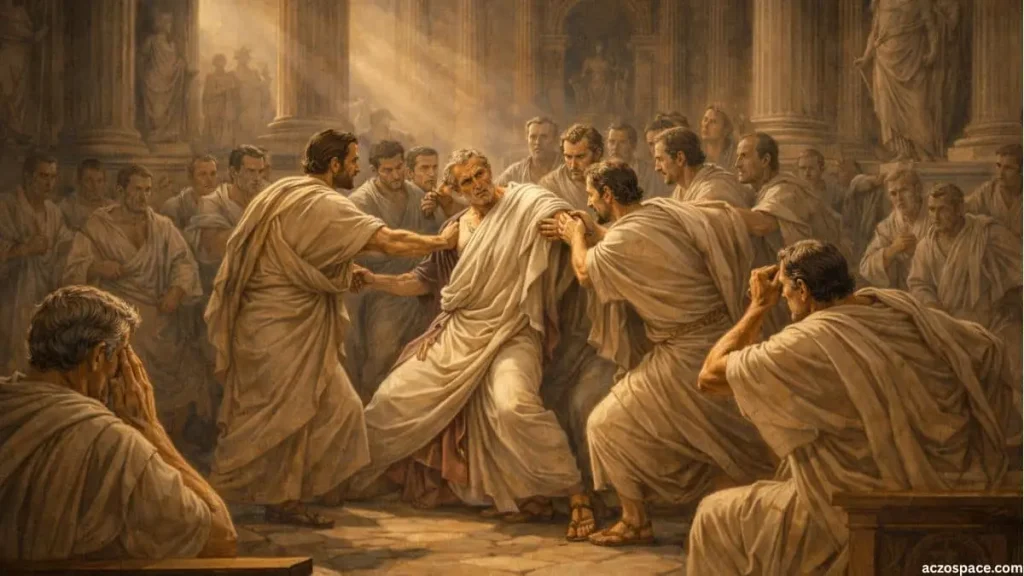
Julius Caesar’s death on the Ides of March (March 15, 44 BCE) was the result of a carefully orchestrated conspiracy. A powerful group of Roman senators, fearing Caesar’s growing authority and influence, plotted to end his life. Among the conspirators were some of Rome’s most prominent figures:
- Marcus Junius Brutus – Once a close friend and protégé of Caesar, Brutus was persuaded by the conspirators to oppose him, motivated by loyalty to the ideals of the Roman Republic.
- Gaius Cassius Longinus – The leading organizer of the plot, Cassius feared that Caesar’s power threatened the authority of the Senate and the traditions of the Republic.
- Casca, Decimus Brutus, Cinna, Trebonius, and Metellus Cimber – Influential senators who presented themselves as protectors of the Republic while actively participating in the assassination.
The conspirators believed that by killing Caesar, they were preserving the Roman Republic and preventing the rise of a monarchy under a single ruler.
On the morning of March 15, 44 BCE, Caesar arrived at the Senate for a session held in the Theatre of Pompey. The conspirators struck swiftly, stabbing him to death. At the time, he was 55 years old.
The Impact of Caesar’s Death on Rome
The conspirators expected that Caesar’s assassination would restore the Republic. Instead, it triggered a period of chaos and civil war. During the aftermath, Mark Antony, a loyal supporter of Caesar, openly opposed the conspirators, inflaming public outrage against them.
Rome descended into turmoil, and the struggle for power eventually led to the formation of the Second Triumvirate, composed of:
- Mark Antony – A trusted general and ally of Caesar, Antony leveraged his popularity among the people and the army to challenge the Senate and consolidate power.
- Octavian – Later known as Augustus Caesar, he was Julius Caesar’s adopted heir and great-nephew. Over time, Octavian would emerge as the first emperor of Rome.
- Cleopatra VII – The Queen of Egypt, who allied with Antony in both love and politics, played a key role in the ensuing power struggle.
Conflict eventually culminated in the Battle of Actium (31 BCE), where Octavian defeated Antony and Cleopatra, securing his control over Rome and laying the foundation for the Roman Empire.
The Legacy of Caesar and the Rise of the Roman Empire
Even though Julius Caesar never became emperor, his reforms and strategies directly shaped the future Roman Empire:
Foundation for Monarchy: While Caesar retained the trappings of the Republic, his reforms set the stage for Octavian to transform Rome into an empire with centralized, imperial authority.
Weakening the Senate’s Power: Caesar curtailed the authority of the Senate, a system that Octavian later strengthened to consolidate imperial power.
Military Reorganization: Caesar’s innovations during the Gallic Wars created a disciplined, loyal army, which became the backbone of Octavian’s empire.
Administrative and Economic Reforms: Octavian adopted and expanded Caesar’s economic and governance policies, stabilizing Rome internally.
The Unstoppable Force of Caesar’s Legacy
The conspirators had hoped to restore the Republic by removing Caesar, but their plan ultimately failed. Instead, his death unleashed a chain of civil wars and power struggles, culminating in the rise of Octavian. Through Caesar’s reforms, military strategies, and popular support, Octavian was able to consolidate power, honor Caesar’s legacy, and establish lasting stability in Rome.
In essence, Julius Caesar’s assassination did not end his influence; it magnified it, ensuring that his vision and authority lived on through the creation of the Roman Empire.
Julius Caesar’s Enduring Contributions to the World
Julius Caesar’s legacy extends far beyond his time, influencing military strategy, political thought, literature, and modern leadership. His life offers timeless lessons for historians, leaders, and readers alike.
Military Innovations
Caesar is widely regarded as one of history’s greatest military leaders. His campaigns not only expanded the Roman Empire but also demonstrated extraordinary tactical brilliance. Some of his key contributions include:
- Rapid Deployment and Decisive Action: Caesar could quickly mobilize his legions and make bold, decisive moves, often catching enemies off guard.
- Divide-and-Conquer Strategy: During the Gallic Wars, he expertly fragmented opposing forces, defeating them piece by piece—a tactic that became legendary in military history.
- Engineering in Warfare: Caesar’s campaigns integrated engineering feats, from bridges and fortifications to siege works and supply routes, giving his armies a tactical advantage.
- Frontline Leadership: He often led from the front, sharing hardships with his soldiers and inspiring loyalty through example.
- Psychological Warfare: Even in harsh climates and difficult terrain, Caesar maintained relentless pressure on his enemies, breaking their morale as much as their forces.
These strategies didn’t just win battles—they shaped the Roman military into a disciplined, adaptable force that would serve as a model for centuries.
Political Vision
Caesar’s political foresight was equally remarkable. He recognized that centralizing authority, when done wisely, could stabilize Rome and address systemic issues:
- Strong Leadership for Stability: Caesar believed that a capable, centralized leader was essential for guiding Rome through internal strife.
- Direct Engagement with the People: By addressing the needs of the populace and building personal rapport, he ensured popular support for his policies.
- Reforms with Lasting Impact: His political vision laid the groundwork for the transformation of the Roman Republic into the Roman Empire.
Caesar’s approach demonstrated that visionary leadership could align governance, public welfare, and military strategy under a cohesive plan.
Caesar in World Literature – Shakespeare’s Julius Caesar
William Shakespeare’s play Julius Caesar immortalized Caesar in global literature, exploring themes that remain relevant today:
- Human Nature and Politics: The play examines ambition, loyalty, betrayal, and the complex dynamics of leadership.
- Character Study: Through Caesar, Brutus, and Mark Antony, Shakespeare highlights personal motivations, political strategy, and moral dilemmas.
- Enduring Lines: Mark Antony’s famous speech, “Friends, Romans, countrymen…” is one of the most recognized passages in world literature.
- Educational Influence: The play is widely studied in schools, universities, and theatrical productions, continuing to teach lessons about leadership, persuasion, and civic responsibility.
Through Shakespeare, Caesar’s life and legacy reach new generations, emphasizing his impact on both history and culture.
Influence on Modern Leadership
Many contemporary leadership models draw inspiration from Caesar’s life and strategies. His approach offers timeless principles for effective leadership:
- Decisive Leadership: Quick, clear decision-making in critical moments.
- Leading by Example: Aligning with your team and sharing in their challenges.
- Strategic Planning: Thinking ahead and preparing for future contingencies.
- Communication Skills: Using rhetoric and public engagement to gain support and inspire action.
- Political Acumen: Managing alliances, navigating opposition, and implementing policy effectively.
From corporate boardrooms to political arenas, Caesar’s life provides a blueprint for leaders who wish to balance vision, strategy, and influence.
Julius Caesar in Pop Culture
Julius Caesar’s life, ambition, and extraordinary leadership have made him a lasting figure not only in history but also in pop culture. From films and television to video games and theater, Caesar continues to captivate audiences worldwide.
Film, TV, and Docuseries
Caesar’s story has long been a popular theme in visual media. His rise from a young aristocrat to the pinnacle of Roman power has inspired numerous adaptations:
- Animated Series (2002): This series dramatizes Caesar’s early life, political ambitions, and eventual domination of Rome, providing a narrative accessible to younger audiences.
- HBO’s Rome (2005–2007): This acclaimed series offers a vivid, modern depiction of Caesar’s political maneuvers, secret alliances, and his famous relationship with Cleopatra, blending historical detail with compelling drama.
Across these portrayals, Caesar is often shown as both a brilliant political strategist and a leader with an unyielding ambition for power—capturing the duality that made him one of history’s most intriguing figures.
Video Games and Interactive Media
In gaming, Caesar is frequently depicted as the archetype of leadership, conquest, and governance:
- Strategy and Civilization Games: Players often take on the role of Caesar, building empires, managing resources, and demonstrating tactical brilliance.
- The Total War: Rome Series: These games emphasize Caesar’s military campaigns, the conditions of Roman soldiers, and his global strategic knowledge, allowing players to experience firsthand the challenges of commanding his armies.
Beyond strategy games, his name and image appear in novels, comics, memes, and pop-culture references, cementing him as an iconic figure representing conquest, leadership, and historical grandeur. Phrases associated with him, such as “Veni, Vidi, Vici” (“I came, I saw, I conquered”), remain popular cultural touchstones, often used humorously or symbolically in memes and motivational contexts.
Theater and Shakespeare’s Influence
Julius Caesar’s most famous stage representation is undoubtedly William Shakespeare’s play Julius Caesar:
- Core Themes: Shakespeare’s work explores Caesar’s assassination, Brutus’ inner conflict, and the political tensions of Rome, offering timeless insights into ambition, loyalty, and human nature.
- Global Reach: The play has been performed worldwide, adapted for both traditional and modern theater. Contemporary productions often reinterpret Caesar in the context of modern politics, militarized states, or institutional power.
- Modern Relevance: Actors portraying Caesar frequently emphasize themes of authority, populism, and civic responsibility, connecting the historical story to current social and political issues.
Through Shakespeare, Caesar’s life is not only preserved but continually reimagined, making him a lens through which audiences examine power, morality, and leadership.
Conclusion
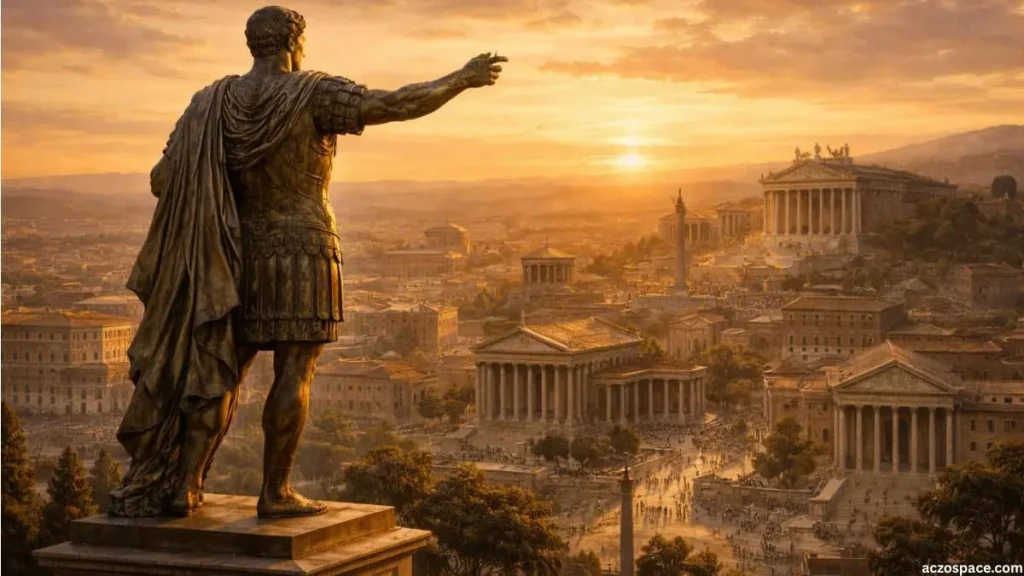
Julius Caesar’s life demonstrates how intellect, rhetoric, and military skill can elevate a single individual to extraordinary heights. He overcame the limitations of his family background, won decisive battles like the Gallic Wars, boldly crossed the Rubicon, and confronted the Roman Senate—all acts of fearless, decisive leadership.
His reforms in the calendar, economy, and legal system improved the lives of Roman citizens, while his assassination failed to save the Republic, instead accelerating its transition into an empire.
Today, Caesar is remembered not only as one of history’s greatest military commanders but also as a visionary political leader whose influence resonates through history, literature, gaming, and popular culture alike. His legacy reminds us that true leadership shapes both the battlefield and the course of civilization.
FAQs
What is the true legacy of Julius Caesar?
The true legacy of Julius Caesar is that he transformed Rome from a republic into the foundation of an empire through strong leadership, reforms, and military power.
What was the life of Julius Caesar?
Julius Caesar’s life was marked by military victories, political reforms, rising popularity, and a dramatic assassination that changed the course of Roman history.
What were the legacies in Caesar’s will?
In his will, Julius Caesar left money to Roman citizens, public gardens for the people, and named Octavian as his adopted heir and successor