
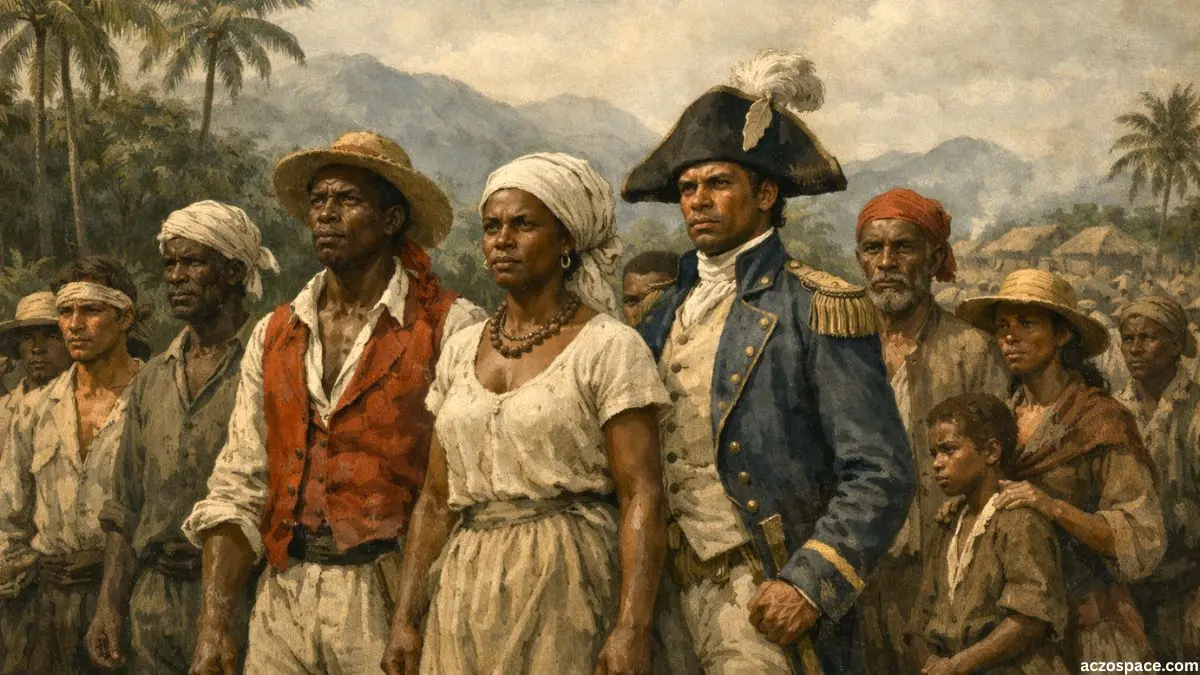
The Haitian Revolution is considered one of the most remarkable events in world history. Occurring between 1791 and 1804, it was the first successful slave revolt that helped create an independent nation, driven by people who had previously been enslaved.

At the time, Haiti, known as Saint-Domingue, was France’s wealthiest colony, producing massive amounts of sugar and coffee through brutal slave labor. However, despite this wealth, the social structure of the colony was rigid and deeply unequal. This led to one of history’s extraordinary struggles for freedom.
Unlike many other revolutions primarily driven by political grievances, the Haitian Revolution uniquely unified the struggle against slavery, racial injustice, and colonial oppression. Its success challenged the existing global order. It provided an example to enslaved populations across the Americas. Ultimately, it reshaped the colonial world. This article explores the causes of the Haitian Revolution, its main figures, events, and its lasting impact on Haitian society and the world.
Table of Contents
Quick Facts
| Fact | Detail |
| Event Name | Haitian Revolution |
| Time Period | 1791 – 1804 |
| Location | Saint‑Domingue (now Haiti) |
| Main Trigger | Slave revolt against French colonial rule starting in 1791 |
| Key Causes | Brutal slavery system, social inequality, influence of the French Revolution ideals |
| Major Leaders | Toussaint Louverture, Jean‑Jacques Dessalines, Henri Christophe |
| Outcome | Independence declared January 1, 1804 (first Black republic) |
| Slavery | Abolished through the course of the revolution (formal abolition by the revolutionaries) |
| Colonial Powers Involved | France (primary), Britain & Spain engaged at different phases |
| Impact | Inspired later anti‑slavery movements; dramatic shift in power structure in the Caribbean |
Background
Haiti under French colonial rule
Saint-Domingue, in present-day Haiti, was a French colony and was one of the wealthiest and most efficient of the Caribbean islands. Its economy was entirely dependent on the labor of the enslaved Africans. It generated immense wealth for the plantation owners of Saint-Domingue. However, the enslaved people lived under extreme hunger, constant fear, and harsh punishments, experiencing great cruelty in their daily lives.
This situation caused severe injustice and opposition among the enslaved people and provided the primary reasons for future revolutionary action.
Social hierarchy
Colonial society was sharply divided into three main groups:
1. White colonists – These included wealthy plantation owners (Grands Blancs) and poor white settlers (Petits Blancs). The Grands Blancs controlled the economy and politics, while the Petits Blancs were often hostile to both the enslaved and free people of color.
2. People of color (gens de couleur libres) – Mixed-race individuals, often wealthy and educated, but deprived of full rights under French law.
3. Enslaved Africans – The majority of the population faced severe oppression and were denied any rights or recognition.
This rigid social hierarchy generated widespread discontent and created fertile conditions for revolutionary resistance.
Intellectual Enlightenment and Revolutionary Influence
In the late 18th century, ideas about liberty, equality, and human rights spread across the world. During this period, Enlightenment ideas spread throughout society, encouraging oppressed groups to challenge existing power structures and demand their rights.
The American Revolution (1775–1783) and the French Revolution (1789–1799) clearly demonstrated these ideas and showed that oppressed people could take action against established authorities.
For the enslaved and free people of color in Saint-Domingue, these revolutionary ideas acted as a strong catalyst. When their lives were marked by injustice and oppression, these ideas helped them to challenge and fight for their freedom.
Causes of the Haitian Revolution
Several interconnected factors led to the Haitian Revolution:
Cruelty of slavery
Slavery in Saint-Domingue was notorious for its extreme brutality. Enslaved people were forced to work long hours under conditions of severe oppression and inhumane treatment.
Enslaved people frequently suffered harsh punishments. Physical violence became a normal part of their lives. All of this severely weakened their physical and mental strength.
Before 1791, there were rebellions and resistance against this unjust system. Through this, the enslaved people clearly demonstrated their opposition. However, none of those rebellions was able to completely dismantle the entire system.
Racial inequality and social injustice
White colonists maintained a strict racial hierarchy within society. This system, based on skin color, determined who would hold power. It created deep divisions within society.
Free people of color were often educated and owned property. However, despite these abilities, they did not receive equal consideration. They frequently faced discrimination and injustice.
This inequality increased tension between different classes in society. That tension became a fundamental cause of major conflicts in the future.
Economic exploitation
Saint-Domingue was a colony that brought enormous wealth to French plantation owners. The profits from the plantation economy made their lives luxurious.
However, the lives of those who created this wealth stood in sharp contrast, as the majority of the population lived in poverty, oppression, and injustice. Daily life was a struggle for them.
This severe economic disparity increased anger and dissatisfaction within society. As a result, it became a major motivating factor for rebellion.
Impact of the French Revolution
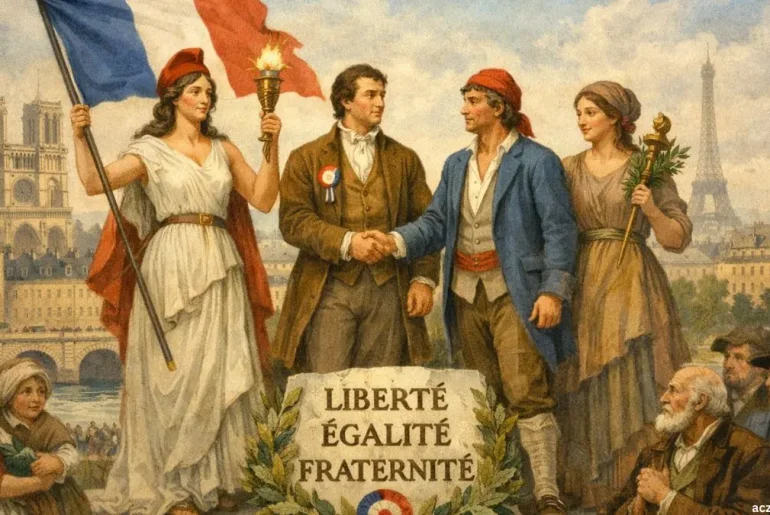
The French Revolution became a fundamental challenge to colonial rule in Saint-Domingue. It introduced new ideas such as liberty, equality, and fraternity to the world. These ideas gave oppressed people new hope.
The free people of color clearly demanded that they, too, should receive equal rights. Their goal was to attain an equal status within society.
Meanwhile, the enslaved population saw this revolution as an opportunity to gain complete freedom. They viewed it as the best chance to escape an unjust system.
Key Figures of the Revolution
Toussaint Louverture

Toussaint Louverture emerged as the leading figure of the Haitian Revolution. Although he was born into slavery, he managed to gain his freedom at a young age. This opened a new path in his life.
After gaining freedom, Louverture developed his abilities to the level of a skilled military strategist, demonstrating exceptional talents on the battlefield and in leadership.
He was able to turn the African slaves into a disciplined and powerful force. Furthermore, by negotiating with the colonial powers, he played a key role in leading Haiti toward independence.
Jean-Jacques Dessalines
Dessalines, who served as a lieutenant under the leadership of Toussaint Louverture, played a very important role in the final stage of the revolution. He was known as a fierce and decisive leader on the battlefield.
After Louverture was captured and deported by Napoleon’s forces, the leadership of the revolution came into Dessalines’ hands. This event brought him immense responsibility and challenges.
Under Dessalines’ leadership, the revolution entered its final battle. In the end, in 1804, Haiti was declared an independent nation. Along with that, Dessalines went down in history as the first ruler of the new nation.
Henri Christophe
Christophe made significant contributions in military campaigns in the northern region. He was recognized as a strong and disciplined leader on the battlefield.
After the revolution, Christophe became the ruler of northern Haiti. Later, he declared himself king. This was a step taken to establish the authority of the new state.
To consolidate power, Christophe established schools, forts, and an organized administrative system. All of this was aimed at making northern Haiti a strong and organized state.
Other important leaders
At the beginning of the Haitian Revolution, Dany Boukman, a Vodou priest, played an important role in organizing the initial uprisings. By uniting the enslaved people, he provided them with spiritual and mental strength to resist.
During the post-revolutionary period, free man of color Alexandre Pétion helped stabilize Haiti. He made significant contributions in the political and administrative fields.
Such figures played a decisive role in the success of the Haitian Revolution and the subsequent establishment of the new state.
Major events and phases
1. 1791 – The Slave Revolt Begins
The Haitian Revolution began in 1791 with a dramatic uprising. It was a moment when the long-suppressed anger and suffering of the enslaved people erupted.
A significant event that sparked this uprising was the Bois Caïman ceremony. It was an incident that symbolized the beginning of the revolution.
Under the guidance of leaders like Dutty Boukman, the enslaved people took up arms against the plantation owners. They attacked estates and strongly resisted the system that had oppressed them.
This uprising marked the beginning of a prolonged struggle that would last for more than a decade.
2. 1793–1798 – French Revolutionary Influence and Toussaint’s Rise
During this period, Toussaint Louverture emerged as a leading figure in the revolution. His leadership gave the revolution a new direction.
In 1794, the French Revolution’s abolition of slavery provided Louverture with an important legal foundation. This decision allowed him to direct the newly freed people into an organized resistance.
L’Ouverture’s skilled military strategies helped to defeat the French loyalists and foreign invaders. Through this, he was able to bring most of Saint-Domingue under his control.
3. 1801–1803 – The Struggle for Independence
Napoleon Bonaparte tried to reestablish French authority over Saint-Domingue. His main goal was to reinstate slavery. This was an attempt to defeat the revolution and restore power to France.
Toussaint L’Ouverture initially opposed this, but in 1802, he was captured and handed over to the French. After this, the leadership of the revolution passed to Dessalines.
The Haitian army, using guerrilla tactics and knowledge of the local terrain, defeated Napoleon’s forces. This was a crucial moment in securing their independence.
4. 1804 – Declaration of Independence
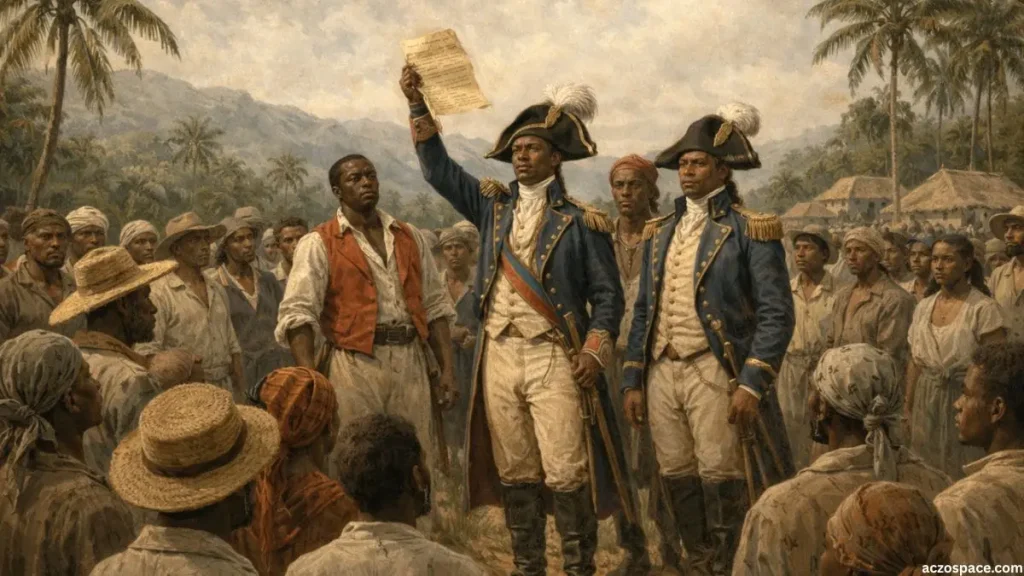
On January 1, 1804, Jean-Jacques Dessalines declared the independence of Haiti. His action symbolized resilience and a new beginning.
On that day, Haiti was established as the first republic in the Americas, led by Black leadership. Dessalines assumed the role of emperor, and his leadership became a symbol of revolution, freedom, and resistance.
The Haitian Revolution not only ended the oppression under colonial rule, but this victory also sent shockwaves across the colonial world. It inspired oppressed people and challenged the global system of colonial domination.
Impact on Haitian Society
Ending slavery and establishing freedom
The primary goal achieved by the success of the Haitian Revolution was the abolition of slavery. This is regarded as the main fundamental purpose of the revolution.
Individuals who had previously been enslaved were now recognized as free citizens. They were allowed to participate in governance processes.
However, with freedom came significant economic and social challenges. The society of the new nation attempted to establish structures to address the inequalities that had persisted throughout the colonial period.
Social and political changes
A new social system emerged in Haiti. Former elites now held official positions and participated in governance.
After the post-revolution period, Haiti became central to the new national organization. Land redistribution and the establishment of provincial administrative institutions were their main initiatives.
However, these changes faced strong resistance from internal factions and foreign powers. They encountered many challenges in establishing the new society.
Economic Challenges
Although Haiti gained independence, it faced significant economic challenges. The destruction of plantations during the war and the international isolation imposed by nations fearful of similar uprisings hindered the economic process.
The export-based agricultural sector, particularly sugar and coffee plantations, experienced severe declines. After the revolution, it took additional time for the economy to recover.
Additionally, with the transition of small Haitian plantation owners into agriculture, new methods of land distribution and the emergence of a new peasant agricultural community developed. This was an important step in establishing the economy of the new nation.
Relations with European Powers
European nations, especially France and Spain, were fearful of the example set by Haiti. They were intimidated by the successful struggle of the people against slavery.
France, in particular, tried to exert economic and political influence over Haiti. In the aftermath of the revolution, it demanded compensation for lost property, especially for those who had been enslaved.
These demands and obstacles were a serious challenge to the economic and political stability of the new independent nation.
The Haitian Revolution had global repercussions, attracting attention from all over the world.
Global Significance
- Inspiration for other slave revolts – The success of Haitian revolutionaries inspired enslaved populations across America, including the United States and Latin America.
- Impact on the abolition movement – European powers and abolitionists around the world had to confront the realities of slavery. Haiti became a living example of freedom and resistance.
- Reconfiguration of colonial power dynamics – Haiti’s independence weakened European colonial authority in the Caribbean islands and signaled the conquered populations’ ability to achieve self-determination.
Challenges and Legacy
Economic and Political Struggles
Although Haiti gained independence, it faced internal political instability. Frequent changes in leadership and economic isolation posed significant challenges to the government.
External pressure also had a profound impact. Former colonial powers demanded tributes and trade restrictions, challenging the new nation’s economy and stability.
These challenges created a need for the Haitian government to develop strong and effective policies both domestically and internationally.
Cultural Identity and Pride
Despite the difficulties, the Haitian Revolution fostered a unique cultural identity. The people took steps to preserve their identity, which became a powerful backdrop for the revolution.
Voodoo, music, and folklore became symbols of the Haitian people’s land. These helped to express resilience, resistance, and unity.
Furthermore, cultural elements played a key role in building strong connections among the people during the revolution and maintaining unity amid economic and political challenges.
Enduring Impact on Human Rights
The most lasting legacy of the Haitian Revolution is its embodiment of universal human rights. The revolution demonstrated that enslaved people could rise up.
Those people acted justly in overthrowing oppressors and asserting their right to fight for their freedom.
History has shown that the Haitian people, by establishing their own nation, could challenge slavery and injustice on a global scale.
Conclusion
The Haitian Revolution was a transformative event that reshaped history. It ended slavery in Saint-Domingue and set an example for liberation movements across the Americas.
Haiti demonstrated that oppressed populations around the world could challenge colonial powers. Toussaint Louverture, Jean-Jacques Dessalines, and other leaders displayed courage, strategic planning, and a commitment to freedom.
Haiti’s journey from a harshly oppressed plantation society to the first independent black republic became a global struggle for liberty and equality.
Today, the Haitian Revolution stands as a powerful testament to human determination, demonstrating that freedom and justice can prevail even in the face of extreme oppression.
FAQs
What was the Haitian Revolution’s freedom?
It was the successful struggle of enslaved Africans in Haiti (1791–1804) that ended slavery and created the world’s first Black republic.
What was the main goal of Haiti’s revolution?
To gain freedom from slavery and achieve independence from French colonial rule.