
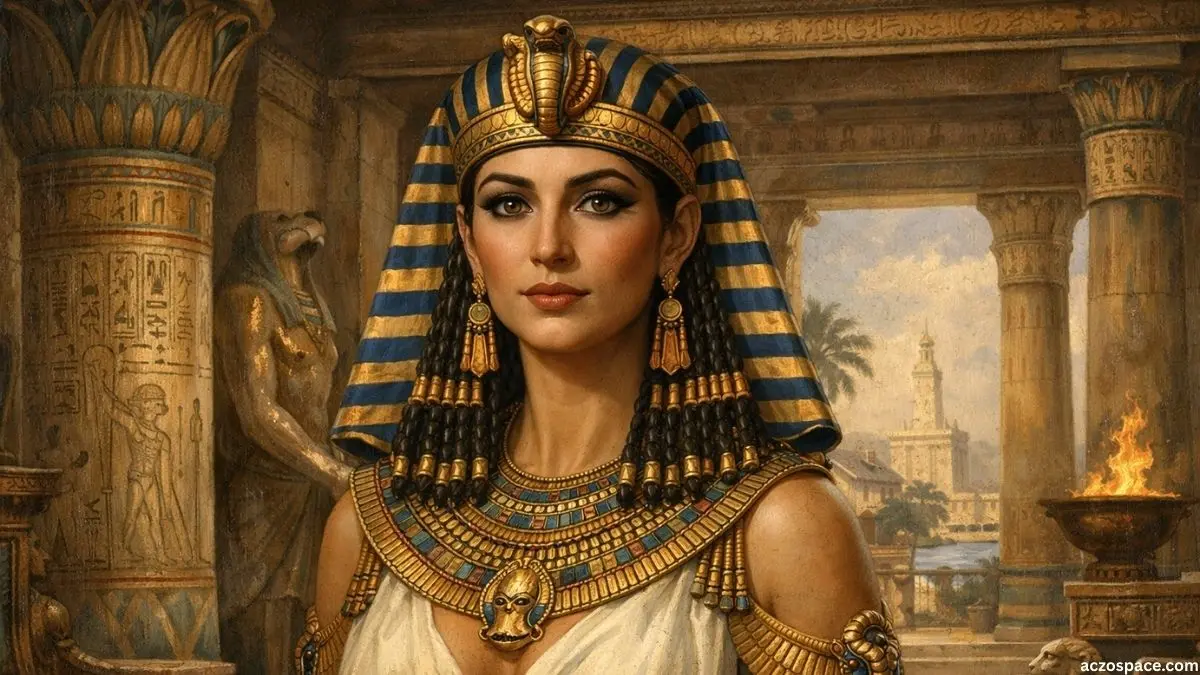
Cleopatra VII Philopator, better known simply as Cleopatra, remains one of history’s most captivating figures. As the final ruler of ancient Egypt, she faced the immense challenge of keeping her kingdom independent during a period when Rome was expanding its dominance across the Mediterranean.
Cleopatra was far more than a legendary beauty—she was a shrewd politician, a skilled diplomat, and a master of strategy. Through carefully forged alliances with influential Roman leaders such as Julius Caesar and Mark Antony, she navigated the treacherous waters of power, securing Egypt’s position for as long as possible.
Her life was a complex tapestry of political intrigue, personal relationships, and power struggles. Cleopatra’s intelligence, charm, and decisive leadership allowed her to leave a lasting imprint on history, inspiring countless historians, writers, and filmmakers for centuries.
Today, she is remembered not only as Egypt’s last pharaoh but also as a symbol of ambition, resilience, and the delicate balance between love and politics in the ancient world.
Table of Contents
Quick Facts
| Fact | Detail |
| Full Name | Cleopatra VII Thea Philopator |
| Title | Queen of the Ptolemaic Kingdom of Egypt |
| Reign | 51 BCE – 30 BCE |
| Dynasty | Ptolemaic (Greek‑Macedonian origin) |
| Born | 69 BCE, Alexandria, Egypt |
| Died | August 30, 30 BCE, Alexandria |
| Language Skills | Greek, Egyptian, possibly others |
| Key Allies | Julius Caesar & Mark Antony |
| Children | Caesarion (with Caesar), 3 with Antony |
| Major Events | Battle of Actium defeat → end of Ptolemaic Egypt; Egypt becomes Roman province |
| Legacy | Last active ruler of ancient Egypt; iconic historical figure with lasting cultural impact |
Cleopatra’s Early Life
Birth and Family Background
Cleopatra was born in 69 BCE in Alexandria, a city renowned as one of the greatest centers of learning and culture in the ancient world. She was the daughter of Ptolemy XII Auletes, a member of the Ptolemaic dynasty, a Macedonian Greek royal family that had ruled Egypt for nearly 300 years following the conquests of Alexander the Great.
From an early age, Cleopatra grew up within a royal court shaped by political conspiracies, rivalries, and constant threats to power. The palace was not merely a residence—it was a training ground for survival.
Childhood and Education
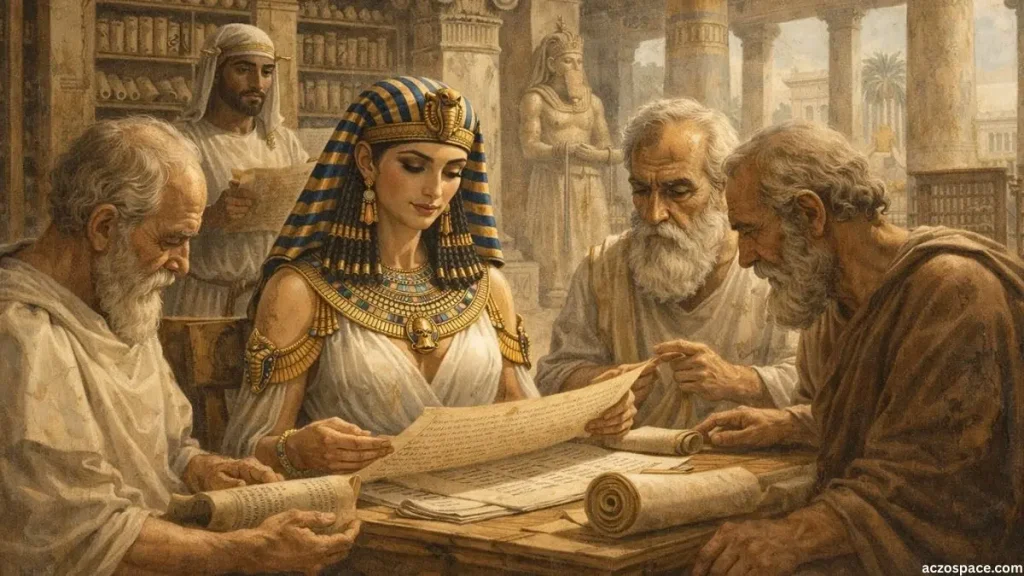
Cleopatra received an education that was exceptional even by royal standards. Unlike many rulers of her dynasty, she learned the Egyptian language, in addition to Greek, and was likely fluent in Latin and several other languages. This ability allowed her to communicate directly with her subjects without interpreters—an uncommon and powerful advantage.
Her studies included mathematics, astronomy, philosophy, medicine, and scientific observation, reflecting the intellectual traditions of Alexandria. Educated by the finest scholars of the era, Cleopatra developed a sharp, analytical mind and a deep understanding of governance, diplomacy, and statecraft.
From a young age, she was exposed to palace politics and royal intrigue. These early experiences helped cultivate the strategic mindset that would later define her reign, preparing her to navigate the dangerous world of power, alliances, and betrayal.
Early Challenges
Cleopatra’s youth was marked by intense family power struggles. After the death of her father, she initially ruled Egypt alongside her younger brother, Ptolemy XIII, as co-regent. However, their partnership quickly collapsed into rivalry as competing factions at court sought control. These early conflicts hardened Cleopatra’s resolve and taught her crucial lessons about authority, loyalty, and political survival—lessons that would prove essential as she fought to rule Egypt in her own right.
Rise to Power
Cleopatra’s path to the throne was anything but smooth. It was shaped by political conspiracies, sibling rivalries, exile, and bold strategic decisions. Despite her young age, she demonstrated remarkable courage, intelligence, and political instinct—qualities that would eventually make her one of the most powerful rulers in Egyptian history.
Accession to the Throne
At just 18 years old, Cleopatra became co-ruler of Egypt with Ptolemy XIII. However, internal conflicts and palace conspiracies soon led to her being forced into exile from Alexandria.
Refusing to accept defeat, Cleopatra sought external support. With the backing of Julius Caesar, she returned to power, defeated her rivals, and reclaimed her throne—this time with far greater authority and influence.
Political Strategy and Leadership
Cleopatra understood that Egypt’s survival depended on carefully balanced diplomacy rather than military strength alone. She was not a ceremonial ruler; she governed actively, made decisive choices, and closely managed the state’s economic and political affairs.
Cleopatra’s Political Intelligence
- She negotiated directly with Julius Caesar to secure her position and protect Egypt’s autonomy.
- She preserved Egypt’s immense wealth and resources despite Rome’s growing dominance.
- She skillfully combined intelligence, cultural awareness, and personal charm to influence both Egyptian and Roman politics.
- She maintained strategic relationships with powerful Roman leaders to safeguard Egypt’s security.
Challenges During Her Early Reign
Cleopatra ruled in a world dominated by men, and her youth and gender made her authority especially vulnerable. Political factions within Egypt continuously challenged her legitimacy, while Rome’s expanding influence posed a constant external threat.
Rather than relying solely on force, Cleopatra leaned on diplomacy, negotiation, and strategic alliances. She understood that survival required adaptability and calculated risk.
How Cleopatra Overcame These Challenges
- She reinforced her authority through intelligence and political maneuvering rather than brute force.
- She formed crucial alliances with Roman leaders to defend her throne.
- She strengthened her legitimacy by embracing Egyptian traditions and cultivating popular support among the people.
Legacy of a Remarkable Ruler
Cleopatra was far more than a symbol of beauty or romance. She was a brilliant political leader, a skilled diplomat, and a ruler who fought relentlessly to preserve her kingdom’s independence against overwhelming odds. Her story continues to resonate because it reflects timeless themes—power, ambition, intelligence, and the human struggle for survival in a changing world.
Even today, Cleopatra stands as one of history’s most enduring and complex leaders—a woman who ruled not just with charm, but with vision and strategy.
Cleopatra and Julius Caesar
Cleopatra’s encounter with Julius Caesar marked a decisive turning point—not only in her own life, but in the history of Egypt itself. Their alliance blended politics, power, and personal intimacy, ultimately securing Cleopatra’s throne and reshaping Egypt’s relationship with Rome. What began as a bold political gamble evolved into one of the most famous partnerships of the ancient world.
Their First Meeting
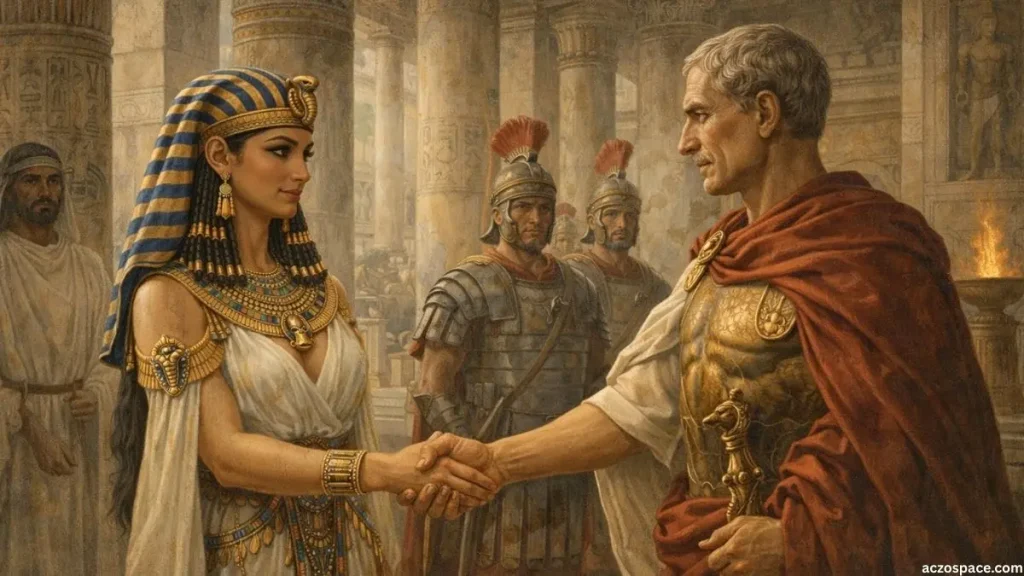
One of the most dramatic scenes in ancient history surrounds Cleopatra’s first meeting with Julius Caesar. According to ancient sources, she was secretly brought into Caesar’s palace in Alexandria, concealed inside a rolled carpet or linen sack.
This was no theatrical stunt—it was a calculated act of political genius. By presenting herself directly to Caesar, Cleopatra bypassed her rivals and demonstrated her intelligence, confidence, and daring. During this encounter, Caesar quickly recognized that she was far more than a displaced queen. He saw in her a capable ruler with sharp political instincts and a clear vision for Egypt’s future.
For Cleopatra, the goal was clear: to reclaim the throne from her brother, Ptolemy XIII, who had forced her into exile. By choosing the right moment and the right ally, she made a decision that would change history.
Alliance, Strategy, and Romance
The relationship between Cleopatra and Julius Caesar was never purely romantic. It was deeply rooted in mutual political advantage. Both understood the power the other possessed—and both used the alliance strategically.
From this union, Cleopatra gave birth to a son, officially named Ptolemy XV Philopator Philometor Caesar, known to history as Caesarion. His birth further strengthened Cleopatra’s position, symbolizing a direct connection between the Egyptian throne and Rome’s most powerful leader.
Caesar’s support allowed Cleopatra to rule Egypt with renewed authority. Through him, she gained protection, legitimacy, and access to Roman influence. In return, Caesar secured a loyal, wealthy, and strategically vital ally in the eastern Mediterranean. Their relationship became one of history’s clearest examples of how love and politics can intertwine.
How the Alliance Benefited Cleopatra
- With Roman military backing, she regained and secured the Egyptian throne.
- Egypt’s political stability and economic strength improved.
- Cleopatra’s influence within Roman affairs increased significantly.
- Caesarion’s position as heir to the throne was strengthened.
Caesar’s Role in Egyptian Politics
During the civil conflict between Cleopatra and Ptolemy XIII, Julius Caesar intervened directly in Egypt’s internal affairs. His political authority and military presence were decisive in restoring Cleopatra to power.
For Caesar, supporting Cleopatra was also a strategic move. Egypt was wealthy, fertile, and crucial to Rome’s grain supply. Ensuring that Egypt remained stable—and friendly to Rome—was in Rome’s best interest.
With Caesar’s backing, Cleopatra’s power extended beyond Egypt’s borders. She was no longer just a regional monarch but a recognized figure on the international political stage. Roman support gave her confidence, security, and prestige, allowing her to rule Egypt more firmly than before.
Political Outcomes of Caesar’s Intervention
- Egypt’s independence was preserved under Cleopatra’s rule.
- The Ptolemaic dynasty was temporarily stabilized.
- Cleopatra gained recognition and respect from Rome’s political elite.
The Legacy of Their Relationship
Cleopatra’s association with Julius Caesar played a major role in cementing her place in history. Their bond is remembered not as a simple love story but as a complex relationship shaped by ambition, power, and survival.
Through Caesar’s support, Cleopatra established herself as Egypt’s dominant ruler and elevated her kingdom’s political importance. Their son, Caesarion, came to represent hope and unity between Egypt and Rome—though history would later treat him tragically. Ultimately, their story adds a layer of both triumph and sorrow to Cleopatra’s life, reinforcing her image as a ruler whose destiny was shaped by love, power, and loss.
Political Turmoil and the Assassination of Caesar
As Julius Caesar’s power continued to grow, his close relationship with Cleopatra alarmed many members of the Roman Senate. They feared that Caesar’s influence—and his connection to a foreign queen—threatened the traditional republican system of Rome.
These fears culminated in 44 BCE, when a group of senators led by Brutus and Cassius assassinated Caesar inside the Senate chamber.
At the time, Cleopatra was in Rome. Upon learning of Caesar’s death, she quickly fled back to Egypt, deeply concerned for her own safety and for the future of Caesarion. Caesar’s assassination abruptly ended both their personal bond and their political alliance.
With his death, Cleopatra lost her most powerful Roman protector. Forced to confront a rapidly changing political reality, she now had to defend her kingdom and her authority alone—setting the stage for the next dramatic chapter of her life.
Cleopatra and Mark Antony
After the assassination of Julius Caesar, Cleopatra faced a dangerous new political reality. Without her most powerful Roman ally, she had to protect both her throne and Egypt’s independence in a rapidly shifting world. Her alliance with Mark Antony, one of Rome’s most influential generals, became a defining chapter in the final years of her reign—blending romance, ambition, and high-stakes politics.
Meeting Mark Antony
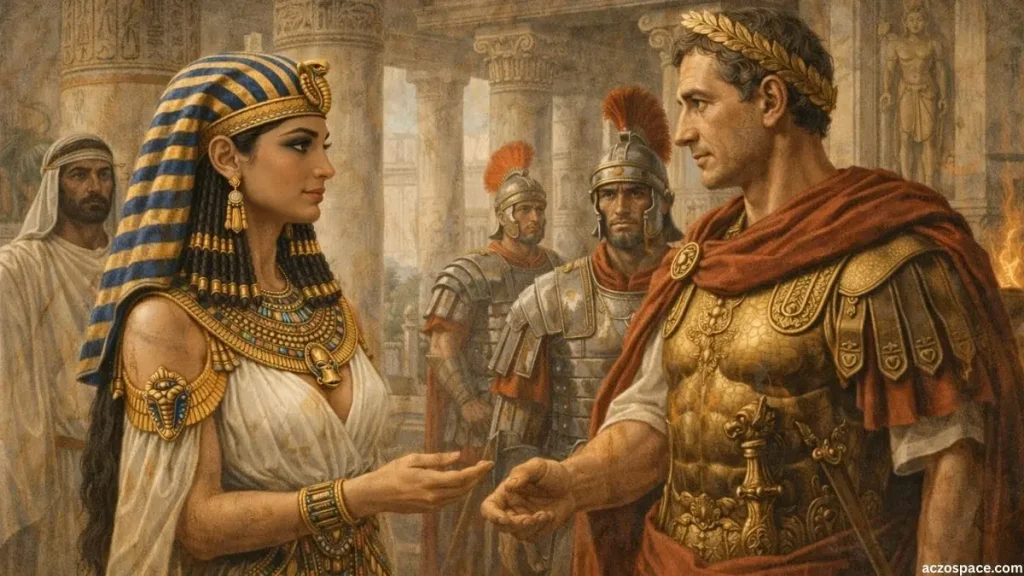
Cleopatra first met Mark Antony in 41 BCE in the city of Tarsus, located in modern-day Turkey. What might have appeared to be a routine political meeting soon became a moment that altered the course of history.
Cleopatra arrived with unmistakable confidence and theatrical elegance, fully aware of the impression she intended to make. Her intelligence, eloquence, charisma, and deep understanding of power politics captivated Antony. He quickly realized that Cleopatra was not merely a queen seeking protection, but a formidable leader with strategic vision.
Their partnership soon combined personal attraction with shared political ambition. Cleopatra sought Antony’s military and political backing to secure Egypt’s stability and strengthen her rule. In return, Antony gained access to Egypt’s vast wealth, resources, and strategic position. Together, they formed a powerful alliance capable of challenging rival factions within Rome itself.
Political and Military Cooperation
During the chaos of Rome’s civil wars, Cleopatra and Mark Antony aligned their goals and resources. Both believed that a united front between Egypt and Rome could reshape the balance of power in the Mediterranean world.
Cleopatra’s immense wealth became a crucial source of funding for Antony’s military campaigns. With Egyptian support, Antony attempted to counter Octavian, Caesar’s adopted heir, who would later become Emperor Augustus. Their alliance was not merely romantic; it was a calculated effort to build a political and military force strong enough to dominate Rome.
In this partnership, love, wealth, and military strategy were inseparably linked, making their story one of the most dramatic alliances in ancient history.
The Battle of Actium and Defeat
The Battle of Actium in 31 BCE marked the decisive turning point in the lives of Cleopatra and Mark Antony. In this crucial naval battle, Octavian’s forces defeated the combined fleets of Antony and Cleopatra.
Following the defeat, Antony and Cleopatra retreated to Egypt as their political power rapidly collapsed. Their long-term vision of uniting Roman and Egyptian influence was shattered, and their ability to resist Octavian steadily weakened.
This loss not only ended their ambitions but also signaled the final collapse of the Ptolemaic dynasty, which had ruled Egypt for nearly three centuries. The Battle of Actium remains one of the most significant moments in Cleopatra’s story—tragic, irreversible, and historically decisive.
Consequences of the Defeat
- Believing false reports that Cleopatra was dead, Mark Antony took his own life.
- Cleopatra’s authority collapsed, and she was ultimately forced to surrender to Octavian.
- Egypt’s independence came to an end, soon becoming a Roman province.
Cleopatra’s Final Days with Antony
Cleopatra and Mark Antony spent their final days together in Alexandria, surrounded by the ruins of their ambitions. Even after losing power, status, and political hope, their loyalty to one another endured—transforming their end into one of history’s most tragic love stories.
Though their deaths marked a dramatic conclusion, their story lives on as a symbol of devotion, resilience, and defiance in the face of overwhelming odds.
Cleopatra and Antony had three children, and their family life unfolded amid intense political pressure and uncertainty. Their relationship went far beyond personal emotion—it reshaped Roman and Egyptian politics and influenced the fate of entire civilizations.
For this reason, Cleopatra and Mark Antony are remembered not simply as lovers but as central figures in a powerful historical drama where love, power, and destiny were tightly intertwined.
Cleopatra’s Death and Legacy
Cleopatra’s death marked the end of the Ptolemaic dynasty and the beginning of Roman rule over Egypt. Yet while her reign came to a dramatic close, her life, intelligence, and political achievements left behind a legacy that continues to captivate the world more than two thousand years later.
The Death of Cleopatra

Cleopatra died in 30 BCE, at approximately 39 years of age. According to the most famous historical account, she ended her life by allowing herself to be bitten by an Egyptian cobra, a symbol closely associated with royal power and divine authority.
However, this is not the only theory. Some historians suggest that Cleopatra may have used poison or another method, as the exact circumstances of her death remain uncertain. What is clear is that her death occurred shortly after the defeat and suicide of her lover and political partner, Mark Antony.
Rather than live as a captive under Octavian—the future Emperor Augustus—Cleopatra chose death on her own terms. Her final act was not simply one of despair, but a deliberate decision to preserve her dignity, royal identity, and independence. In this way, her death became a powerful symbol of resistance as well as honor.
With Cleopatra’s passing, Egypt lost its sovereignty. The ancient kingdom was annexed by Rome and transformed into a Roman province under direct imperial control. Cleopatra thus entered history as the last queen of Egypt, and the final pharaoh of an ancient civilization.
Cultural and Historical Influence
Cleopatra’s story has echoed through centuries of art and literature. William Shakespeare’s play Antony and Cleopatra immortalized her as a complex figure of passion, ambition, and political intelligence, introducing her story to generations of readers and audiences worldwide.
Beyond literature, Cleopatra has inspired countless films, novels, paintings, and artistic interpretations, reinforcing her image as a global cultural icon. Modern historians increasingly emphasize her strategic brilliance, diplomatic skill, and effective leadership, challenging older portrayals that reduced her role to romance alone.
As a result, Cleopatra remains deeply embedded in global memory—not just as a lover or a queen, but as a visionary leader navigating one of history’s most dangerous political environments.
The Enduring Symbol of Cleopatra
Cleopatra continues to symbolize intelligence, charisma, and female authority. Her life story—woven from love, power, ambition, and loss—still educates, inspires, and entertains audiences around the world.
Her legacy endures because it speaks to universal themes: resilience in the face of overwhelming power, the struggle for independence, and the ability of a determined leader to shape history against impossible odds. Among the greatest female rulers in history, Cleopatra holds a unique and lasting place.
Even today, her eloquence, political insight, and bold decision-making continue to capture the imagination—ensuring that Cleopatra’s name remains timeless.
Conclusion
Cleopatra VII stands as one of the most compelling and powerful figures in human history. From her early years in the royal palace of Alexandria to her strategic alliances with Julius Caesar and Mark Antony, she demonstrated a rare combination of intelligence, charisma, and political mastery.
Her story cannot be reduced to romance or palace intrigue alone. Cleopatra was a ruler who acted decisively at a critical moment in history, striving to protect Egypt’s independence, strengthen its cultural identity, and shape the destiny of her kingdom amid overwhelming foreign pressure.
She defied the gender norms of her time and left behind a legacy that continues to endure. As the last pharaoh of Egypt, Cleopatra ruled not through brute force, but through wisdom, diplomacy, and strategic vision.
Her alliances with Rome were both political and personal, carefully crafted to secure her position and defend Egypt’s wealth, culture, and autonomy. Despite relentless external threats, she maintained Egypt’s status as a major power for as long as circumstances allowed.
Cleopatra’s life has inspired countless works of literature, film, and art, transforming her into a global icon. Yet beyond the myths, she remains a symbol of intelligence, statecraft, and female leadership. Her legacy speaks to the enduring power of vision, courage, and strategic thinking.
Ultimately, Cleopatra’s story offers a timeless lesson about leadership and influence. It reminds us that true leadership unites insight, determination, and bold decision-making—and that even in the face of immense challenges, one individual can leave a lasting mark on history.
FAQs
Who was Cleopatra’s father?
Cleopatra’s father was Ptolemy XII Auletes, the Pharaoh of Egypt from the Ptolemaic dynasty, known for his alliance with Rome and love of Greek culture.
How did Cleopatra die?
Cleopatra died by suicide in 30 BC, traditionally believed to have been caused by the bite of an asp (Egyptian cobra), after the defeat of her forces alongside Mark Antony by the Romans.