The Cold War (1947–1991): A Silent Battle That Shook the World
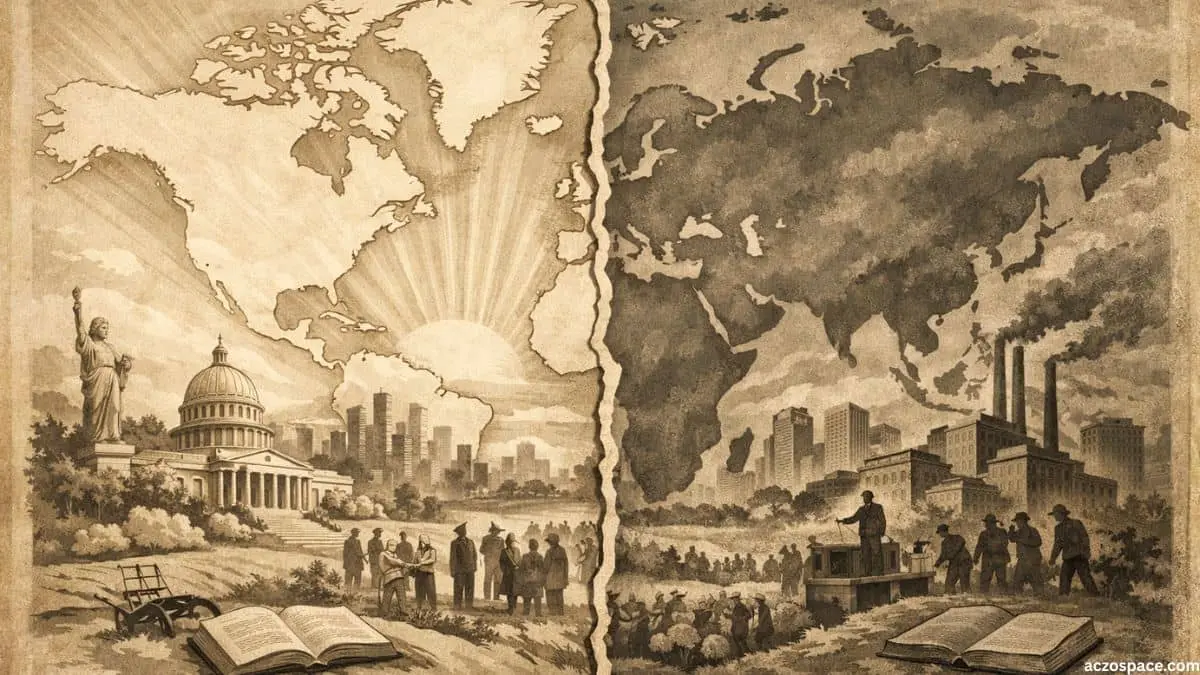
The Second World War ended in 1945, leaving much of the world physically devastated and politically unsettled. Cities lay in ruins, economies struggled to recover, and nations faced the urgent task of rebuilding while redefining their place in a rapidly changing global order. Out of this fragile environment emerged a new balance of power dominated by two superpowers: the United States and the Soviet Union.
Rather than confronting each other through direct battlefield conflict, these nations entered a prolonged period of tension known as the Cold War—a rivalry fought through ideology, influence, technology, and strategic alliances rather than open warfare. This era, lasting from 1947 to 1991, shaped international relations, accelerated scientific advancement, and introduced a persistent sense of global uncertainty driven by nuclear competition and political polarization. Understanding the Cold War is essential to understanding the foundations of today’s geopolitical landscape.
Table of Contents
Quick Facts:
| Category | Details |
| Time Period | Approximately 1947 – 1991, from the end of World War II to the collapse of the Soviet bloc |
| Primary Rivals | United States and Soviet Union |
| Type of Conflict | Ideological, political, economic, and technological rivalry rather than direct large-scale war |
| Main Ideologies | Capitalism and liberal democracy vs. Communism and centralized state control |
| Military Alliances | Western Bloc led by NATO vs. Eastern Bloc alliances led by the USSR |
| Global Impact | Influenced international diplomacy, defense policies, and political alignments across Europe, Asia, Africa, and the Americas |
| Nuclear Tension | Development of vast nuclear arsenals created the doctrine of Mutually Assured Destruction (MAD) |
| Key Strategy | Proxy wars, intelligence competition, propaganda, and technological rivalry instead of direct confrontation |
| Technological Race | The Space Race accelerated advances in satellites, computing, telecommunications, and scientific research |
| Role of International Institutions | Organizations such as the United Nations worked to mediate crises and promote diplomatic dialogue |
| End of the Conflict | Dissolution of the Soviet Union in 1991 marked the symbolic end of the Cold War era |
| Lasting Legacy | Modern security alliances, arms-control agreements, and today’s geopolitical structure are deeply shaped by this period |
What Was the Cold War?
The Cold War refers to the sustained political, economic, and ideological confrontation between the two superpowers and their respective allies from 1947 to 1991. It was not a traditional war marked by direct military clashes between the main rivals. Instead, it unfolded across multiple arenas—diplomacy, intelligence, economics, science, and regional conflicts.
At its core, the Cold War represented a struggle between two competing worldviews:
- Capitalism and liberal democracy, emphasizing private enterprise, market economies, and multiparty governance.
- Communism advocates state-controlled economies, single-party systems, and the principle of collective equality.
Key Characteristics of the Cold War
- Proxy Wars: Conflicts occurred indirectly in regions such as Asia, Africa, and Latin America, where each superpower supported opposing sides.
- Ideological Competition: Both sides sought to promote their political and economic systems as the superior model for global development.
- Arms Race: A relentless buildup of nuclear and conventional weapons created a climate of deterrence rather than direct confrontation.
- Technological Rivalry: Scientific breakthroughs—especially in space exploration—became symbols of national prestige and influence.
- Propaganda and Influence Campaigns: Media, education, and cultural outreach were used to win global support.
Despite the absence of direct war between the superpowers, the Cold War influenced nearly every major international decision for more than four decades.
Why Did the Cold War Begin?
1. A New Global Power Structure After World War II
World War II drastically weakened traditional European powers such as Britain, France, and Germany. Into this vacuum stepped the United States and the Soviet Union, each possessing immense military strength, economic capacity, and ideological ambition.
This shift created a bipolar world order—a system dominated by two competing centers of power. Nations increasingly aligned themselves with one side or the other, reshaping diplomacy into a global contest for influence.
2. Ideological Conflict: Capitalism vs. Communism
The most profound divide was philosophical. Each superpower believed its system offered the best path to stability and prosperity—and viewed the other as a potential threat to global peace.
- The Western bloc promoted individual freedoms, open markets, and democratic governance.
- The Eastern bloc emphasized state planning, centralized authority, and social equality.
Because these models were fundamentally incompatible, cooperation gave way to suspicion. The Cold War became, in essence, a battle over which ideology would guide the modern world.
3. Economic Reconstruction and Political Strategy
Postwar recovery efforts further deepened divisions. The United States invested heavily in rebuilding Western Europe, encouraging economic revival tied to capitalist markets and democratic institutions. Meanwhile, the Soviet Union consolidated its influence across Eastern Europe, establishing governments aligned with its socialist framework.
This led to the emergence of what became known as the Eastern Bloc, a group of states politically and economically linked to Moscow. Europe—and much of the wider world—was effectively divided into rival spheres of influence.
Major Flashpoints of the Cold War
Throughout the Cold War, a series of high-stakes crises reshaped global politics. Although the two superpowers avoided direct military confrontation, their rivalry played out across several regions, turning local conflicts into global concerns. Cities and nations such as Berlin, the Korean Peninsula, Cuba, and Vietnam became defining symbols of this ideological struggle.
These events demonstrated how the Cold War extended far beyond diplomacy, influencing borders, governments, and everyday lives around the world.
Berlin Blockade and the Berlin Wall
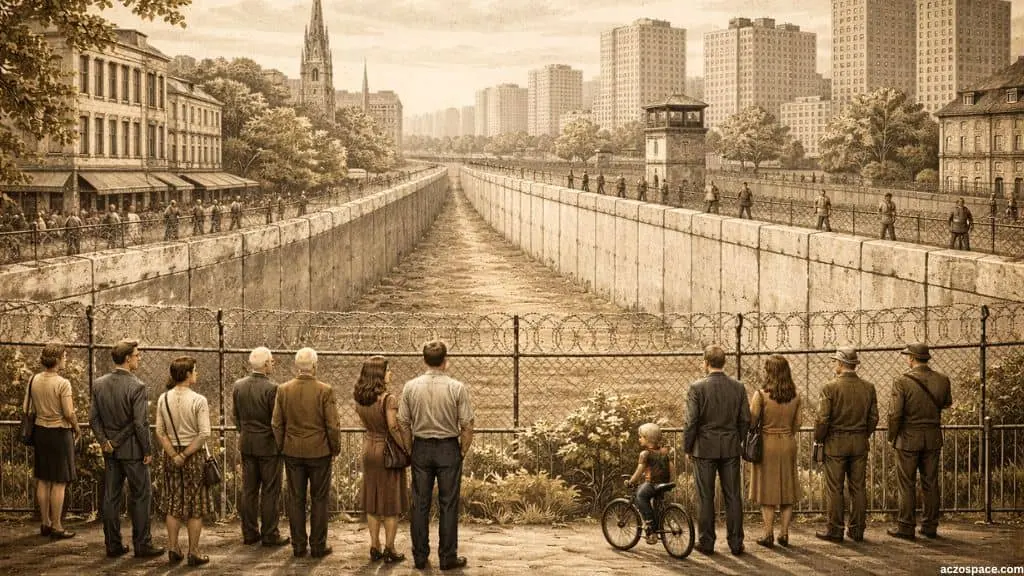
After World War II, Germany was divided into occupation zones administered by the Allied powers. The western sectors were governed by the United States, Britain, and France, while the eastern zone fell under Soviet control. This division eventually produced two separate states—West Germany and East Germany—marking one of the earliest geopolitical fault lines of the Cold War.
In 1948, the Soviet Union attempted to force Western powers out of Berlin by blocking all land routes into the city. This crisis, known as the Berlin Blockade, prompted a massive Western-led airlift that delivered food, fuel, and supplies to residents for nearly a year. The operation became an early test of resolve between the rival blocs.
Tensions escalated again in 1961 with the construction of the Berlin Wall, a fortified barrier separating East and West Berlin. Built to prevent mass migration from East to West, the wall soon became one of the most powerful visual symbols of ideological division—representing the broader struggle between political control and individual freedom in Cold War Europe.
The Korean War: A Proxy Conflict Emerges
The Korean War (1950–1953) is widely regarded as the first major proxy war of the Cold War era. Following Japan’s defeat in World War II, Korea was divided into two states:
- North Korea aligned with the Soviet Union and China under a communist system.
- South Korea received support from the United States and its allies, adopting a capitalist and democratic framework.
Although the conflict did not escalate into direct war between the superpowers, their military and logistical backing intensified the fighting. The war caused immense human suffering and ended in an armistice rather than a peace treaty, leaving the peninsula divided to this day—an enduring legacy of Cold War geopolitics.
The Cuban Missile Crisis: The World on Edge
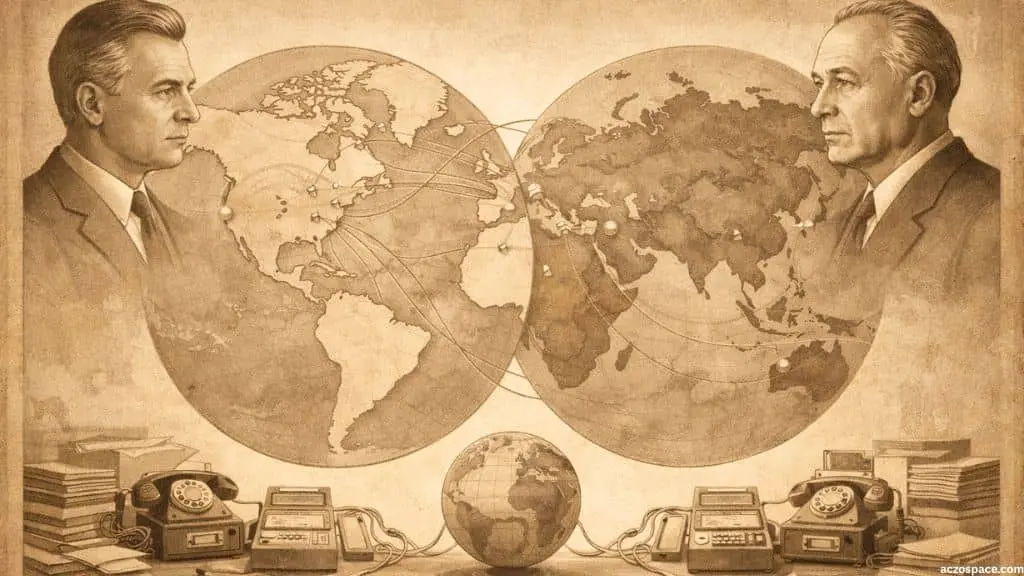
In 1962, tensions reached their most dangerous peak during the Cuban Missile Crisis. When the United States discovered Soviet nuclear missiles being installed in Cuba—just 90 miles from its shores—the confrontation brought the world to the brink of nuclear war.
For several tense days, global leaders engaged in urgent negotiations. Ultimately, diplomacy prevailed: the Soviet Union agreed to remove the missiles, and the United States pledged not to invade Cuba while quietly withdrawing its own missiles from Turkey.
The crisis underscored how rapidly Cold War tensions could escalate—and how critical cautious leadership was in preventing catastrophe.
The Vietnam War: Cold War Rivalry Spreads to Southeast Asia
The Vietnam War (1955–1975) illustrated how Cold War dynamics extended far beyond Europe. Vietnam was divided into:
- A communist North supported by the Soviet Union and its allies.
- A Western-backed South seeking to maintain a non-communist political system.
The prolonged conflict caused widespread devastation and deeply influenced international opinion about military intervention and ideological competition. It also demonstrated that Cold War tensions were not confined to one region but had a truly global reach.
The Arms Race and the Nuclear Threat
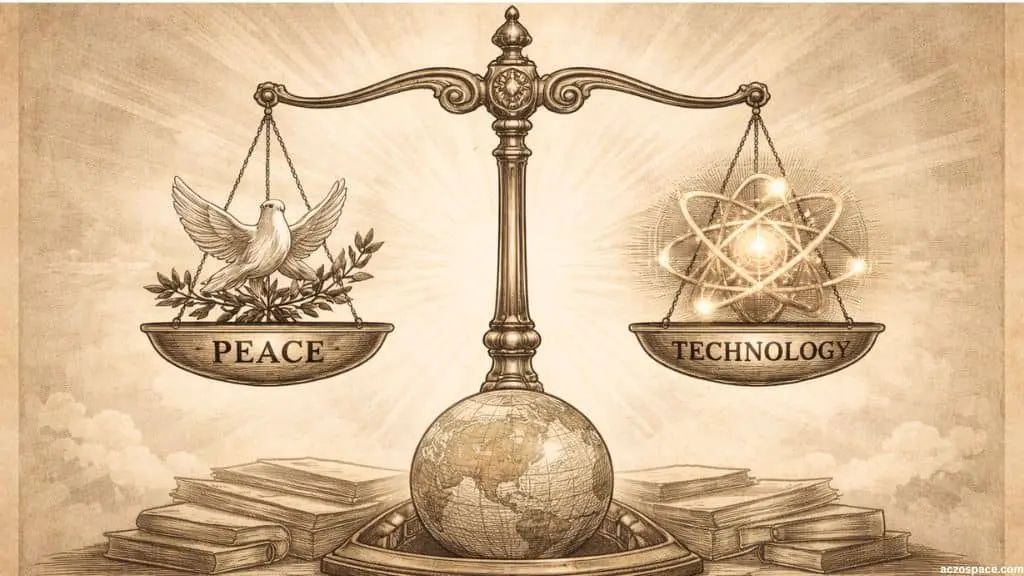
Another defining dimension of the Cold War was the arms race, particularly the development of nuclear weapons. Both superpowers sought to outpace each other by building increasingly powerful arsenals—from atomic bombs to hydrogen weapons and long-range missile systems.
This competition produced the doctrine of Mutually Assured Destruction (MAD)—the understanding that any nuclear conflict would result in catastrophic losses for both sides. Paradoxically, this balance of terror discouraged direct war while sustaining a constant atmosphere of tension.
Key Consequences of the Arms Race
- Global Security Concerns: The possibility of nuclear confrontation shaped defense strategies and international diplomacy for decades.
- Public Anxiety: Civil defense drills and emergency preparedness programs became part of daily life in many countries.
- Scientific and Technological Progress: Advances in nuclear research, rocket engineering, and communications technologies accelerated rapidly, later contributing to civilian innovations such as satellite systems and space exploration.
The nuclear dimension of the Cold War created a fragile equilibrium—one in which peace was maintained not through trust, but through deterrence.
The Space Race: Competition Beyond Earth
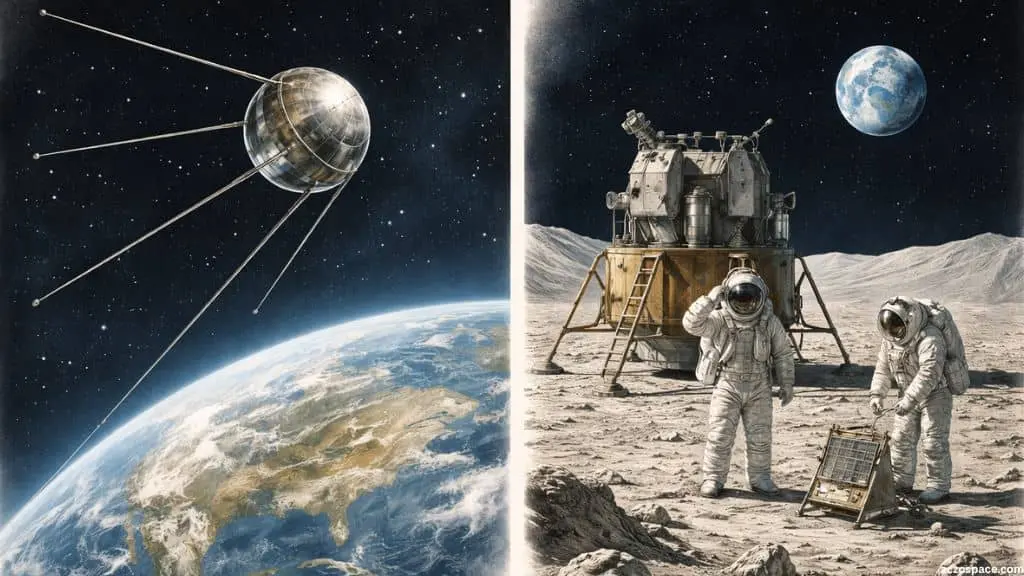
The Cold War rivalry was not confined to military power—it extended into outer space. This technological contest, widely known as the Space Race, became a powerful demonstration of scientific capability and national prestige. Many policymakers believed that leadership in space exploration signaled superiority in both technology and global influence.
The Beginning of the Space Race
The competition began dramatically in 1957 when the Soviet Union launched Sputnik 1, the world’s first artificial satellite. The achievement stunned the West and created a sense of urgency in the United States, which feared it was falling behind in advanced science and missile technology.
In response, the United States expanded research funding, strengthened science education, and accelerated its space program through NASA (National Aeronautics and Space Administration).
The defining milestone came in 1969, when American astronauts successfully landed on the Moon. This achievement was widely interpreted as a technological victory and a symbol of how scientific innovation could shape geopolitical influence during the Cold War.
Scientific and Technological Advancements
The Space Race fueled rapid progress across multiple fields:
- Computing Technology: Early computers were refined to support navigation, data processing, and research.
- Satellite Communications: Innovations enabled global broadcasting, weather forecasting, and telecommunications.
- Military and Civilian Research: Rocket science and materials engineering later contributed to commercial aviation and space-based services.
Many everyday technologies—such as GPS navigation, satellite television, and aspects of the modern internet infrastructure—owe their origins to research conducted during this era. What began as a strategic rivalry ultimately transformed civilian life around the world.
The Cold War and the Developing World
The Cold War was not solely a contest between superpowers. Its effects were deeply felt across Asia, Africa, and Latin America, where newly independent nations were attempting to build stable governments after the end of colonial rule.
These countries often faced intense pressure to align with either capitalism or communism. As a result, many became arenas of indirect competition, receiving economic aid, political backing, or military assistance from rival blocs.
Challenges Faced by Developing Nations
Smaller nations frequently found themselves navigating difficult choices:
- Aligning with one superpower risked hostility from the other.
- Domestic politics were influenced by foreign ideologies and funding.
- Some regions experienced internal conflict and economic instability linked to Cold War tensions.
The Rise of the Non-Aligned Movement
In response, several countries formed the Non-Aligned Movement (NAM), a coalition that sought to remain independent of both power blocs. The movement emphasized:
- Sovereign decision-making in foreign policy
- Peaceful coexistence
- Economic cooperation among developing nations
For many states, non-alignment provided a way to safeguard independence while still engaging with the global community.
Social and Cultural Impact of the Cold War
The Cold War influenced not only governments but also the daily lives of ordinary people. The possibility of nuclear conflict created a climate of anxiety in many societies, leading to civil defense programs and public preparedness campaigns—even schoolchildren practiced emergency drills.
Media and Propaganda
Governments relied heavily on communication tools to shape public opinion:
- Radio broadcasts, newspapers, and films promoted national ideologies.
- Cultural messaging highlighted perceived strengths of each system.
- Information campaigns sought to build loyalty and reduce fear.
Education and Cultural Expression
The era also reshaped education and culture:
- Greater emphasis was placed on mathematics, science, and engineering.
- Universities expanded research programs tied to technological competition.
- Literature, cinema, and art frequently explored themes of conflict, identity, and global tension.
These developments reveal that the Cold War was as much a cultural and psychological contest as it was a political one.
The End of the Cold War
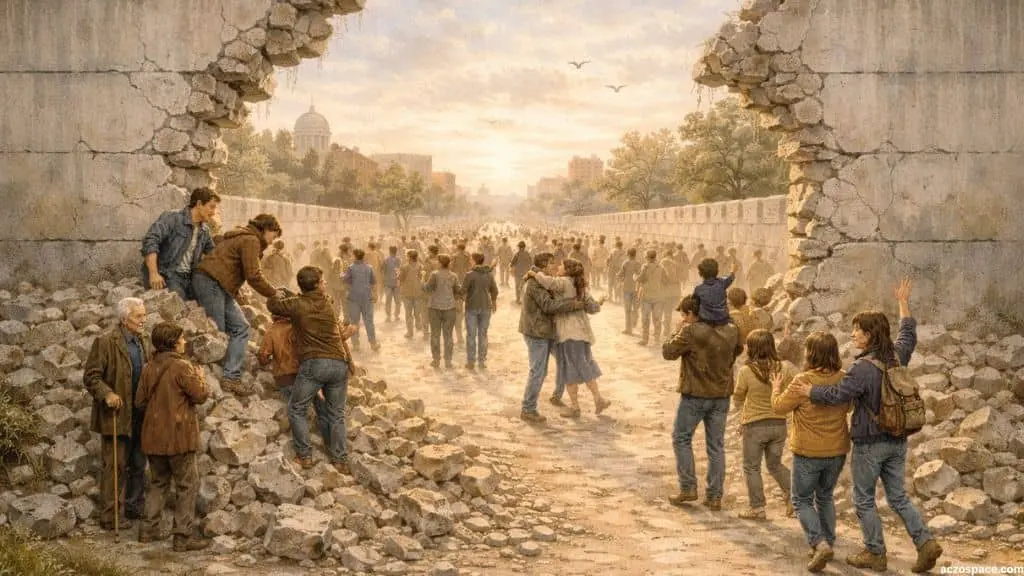
By the late 1980s, the long-standing rivalry began to lose momentum. Economic difficulties, political reforms, and shifting global dynamics weakened the structures that had sustained decades of confrontation.
Internal Struggles Within the Soviet System
The Soviet economy faced mounting inefficiencies. Industrial output slowed, agricultural production lagged, and shortages of consumer goods became widespread. At the same time, reform-minded leadership introduced policies aimed at openness and restructuring, attempting to modernize the system while reducing tensions with the West.
The Fall of the Berlin Wall
In 1989, the dramatic opening of the Berlin Wall became the defining symbol of the Cold War’s collapse. The barrier that had divided Europe for nearly three decades was dismantled, signaling the end of ideological separation across the continent and paving the way for German reunification.
The Dissolution of a Superpower
In 1991, the Soviet Union formally dissolved, bringing the Cold War to an official close. The decades-long geopolitical standoff ended without a direct superpower war, marking a profound transition in modern history and ushering in a new international order.
The Legacy of the Cold War
Although the Cold War ended more than three decades ago, its influence continues to shape global politics, security strategies, and technological development. The period left behind frameworks for nuclear regulation, international alliances, and scientific innovation that still guide how nations cooperate—and compete—today.
Rather than disappearing with the collapse of superpower rivalry, many Cold War structures evolved into the foundations of the modern international system.
Key Elements of the Cold War Legacy
- Nuclear Arms Control Agreements
International treaties were established to limit the spread and testing of nuclear weapons. These agreements introduced safeguards designed to reduce the risk of global catastrophe and promote strategic stability. - A New Approach to International Relations
After decades of confrontation, countries increasingly prioritized diplomacy, economic partnerships, and conflict prevention. Multilateral cooperation became a central feature of global governance. - Strengthened Global Institutions
Organizations such as NATO and the United Nations took on expanded roles in peacekeeping, crisis management, and collective security—missions that remain vital in today’s geopolitical landscape. - Technological Transformation
Scientific competition during the Cold War accelerated breakthroughs in computing, satellite communications, and information networks. Many of these innovations now underpin everyday technologies, from global navigation systems to digital communication.
In this sense, the Cold War was not only a political confrontation but also a period of profound transformation that reshaped how the world is organized.
Lessons Learned from Cold War History
The Cold War offers enduring lessons about the dangers of ideological rivalry and the importance of sustained dialogue. It demonstrated that conflicts driven by competing worldviews can be just as destabilizing as conventional warfare, even without direct military confrontation between major powers.
The Value of Diplomacy and Dialogue
Moments of extreme tension revealed how essential communication is between nations. Diplomatic negotiation, careful decision-making, and international mediation often prevented crises from escalating into irreversible conflict.
History shows that even small political miscalculations can have far-reaching consequences. Maintaining open channels of dialogue remains one of the most effective tools for preserving global stability.
The Human Cost of Power Struggles
Proxy wars, political instability, and arms competition caused immense suffering across multiple regions. Millions of people were affected by conflicts indirectly tied to superpower rivalry. These experiences highlight the need to resolve disputes through lawful, cooperative, and humanitarian approaches rather than through escalation.
Conclusion: Why the Cold War Still Matters Today
The Cold War stands as one of the most influential periods in modern history—a decades-long struggle defined not by direct battle between superpowers, but by ideological competition, strategic deterrence, and technological advancement.
Many aspects of today’s world—from defense alliances and nuclear policy to global communication networks—are rooted in developments from that era. The institutions formed, the treaties negotiated, and the lessons learned continue to guide international relations in the twenty-first century.
Ultimately, the Cold War reminds us that global stability depends not only on strength, but also on cooperation, restraint, and mutual understanding. Studying this period helps policymakers, scholars, and citizens alike appreciate the importance of diplomacy and shared responsibility in preventing future conflicts.
FAQs
How did the Cold War affect other countries?
Many developing nations in Asia, Africa, and Latin America became battlegrounds for proxy wars. Smaller countries were often forced to choose sides or struggled to remain neutral. This led to political instability, civil wars, and long-lasting economic and social consequences in several regions of the world.
Why is the Cold War still important today?
The Cold War shaped modern international relations, military alliances, and global security policies. Institutions such as NATO and the United Nations gained greater importance during this era. Nuclear deterrence strategies and diplomatic practices developed during the Cold War continue to influence world politics today.