The History of the United Nations: A Global Journey
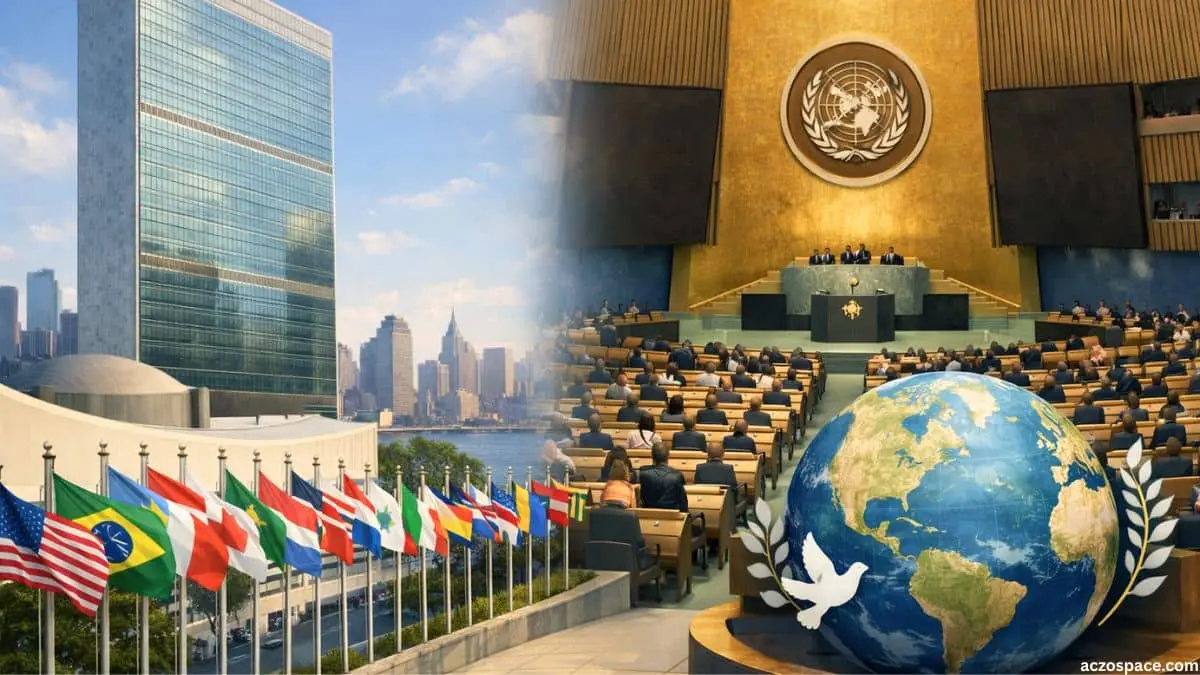
The United Nations (UN) is the world’s largest international organization, created to bring countries together in the pursuit of peace, security, and global cooperation. It emerged from the devastation and hard lessons of the Second World War, a conflict that exposed the catastrophic consequences of unchecked aggression and weak international coordination.
Founded in 1945, the United Nations has since become a central pillar of modern diplomacy. From conflict prevention and peacekeeping to global development initiatives and humanitarian relief, the UN has played an essential role in shaping the post-war international order.
Today, the organization is made up of 193 member states, providing a global forum where nations collectively address shared challenges such as armed conflict, poverty, climate change, refugee crises, and human rights violations. More than just a diplomatic platform, the UN represents an ongoing effort to manage global problems through dialogue and cooperation rather than war.
Table of Contents
Quick Facts
| Fact | Detail |
| Organization Name | United Nations (UN) |
| Founded | 24 October 1945 (UN Charter came into force) |
| Charter Signed | 26 June 1945 at San Francisco Conference |
| Original Member States | 51 nations ratified the Charter |
| Predecessor | League of Nations (1920–1946) |
| Headquarters | New York City, United States |
| Purpose | Promote peace, security, human rights, cooperation |
| Current Members | 193 countries (as of 2025) |
| Annual Commemoration | United Nations Day – 24 October |
The Origins of the United Nations
The League of Nations: A Predecessor with Limitations
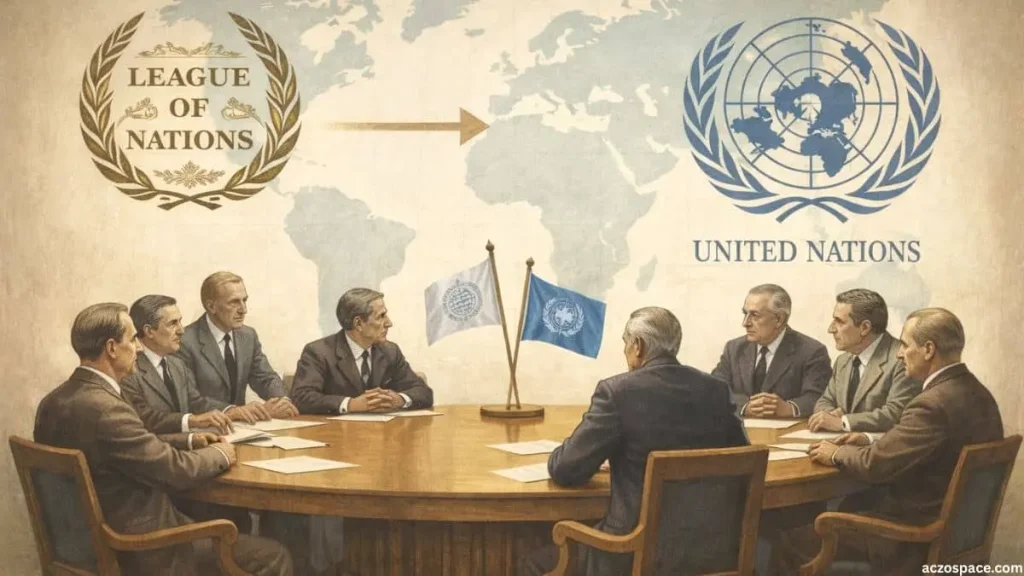
Before the United Nations came into existence, the international community made an earlier attempt to safeguard world peace through the League of Nations, established in 1920 after the end of the First World War. It was the first official international organization dedicated to preventing conflict through diplomacy and dialogue.
Despite its ambitious ideals, the League of Nations struggled to function effectively. Several critical weaknesses ultimately undermined its mission:
- Lack of universal membership – Although the United States proposed the League, it never formally joined, significantly weakening the organization’s authority and credibility.
- Weak enforcement mechanisms – The League lacked the power to enforce its decisions or impose meaningful penalties on states that violated its resolutions.
- Failure to prevent aggression – It proved incapable of stopping expansionist actions by powerful states such as Nazi Germany, Fascist Italy, and Imperial Japan.
By the time the Second World War erupted in 1939, global confidence in the League of Nations had largely collapsed. Its failure made it clear that a stronger, more inclusive, and more effective international organization would be necessary to prevent future global conflicts.
Wartime Alliances and the Atlantic Charter
The foundations of the United Nations were laid during the Second World War itself. As the scale of destruction grew, world leaders began thinking seriously about how to rebuild the international system once the fighting ended.
A key moment came in August 1941, when U.S. President Franklin D. Roosevelt and British Prime Minister Winston Churchill issued the Atlantic Charter. Although not a formal treaty, the charter outlined a shared vision for the post-war world.
It emphasized principles such as:
- The right of nations and peoples to self-determination
- International economic cooperation
- Reduction of trade barriers
- Disarmament to prevent future wars
The Atlantic Charter became a moral and political blueprint for a new world order based on peace, stability, and cooperation. Historically, it is regarded as a major step toward the creation of the United Nations.
The Declaration by United Nations (1942)
On January 1, 1942, a significant wartime milestone was reached when 26 countries fighting against the Axis powers signed the Declaration by United Nations.
By signing this declaration, these nations pledged to:
- Commit all available resources to defeating the aggressor states
- Avoid separate peace agreements with the enemy
This act formally unified them as a wartime alliance and, notably, marked the first official use of the name “United Nations,” a term introduced by President Roosevelt.
Beyond military cooperation, the declaration reinforced the idea that victory in war must be followed by a durable system of peace and international collaboration. It thus served as a crucial ideological and organizational foundation for the future United Nations.
The Establishment of the United Nations
The Dumbarton Oaks Conference (1944)
Even before the war ended, the major Allied powers agreed that a new international organization would be essential to maintain global peace. This vision began to take concrete form at the Dumbarton Oaks Conference, held in 1944 in Washington, D.C.
Representatives from the United States, the United Kingdom, the Soviet Union, and China participated in the discussions. Their primary goal was to design the basic structure and functions of a new organization capable of preventing future conflicts.
At Dumbarton Oaks, key principles were outlined, including:
- Collective responsibility for maintaining peace
- Peaceful resolution of international disputes
- Cooperation among states to ensure global security
These proposals later became the backbone of the United Nations Charter.
The Yalta Conference (1945)
As the Second World War neared its conclusion, decisive agreements were reached at the Yalta Conference in February 1945, held in Crimea. The meeting brought together three of the most influential wartime leaders: Franklin D. Roosevelt, Winston Churchill, and Joseph Stalin.
One of the most significant outcomes of Yalta was agreement on how the future United Nations would operate—particularly the structure of the Security Council. The leaders decided that certain major powers would hold permanent membership along with veto power.
These countries—later known as the “Big Five”—were:
- United States
- United Kingdom
- Soviet Union (now Russia)
- China
- France
The conference also reaffirmed the urgent need for a permanent international organization to maintain post-war peace. The decisions made at Yalta paved the way for the final drafting of the UN Charter.
The San Francisco Conference (1945)
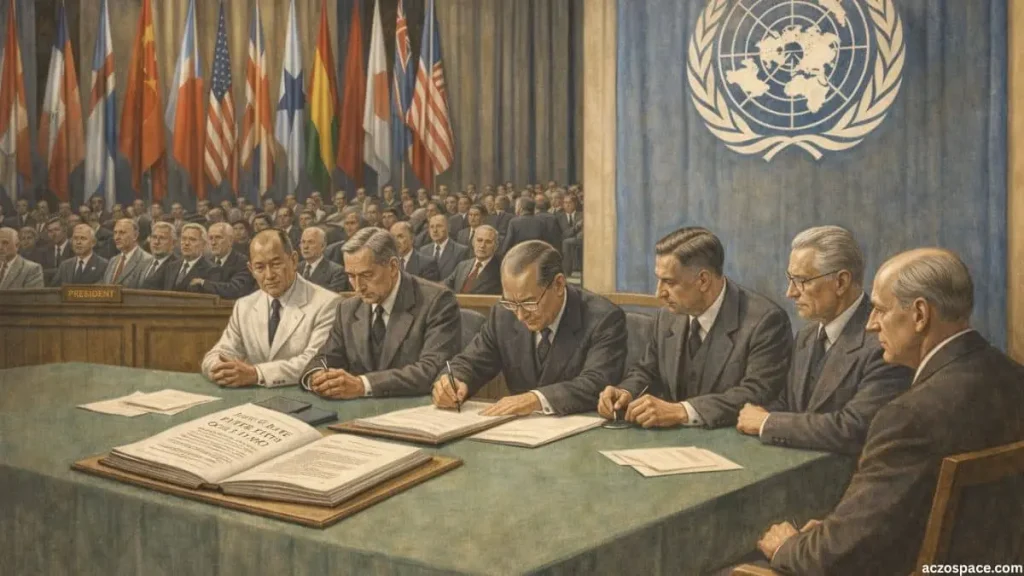
The final and most decisive step in the birth of the United Nations took place at the San Francisco Conference, beginning in April 1945. Delegates from 50 countries gathered with a shared mission: to draft and approve the United Nations Charter.
Over nearly two months of intense negotiations, delegates debated issues such as:
- The rights and responsibilities of member states
- The structure of the Security Council
- Mechanisms for international cooperation and peacekeeping
On June 26, 1945, the UN Charter was officially signed. It became the legal foundation of a new international organization dedicated to peace, security, human rights, and development.
Following ratification by the required number of states, the United Nations officially came into existence on October 24, 1945—a date now celebrated annually as United Nations Day.
The San Francisco Conference thus stands as the final and decisive moment in the creation of the United Nations, marking the beginning of a new chapter in global history.
The Structure of the United Nations
The Six Principal Organs
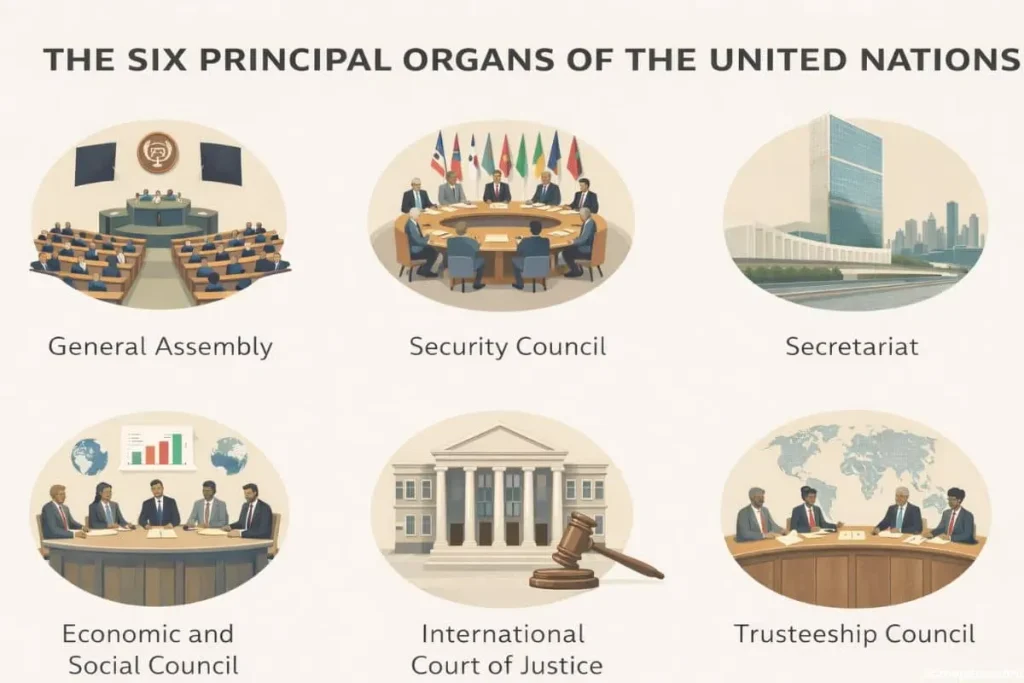
The United Nations operates through six principal organs, each assigned specific responsibilities that allow the organization to address global challenges in an organized and effective manner. Together, these bodies form the institutional backbone of the UN, working collectively to promote international peace, security, development, and human rights.
1. The General Assembly
The General Assembly is the UN’s main deliberative forum, where all 193 member states are represented on an equal basis, each holding one vote. It provides a global platform for open discussion on international issues, including peace and security, development, human rights, and the United Nations budget.
While the Assembly’s resolutions are generally non-binding, they carry significant moral and political weight, often reflecting the collective will of the international community.
2. The Security Council
The Security Council bears primary responsibility for maintaining international peace and security. It is composed of 15 members: five permanent members with veto power—the United States, the United Kingdom, France, Russia, and China—and ten non-permanent members elected for two-year terms.
This structure reflects the post–Second World War balance of power and gives the Council unique authority to impose sanctions, authorize peacekeeping missions, and, in extreme cases, approve the use of force.
3. The International Court of Justice (ICJ)
Located in The Hague, Netherlands, the International Court of Justice serves as the UN’s principal judicial organ. Its main role is to resolve legal disputes between states through peaceful means.
In addition to settling cases, the Court also provides advisory opinions on legal questions referred to it by UN organs and specialized agencies, helping shape international law.
4. The Economic and Social Council (ECOSOC)
The Economic and Social Council (ECOSOC) coordinates the UN’s work in the areas of economic development, social progress, and humanitarian assistance. It acts as a bridge between the UN and its many specialized agencies, programs, and commissions.
ECOSOC plays a key role in global efforts to reduce poverty, improve access to education and healthcare, promote gender equality, and support sustainable development.
5. The Trusteeship Council
The Trusteeship Council was originally established to oversee trust territories placed under international administration after the Second World War. Its mission was to guide these territories toward self-government or independence.
After the last trust territory achieved independence in 1994, the Council suspended its operations. Although largely inactive today, it remains a formal part of the UN’s institutional structure.
6. The Secretariat
Led by the Secretary-General, the Secretariat handles the day-to-day administrative and operational work of the United Nations. It is staffed by international civil servants drawn from around the world.
The Secretariat plays a crucial role in implementing UN decisions, conducting research, preparing reports, and supporting peacekeeping, humanitarian, and diplomatic initiatives.
Specialised Agencies and Programs
The work of the United Nations extends far beyond its main deliberative bodies. A wide range of specialized agencies and programs operate in partnership with the UN to address practical challenges in fields such as health, education, economic stability, and child welfare.
These organizations have a direct impact on everyday lives across the globe.
World Health Organization (WHO)
The World Health Organization is the leading international authority on global public health. Its mission is to improve health standards worldwide and prevent the spread of disease.
WHO coordinates responses to pandemics, issues global health guidelines, and provides technical support to countries strengthening their healthcare systems.
United Nations Educational, Scientific and Cultural Organization (UNESCO)
UNESCO promotes peace and mutual understanding through education, science, culture, and freedom of expression. One of its most well-known roles is the protection of World Heritage Sites, which preserve humanity’s shared cultural and natural legacy.
Through these efforts, UNESCO seeks to foster dialogue and cooperation among nations.
International Monetary Fund (IMF)
The International Monetary Fund (IMF) works to maintain global financial stability. It provides financial assistance to member states facing economic crises and offers policy advice to promote sustainable growth.
The IMF has played a significant role in shaping the international financial system since its creation in the mid-twentieth century.
The World Bank
The World Bank focuses on reducing poverty and supporting economic development in low- and middle-income countries. It provides loans and grants for projects related to infrastructure, education, healthcare, environmental protection, and economic reform.
Its long-term goal is to improve living standards and promote inclusive growth.
United Nations Children’s Fund (UNICEF)
The United Nations Children’s Fund (UNICEF) is dedicated to protecting the rights, health, and well-being of children worldwide. It plays a particularly vital role in conflict zones and humanitarian emergencies, where children are often the most vulnerable.
Through programs in nutrition, education, vaccination, and child protection, UNICEF works to give every child a better start in life.
The Early Years of the United Nations (1945–1960)
The Birth of UN Peacekeeping Operations
When the United Nations was founded in 1945, its central mission was clear: to preserve international peace and security in a world recovering from the devastation of war. During its earliest years, the organization focused heavily on preventing renewed conflict and developing practical mechanisms to maintain peace.
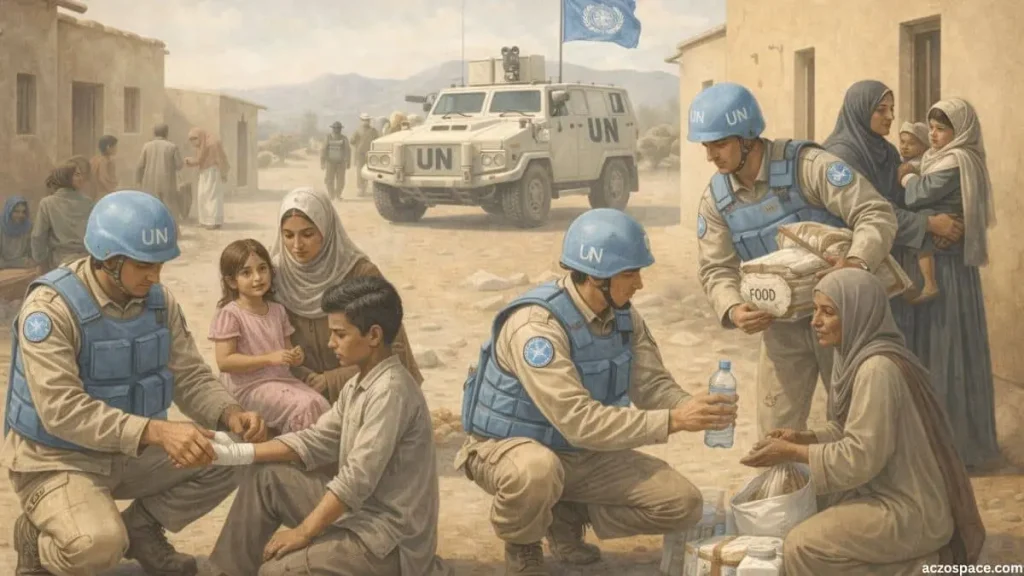
The UN’s first peacekeeping mission was launched in 1948 in the Middle East under the United Nations Truce Supervision Organization (UNTSO). Its purpose was to monitor ceasefire agreements following regional hostilities and to help prevent renewed fighting.
UNTSO established a new model for international peacekeeping—based on neutrality, observation, and cooperation rather than direct combat. This early experiment laid the groundwork for future UN peacekeeping missions across the globe and became a defining feature of the organization’s role in conflict management.
Decolonization and Independence Movements
Between the 1940s and 1960s, the United Nations played a significant role in supporting newly emerging nations, particularly in Asia and Africa, as colonial empires began to collapse after the Second World War.
Many formerly colonized countries turned to the UN for diplomatic support, legitimacy, and international recognition. In 1960, the organization took a decisive step by issuing a landmark declaration calling for an end to colonial rule and affirming the right of all peoples to self-determination.
This declaration marked an important shift in international norms. It demonstrated the UN’s commitment to peaceful development, political independence, and the protection of fundamental human rights. Through this stance, the organization helped reshape the global political landscape and amplify the voices of newly independent nations.
Challenges of the Cold War Era
The Cold War posed one of the greatest challenges to the United Nations during its early decades. Deep political divisions between the United States and the Soviet Union frequently paralyzed decision-making, particularly within the Security Council, where veto power was often used to block action.
Despite these obstacles, the UN continued to play a meaningful role in managing international crises. Notable examples include:
- The Korean War (1950–1953): The United Nations coordinated collective action aimed at restoring peace and stability on the Korean Peninsula.
- The Suez Crisis (1956): The UN intervened diplomatically and deployed its first large-scale peacekeeping force to help defuse tensions between Egypt and Israel, Britain, and France.
- Peacekeeping in the Congo (1960): UN forces were deployed to prevent internal conflict from escalating and to support stability in the newly independent state.
These efforts marked the early evolution of the UN’s peacekeeping function. Even amid Cold War rivalries, the organization remained committed to dialogue, conflict prevention, and peaceful resolution.
Expansion and Global Influence (1960–1990)
From 1960 to 1990, the United Nations entered a period of significant growth and expanding influence. This era saw the organization become a central actor in promoting peace, development, and human rights on a global scale.
Growth in Membership
By 1960, UN membership had grown to 99 countries, largely due to the admission of newly independent states from Africa and Asia. This expansion transformed the organization, giving greater representation and influence to countries from the Global South.
As a result, international discussions increasingly reflected diverse perspectives on development, sovereignty, and global justice, reshaping the UN’s priorities and agenda.
Human Rights and International Law
The adoption of the Universal Declaration of Human Rights in 1948 provided a moral and legal foundation for later international treaties. Building on this framework, the UN introduced two major human rights agreements in 1966:
- International Covenant on Civil and Political Rights (ICCPR): Focused on protecting individual freedoms such as life, liberty, political participation, and freedom of expression.
- International Covenant on Economic, Social and Cultural Rights (ICESCR): Addressed rights related to health, education, adequate living standards, social security, and work.
Together, these treaties strengthened international human rights law and offered clearer guidelines for state responsibility, shaping UN action for decades to come.
Development and Humanitarian Efforts
As global attention increasingly turned to poverty, hunger, and public health, the United Nations expanded its development and humanitarian work. Specialized agencies and programs became central to this mission.
Organizations such as UNICEF, the World Food Programme (WFP), and the World Health Organization (WHO) played critical roles in delivering humanitarian assistance, improving child welfare, combating hunger, and strengthening healthcare systems worldwide.
Through these efforts, the UN evolved beyond a peacekeeping body into a broader force for human development and global cooperation.
The United Nations After the Cold War (1990–2000)
A New Era for PeacekeepingThe end of the Cold War marked a turning point for the United Nations (UN). With ideological rivalry between major powers easing, the organization entered a new phase in which it could act more decisively in matters of war, peace, and international security.
Between 1990 and 2000, the UN became deeply involved in a range of global conflicts, testing both its authority and its capacity to maintain peace.
The Gulf War (1991)
The 1991 Gulf War demonstrated a renewed willingness among major powers to work through the United Nations framework.
- The UN Security Council authorized the use of force against Iraq following its invasion of Kuwait.
- The operation highlighted the importance of international cooperation and collective security under UN leadership.
This moment was widely seen as evidence that the UN could function more effectively in a post–Cold War world.
Cambodia, Somalia, Rwanda, and Bosnia
During the 1990s, the UN launched peacekeeping and humanitarian missions in several crisis zones, including Cambodia, Somalia, Rwanda, and Bosnia. These interventions produced mixed results.
While some missions helped stabilize fragile post-conflict societies, others revealed serious shortcomings. In particular, the UN faced strong criticism for its failure to prevent genocide and mass violence, most notably in Rwanda and Bosnia.
These tragic events sparked intense debate about the limits of peacekeeping, the responsibility to protect civilians, and the need for institutional reform.
Efforts at Reform
In response to these challenges, the United Nations undertook a range of reform initiatives during the 1990s, including:
- Calls to strengthen representation and effectiveness within the Security Council
- Efforts to improve the coordination and efficiency of humanitarian operations
- Increased emphasis on accountability, transparency, and policy reform
Overall, the decade from 1990 to 2000 represented a period of ambitious peace initiatives, painful lessons, and growing demands for reform within the UN system.
The United Nations in the 21st Century
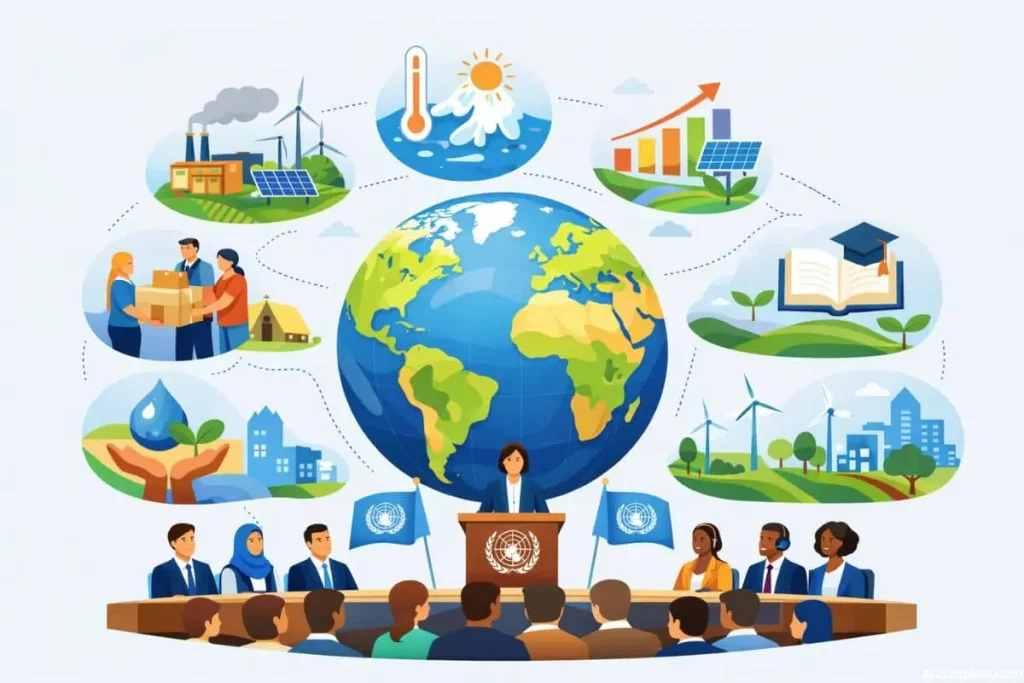
In the 21st century, the United Nations has continued to promote peace, development, and environmental protection, while adapting to new forms of conflict and global competition.
The War on Terror and Emerging Challenges
Following the September 11, 2001 terrorist attacks, the United Nations adopted resolutions supporting international efforts to combat terrorism. These measures aimed to strengthen global security while reinforcing cooperation among member states.
However, the UN faced significant criticism in 2003, when the United States launched the Iraq War without explicit Security Council authorization. This decision exposed deep divisions within the international community and highlighted the UN’s limitations in enforcing collective decision-making.
Balancing decisive action against terrorism with respect for international law became one of the organization’s most complex challenges in the early 21st century.
The Sustainable Development Goals (SDGs)
In 2015, the United Nations adopted the 2030 Agenda for Sustainable Development, one of its most ambitious global initiatives to date.
- The agenda includes 17 Sustainable Development Goals (SDGs)
- These goals focus on ending poverty, protecting the environment, and promoting peace and prosperity
- The SDGs encourage cooperation between governments, international organizations, and civil society
Together, the SDGs provide a global roadmap for addressing social, economic, and environmental challenges in an interconnected world.
Leadership on Climate Change
As climate-related threats have intensified, the United Nations has taken a leading role in coordinating global climate action. The organization provides a platform for countries to negotiate agreements aimed at addressing global warming, pollution, and sustainable development.
Key UN-backed agreements include:
- The Kyoto Protocol (1997): The first major international agreement aimed at reducing carbon emissions
- The Paris Agreement (2015): A landmark accord designed to limit global temperature rise to between 1.5°C and 2°C
Through these efforts, the UN has positioned itself at the center of international cooperation on climate change.
Humanitarian Crises and Refugees
The United Nations continues to play a vital role in responding to humanitarian crises around the world. Conflicts in Syria, Yemen, Ukraine, and various regions of Africa have underscored the ongoing need for international coordination and support.
Through the United Nations High Commissioner for Refugees (UNHCR), millions of displaced people receive food, shelter, healthcare, and protection.
At its core, the UN’s humanitarian mission seeks to safeguard human dignity, improve living conditions for refugees, and provide life-saving assistance during times of crisis.
Achievements of the United Nations
Since its founding in 1945, the United Nations (UN) has played a central role in promoting global peace, stability, and cooperation. While its work is often complex and imperfect, several long-term achievements stand out:
- Preventing another world war: Although regional conflicts have occurred, the UN has contributed to preventing a third large-scale global war through diplomacy, collective security, and dialogue.
- Supporting independence and self-determination: The UN assisted more than 80 countries in their transition from colonial rule to independence, helping reshape the modern political map.
- Advancing global human rights: Through international standards, treaties, and monitoring mechanisms, the UN has helped embed human rights into international law.
- Improving global health and reducing child mortality: UN agencies have played a major role in vaccination campaigns, disease prevention, and improving children’s living conditions worldwide.
- Strengthening climate cooperation: The UN has provided a global platform for collective action on climate change and environmental protection.
Together, these efforts have established the United Nations as a leading institution in the promotion of peace, human dignity, public health, and environmental sustainability.
Criticism and Ongoing Challenges
Despite its accomplishments, the United Nations has faced persistent criticism and serious challenges in fulfilling its mission:
- Security Council veto power: The veto held by permanent members often blocks decisive action, limiting the UN’s ability to respond effectively to crises.
- Bureaucracy and inefficiency: The organization is frequently criticized for slow decision-making and administrative complexity.
- Failure to prevent genocide: The UN has been strongly criticized for its inability to prevent mass atrocities in Rwanda and Bosnia during the 1990s.
- Limits on enforcing international law: The UN lacks direct enforcement power, relying largely on the political will of member states.
- Relevance in a multipolar world: As global power becomes more fragmented, questions continue to arise about the UN’s effectiveness in addressing modern geopolitical tensions.
Even while facing these constraints, the United Nations continues to work toward maintaining peace, protecting human rights, and promoting international justice.
The Future of the United Nations
Calls for Reform
As the world changes rapidly, calls for UN reform have grown louder. Many argue that the organization must adapt to remain effective in the decades ahead. Key reform proposals include:
- Expanding the Security Council: Proposals often mention adding countries such as India, Japan, Germany, Brazil, and stronger representation from Africa to reflect today’s global balance of power.
- Greater accountability in peacekeeping: Improving oversight, responsibility, and operational effectiveness in peacekeeping missions.
- Stronger action on climate change and digital governance: Addressing global warming, environmental degradation, and regulation of digital technologies.
Looking ahead, the UN aims to become a more inclusive, transparent, and effective organization—capable of addressing global challenges while safeguarding peace and sustainability.
The UN’s Role in a Changing World
As global challenges continue to evolve, the United Nations must adapt to new realities. In the coming years, its role is likely to focus on several emerging areas:
- Cybersecurity and artificial intelligence (AI): Developing international norms for data protection, cyber threats, and ethical use of AI.
- Rising nationalism and security concerns: Responding to growing nationalist movements and security-driven policies through diplomacy and international law.
- Global pandemics and health crises: Strengthening international health cooperation and emergency responses, informed by lessons from COVID-19.
By addressing cyber threats, pandemics, nationalism, and evolving security risks, the United Nations will continue to focus on its core mission: maintaining international peace, promoting sustainable development, and fostering cooperation in an increasingly interconnected world.
Conclusion
The United Nations (UN) stands as one of the most ambitious and adaptable institutions in modern history. Established in the aftermath of the Second World War, it was designed to prevent the return of global catastrophe and to provide a permanent forum where nations could resolve disputes through dialogue rather than violence. Over time, the UN has grown into a central hub for international cooperation, bringing together countries with vastly different political systems, cultures, and interests.
Despite its limitations and well-documented shortcomings, the organization has consistently worked toward maintaining global peace and security, advancing economic and social development, and protecting human rights. Its efforts span diplomacy, peacekeeping, humanitarian relief, public health, and environmental protection—areas that increasingly intersect in today’s interconnected world.
In the present day, the United Nations is widely recognized as the primary global platform for multilateral dialogue and cooperation. Even when consensus is difficult to achieve, the UN remains a vital space where global challenges can be debated, negotiated, and addressed collectively.
The future success of the United Nations will largely depend on its ability to reform, remain relevant, and respond effectively to both long-standing and emerging challenges in a rapidly changing global landscape. Issues such as climate change, technological disruption, pandemics, and shifting power dynamics demand flexibility and renewed commitment from member states.
As a cornerstone institution for promoting peace, security, sustainable development, and human rights, the United Nations has shown a capacity to evolve alongside the world it serves. Its continued relevance will rest on how well it adapts—while staying true to its founding ideals—in an increasingly complex and interconnected global order.
FAQs
What are 5 facts about the United Nations?
1. The United Nations (UN) was founded in 1945 after World War II.
2. It has 193 member countries.
3. Its main goals are peace, security, and human rights.
4. The UN headquarters is in New York City, USA.
5. It runs programs like UNICEF, WHO, and UNESCO.
What is the summary of the United Nations?
The United Nations (UN) is an international organisation founded in 1945 to promote peace, security, human rights, and cooperation among countries worldwide.