Taj Mahal History and Architecture: The Ultimate 2026 Guide to India’s Most Iconic Monument
The phrase Taj Mahal history and architecture refers to the rich story behind its creation and the remarkable design that makes it one of the most admired monuments in the world. Built in the 17th century by the Mughal emperor Shah Jahan, the Taj Mahal was constructed as a mausoleum in memory of his beloved wife, Mumtaz Mahal. Over time, it has become a global symbol of love, artistic excellence, and cultural heritage.
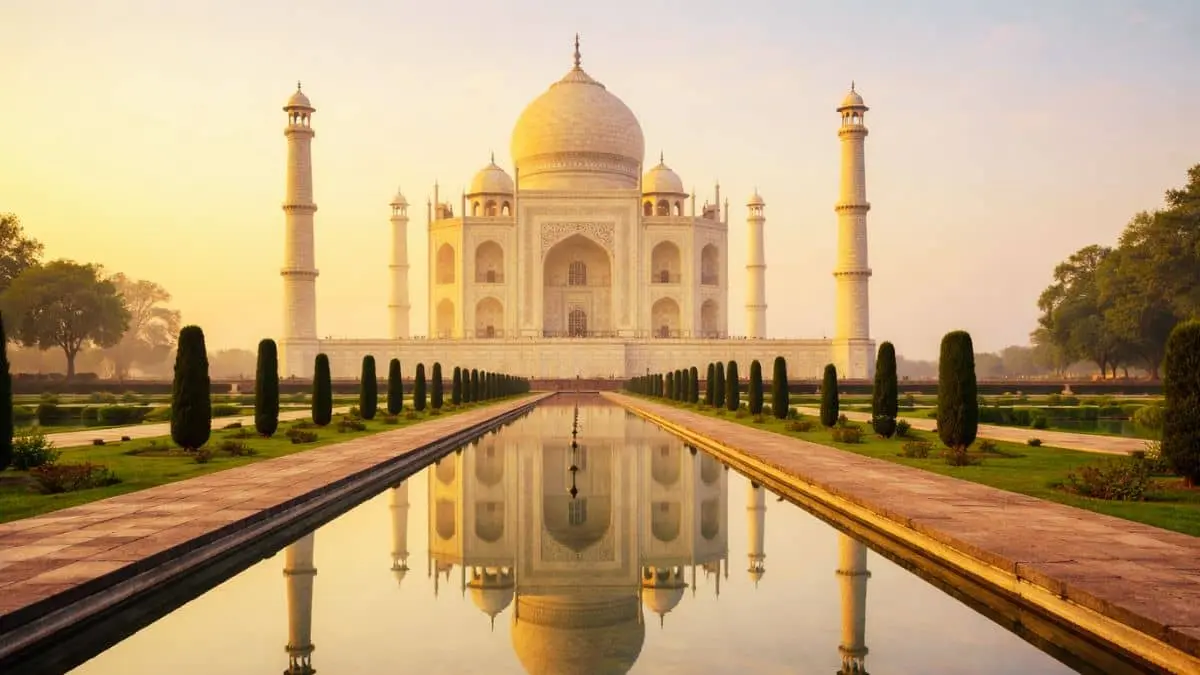
From an architectural perspective, the Taj Mahal is a masterpiece that blends Persian Islamic and Indian styles into a perfectly symmetrical structure. Its iconic white marble dome, elegant minarets, and beautifully landscaped gardens showcase advanced engineering and artistic precision that were far ahead of its time. Every detail, from the intricate carvings to the reflective pools, was carefully designed to create harmony and balance.
Table of Contents
Globally, the Taj Mahal holds immense importance as a UNESCO World Heritage Site and is widely recognized as one of the New Seven Wonders of the World. It attracts millions of visitors each year, including students, historians, and travelers eager to explore its beauty and meaning.
In this article, you’ll discover the complete story behind the Taj Mahal, its fascinating history, unique architectural features, cultural significance, and practical travel insights. Whether you’re studying world history or planning a visit, this guide will help you fully understand why the Taj Mahal continues to captivate people across the globe.
The Fascinating History of the Taj Mahal
Who Built the Taj Mahal and Why?
The Taj Mahal was commissioned by the Mughal emperor Shah Jahan in memory of his beloved wife, Mumtaz Mahal. Their story is often described as one of the greatest love stories in history. Mumtaz Mahal died in 1631 during childbirth, deeply affecting Shah Jahan, who then decided to build a grand mausoleum that would honor her memory forever.
Construction of the Taj Mahal began in 1632 and was largely completed by 1653. Over these two decades, the monument evolved into a symbol of eternal love, combining emotional depth with architectural brilliance. What started as a personal tribute soon became one of the most recognized structures in the world.
Construction Timeline and Workforce
The construction of the Taj Mahal was a massive undertaking that required extraordinary resources and coordination. It is estimated that over 20,000 artisans, craftsmen, and laborers worked on the project, including architects from across Asia and the Middle East.
The primary material used was white marble sourced from Makrana in Rajasthan, along with precious and semi-precious stones such as jade, turquoise, and lapis lazuli for decorative inlay work. This intricate technique, known as Pietra Dura, added to the monument’s unmatched beauty.
The project also involved thousands of elephants to transport materials and is believed to have cost millions of rupees at the time, equivalent to billions in today’s value. The scale of effort and precision reflects the ambition and power of the Mughal Empire during its peak.
The Taj Mahal in Historical Context
The Taj Mahal was built during the height of the Mughal Empire, a period known for its cultural richness, economic strength, and architectural achievements. Under Shah Jahan’s rule, the empire saw a golden age of art and construction.
Its design reflects strong influences from Persian and Islamic architectural traditions, combined with Indian craftsmanship. Elements such as the symmetrical layout, large central dome, and decorative calligraphy highlight this fusion of cultures.
In a broader historical sense, the Taj Mahal represents not just a personal story of love, but also the artistic and cultural excellence of an entire era. Today, it stands as a lasting reminder of how history, emotion, and architecture can come together to create something truly timeless.
Taj Mahal Architecture – Design, Style & Symbolism
Architectural Style and Influences
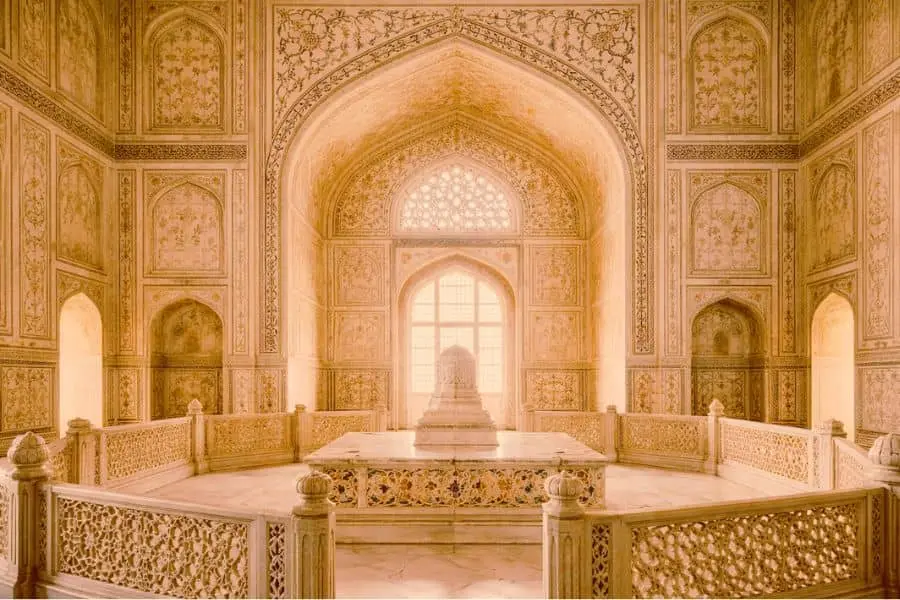
The Taj Mahal is a masterpiece of Mughal architecture, a style that blends elements from Persian, Islamic, and Indian traditions into a unified and harmonious design. Commissioned by Shah Jahan, the structure reflects the artistic vision of an empire at its cultural peak.
One of the most striking aspects of its design is the emphasis on symmetry and balance. Every element from the central dome to the surrounding minarets is carefully aligned to create a sense of visual harmony. This symmetry is not just aesthetic; it symbolizes order, perfection, and the concept of paradise in Islamic architecture.
Layout and Structural Design
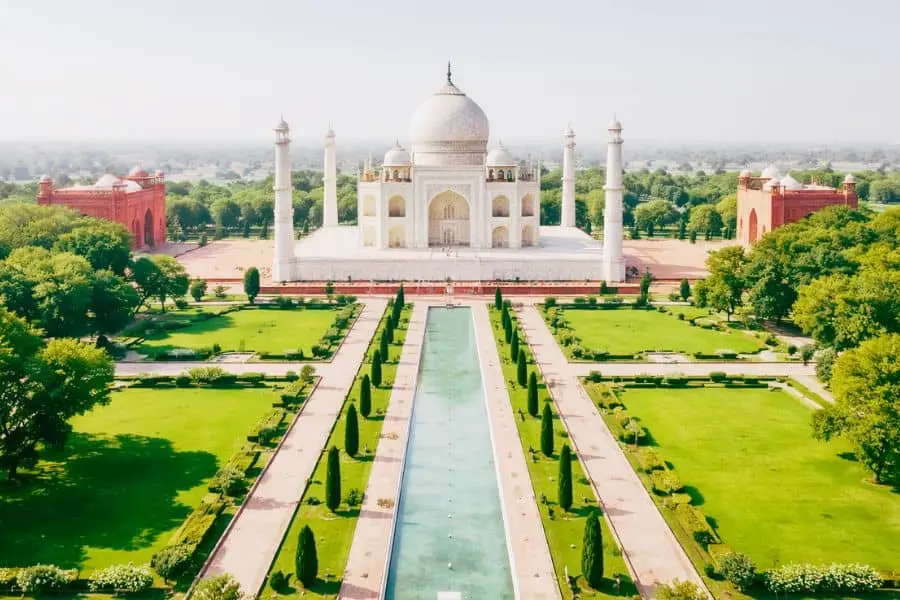
The Taj Mahal complex follows a well-planned layout based on the traditional Charbagh (four-part garden) design, which represents paradise as described in Islamic texts. At the center stands the main mausoleum, built on a raised platform and flanked by four elegant minarets.
A long reflecting pool runs along the central axis, mirroring the monument and enhancing its visual impact, especially at sunrise and sunset. The massive white marble dome, often called the “onion dome,” rises majestically above the structure while the minarets slightly tilt outward to protect the tomb in case of structural failure.
This thoughtful design showcases not only artistic beauty but also advanced engineering for its time.
Materials and Decorative Elements
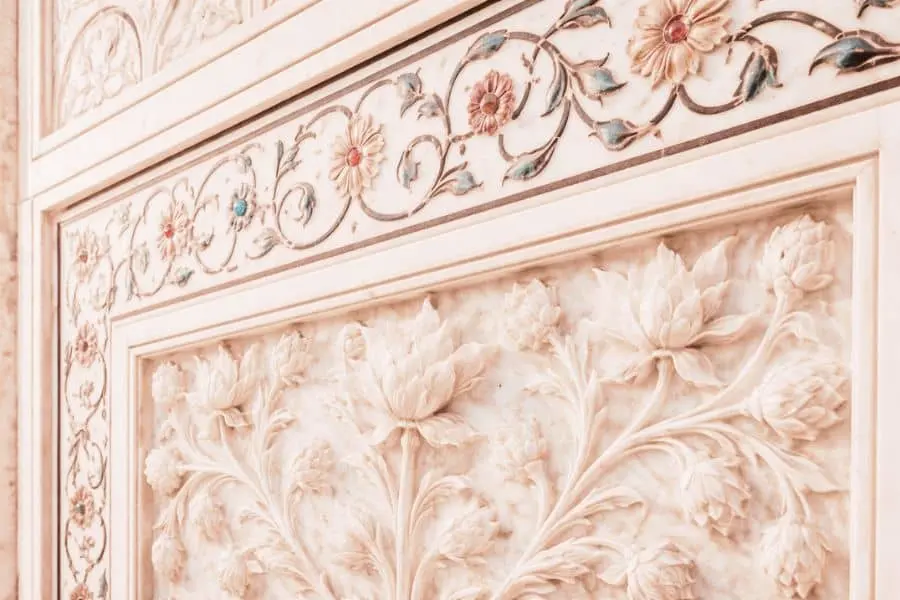
The primary material used in the Taj Mahal is pristine white marble sourced from Makrana in India. This marble changes color depending on the light, appearing pinkish at dawn, bright white during the day, and golden under moonlight.
The monument is richly decorated with semi-precious stones such as jade, crystal, turquoise, and lapis lazuli, embedded into the marble using a technique known as Pietra Dura. Delicate carvings, floral patterns, and Quranic calligraphy adorn the walls, demonstrating extraordinary craftsmanship.
Each decorative element was designed with precision, ensuring that no detail disrupts the overall harmony of the structure.
Unique Features That Make It a Wonder
What truly sets the Taj Mahal apart are its unique architectural innovations. One fascinating feature is the use of optical illusions; calligraphy appears uniform from the ground but is actually scaled in size to look consistent from a distance.
The monument’s near-perfect symmetry is another defining characteristic. Except for the later addition of Shah Jahan’s tomb beside Mumtaz Mahal, every element is perfectly balanced along a central axis.
Additionally, the engineering brilliance behind the structure, including its stable foundation near a river and earthquake-resistant features, demonstrates advanced knowledge for the 17th century.
Together, these elements make the Taj Mahal not just a beautiful monument, but a timeless wonder of architecture and human creativity.
Cultural and Global Significance of the Taj Mahal
Symbol of Love and Legacy
The Taj Mahal is widely regarded as the ultimate symbol of eternal love. Built by Shah Jahan in memory of Mumtaz Mahal, it represents a deep emotional story that continues to resonate across cultures and generations.
Its romantic symbolism has made it globally recognizable not just as a historical monument but as a powerful expression of devotion and remembrance. In modern times, the Taj Mahal remains a popular destination for couples, travelers, and storytellers, reflecting how timeless human emotions can be captured through architecture. This universal theme of love is one of the key reasons why it continues to inspire millions around the world.
UNESCO Recognition and Tourism Impact
The Taj Mahal’s cultural importance is officially recognized by UNESCO, which designated it as a World Heritage Site. This status highlights its outstanding value to humanity and ensures its preservation for future generations.
Each year, millions of tourists from across the globe visit the Taj Mahal, making it one of the most visited landmarks in the world. Its popularity contributes significantly to India’s tourism industry while also promoting global awareness of cultural heritage. The monument serves as a bridge between history and modern travel, attracting historians, architects, students, and casual visitors alike.
Why It Matters to American Travelers & Students
For American travelers and students, the Taj Mahal offers more than just a sightseeing experience; it provides a meaningful connection to world history and architectural excellence. Studying Taj Mahal history and architecture helps students understand the influence of different cultures and design traditions in shaping global heritage.
For travelers from the United States, visiting the Taj Mahal can be an eye-opening cultural experience. It encourages appreciation for diverse histories, artistic achievements, and traditions beyond their own environment. In an increasingly connected world, such experiences foster global awareness, empathy, and a deeper understanding of humanity’s shared cultural legacy.
Visiting the Taj Mahal – What Travelers Should Know
Location and Best Time to Visit
The Taj Mahal is located in Agra, a historic city in northern India that is easily accessible from New Delhi by train or road. It sits along the banks of the Yamuna River, adding to its scenic beauty.
The best time to visit is during the cooler months, from October to March, when the weather is more comfortable for sightseeing. For the most memorable experience, plan your visit at sunrise; this is when the white marble glows softly in golden light, and crowds are smaller. Sunset visits are also popular, offering warm tones and a romantic atmosphere, though they tend to be more crowded.
Entry Tips and Travel Advice
Visitors need to purchase tickets to enter the Taj Mahal, with different pricing for domestic and international tourists. It’s recommended to book tickets in advance online to avoid long queues.
There are a few important guidelines to keep in mind:
- Large bags, food items, and certain electronics are restricted
- Dress modestly, respecting the cultural and historical significance of the site
- Follow security checks and posted rules inside the complex
Also, Fridays are reserved for prayers, so the Taj Mahal is closed to general visitors on that day.
Photography and Must-See Spots
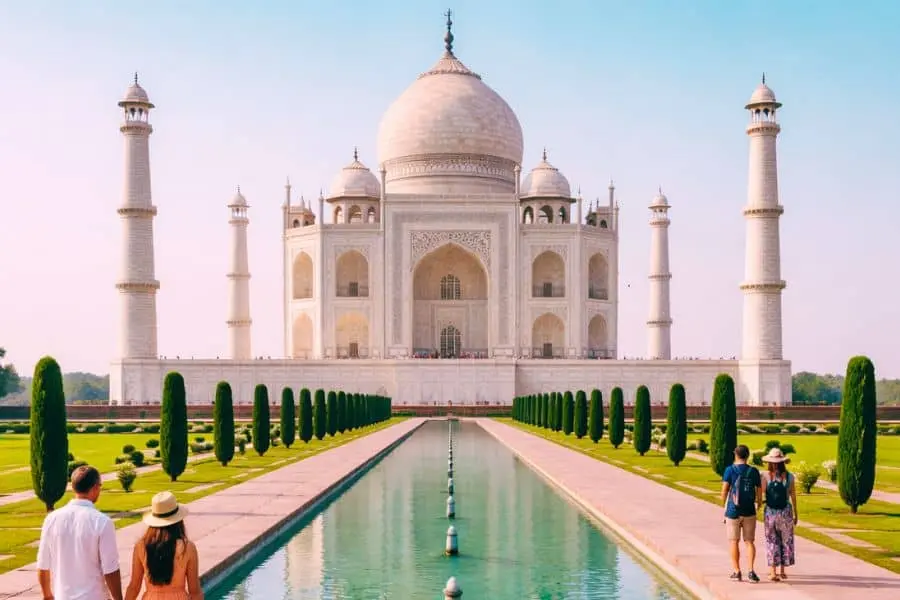
The Taj Mahal offers countless breathtaking photo opportunities. The most iconic view is from the main entrance gate, where the monument is perfectly framed. The long reflecting pool in the central garden is another must-see spot, capturing a stunning mirror image of the structure.
For unique angles, explore the side pathways and garden corners, which often provide less crowded perspectives. Many photographers also recommend visiting the nearby Mehtab Bagh, located across the river, for a beautiful rear view of the Taj Mahal, especially at sunset.
When it comes to timing, sunrise offers soft lighting and fewer crowds, making it ideal for peaceful photography. Sunset, on the other hand, delivers dramatic colors and a more vibrant atmosphere. Both experiences highlight different aspects of the monument’s beauty, making either choice worthwhile depending on your preference.
Key Facts About Taj Mahal History and Architecture
Here are some quick, easy-to-read facts that summarize Taj Mahal history and architecture:
- Construction Period: Built between 1632 and 1653 under Shah Jahan
- Purpose: A mausoleum dedicated to Mumtaz Mahal
- Location: Agra, along the Yamuna River
- Architectural Style: Mughal architecture with Persian, Islamic, and Indian influences
- Height: Approximately 73 meters (240 feet) including the dome
- Main Material: White marble sourced from Makrana, India
- Decorative Elements: Semi-precious stones like jade, crystal, turquoise, and lapis lazuli
- Key Features: Central dome, four minarets, symmetrical gardens (Charbagh layout)
- Design Highlight: Perfect symmetry across the entire complex
- Art Technique: Intricate inlay work known as Pietra Dura
- Global Status: Recognized as a UNESCO World Heritage Site
- Workforce: Around 20,000 artisans and laborers contributed to its construction
- Logistics: Thousands of elephants were used to transport heavy materials
- Estimated Cost: Millions of rupees at the time (equivalent to billions today)
- Unique Feature: Changes color depending on sunlight: pink at dawn, white by day, golden at dusk.
These facts highlight why the Taj Mahal remains one of the greatest achievements in architectural history.
Conclusion
The story of the Taj Mahal is far more than a tale of love. It is a remarkable blend of history, architecture, and cultural expression. Exploring Taj Mahal history and architecture reveals how this iconic monument reflects the artistic brilliance of the Mughal era, the emotional depth of its origin, and the technical mastery behind its construction. From its perfectly symmetrical design to its intricate marble craftsmanship, every detail contributes to its timeless appeal.
Beyond its physical beauty, the Taj Mahal holds immense cultural and historical value. It stands as a global symbol of love, a UNESCO-recognized treasure, and a masterpiece that continues to inspire architects, historians, students, and travelers worldwide. Its ability to connect people across different cultures and generations is what truly makes it extraordinary.
Whether you’re studying its design or dreaming of visiting in person, the Taj Mahal offers an unforgettable experience that goes beyond expectations.
FAQs
Why is the Taj Mahal considered an architectural masterpiece?
The Taj Mahal is considered an architectural masterpiece because of its perfect symmetry, innovative engineering, and artistic excellence. It combines Persian, Islamic, and Indian design elements into a harmonious structure. Intricate marble carvings, inlay work (Pietra Dura), and the elegant dome and minarets showcase exceptional craftsmanship and creativity, making it one of the most admired monuments in the world.
How long did it take to build the Taj Mahal?
Construction of the Taj Mahal began in 1632 and was largely completed by 1653, taking approximately 21 years. Over 20,000 artisans, craftsmen, and laborers contributed to the project, working meticulously to bring the emperor’s vision to life.